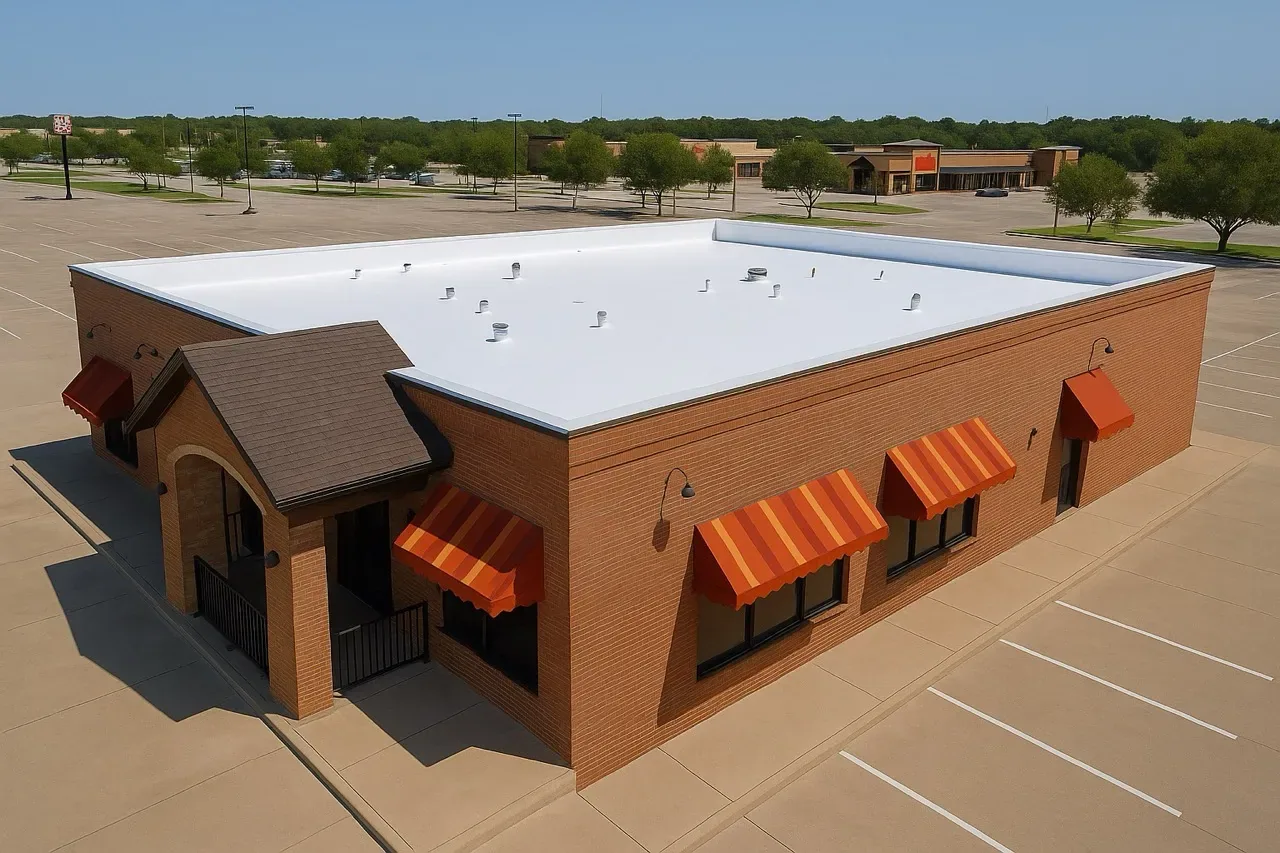
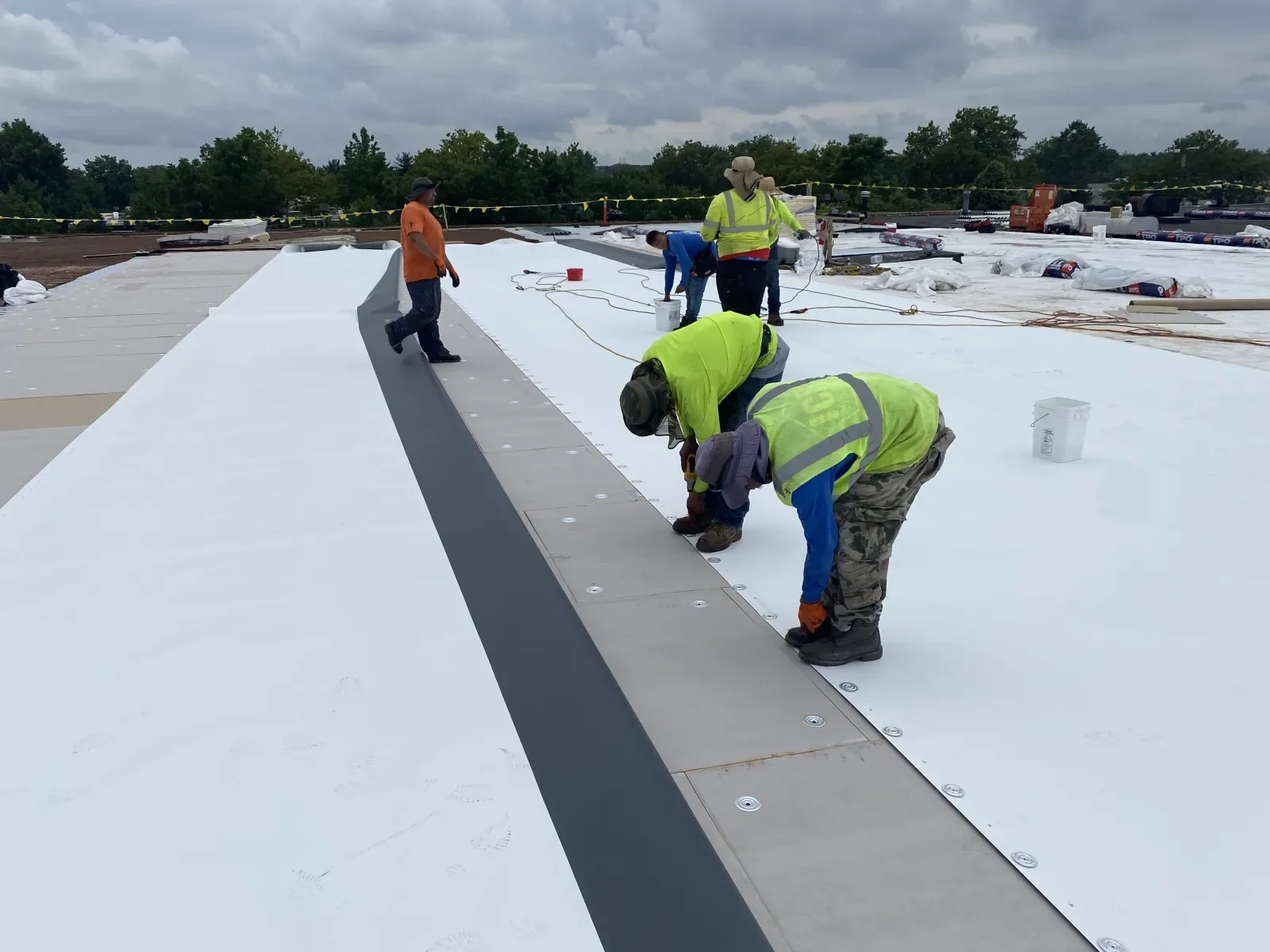
Holcim Elevate roofing in Berkeley, CA: EPDM, TPO and PVC systems and repairs, with the existing membrane, insulation and curb heights checked before anything is ordered.
Roofing Manufacturers | Berkeley, CA
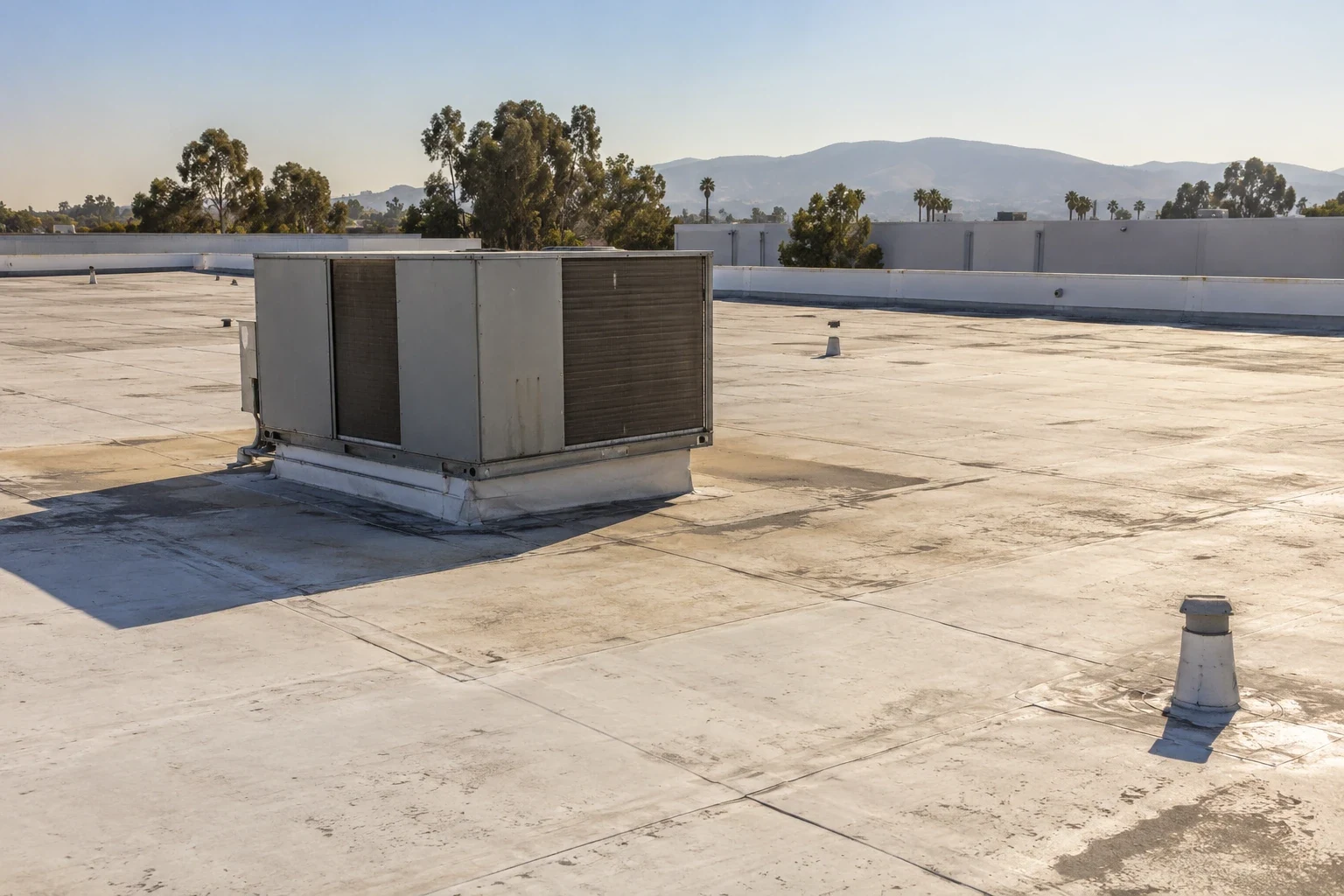
On a distribution center roof, the flashing has pulled loose at the corner of a rooftop unit. Before repairing it with Holcim Elevate materials, we need to know what membrane is already there and whether the insulation around the corner is wet. Holcim Elevate roofing in Berkeley, CA starts with that inspection. A patch over the visible gap isn't a complete fix. On distribution center roofs, we also plan around dock traffic and rooftop equipment. The product family on the label doesn't guarantee every part is compatible, so the proposal spells out the membrane and any substrate work needed.
Holcim Elevate roof work around Berkeley and Oakland starts by confirming the membrane family and connection details present at the building. We review the equipment details with the building operator before opening anything. Loose flashing can let water into insulation nearby, so we check before deciding what can stay. Old records help identify the membrane and any later repairs. The products are chosen to fit the actual roof and the manufacturer's current requirements. Our recommendation is based on what we find on that building.
Holcim Elevate offers EPDM, TPO and PVC roofing. Each has its own membrane, seaming method and flashing accessories. We confirm which one is on the roof before listing parts. Flexible membranes can look similar from the top, and earlier repairs may have used incompatible products. A seaming method from one membrane doesn't work on another. The proposal names the system and its accessories so the order is right the first time. If records are unclear, we confirm the membrane on site before anything is ordered.
Comparing Holcim Elevate with Carlisle SynTec means pricing each system's own components for the same roof area. We include the same substrate repairs and flashing work in both. The same square footage doesn't make sheets or seam accessories interchangeable. Products are confirmed before ordering. A lower membrane price can leave flashing work out of the bid. Having membrane available doesn't prove the old roof can stay. The comparison shows what each option will actually finish on your roof.
Water getting in at an open flashing corner soaks the insulation around it. We separate suspect areas from confirmed wet insulation. Confirmed wet material is removed and replaced, and the estimate covers both. New membrane won't dry insulation left underneath. The fastening or adhesive holding the insulation down may also need checking. Old records may not show later changes. The proposal says what's staying after testing and what's being replaced, and the new system goes on solid, dry substrate.
A commercial roof inspection before ordering Holcim Elevate materials checks the flashings and the area around them against any records. Suspect areas are kept separate from confirmed repairs. If more damage turns up when the roof is opened, it's measured and approved before we continue, and the area stays sealed. A small gap on the surface doesn't tell you how far the water went. A stain inside doesn't map the wet insulation either. The recommendation is tied to what testing confirms.
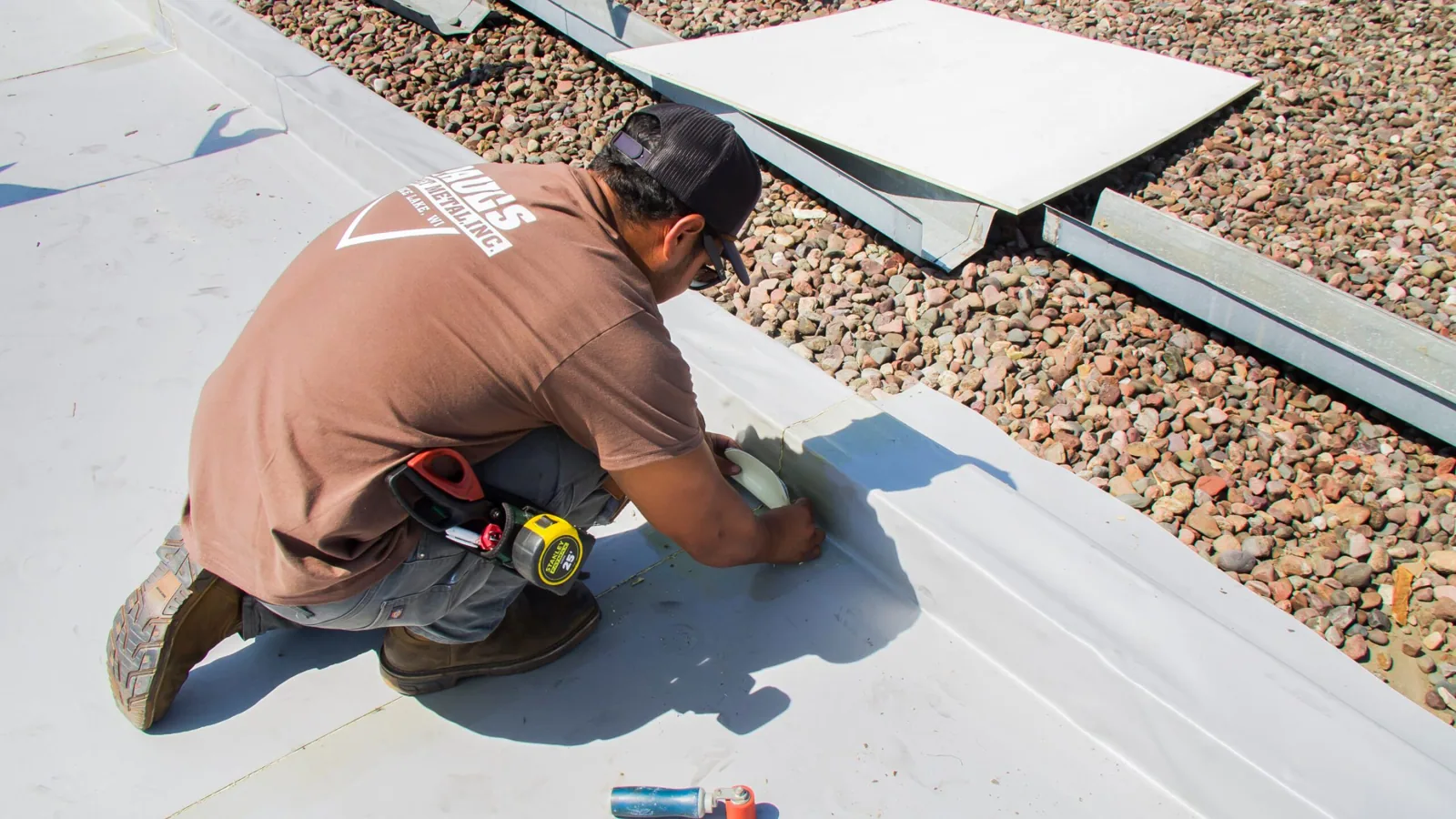
Every membrane has a seaming method and an attachment method, and both need to be right. EPDM uses tape and primer; TPO and PVC are heat-welded. A repair method from one Holcim Elevate membrane doesn't work on another. We match accessories and prep to the installed system. A seam test confirms the seam, not the insulation or fasteners underneath it. Membrane on site doesn't mean the flashing around the unit is ready, so the scope lists each step separately.
On a PVC roof, repairs are welded to clean, compatible membrane. We check the existing membrane and prep the surface before welding. Old repair materials matter where new work meets them. Products are confirmed before ordering. Substrate repairs are included in the price. Membrane ready to install elsewhere doesn't help a corner that still needs prep. The repair is complete when the corner flashing is welded to sound membrane on a dry, solid base.
New insulation raises the roof, which can leave rooftop unit curbs too short for proper flashing. We measure curb heights against the planned assembly before ordering accessories. If curbs need raising, that's in the scope. Comparing Holcim Elevate with Versico means reviewing each system's components on their own, since similar names don't make parts interchangeable. Both options should include the same substrate repairs and the same protection for occupied space. The comparison should be based on what each actually includes.
If a rooftop unit has to be lifted to raise its curb, the mechanical contractor handles that. We schedule around their lift. Limited dock or crane access can mean extra handling. If work has to be split around building hours, each area is sealed in between, which adds setup time. Those costs are separate from the membrane price. Being ready means substrate, flashings and membrane all on site, and the equipment trade scheduled. The estimate explains those steps.
For West Berkeley and Emeryville Holcim Elevate projects, record the installed membrane and the specific perimeter or equipment detail completed. Lab and institutional buildings often have unit and access limits that affect scheduling. In West Berkeley, each roof gets its own inspection. Unfinished details stay listed with whoever is responsible. A new field membrane doesn't mean every flashing around it is done. The system installed is recorded by location, so the closeout shows where our work stopped.
The closeout record names the Holcim Elevate membrane and accessories installed, with photos of substrate repairs and the finished corner flashing. Test results are included. Areas we didn't open aren't assumed to be sound. If a warranty was offered, review its terms against the system installed. The manufacturer's name doesn't certify a contractor or guarantee coverage. The record shows how the loose flashing was fixed, and future changes should be checked against it so new materials match.
Send membrane records and the location of the problem. We'll inspect the roof and explain the repair and any substrate work with photos.
Request a Roof Assessment