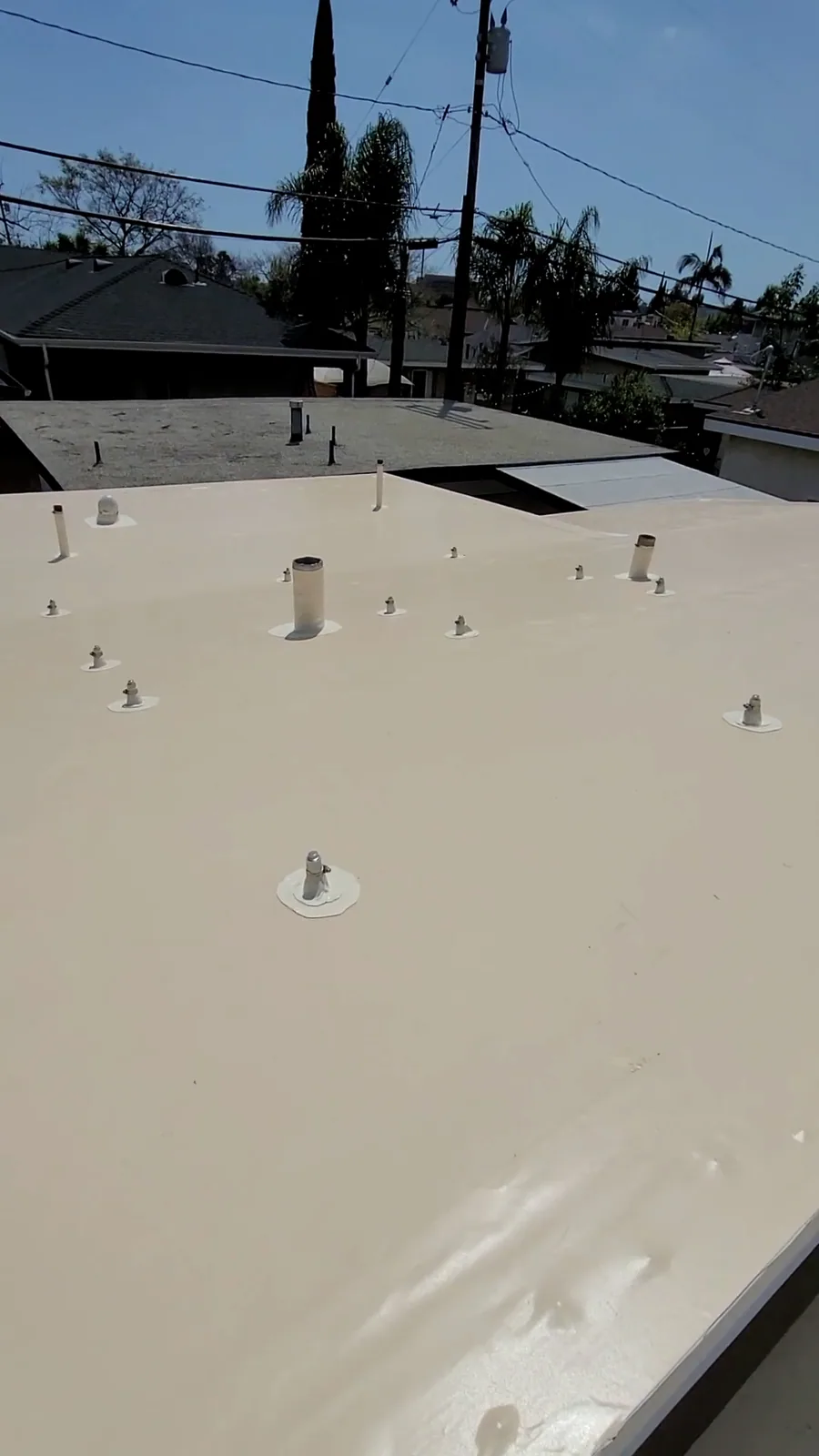
PVC roofing in Berkeley, CA: split curb flashing, open seams and wet insulation repaired with compatible heat-welded PVC, tested and photographed.
Roof Systems | Berkeley, CA
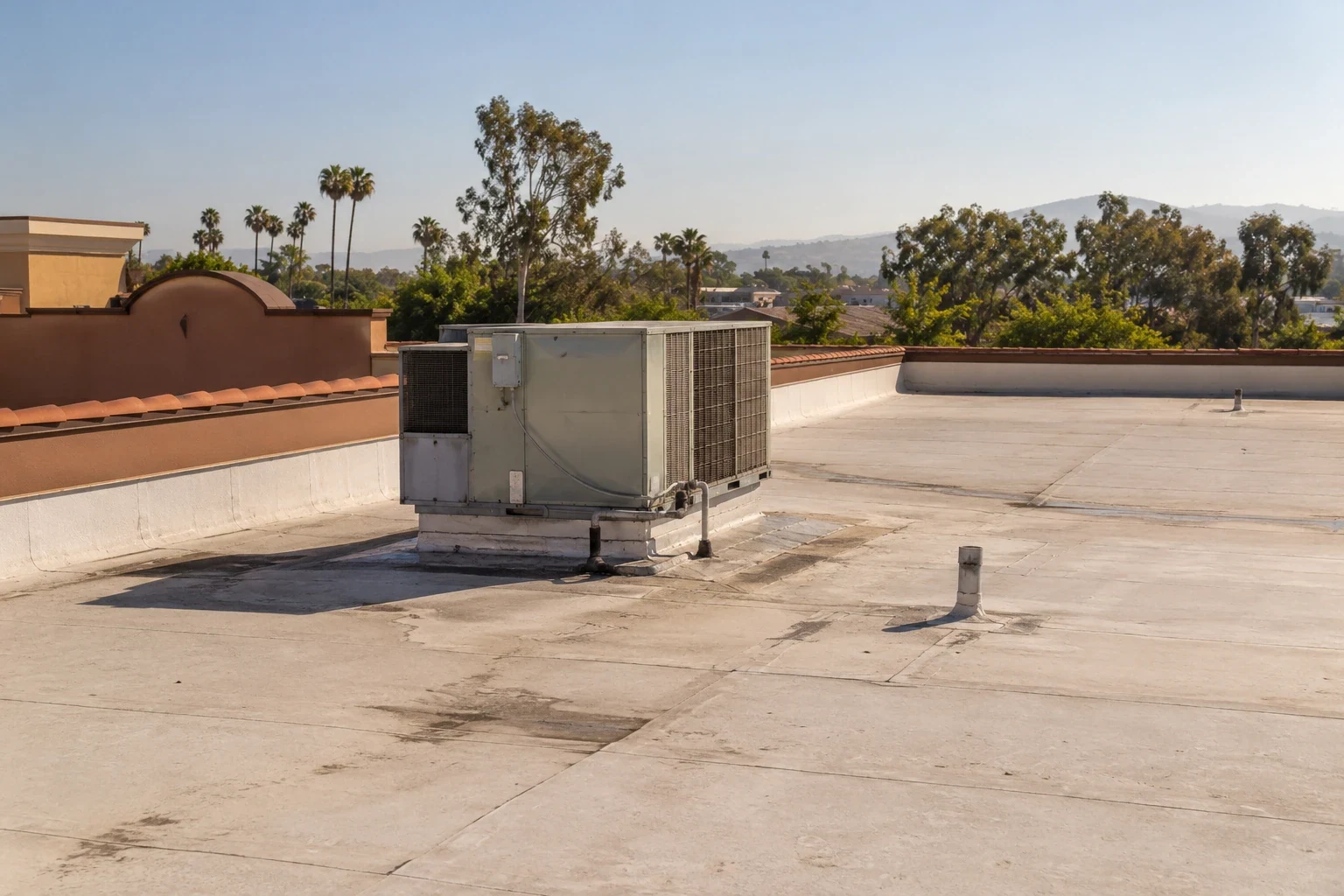
On a restaurant roof, the PVC flashing has split at the corner of an equipment curb, while the rest of the roof still looks fine. PVC roofing in Berkeley, CA is often repaired in a spot like that, but the fix depends on the membrane, the curb and whether the insulation underneath has stayed dry. A patch over the split is not enough if the curb wood is soft or the insulation is wet. For a restaurant roof, we also plan around kitchen equipment and service hours. We confirm the membrane, check the support and fix the full detail.
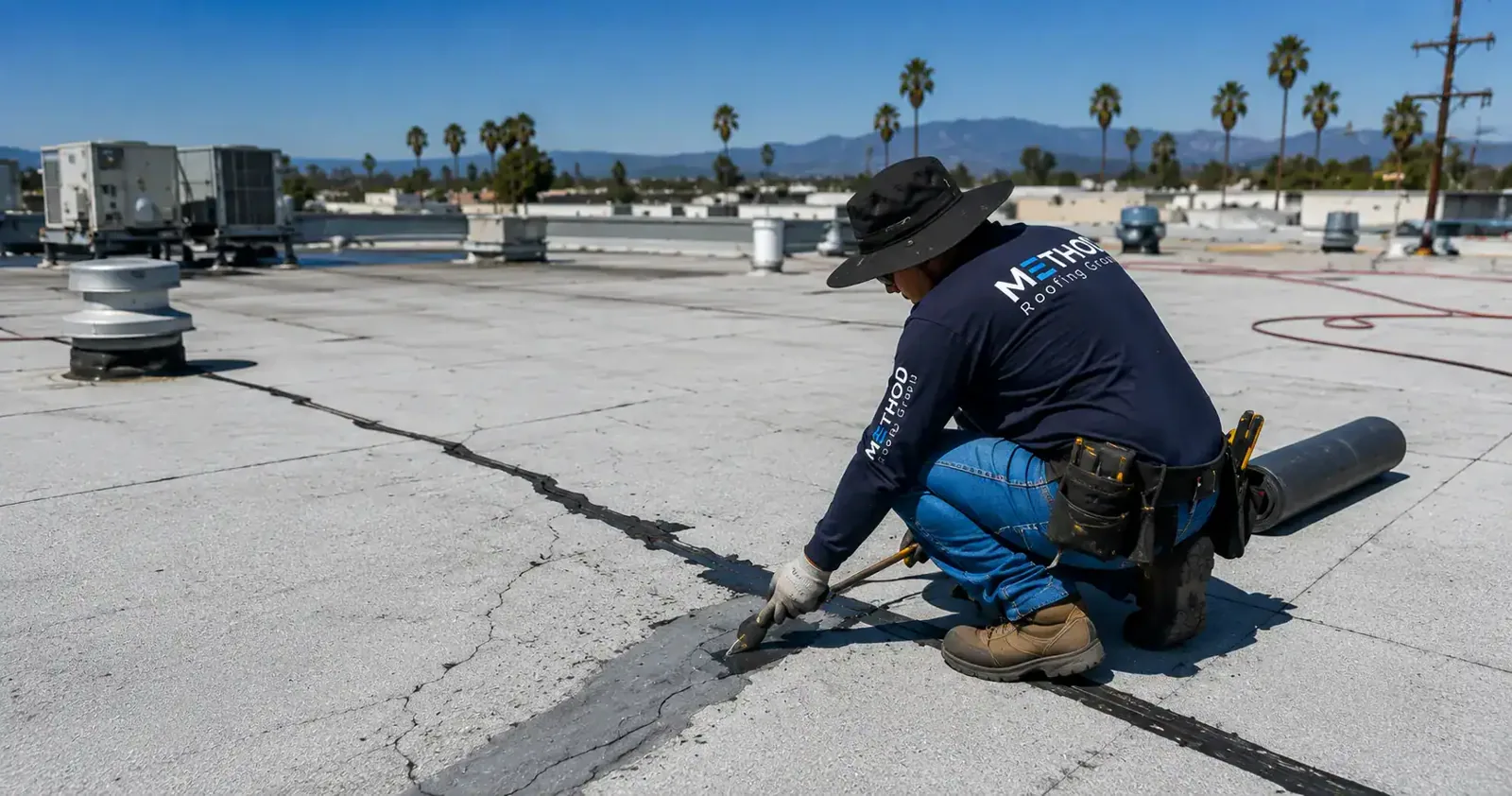
PVC membrane seams are heat-welded, and a reliable repair needs clean, compatible sheet at the weld line. We inspect the surface, backing and prior repairs before choosing a patch, seam correction or broader replacement. Berkeley’s wet season follows months with little rain, so open laps and weak curb details can be exposed quickly once storms return. West Berkeley’s research and production buildings have different penetrations from downtown Oakland offices. The repair follows the actual membrane and the support it rests on.
Older patches can hide what the original membrane is. We check any roof records and look at the sheet and patches before ordering repair materials. Not every white flexible sheet is PVC, and not every PVC product welds well to every other. If we are unsure, we make test welds. The manufacturer's requirements set the flashing and accessory products. Where earlier patches are a different material, we may need to cut them out. The proposal names the products and the repair area, so the price ties to the roof actually on your building.
Our commercial roof repair work sets a clear boundary for the repair. A small patch over the split may leave rotted curb wood or wet insulation just outside it. We separate a local repair from a larger replacement, and show you what each would fix. If a larger section is needed, the curb, insulation and flashing are all part of it. Equipment that has to be moved is coordinated with your contractor either way. The goal is to stop the water at its source with the right materials.
An open curb seam lets water into the insulation around it. We use core cuts or a moisture scan to see how far it spread, and keep confirmed wet areas separate from areas that only look suspect. Wet insulation has to be removed and replaced; new membrane will not dry it. A large stain inside does not tell you the exact size of the wet area, so we measure on the roof. We also check that the roof is still properly attached. The repair area is drawn to the insulation that is actually wet.
Some owners compare PVC with a TPO roof. Both are heat-welded, but they use different sheets and accessories, which are not interchangeable. We price both on the same area, with the same insulation and curb repairs included. Equal square footage does not mean equal flashing labor. Whichever you choose, wet insulation still has to be replaced, and any required project review comes before ordering. Similar-looking roofs can have very different details at curbs, so the comparison shows the full work needed to close the leak.
PVC membrane and flashing are joined by hot-air welding. We confirm the sheet and accessories, clean the surfaces, and make test welds to check that the materials bond under that day's conditions. After the seams cool, we probe them to find any gaps. Those checks tell you the weld is good; they do not tell you the insulation underneath is dry, which is checked separately. Each finished detail is photographed. The welding products have to match the membrane on your roof, so we confirm that before work begins.
Some owners consider a KEE roof, a thermoplastic sheet that often has a PVC base with an added flexibilizer. It is not automatically compatible with standard PVC, so we check the exact products and accessories for each option. Existing patches matter too, since new welds have to bond to them or replace them. We compare complete options, each including the same curb and insulation repairs. The recommendation follows what we find on the roof, not the assumption that one flexible sheet is as good as another.
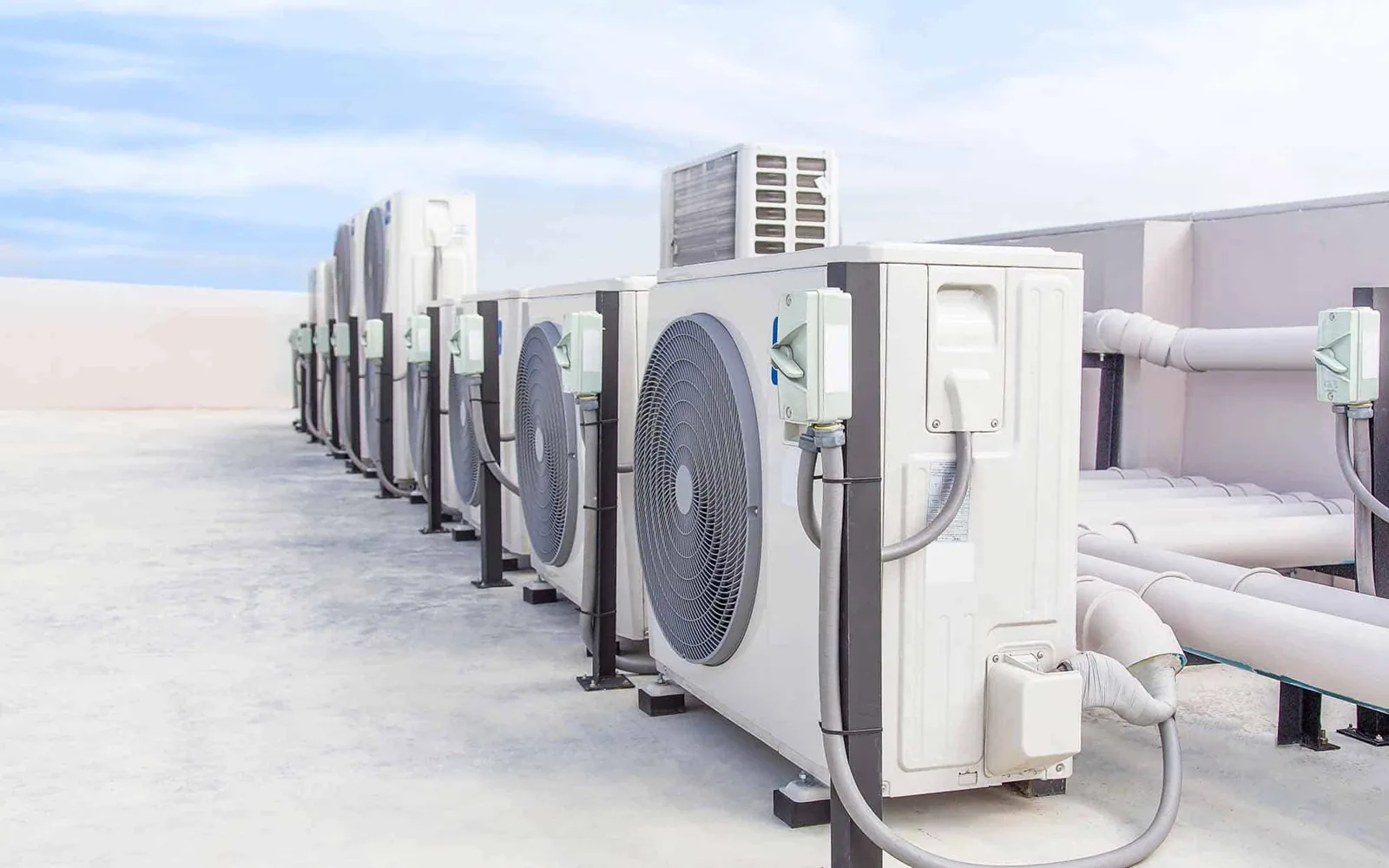
New insulation raises the roof surface, which can leave an equipment curb too short for proper flashing. We measure each curb before ordering materials and include any raising or rebuilding in the estimate. Our rooftop curb and equipment support work handles that, with your mechanical contractor moving or lifting the unit first if needed. Field membrane can go down elsewhere, but that curb is not finished until the unit is out of the way and the curb is rebuilt.
Drains and walls need the same height check, since a raised roof can leave a drain sitting high or a wall flashing too short. Any wall repair goes to the right trade first. Tight roof access or work in occupied rooms can add handling time and setup, and we include that. If the work happens in phases, each phase gets a temporary seal at the end of the day. Insulation, membrane, flashing and accessories all need to arrive together. The schedule explains what has to happen, in what order, before each curb and drain is closed for good.
At a curb or drain, the PVC field has to join a compatible flashing detail without blocking movement or water flow. We confirm the substrate, welding conditions and temporary closure before opening the existing assembly. The downtown Berkeley PVC roof still needs its own review of equipment access and roof geometry; Emeryville’s lab properties have separate operating limits. Photos show the completed seam and any unresolved backing or component question.
When the job is done, you get photos of the replaced insulation, the rebuilt curbs and the finished welds, along with the test weld and seam probe results. Areas we did not open are noted as not tested. If a manufacturer warranty is offered, its terms depend on the exact membrane and how it was installed, and we explain them rather than promising coverage up front. The closeout notes record which products went where, so anyone who later adds equipment or cuts into the roof knows exactly what to match.
Send any membrane records you have and tell us where the split curb is. We will check the membrane and the insulation underneath and send a plain repair plan with photos.
Request a Roof Assessment