Local weather advisory
The National Weather Service has issued a coastal flood advisory covering Berkeley. Heavy rain and drainage loading can expose roof leaks, blocked drains, and ponding water. This is a weather exposure advisory; it does not establish damage to a specific roof.
Do not access a roof during hazardous weather. Protect people first, avoid water near electrical equipment, and request roofing help when conditions permit.
National Weather Service · Updated Oct 28, 2026, 7:20 AM UTC
Commercial roof inspections in Berkeley, CA: we walk the roof, check edges, seams, drains and flashing, and give you photos and a prioritized list of what needs work.
Commercial Roofing Services | Berkeley, CA
A loose parapet cap on a public building can let rain run straight down the inside of the wall, even when the membrane across the rest of the roof looks fine. That is the kind of thing a commercial roof inspection in Berkeley, CA, should catch early. We walk the whole roof, not just the spot someone complained about, and look at edges, seams, drains, curbs, penetrations and any old patches. We also ask what has been happening inside: stains, drips during storms, musty rooms, or nothing at all.
The goal is a clear picture of what the roof needs and how urgently. Some findings call for a repair this month. Others are worth watching and budgeting for. A few may point toward replacement in the next several years. For government and public buildings, we also plan around security, public entrances and who needs to sign off on roof access. We tell you what we could see and reach, and what we could not, so nobody mistakes a visual check for a full moisture survey.
Roof edges take a beating from wind, and they are where a lot of leaks start. When we find a loose coping cap or a lifted edge strip, we check what it is fastened to. Rotted wood nailers or a cracked parapet wall will not hold new fasteners, so simply re-securing the metal may only buy a few months. We also look for gaps in the joints between metal sections and split sealant along the wall.
Edge problems often look minor from the ground and serious up close. Water that gets behind a cap can soak the top of the wall and the insulation at the roof perimeter long before anything shows indoors. When an edge needs real work, our edge metal and coping repair team picks up where the inspection leaves off. The inspection report notes exactly which runs of edge are loose, how far the damage seems to go, and whether the nailer underneath felt solid or soft. That way the repair estimate is built on what is actually there, not on a guess.
A visual inspection tells us a lot about the surface: open seams, cracked flashing, ponding, blistering and damage from foot traffic. It cannot tell us whether the insulation under the membrane is wet. A roof can look sound and still hold water in its insulation after years of slow leaks, which adds weight, reduces insulating value and eventually rusts or rots the deck.
When we see signs of trapped water, such as soft spots underfoot, blisters, stains inside that do not line up with any visible defect, or an old roof with a long leak history, we recommend testing. An infrared moisture survey can map likely wet areas across the roof, and a few small core cuts confirm what the scan shows. We explain why we think testing is worth the cost on your building and what decision it would help you make. If the roof is dry and sound, we say so and skip the extra expense. Testing is a tool for deciding between repair, recover and replacement, not an automatic add-on.
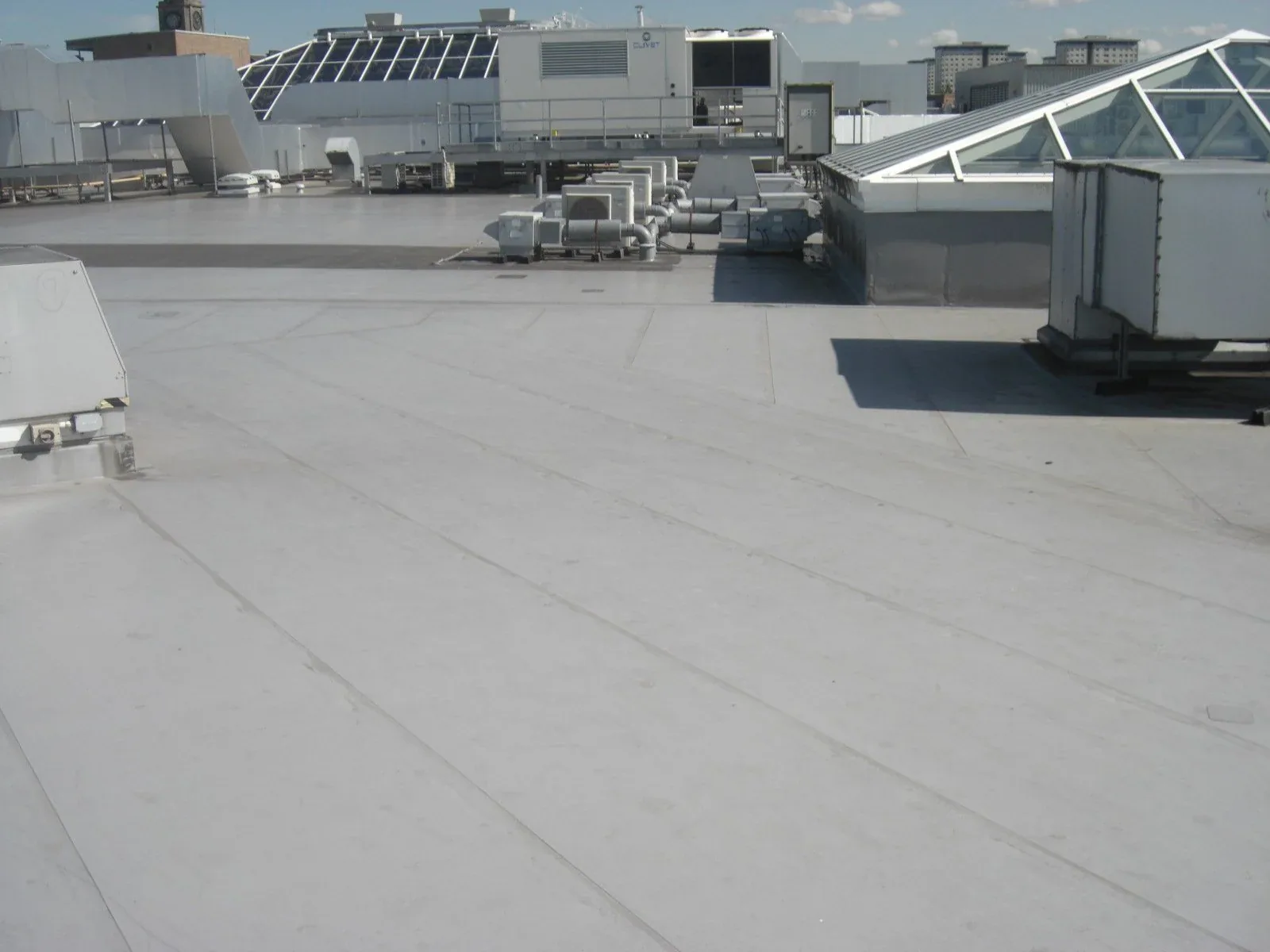
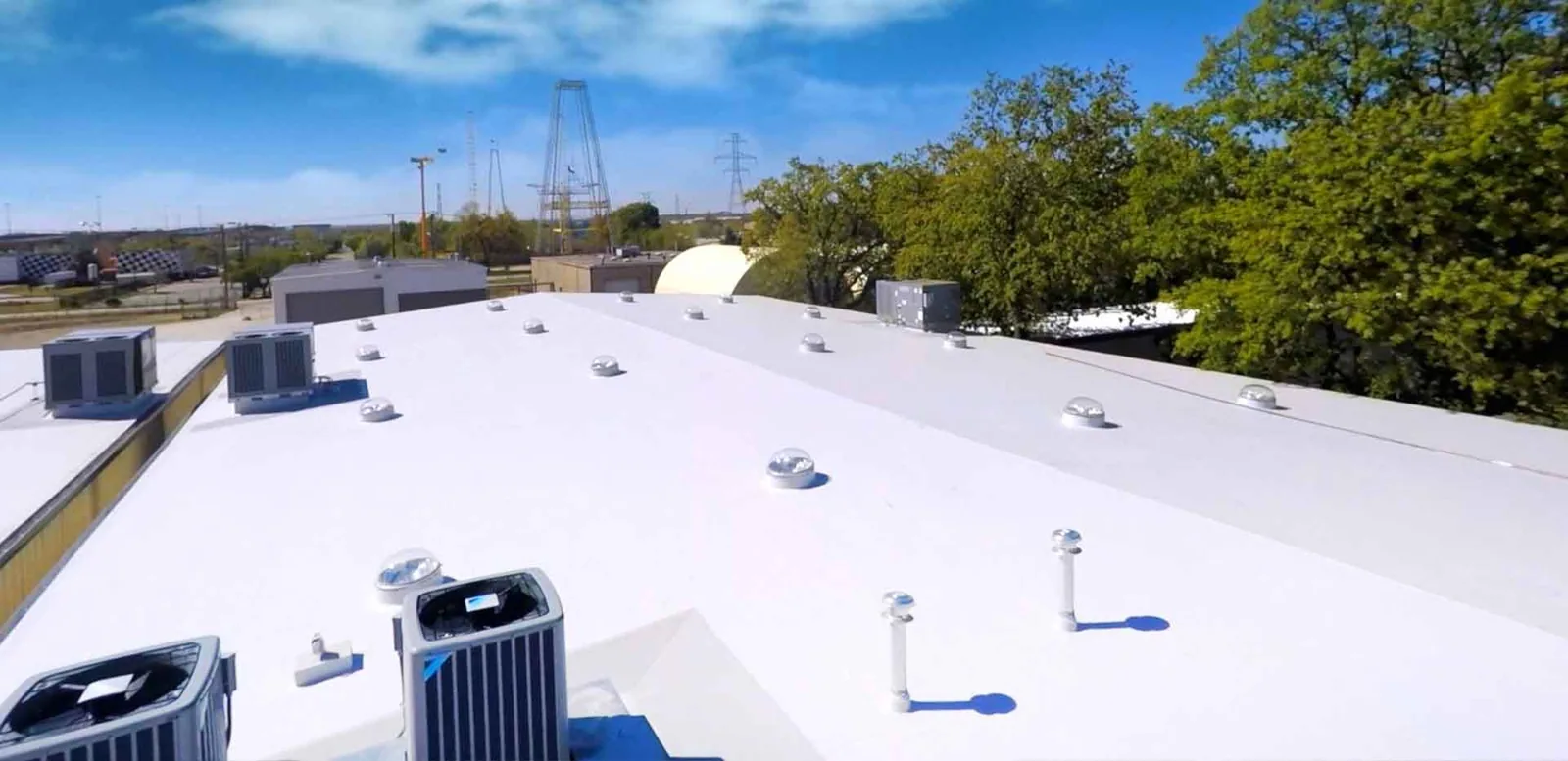
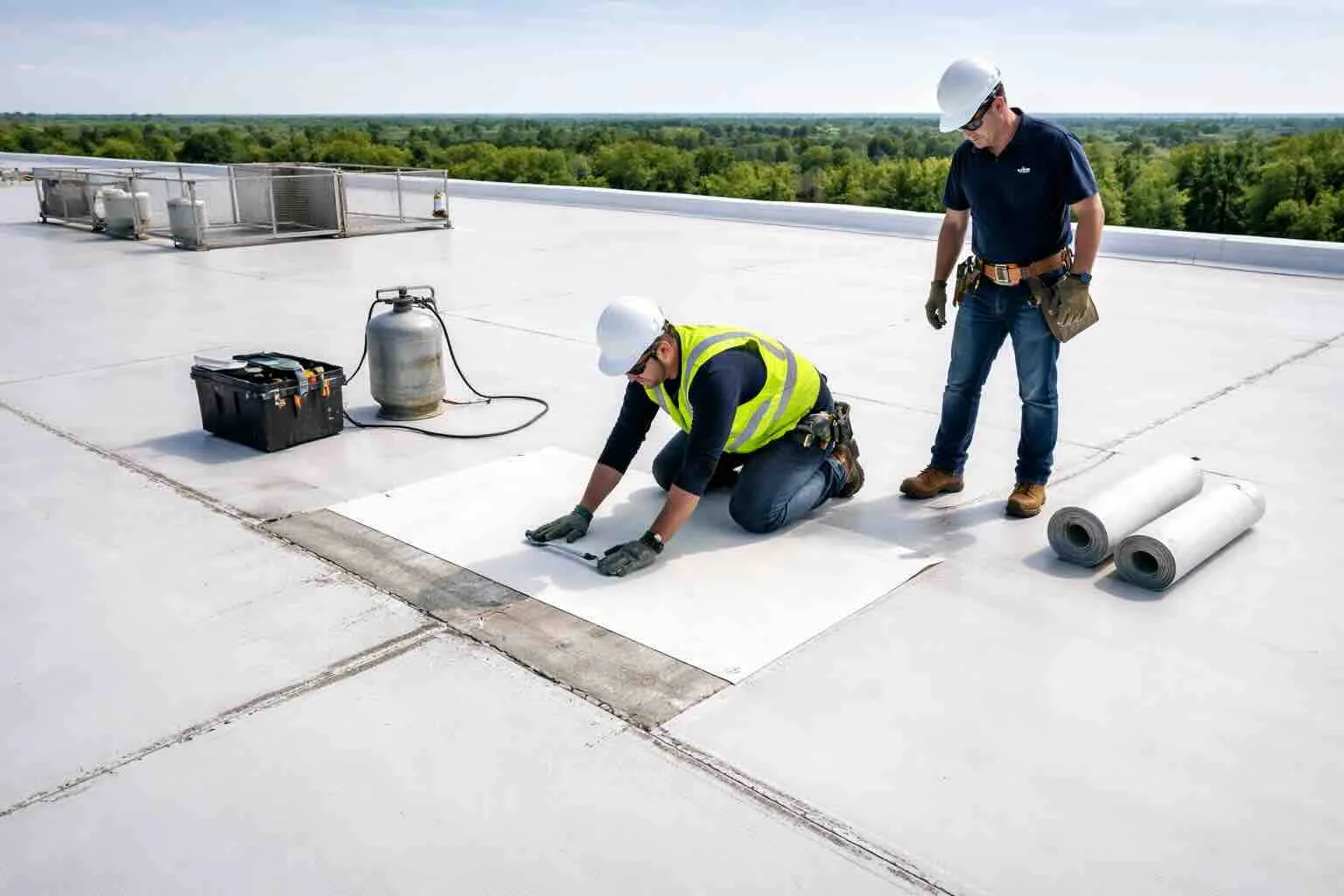
Different roof systems fail in different ways, and the right repair depends on what is up there. On a TPO roof, we look closely at heat-welded seams, the membrane around curbs and corners, and any spots where the sheet has shrunk or been punctured. Older TPO can become hard to weld, which changes how a repair is done. We note the membrane type, approximate age and any past patches made with mismatched materials.
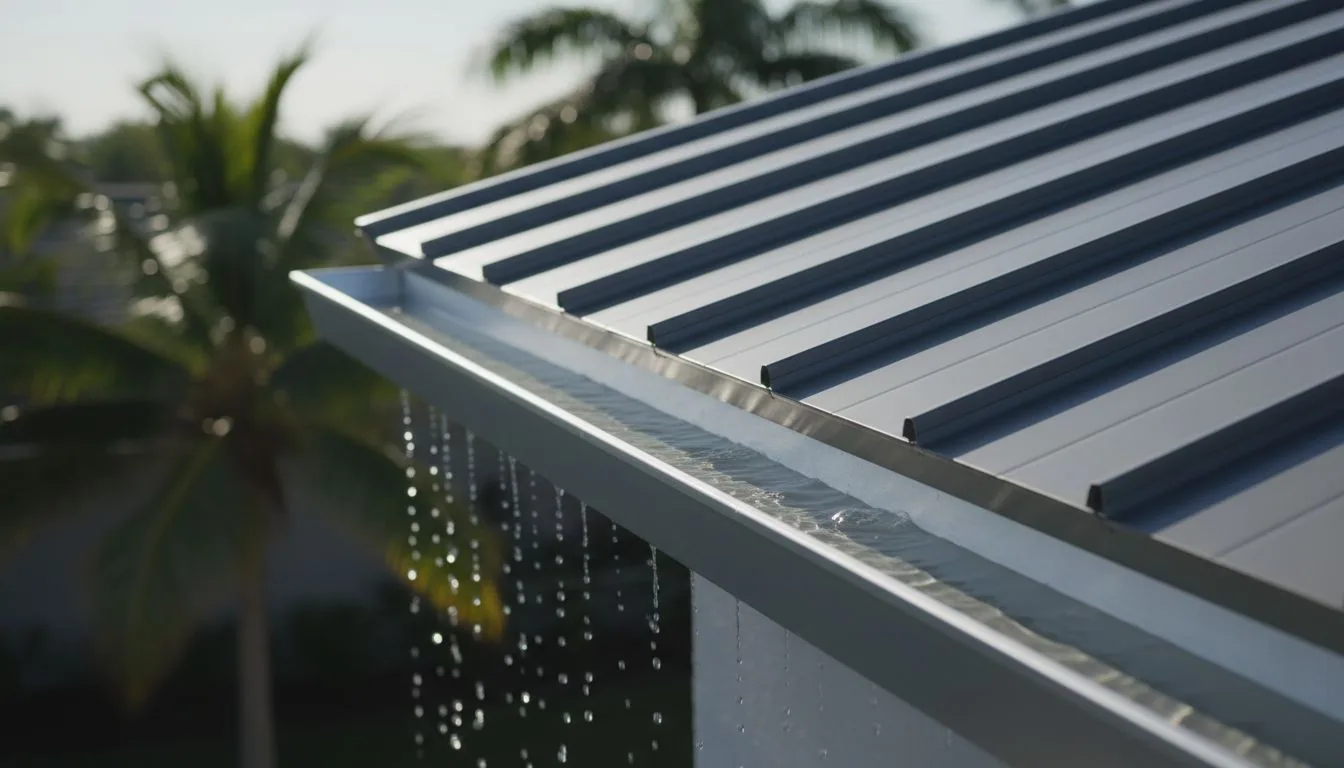
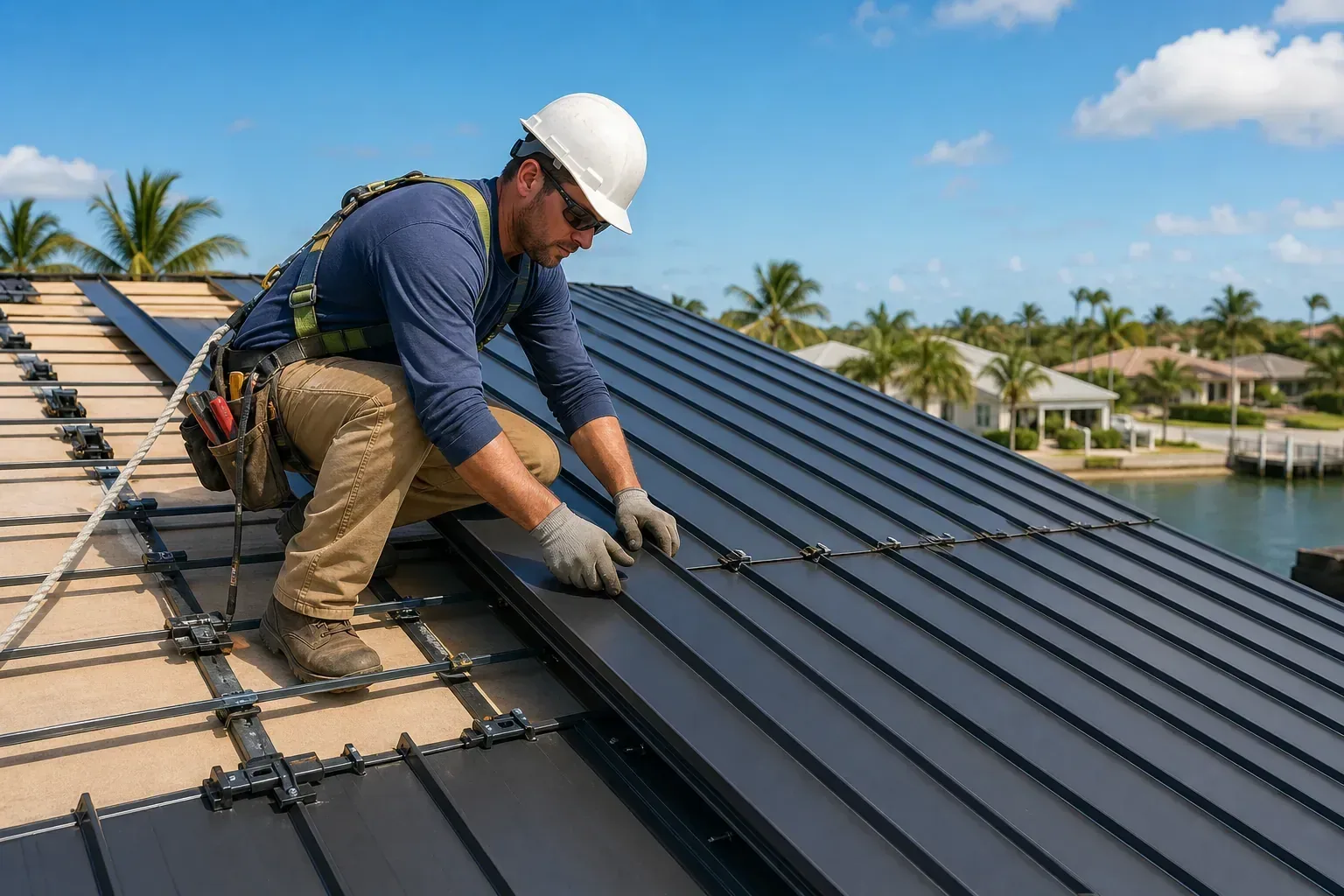
Metal roofs raise a different set of questions. On a standing seam metal roof, we check panel clips, seam closures, fastener rows on trim, rust at panel laps and the sealant at penetrations. Expansion and contraction can loosen trim and open end laps over time. Knowing the system matters because a sealant smear that works on one roof can fail quickly on another. Our report names the system so the next contractor, or your own maintenance staff, uses compatible materials instead of whatever happens to be on the truck.
Most inspections turn up a mix of problems. We sort them by risk. Active leaks, open seams, missing flashing and loose edge metal that could blow off come first because they can damage the building or its contents quickly. Clogged drains and scuppers also go near the top of the list, since standing water adds weight and finds every weak seam.
Next come items that will become leaks if left alone: cracked sealant, worn pitch pans, small blisters, and flashing that is starting to pull away. These are usually inexpensive to handle now and expensive later. Many of them fit naturally into a preventive maintenance program, where they are fixed on a schedule instead of during a storm. The last group covers wear that affects long-term planning, such as aging membrane or widespread ponding. We give you a rough sense of which items can wait a season and which should not, so you can plan the budget instead of reacting to the next leak.
Across West Berkeley and Emeryville, a careful roof inspection separates damage you can see from conditions that still need confirming. Older industrial and lab buildings in this part of the East Bay often have years of added equipment, abandoned curbs and patch-on-patch repairs, so we mark every finding on a roof plan. The same approach applies to buildings in downtown Berkeley, where access, tenants and street-side staging can shape how and when work gets done.
You receive a written report with photos, each tied to a location on the roof. It lists what we found, what we recommend, and which items are urgent versus routine. Where we could not reach an area or could not confirm what was under the surface, the report says so plainly. If work is needed, we can turn the findings into an estimate. Keep the report on file; the next time something leaks, comparing new photos against these makes it much easier to tell whether a problem is new or one that was already on the list.
Tell us where you are seeing problems and send any roof records you have. We will walk the roof and send back a clear report with photos.
Request a Roof Assessment