Infrared roof moisture surveys in Berkeley, CA: thermal scans locate likely wet insulation, core cuts confirm it, and you get a map for repair or recover decisions.
Commercial Roofing Services | Berkeley, CA
A dark or soft patch on a low-slope office roof often raises the same question: is the insulation underneath wet, and if so, how much of it? You cannot answer that by looking at the membrane. An infrared moisture survey in Berkeley, CA, uses a thermal camera to find areas of the roof that hold heat differently, which usually points to wet insulation. Then we confirm with core cuts before anyone decides what to remove.
The survey is most useful when you are deciding between repair, recover and replacement, or when leaks keep showing up without a clear cause. Wet insulation adds weight, loses its insulating value and keeps feeding moisture to the deck. Knowing where it is lets you remove only what is wet instead of guessing. For office buildings, scanning in the evening means no disruption to tenants. We explain what the survey can and cannot show, and what other checks may still be needed, before you pay for it, so you know whether it will actually answer the question you have.
Wet insulation holds heat longer than dry insulation. After a sunny day, as the roof cools in the evening, wet areas stay warmer and show up as bright patches on the thermal camera. That pattern is a strong clue, but not proof. Heat can also show up because of extra layers of material, ponded water on the surface, recent patches, rooftop equipment or warm air leaking from inside.
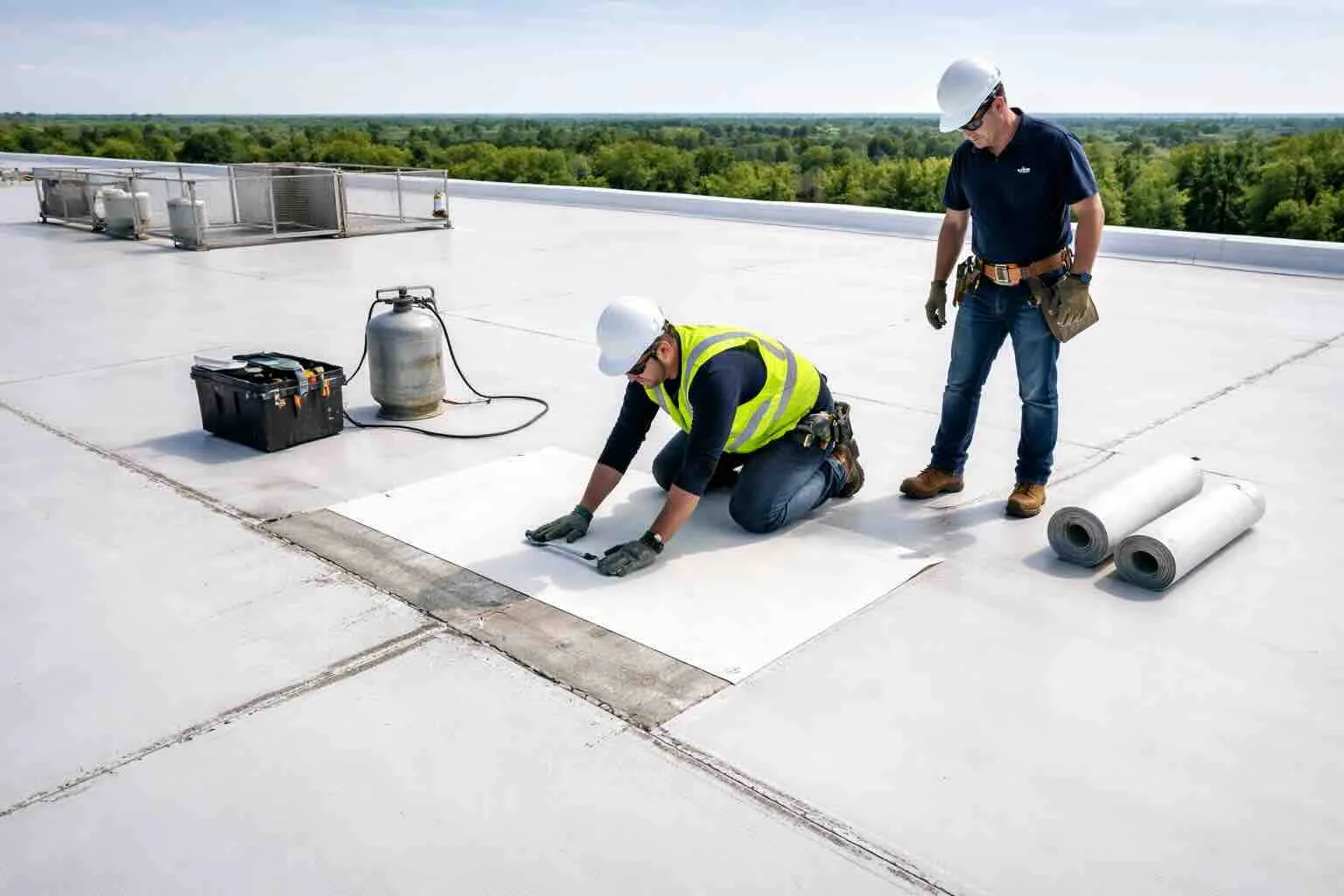
We mark every suspect area on the roof with paint or flags and on a roof plan. Then we take core samples in some of the suspect areas and some of the dry-looking areas to confirm what the camera shows. A follow-up roof inspection also checks the surface for causes, such as open seams or failed flashing near the wet areas. Infrared works best on roofs with absorbent insulation like fiberboard or perlite. Some foam insulations hold less water and show up less clearly. We tell you up front if your roof type makes the scan less reliable, and suggest alternatives if needed.
Once the wet areas are mapped and confirmed, the results drive the plan. If wet areas are small and scattered, targeted repairs make sense: cut out the wet insulation, replace it, patch the membrane and fix the entry point. If wet areas cover a significant share of the roof, replacement often costs less over time than repeated repairs.
The survey is especially important before a roof recover. Putting a new roof over wet insulation traps the moisture, which can lead to blistering, poor attachment and a shortened roof life. Many manufacturers require wet insulation to be removed before they will warrant a recover. The survey tells you how much would need to come out, which lets you compare recover and full replacement with real quantities. The thermal outline gives us a starting point. Final removal quantities are confirmed once the roof is opened, and we use agreed unit prices if more turns up than the survey showed.
A moisture survey shows where water is, not always how it got there. Water can enter at one curb and travel many feet through the insulation before it shows up on the scan. Finding the entry point still takes a visual inspection of seams, flashings, drains and penetrations near the wet areas.
On a TPO roof, the usual suspects are open seam welds, punctures from foot traffic and flashings pulled loose at curbs. We check those near each wet area and note which ones look like the source. The survey also does not tell you whether the deck is damaged under wet insulation. That only becomes clear when the roof is opened. And it cannot tell you about the structure of the building. If wet areas are large enough that weight is a concern, we may recommend a structural engineer review. We keep those questions clearly separate in the report so nothing is assumed.
Good thermal images need the right conditions. The roof should have had a sunny day to warm up, followed by a clear, calm evening for it to cool. Wind, rain, fog, heavy dew or standing water can make the scan unreliable. In the Bay Area, evening fog and cloud cover can push scans back a few days, so we watch the forecast and schedule around it.
The roof also needs to be dry on the surface, since wet surfaces mask what is underneath. Rooftop equipment and safe access in the dark have to be planned. Follow-up core cuts are done in daylight and patched the same day. If repairs follow, the roof type affects the approach. On an EPDM roof, wet insulation is cut out and replaced, and new rubber membrane is patched in with compatible primer and seam tape. We plan the survey and any follow-up work so you get answers without leaving the roof open longer than necessary.
Across West Berkeley and Emeryville, thermal results have to be read against the roof makeup, the weather on the night of the scan and the core cuts that confirm it. Older buildings here sometimes have several roofs stacked on top of each other, which can blur the picture. Surveys in downtown Berkeley may also need coordination with tenants and building access after hours.
You get a roof plan with wet areas outlined and sized, thermal and daytime photos of each area, core cut results showing what the insulation was and whether it was wet, and the weather conditions during the scan. The report notes any areas where the scan was unclear and what might explain it. Possible entry points we found are listed separately. Keep the report with your building records. A future survey can be compared against it to see whether wet areas are growing or stable.
Tell us about the roof and the area you are worried about. We will check whether a scan makes sense and explain the results plainly.
Request a Roof Assessment