Local weather advisory
The National Weather Service has issued a coastal flood advisory covering Berkeley. Heavy rain and drainage loading can expose roof leaks, blocked drains, and ponding water. This is a weather exposure advisory; it does not establish damage to a specific roof.
Do not access a roof during hazardous weather. Protect people first, avoid water near electrical equipment, and request roofing help when conditions permit.
National Weather Service · Updated Oct 28, 2026, 7:20 AM UTC
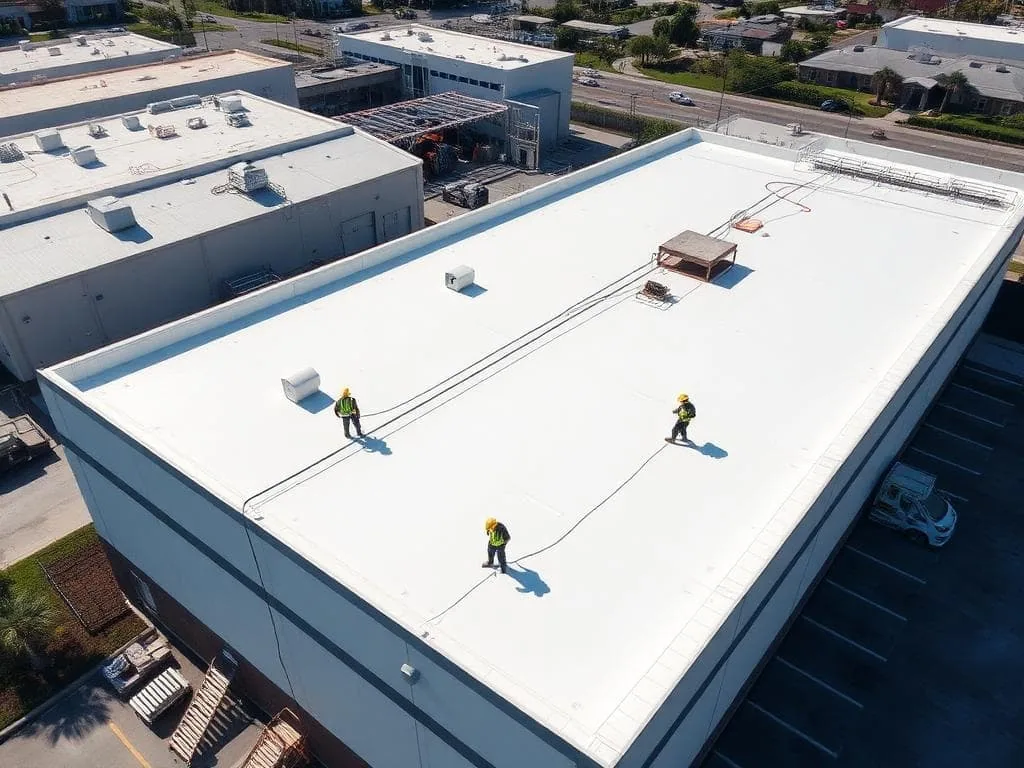
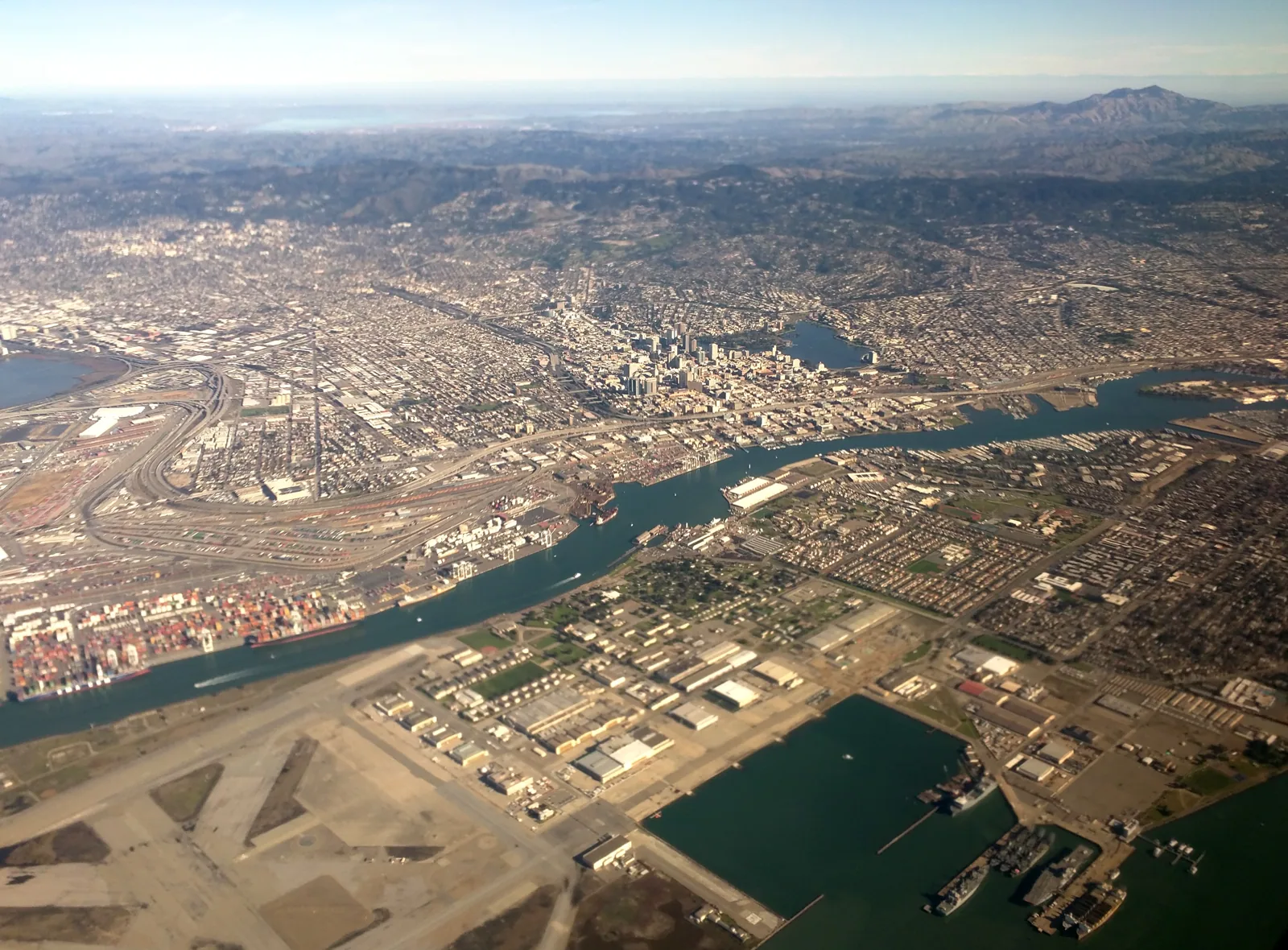
Commercial roofing in downtown Oakland: open coping joints, parapet wall flashing and edge repairs planned around busy entrances and occupied office buildings.
Service Areas | Berkeley, CA
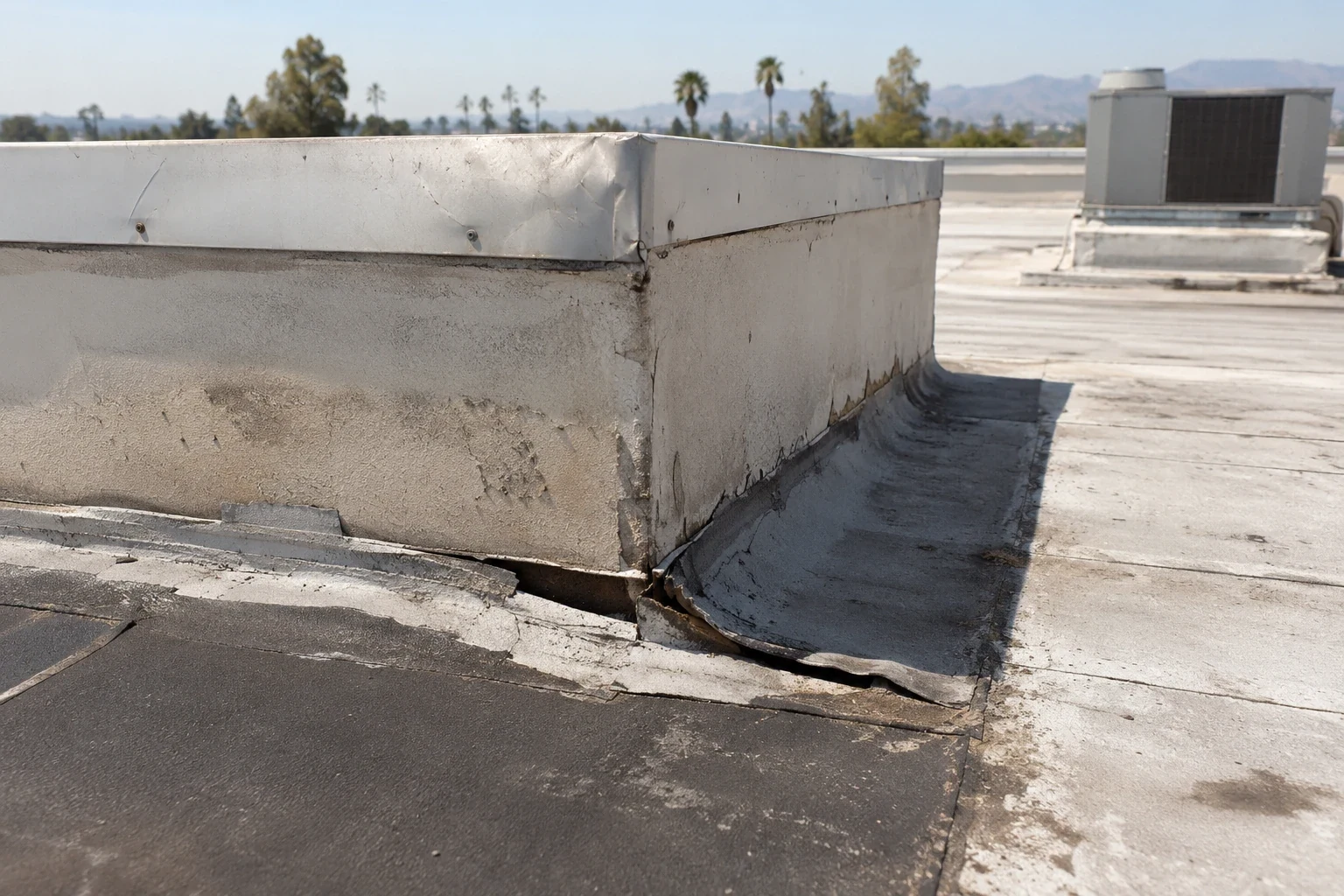
On downtown office buildings, many leaks start at the parapet cap. When a joint in the metal coping opens up, rain runs down behind it into the top of the wall and then behind the roof flashing. The membrane out in the field can be in good shape while the edge leaks. We repair and replace commercial roofs in downtown Oakland from our base in Berkeley, CA, and we treat the coping, the wood or masonry under it and the wall flashing as one detail so the leak actually stops.
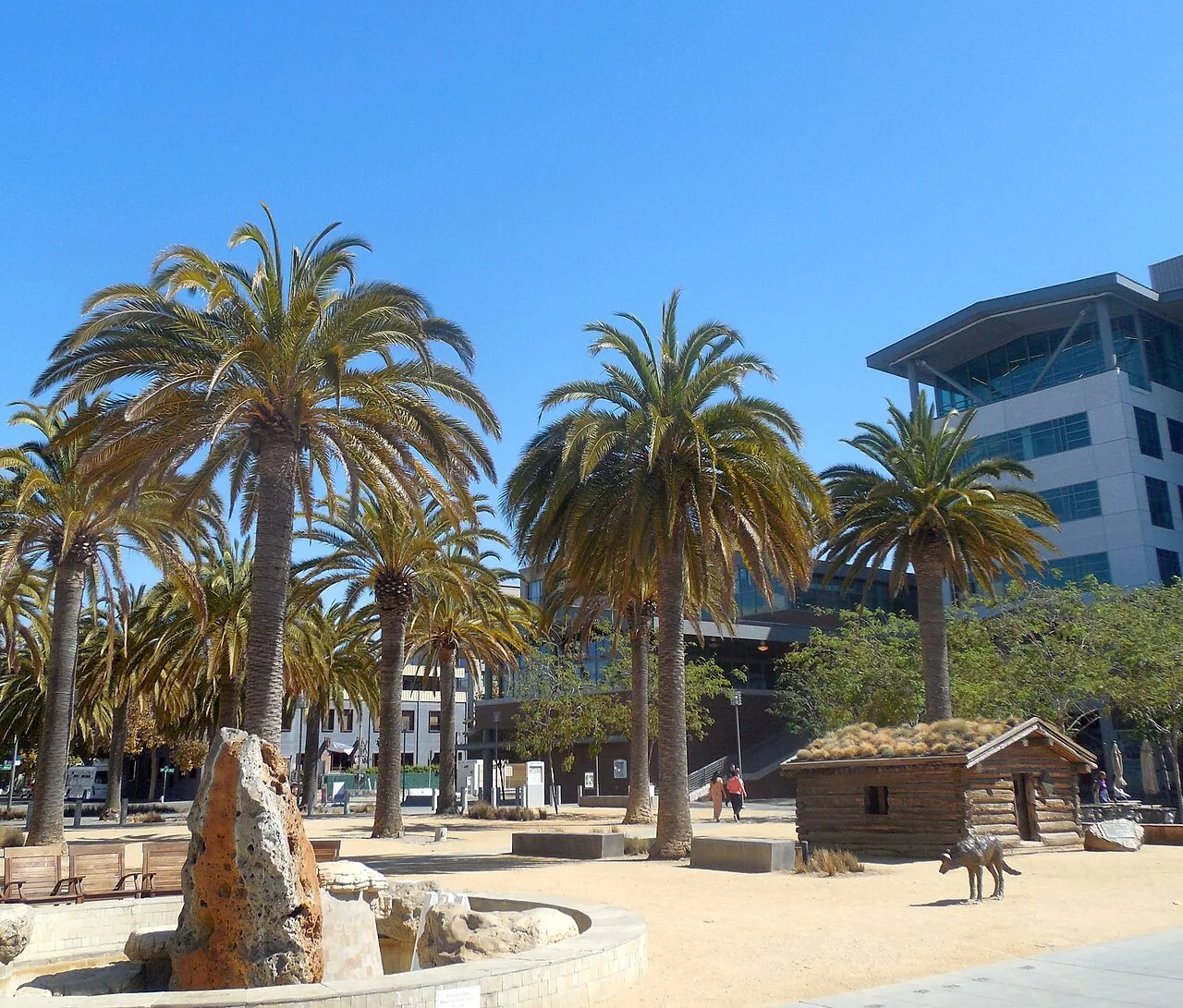
Downtown buildings, from offices near the Main Library on 14th Street to those around Frank H. Ogawa Plaza and City Hall, usually have a public sidewalk right below the roof edge. That means edge work needs barricades, overhead protection and a plan for the entrance. Our edge metal and coping repairs include the wall flashing under the cap. A shiny new piece of coping alone can leave the real leak in place.
An exposed joint can show failed sealant or displaced metal. We inspect how the pieces overlap and allow for movement. The connection may require a joint treatment different from its existing patch. We also examine corners and ends where runoff can collect. Water passing the cap may enter behind the roof flashing. That lower connection needs inspection before the metal detail is priced.
A wall crack beside the cap can complicate the roof-side finding. Masonry or wall repair may require coordination with another specialist. We identify that boundary rather than coating over an unresolved opening. Our correction of failed flashing addresses the connection that belongs to the roofing assembly. The written scope identifies any wall work needed first. That lets the owner coordinate the adjoining repairs in a workable order. Closing one joint should not conceal a defect beside it.
Loose backing beneath the cap can prevent a lasting attachment. We examine the supporting material before choosing replacement metal. Deteriorated wood or damaged wall material may require rebuilding at that location. The existing fastener pattern may also need review for the selected assembly. A wider metal cover cannot compensate for unsound backing. We tie the attachment detail to what the exposed edge can support.
Removal should reveal enough of the connection to establish its condition. We record concealed damage before it is closed beneath new work. The owner receives photos showing why additional backing repair is needed. A direct inspection of the roof edge helps define that work beforehand where accessible. Remaining concealed conditions require a clear approval process during removal. The final cap detail must also join the adjacent roofing correctly. Firm backing and a sound roof transition work together at that edge.
Removing edge metal above a doorway creates an overhead handling concern. We inspect the entrance and the roof work area together. Protective separation may require a temporary alternate route for building users. The available route determines how the daily work can be divided. Delivery and debris removal also need space outside the entrance. We establish those arrangements before committing to a start date.
A building near 14th Street will have different sidewalk and entrance conditions than one facing Frank H. Ogawa Plaza, so we walk each site at ground level. Our reroofing over occupied buildings work includes a daily protection plan for people coming and going. If you also manage roofs in Jack London Square or West Oakland, each one gets its own staging plan. That way the property manager knows exactly which doors and walkways are affected and when.
A sound membrane beside a failing cap may remain useful. We check its attachment and the condition beneath the wall connection. Wet insulation or deteriorated flashing backing can extend the correction. The roof field and the edge therefore need related but separate findings. A full replacement may address broad defects elsewhere on the roof. It is not automatically required by one failed metal joint.
A planned replacement should still include a complete edge detail. Retaining defective coping over a new membrane could preserve the old water path. Our commercial roof replacement work identifies those transitions within the proposed assembly. For a focused repair, we mark the retained roof and repaired edge. The owner can compare those options against condition and access costs. The decision stays attached to the actual defects found. An attractive surface change alone does not resolve the connection below it.
A completed cap joint needs a clear location in the building record. We photograph the joint and the wall flashing connected to it. A wider view identifies the roof corner or entrance beneath it. That combination helps a later inspector return to the right detail. The record states which backing was replaced during the repair. It also identifies adjacent wall work handled under a separate scope.
Remaining worn joints should be marked apart from completed corrections. Their condition can guide the next maintenance decision or budget allowance. A stable repaired joint needs a comparison with its completion condition. New movement or water entry justifies examining its attachment and adjoining wall again. The owner can act on that changed finding rather than another general roof description. We keep the report plain enough for an asset manager to use.
Before we pull the coping, we agree on who gets the photos if we find rotted wood or damaged masonry and who can approve the extra repair. That keeps us from leaving an open wall exposed while we wait for a decision. We only open as much as we can close up the same day, and you get a clear reason for any added work before it is covered.
Office, civic and transit buildings downtown often share busy entrances and tight delivery windows. We set up so sidewalks and emergency exits stay clear, and we confirm ahead of time whether roof access needs a building engineer or a security escort. On a dense block, water can travel in unexpected ways, so we check neighboring parapets, internal drains and rooftop unit curbs around the reported leak. The closeout names the exact building and roof section we worked on, so nobody confuses it with the roof next door.
Have us inspect the coping and the wall flashing under it together. You get plain photos showing the repair, the roof that can stay, and any wall work needed.
Request a Roof Assessment