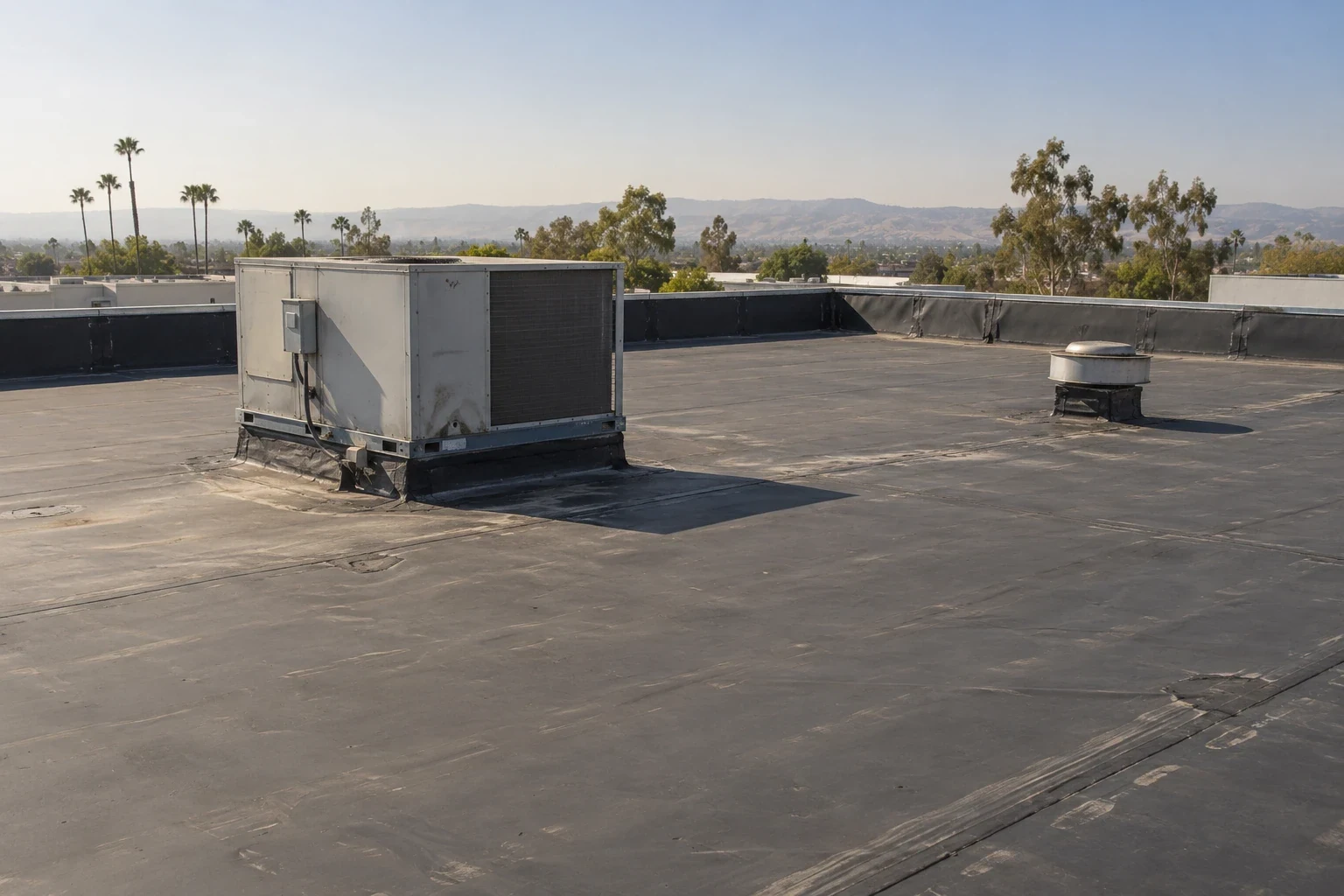
Commercial roof repair in Berkeley, CA: we fix failed patches, seams, flashing and wet insulation with materials that match your roof, and explain the cost clearly.
Commercial Roofing Services | Berkeley, CA
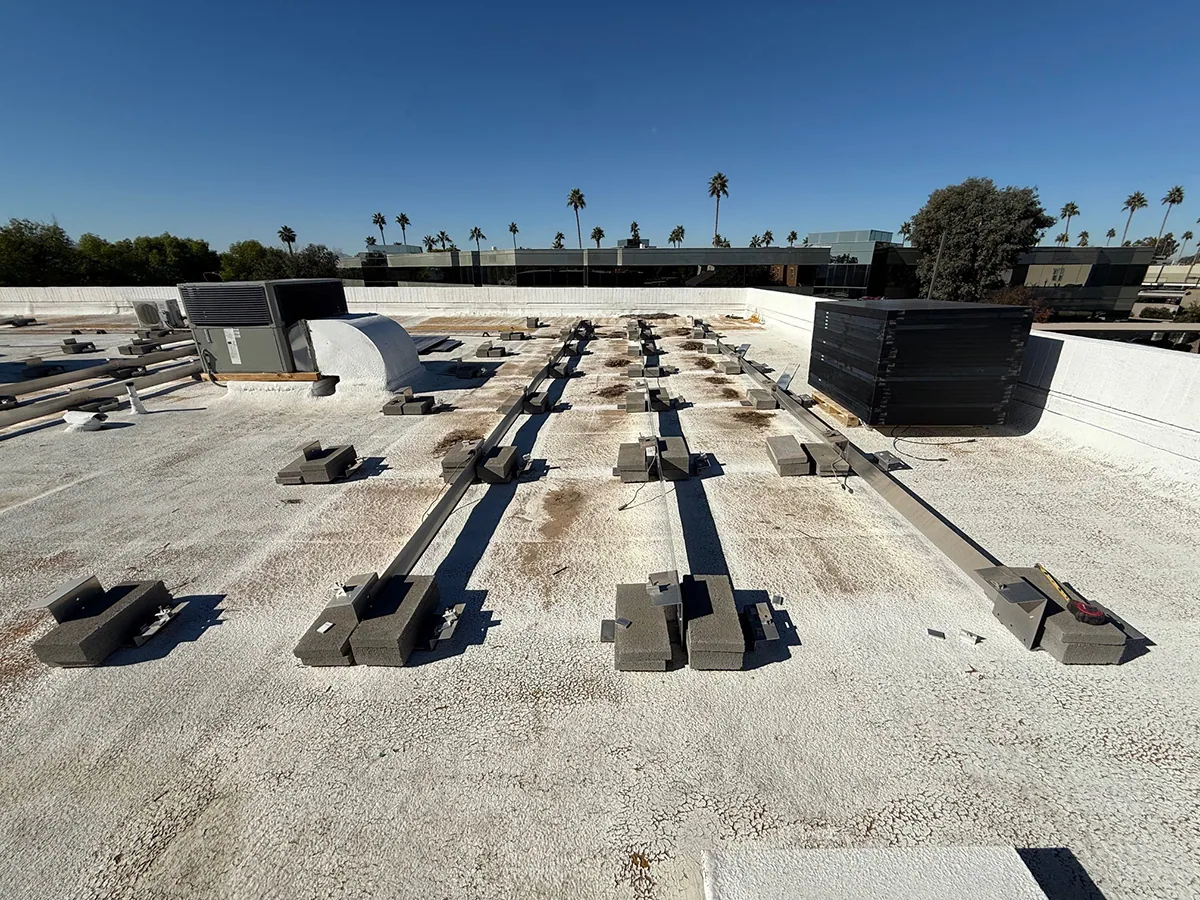
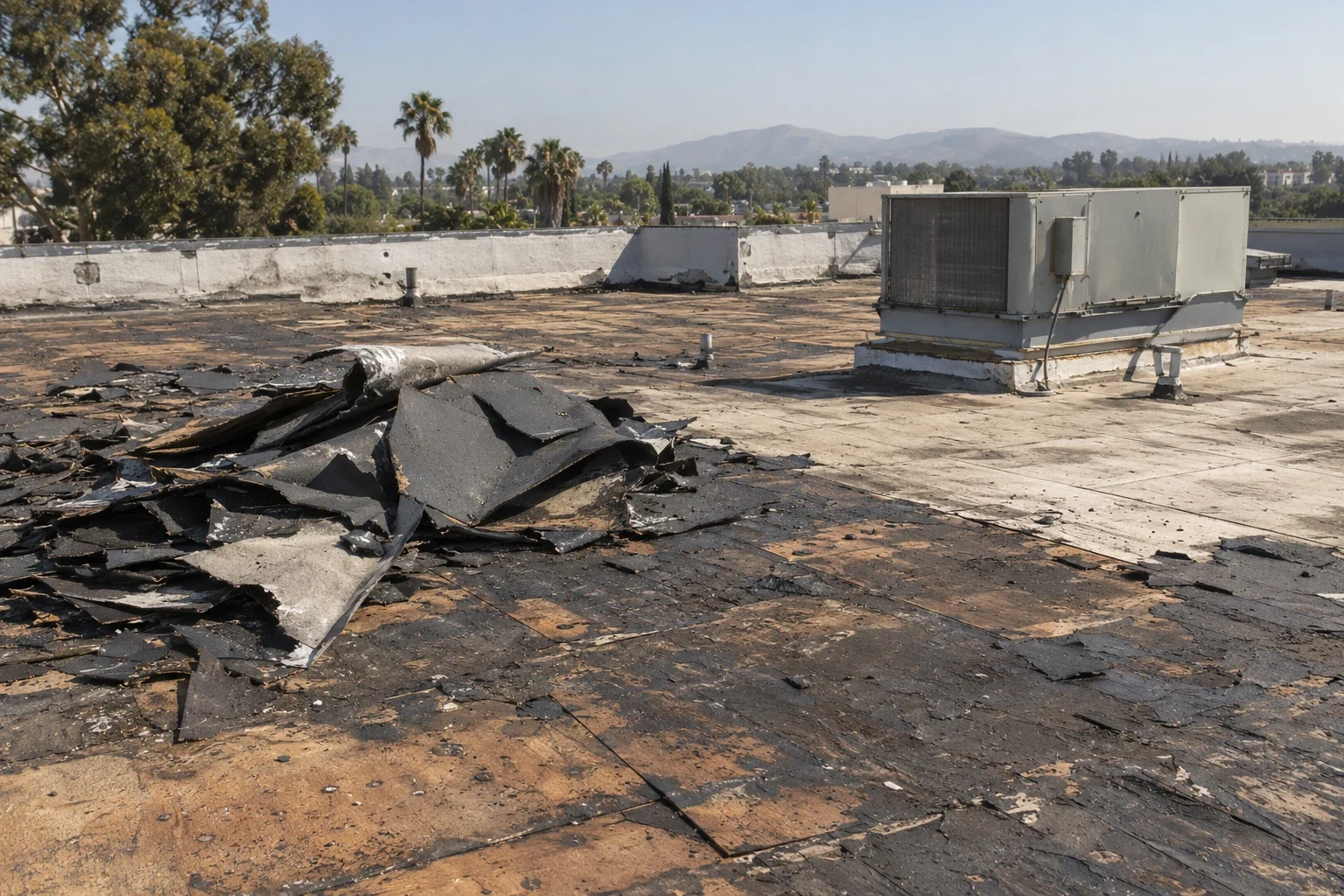
An old patch peeling up on a lab roof is a common sight, and it usually means two problems: the patch has failed, and the seam it was meant to seal has been taking on water for a while. Commercial roof repair in Berkeley, CA, starts with figuring out what is under that patch before deciding what goes on top. We identify the existing membrane, check how far the damage reaches, and find out whether the insulation and deck underneath are still dry and solid.
On manufacturing and industrial buildings, repairs also have to work around equipment, exhaust stacks, production schedules and rooms that cannot get wet. We ask about those limits at the start. Another layer of patch material will not dry out wet insulation underneath, and it will not hold if the wood or metal it is fastened to has failed. So our recommendation explains exactly which seam or flashing we are rebuilding, what we are replacing underneath, and which other problem areas we noticed but left out of the price. You see what you are paying for and what is still waiting. Every repair in Berkeley and Oakland starts the same way: define the damaged area and confirm what around it is still sound. We want to know which rooms sit under the work before we open anything up. An old patch can also hide the original roof material, which affects which repair products will bond to it.
Patches fail for a few predictable reasons. The material was not compatible with the roof underneath, the surface was not cleaned and primed, the patch was too small to reach sound membrane, or the roof kept moving under it. When an edge lifts, rain gets behind it and runs under the patch, which is often worse than having no patch at all.
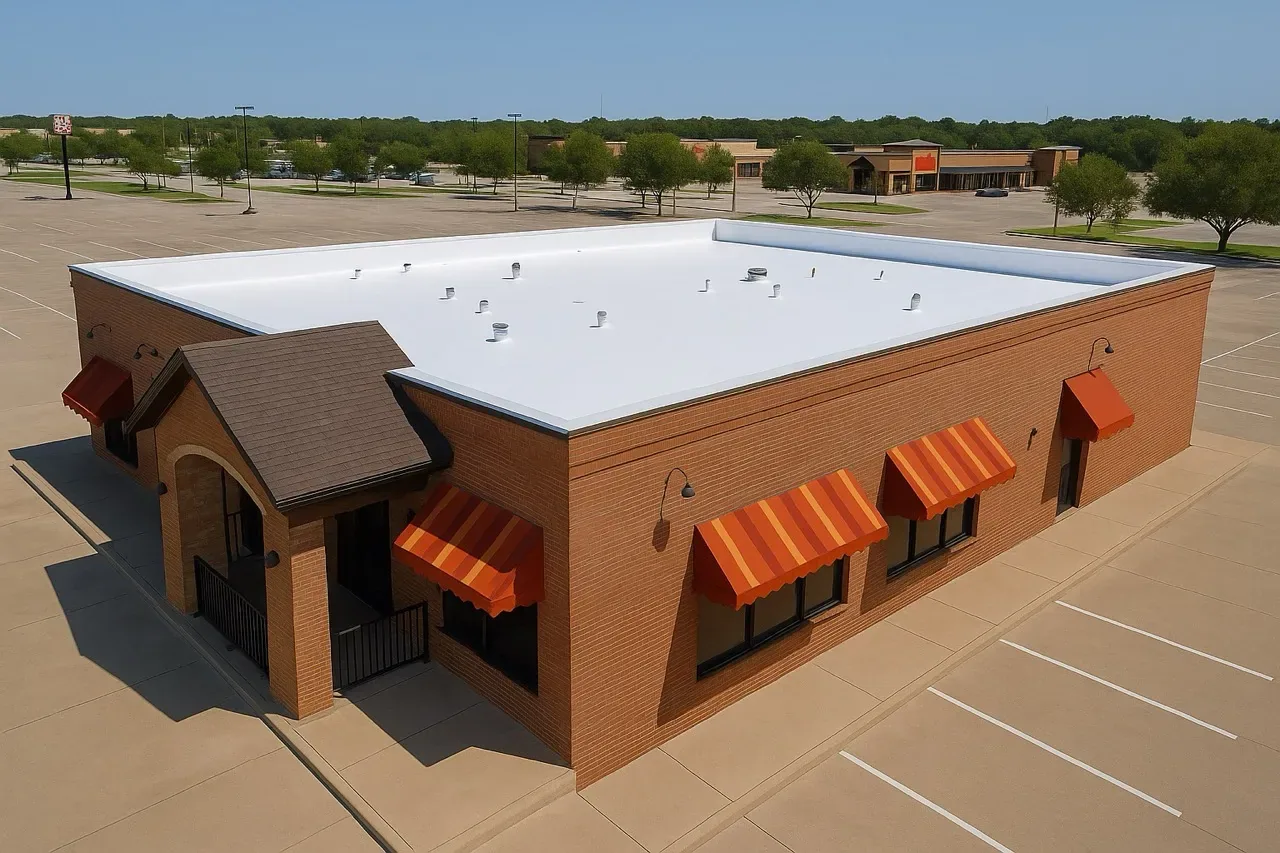
We start by identifying the original membrane and anything added in past repairs, since a roof that has been patched by several contractors can have three or four products stacked on one seam. A focused roof inspection of the area tells us which materials are there, how far the failed section runs and whether there are similar weak spots nearby. Color is not a reliable guide; a white roof can be TPO, PVC or a coated older membrane, and each takes a different repair. Once we know what is up there, we can pick a repair method that will bond and last instead of guessing and hoping.
Water that gets in at a failed patch spreads into the insulation beside it. That wet area is usually bigger than the patch itself. We open the roof enough to see how far moisture has traveled, then remove insulation that is wet or crushed. Leaving it in place under new membrane traps the water, and the new repair tends to blister and fail early.
Once the wet material is out, we check the deck for rust, rot or soft spots and replace insulation to match the surrounding thickness so the repair sits flush and drains properly. If the damage turns out to be widespread, it is worth comparing a large repair with roof replacement of that section. A big repair on a roof near the end of its life can cost a large share of a new roof and still leave you with old material everywhere else. We give you both numbers when it is a close call, along with the equipment moves and disruption each option involves.
A lot of failed patches sit right beside a curb or wall, where the membrane turns up and is hardest to seal. A proper repair cuts out the failed material and rebuilds the flashing from sound roof up the side of the curb, with the right height, corners and termination at the top. Sealant can be part of the detail, but it should not be the only thing keeping water out.
On a PVC roof, that means heat-welding new PVC flashing to cleaned, existing membrane, then probing every weld to check it. If the PVC is old and will not weld cleanly, we may need to cut back further. Sometimes the curb itself is the problem: too short for the current roof thickness, rotted, or holding a unit that has to be lifted before the flashing can be redone. When another trade has to disconnect or raise equipment, we coordinate that timing with you. Until the unit is moved, that corner cannot be properly finished, and we will not pretend otherwise.
The price of a repair depends far more on what is under and around the damage than on the size of the hole. Wet insulation that has to come out, rotted wood nailers, deck repairs and curb rebuilding all add labor and material. Getting materials to the roof matters too. A building with no roof hatch, tight street access or a long carry from the hoist can add real time to a small job.
Membrane type also affects cost. An EPDM roof uses primers, seam tape and cured flashing, while a heat-welded membrane needs welding equipment and a clean, weldable surface. Repairs above occupied rooms may need to be done in short sections so the roof is sealed each night, which means more setups. We break the estimate into the parts that drive cost, such as membrane work, insulation replacement, flashing, access and protection, so you can see why the number is what it is and compare it fairly against other bids.
Across West Berkeley and Emeryville, a lasting repair comes down to compatible materials and solid attachment at the damaged detail. For institutional and lab buildings, we confirm which building and roof area is in scope and what equipment or occupied areas limit the work. Repairs in West Berkeley follow the same approach: we fix what we found on that roof and note anything we could not get to.
When the work is done, you get photos of the repair before, during and after, a list of materials used and the location on a roof plan. If we replaced insulation or wood, the report shows where and how much. Other problems we noticed but did not fix are listed separately, so they do not get forgotten. Any manufacturer or workmanship warranty that applies comes with its own written terms, which you should keep with the report. If something leaks later, that record helps us tell quickly whether it is related to the repair or a new problem.
Send us the location of the failing patch and any records about the roof. We will inspect the area and send back a plain explanation with photos.
Request a Roof Assessment