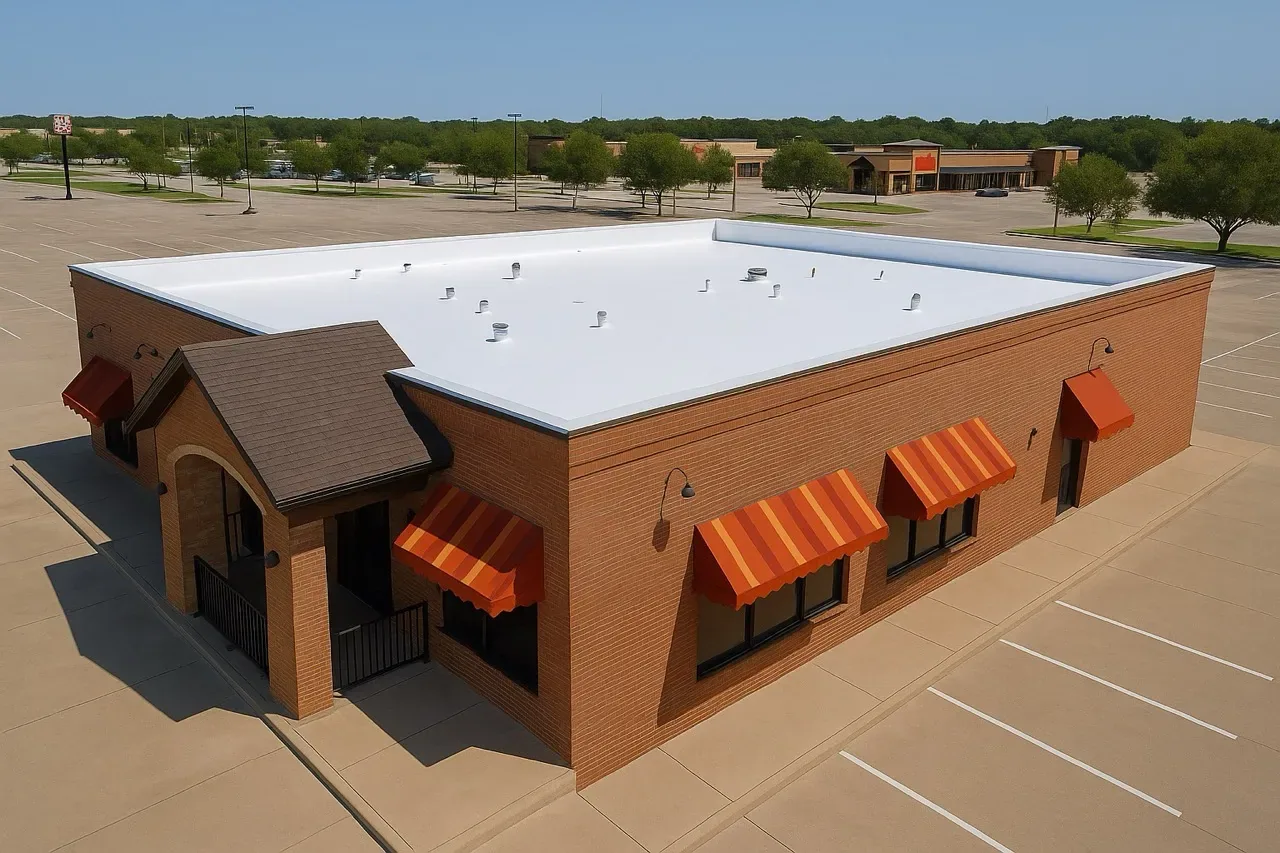
EPDM roofing in Berkeley, CA: lifted seams, loose flashing and wet insulation repaired with compatible primers and tapes, or the rubber roof replaced when needed.
Roof Systems | Berkeley, CA
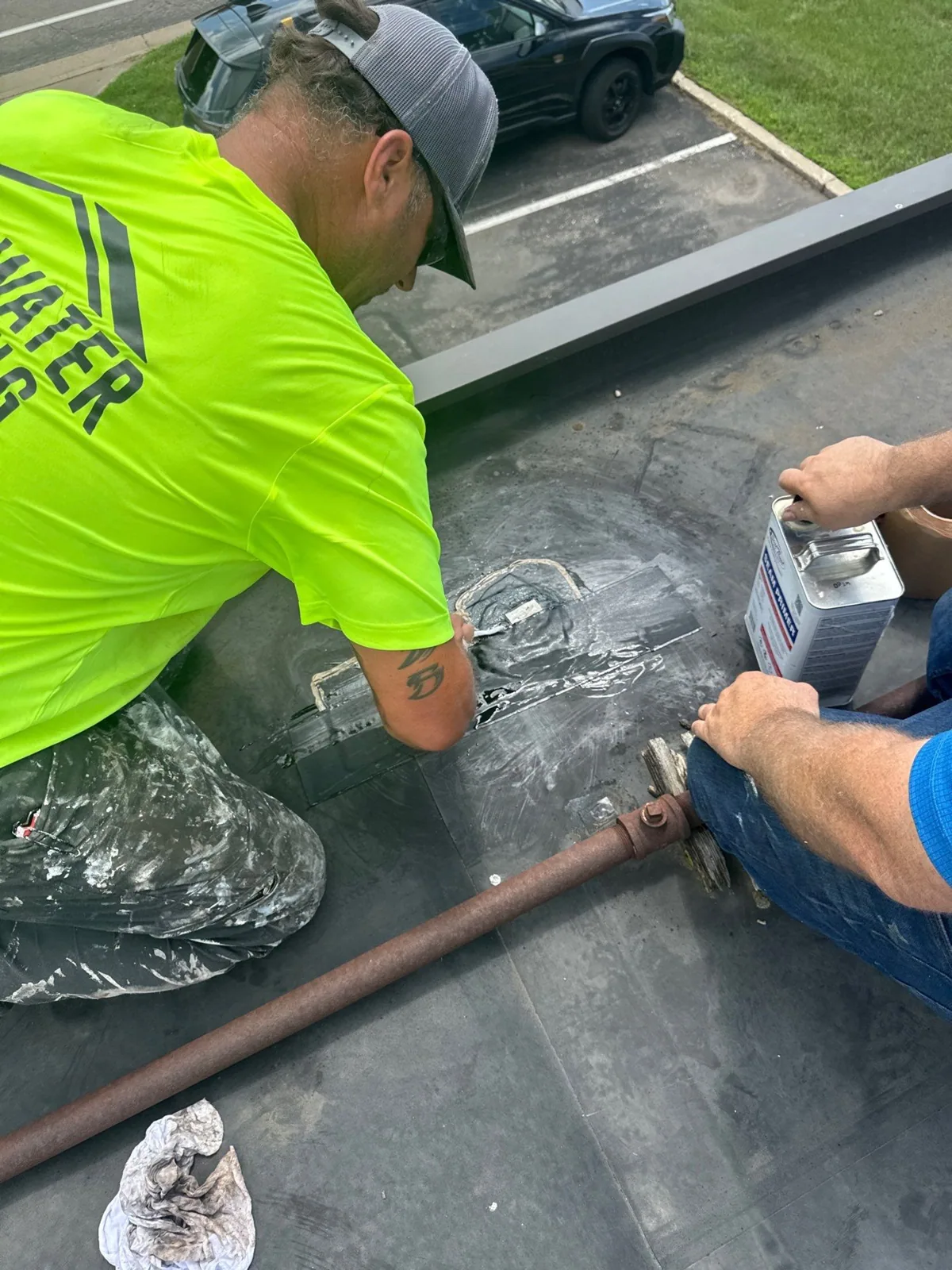
On an office building, a seam in the rubber roof has lifted where the roof meets a wall, and water is getting under it. An EPDM roof in Berkeley, CA can usually be repaired at a seam like that, but the fix depends on what kind of seam it is, how old the rubber is and whether the insulation underneath has stayed dry. For an office building roof, we also plan around tenants and rooftop equipment. A strip of tape over a loose edge will not last if the rubber or the insulation under it is in poor shape.
EPDM repairs depend on membrane condition, seam preparation and compatible bonding materials. We inspect the split, identify prior patches and look for damp or unstable support before placing a new splice. Berkeley’s long dry season can leave old adhesive brittle before winter rain returns. West Berkeley’s former industrial roofs and Oakland’s warehouse stock add distinct building contexts, but neither tells us which membrane is installed. We verify the actual sheet and repair boundary before selecting the permanent method.
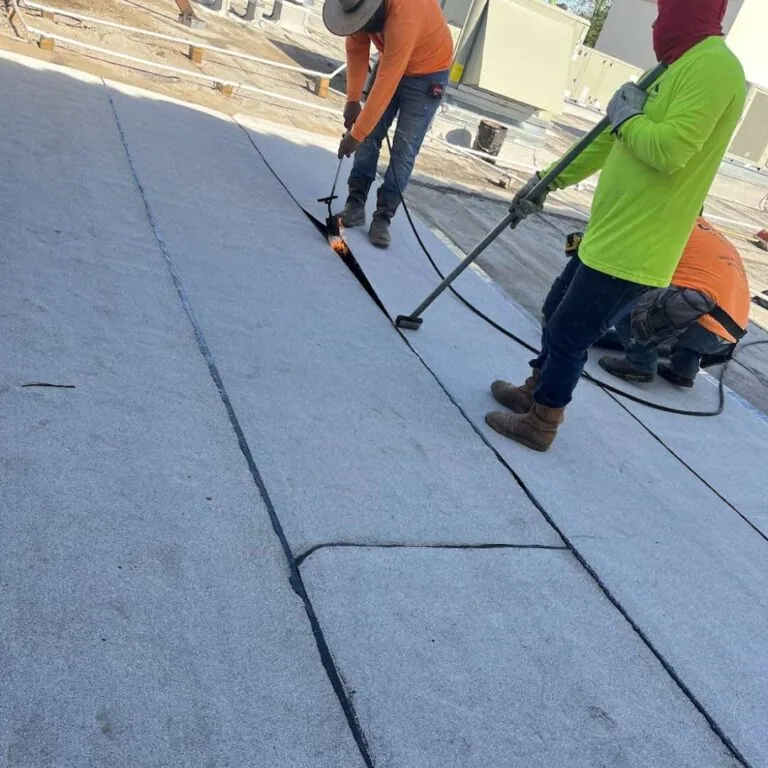
EPDM seams have been made different ways over the years. Older roofs often used liquid adhesive; newer ones usually use seam tape, and some sheets come with tape applied at the factory. Many roofs also have patches from different repairs. We check any roof records and look closely at the seam and patches before choosing repair materials, because the primer and tape need to match what is there. EPDM is not welded like PVC or TPO, so methods from those roofs do not apply. Once we know what we are working with, we can say exactly how the seam will be rebuilt.
Our commercial roof leak repair process makes sure the lifted seam is actually the leak. A drip inside can be some distance from the opening on the roof, and walls, rooftop units and drains can all leak into the same office. We check each one and compare it with when the drip appears. If a unit or wall is the real source, that goes to the right trade. Fixing the seam will not stop a leak coming from somewhere else, so we tell you plainly which openings we are repairing and which belong to someone else.
An intact rubber sheet does not mean the insulation under it is dry. Water that got in at the lifted seam may have spread well beyond it. We confirm with core cuts or a moisture scan before deciding what can stay. Wet insulation has to be removed and replaced, because a new membrane or patch on top will not dry it. We also check whether the roof is still properly attached, which is a separate question from moisture. Old drawings do not always show later changes, so we confirm in the field and list what stays and what gets replaced.
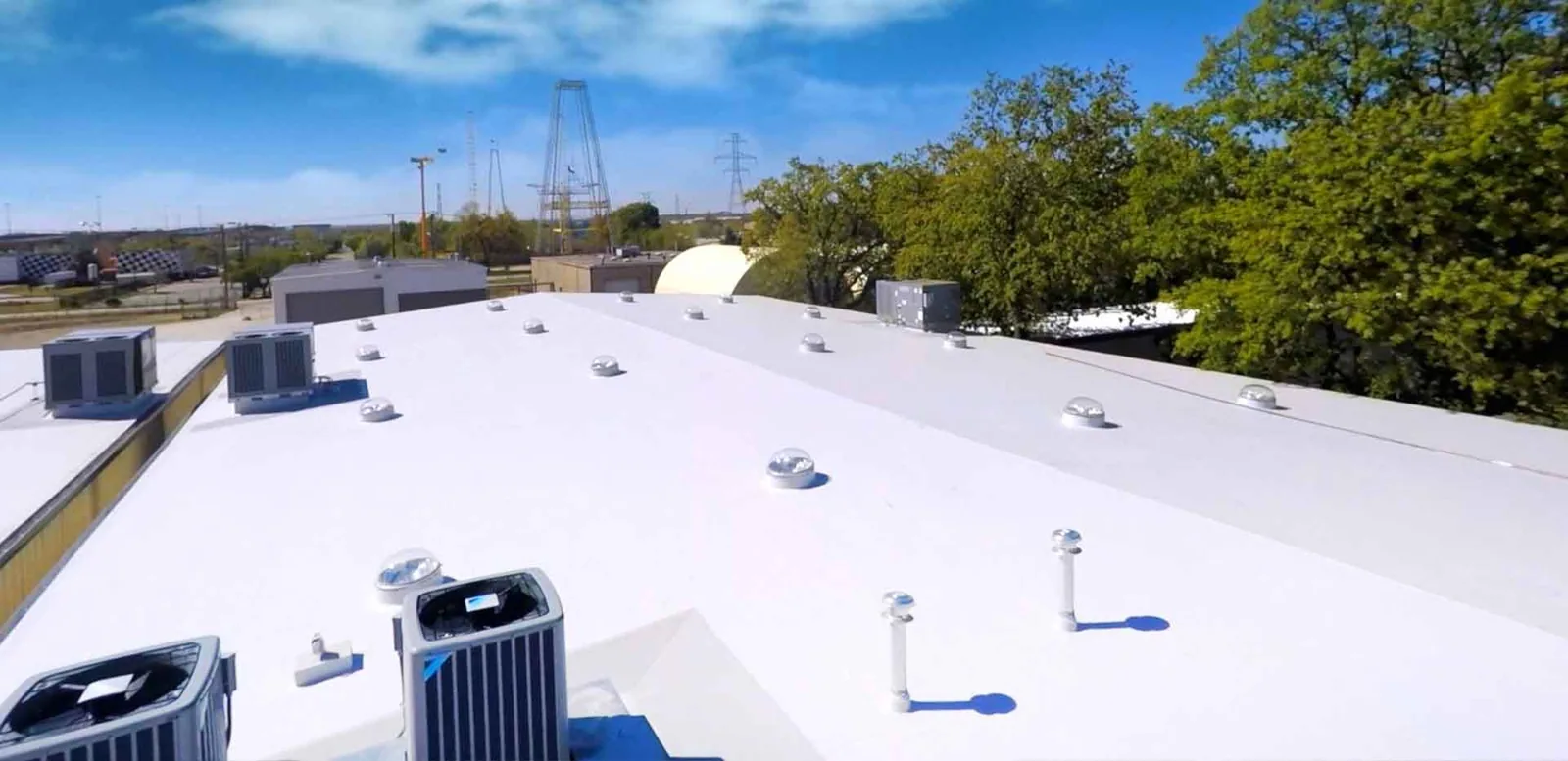
When an EPDM roof is near the end of its life, some owners replace it with a TPO roof, which has heat-welded seams and different flashing details. We compare the two on the same roof area, with wet insulation replacement included in both, so the prices are comparable. Labor for seams, walls and curbs differs between them. A low number that leaves out insulation or equipment curbs is not a real comparison. Whichever you choose, the curbs and walls still need to be accessible and ready, or the job cannot be finished.
Some EPDM sheets come with seam tape already applied at the factory, but that does not tell us what is on your roof. We identify the actual sheet and seam type first. The new seam needs clean, primed rubber on both sides, the right tape or adhesive, and enough overlap to shed water. Where the old rubber is chalky, brittle or contaminated, we cut back to good material. The manufacturer's instructions set the products and steps. We check the finished seam, but that check covers the seam itself, not the insulation underneath, which is tested separately.
Some owners consider a PVC roof instead. PVC seams are heat-welded, which takes different equipment, preparation and flashing products than EPDM. We do not assume labor or materials carry over from one system to the other. Curb and wall heights, and the condition of the insulation, still decide how much work is needed. All flashing and edge materials have to be on site with the membrane. Whichever system you choose, the goal is the same: close the leak at the weak seam with materials that work together.
A leak where the rubber meets a wall usually means the wall flashing has pulled loose or the wood behind it has rotted. We check both, and measure whether new insulation will leave the flashing too short. Our edge metal and coping repair work rebuilds wall caps and roof edges so the new flashing has something solid to fasten to and is covered properly at the top. If the wall itself is cracked, a mason or framer handles that first. The flashing repair is scheduled after their work, since the roofer cannot finish a wall still under repair.
Curbs can be the same story. If a rooftop unit blocks the base of a curb, your HVAC contractor has to move or disconnect it before we can flash it, and the schedule follows that visit. Tight access or a building that has to be done in sections adds setup time, and we include it in the estimate. Insulation, rubber, primers, tapes and flashing all need to be on hand together. A roll of rubber cannot fix a curb that is still blocked, so the job is planned around everything needed to close each opening for good.
A repaired seam needs clean, sound EPDM beyond the visible separation. We check corners, pipe boots and adjacent laps, then detail the patch so it sheds water without trapping a loose edge. A West Berkeley EPDM repair should preserve access to rooftop units and identify any support condition that cannot be seen without an opening. The record names the materials installed and any remaining roof or equipment task.
When the work is done, you get photos of the repaired seams, rebuilt wall and curb flashing, and any replaced insulation, along with the seam checks we made. Areas we did not open are noted as not tested. If a manufacturer warranty is offered, its terms depend on the system and how it was installed, and we explain them rather than promising coverage up front. The closeout notes record which products went where. If someone later adds equipment or cuts into the roof, you can compare the change against that record to see what was there.
Send any roof records you have and tell us where the lifted seam or leak is. We will check the rubber and the insulation underneath and send a plain repair plan with photos.
Request a Roof Assessment