Local weather advisory
The National Weather Service has issued a coastal flood advisory covering Berkeley. Heavy rain and drainage loading can expose roof leaks, blocked drains, and ponding water. This is a weather exposure advisory; it does not establish damage to a specific roof.
Do not access a roof during hazardous weather. Protect people first, avoid water near electrical equipment, and request roofing help when conditions permit.
National Weather Service · Updated Oct 28, 2026, 7:20 AM UTC
Commercial roof leak repair in Berkeley, CA: we trace the leak to its source, check for wet insulation, and make a permanent repair instead of another patch.
Commercial Roofing Services | Berkeley, CA
A ceiling stain in an office corridor rarely sits directly under the hole in the roof. Water can enter at a cracked curb flashing, run along the deck or through the insulation, and drip out twenty feet away. That is why commercial roof leak repair in Berkeley, CA, starts with tracing the water, not just patching the nearest seam. We look at the stain pattern inside, then check every likely entry point on the roof above and upslope from it.
It helps a lot to know when the leak shows up. Does it drip only in heavy, wind-driven rain, after a few hours of steady rain, or when the rooftop units are running? Each pattern points to different suspects: wall flashing, a seam, a drain, or condensation from equipment. For office buildings, we also plan around tenants, so we know which suites are affected and when we can get into ceilings if needed. The aim is to find the real source on the first visit and fix it once, not to come back after every storm.
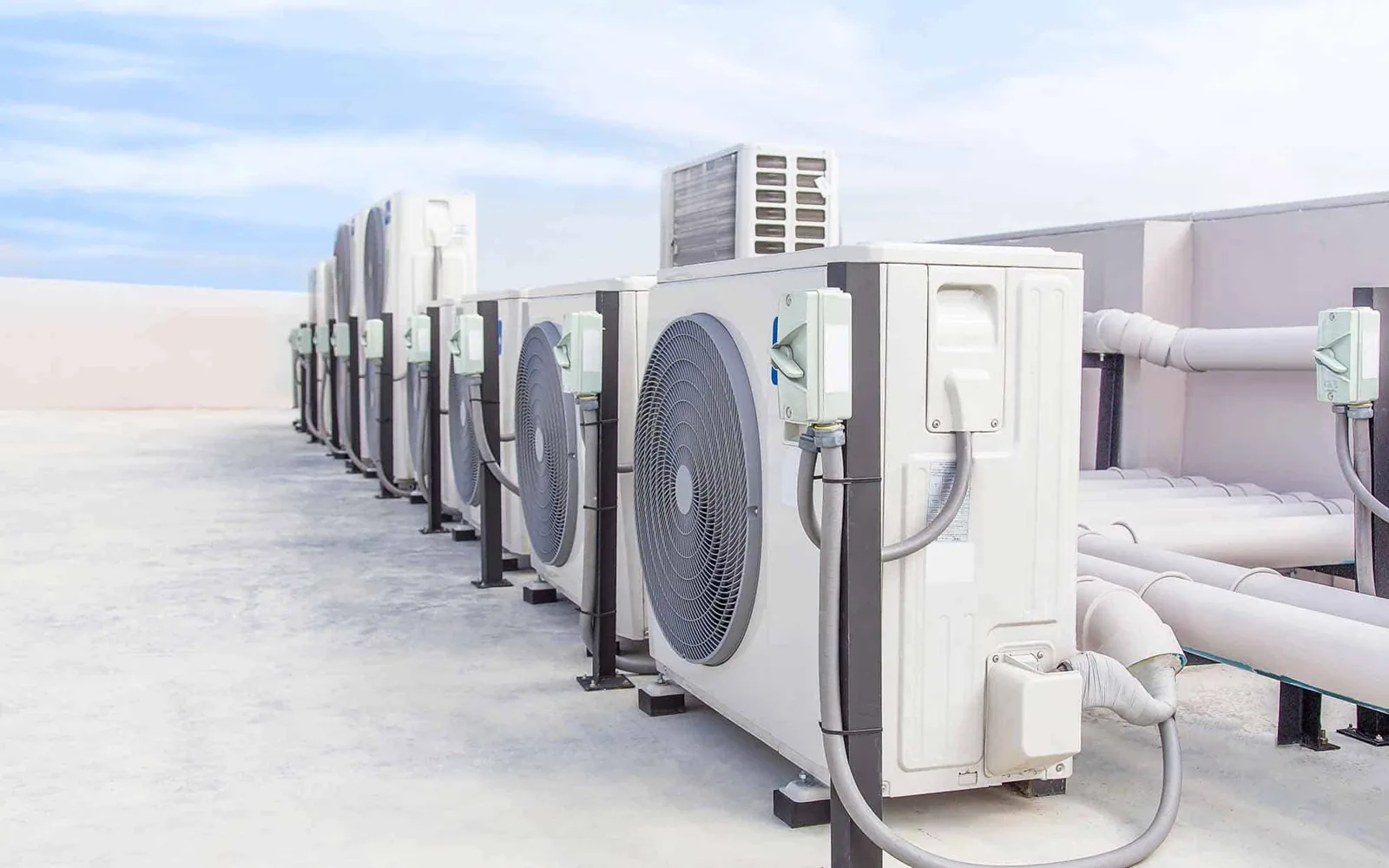
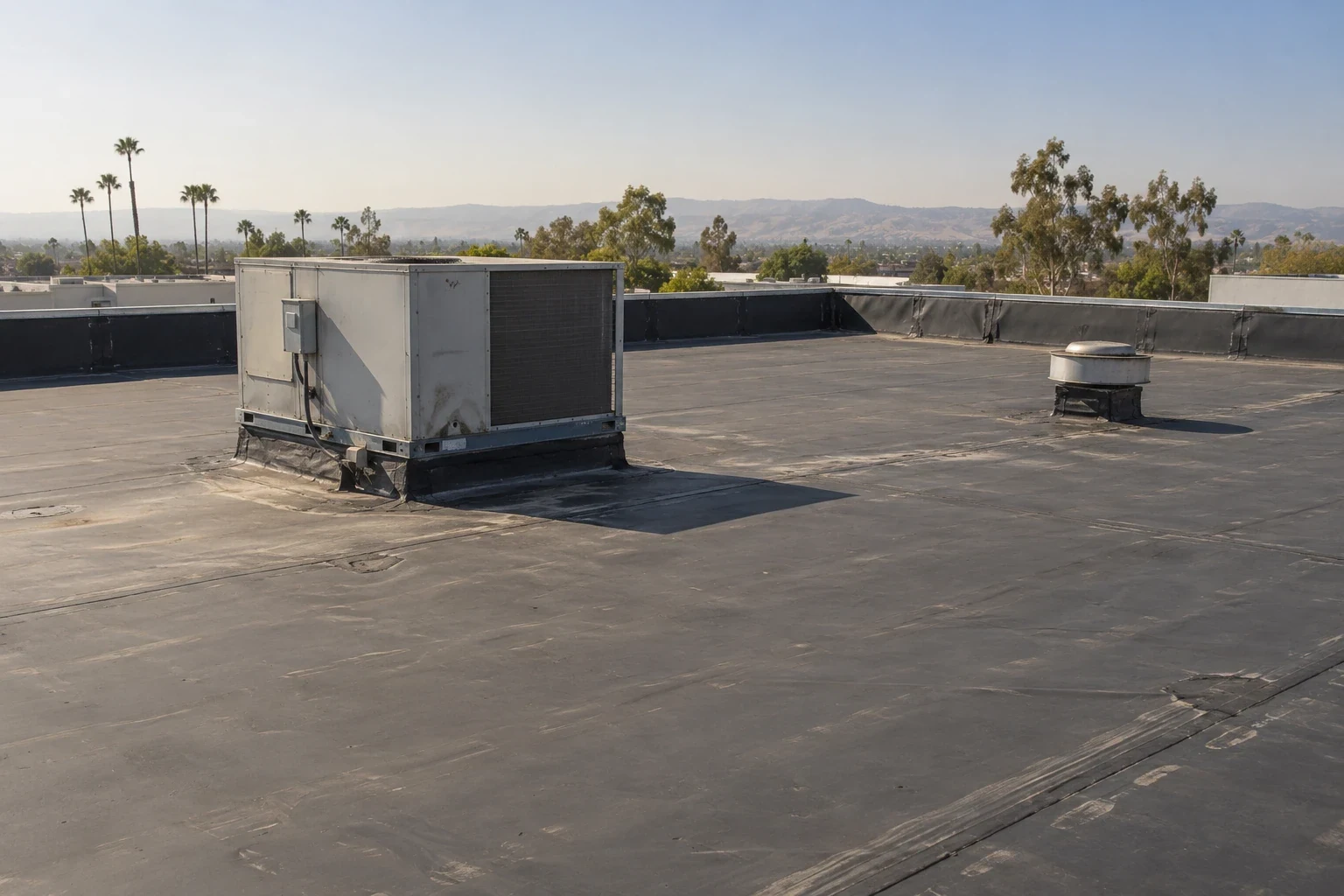
Most leaks start at a detail, not in the open field of the roof. Curbs around HVAC units, pipe boots, skylights, wall flashing, drains and old patches are the usual culprits. We check each one near the leak area for split seams, pulled-back flashing, cracked sealant and gaps where flashing meets metal. Sometimes the cause is obvious. Often there are two or three possible entry points, and we work through them in order.
When the source is not clear, a more detailed roof inspection can help, sometimes with a controlled water test where we wet one detail at a time and watch for the drip below. That takes coordination with whoever can be inside the building during the test. We will not claim a cause we have not confirmed. If we fix the most likely detail and the leak persists, we tell you what we tried, what we ruled out and what we will check next. A leak that keeps coming back usually means the first fix went to the wrong place.
A leak that has been going on for a while has usually soaked more than the spot where water got in. Insulation boards under the membrane soak up water and spread it sideways. Wet insulation does not dry out under a sealed roof. It loses its insulating value, adds weight, and keeps feeding moisture to the deck. Patching the membrane over wet insulation often leads to blisters, soft spots and a repair that fails early.
When we suspect wet material, we cut a small test opening or use a meter to see how far the moisture goes. On larger roofs or long-running leaks, an infrared moisture survey can map the wet area before anyone commits to a repair size. We remove insulation that is wet or crushed, check the deck underneath for rust or rot, and replace what came out with new material at the right thickness. The estimate shows the known wet area separately, with a unit price for any extra that turns up once the roof is open.
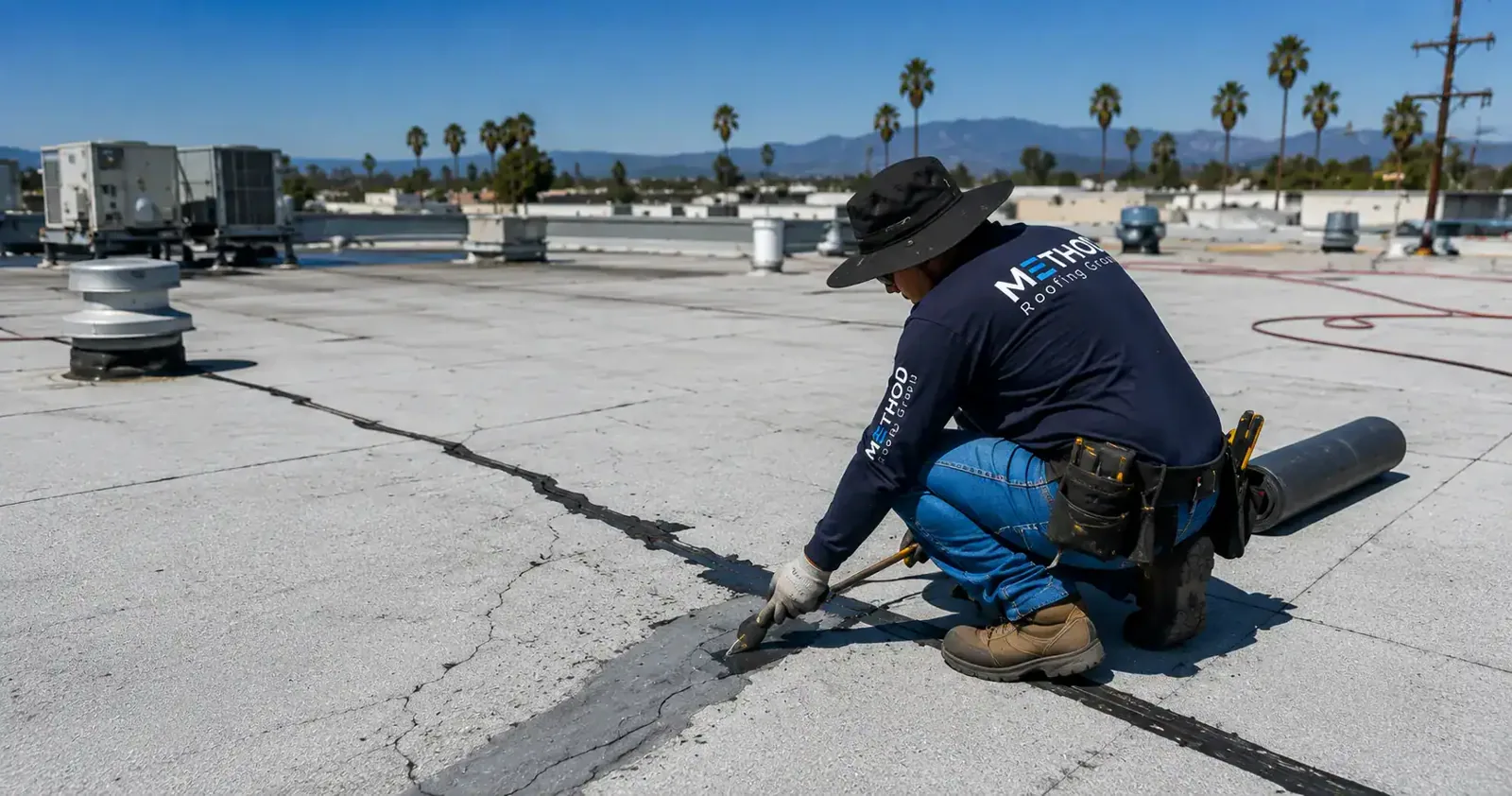
A permanent leak repair means rebuilding the detail that failed with materials that match the existing roof. A smear of mastic over a split curb flashing might stop a drip for a season, but it will crack again as the roof moves with heat and cold. We cut out the failed flashing, clean and prepare the surrounding membrane, and install new flashing that laps properly onto sound roof.
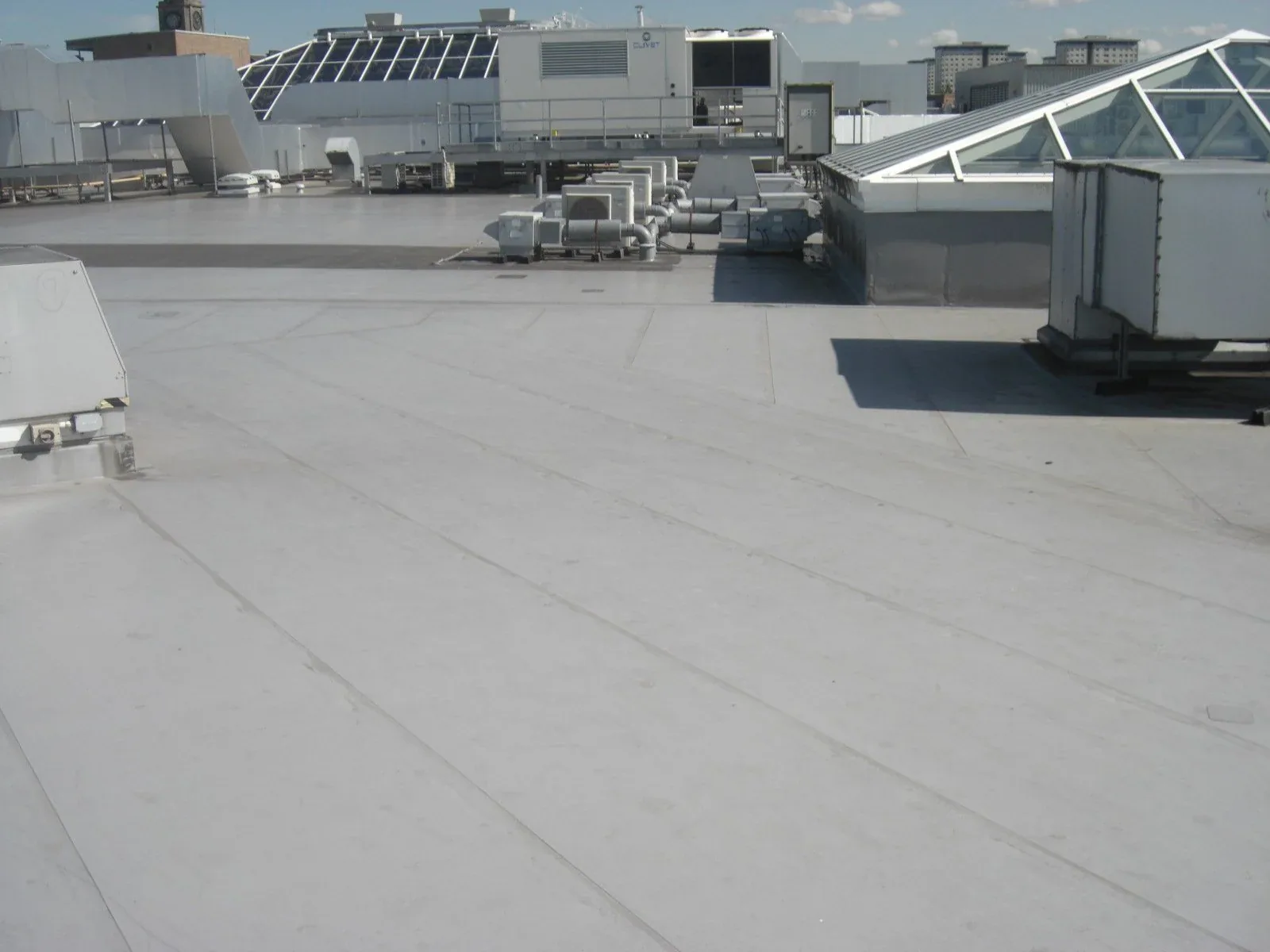
On an EPDM roof, that means cleaning and priming the rubber, then using compatible seam tape and flashing rather than products made for other membranes. TPO and PVC repairs are heat-welded, and modified bitumen gets torch-applied or cold-applied plies. Mixing incompatible products is one of the most common reasons repairs fail. We also check that the curb or wall behind the flashing is solid, because new flashing fastened to rotted wood will pull loose. When the repair is done, the water path we found is closed with the same kind of roof that surrounds it.
Sometimes a leak is a single bad detail on an otherwise healthy roof. Other times it is the first sign of a roof wearing out: seams opening in several places, flashing failing at multiple curbs, or wet insulation spread across a large area. If we see that pattern, we tell you, because paying for one leak call after another can cost more than a planned fix.
In that case, a broader commercial roof repair may make sense, taking care of every weak seam and detail in one mobilization. On a TPO roof, for example, we might recommend re-welding or stripping in all the seams in an aging section rather than chasing them one at a time. We lay out the options side by side: fix this leak only, fix the surrounding problem areas, or start planning for replacement. You decide based on budget and how long you plan to keep the building. We just make sure the trade-offs are clear.
In West Berkeley and Emeryville, a lot of leak calls come from older buildings with layers of past repairs, so we follow the water path rather than the most recent patch. The same goes for properties in downtown Berkeley, where older mixed-use buildings often have roofs that were modified many times as tenants changed.
After the repair, you get photos of the leak source before and after, a short description of what failed and what we installed, and the location marked on a roof plan. If we removed wet insulation, the report shows how much and where. We also note any other weak spots we saw but did not fix, so they can be scheduled. If water shows up again, call us with the date, the weather and the exact spot inside. Comparing that against the repair record usually tells us quickly whether it is the same leak or a new one.
Tell us where the water shows up inside and when it happens. We will trace it on the roof and explain what we find, with photos.
Request a Roof Assessment