Local weather advisory
The National Weather Service has issued a coastal flood advisory covering Berkeley. Heavy rain and drainage loading can expose roof leaks, blocked drains, and ponding water. This is a weather exposure advisory; it does not establish damage to a specific roof.
Do not access a roof during hazardous weather. Protect people first, avoid water near electrical equipment, and request roofing help when conditions permit.
National Weather Service · Updated Oct 28, 2026, 7:20 AM UTC
Commercial roof repair in Emeryville from our Berkeley crew: open seams, wet insulation and leaks over offices and labs, repaired with clear photos and pricing.
Service Areas | Berkeley, CA
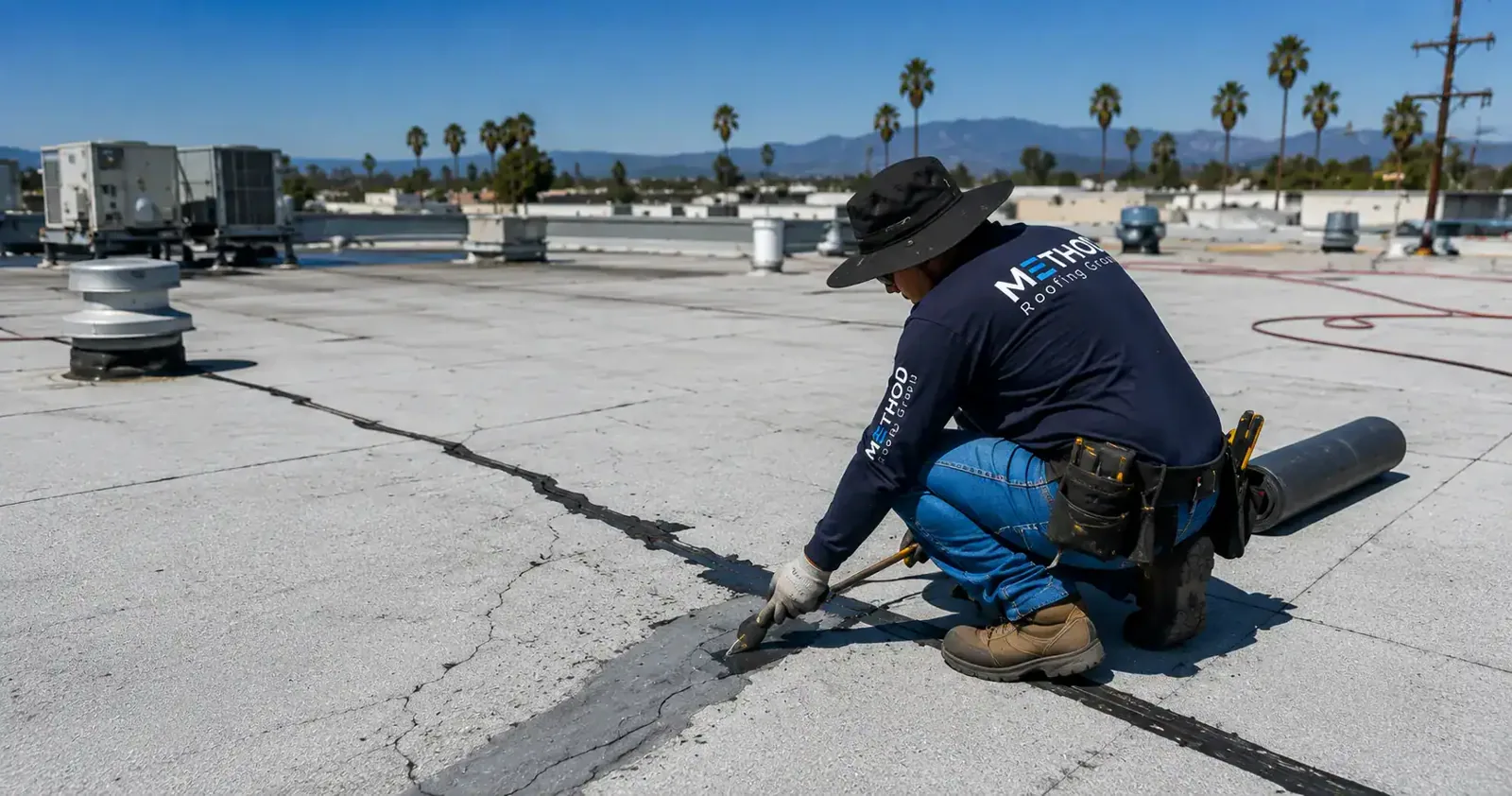
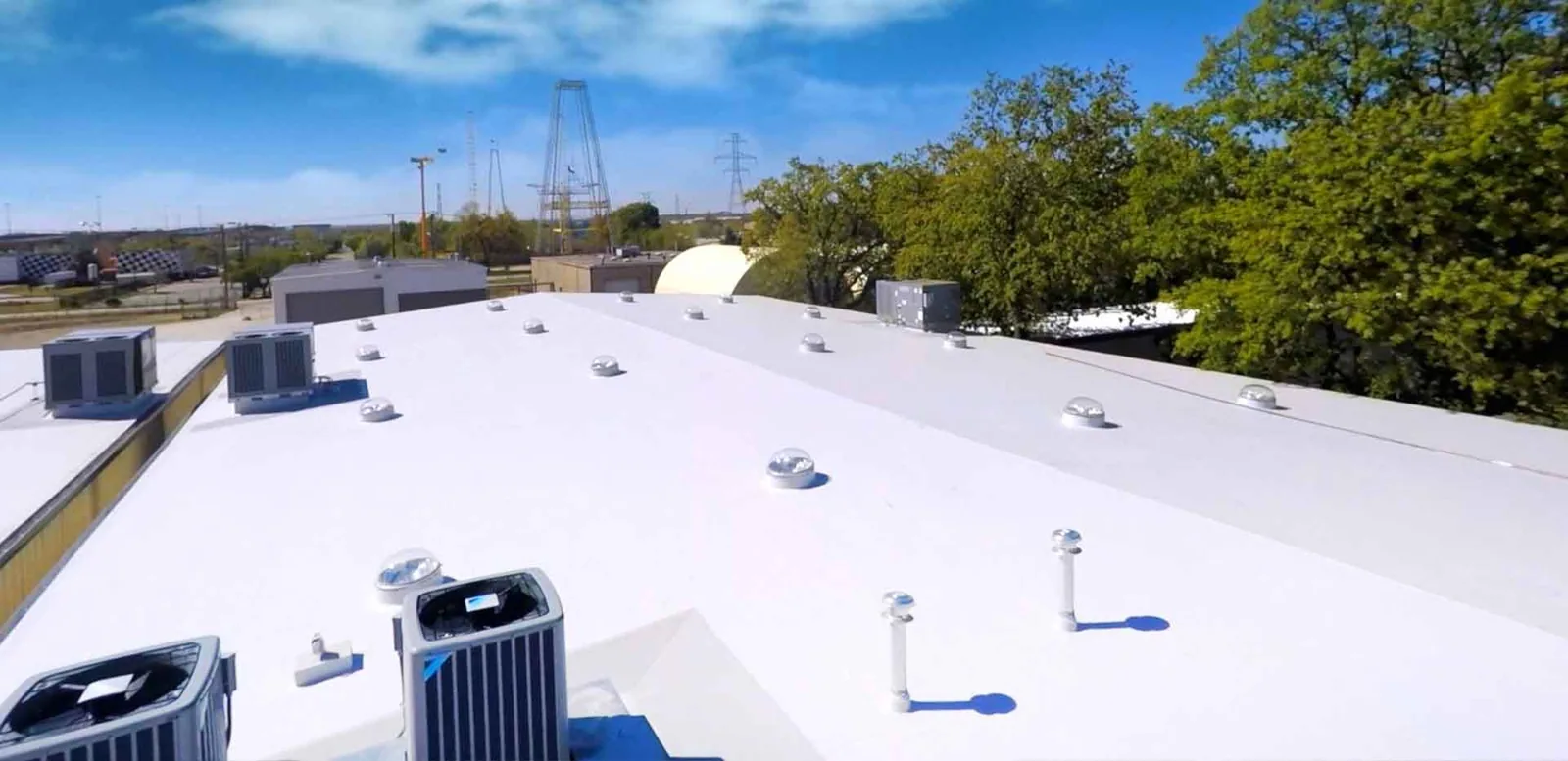
A seam that has opened a quarter inch on an office roof will not stay that size. Wind, sun and foot traffic keep working at it until water gets under the membrane. We repair commercial roofs in Emeryville from our base in Berkeley, CA. When a seam lifts with light pressure from a probe, we check the membrane on both sides and the insulation below, because a seam that looks closed nearby may never have been welded or glued properly in the first place.
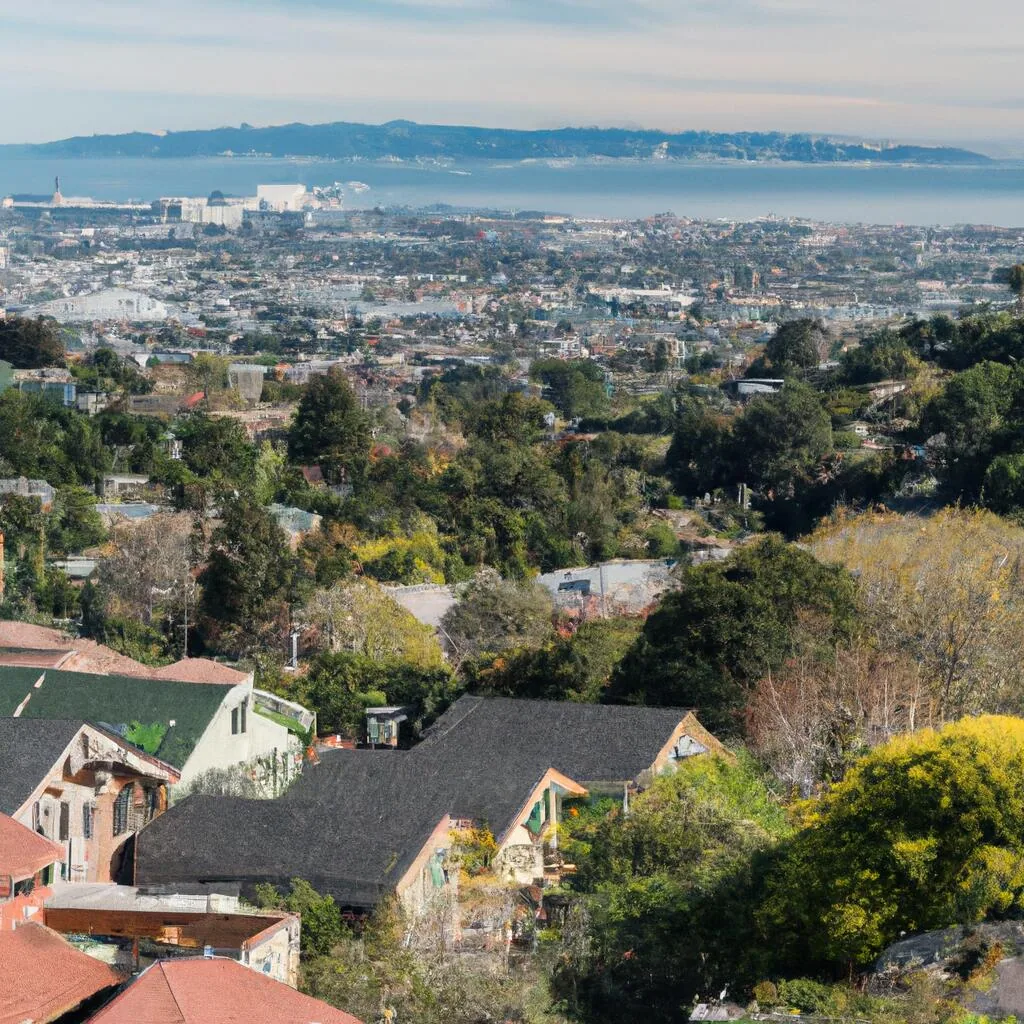
Emeryville has offices, labs, retail and civic buildings like City Hall on Park Avenue and the Senior Center on Salem Street. Every building gets its own inspection before we schedule, since roof access and the entrance below often need different kinds of protection. Our commercial roof repair work plans those practical details around the actual problem we find on the roof.
An open lap gives us a starting point for examination. We follow that connection beyond the visible gap to assess continuity. Nearby seams can help distinguish local damage from a broader installation problem. We also examine sheet edges and corners where stress concentrates. A narrow opening can run farther beneath the top sheet. Its exposed length may therefore understate the repair needed.
How we check a seam depends on the membrane. A welded TPO or PVC seam has to be fused solidly to the sheet below. A glued or taped EPDM seam depends on clean prep and the right adhesive or tape. We identify the roof type before deciding what the opening means. Our seam failure repair work follows that finding instead of reaching for a tube of sealant. One bad spot may just need a new cover strip; a roof full of weak seams needs a closer look before we price anything.
A lifted lap can admit water between the roofing layers. We check the adjacent surface for soft spots and changed support. An approved exploratory opening can establish whether the insulation remains dry. Its position should relate clearly to the failed seam being examined. We record the exposed layers before restoring the inspection opening. That gives the manager a material finding rather than only a surface photograph.
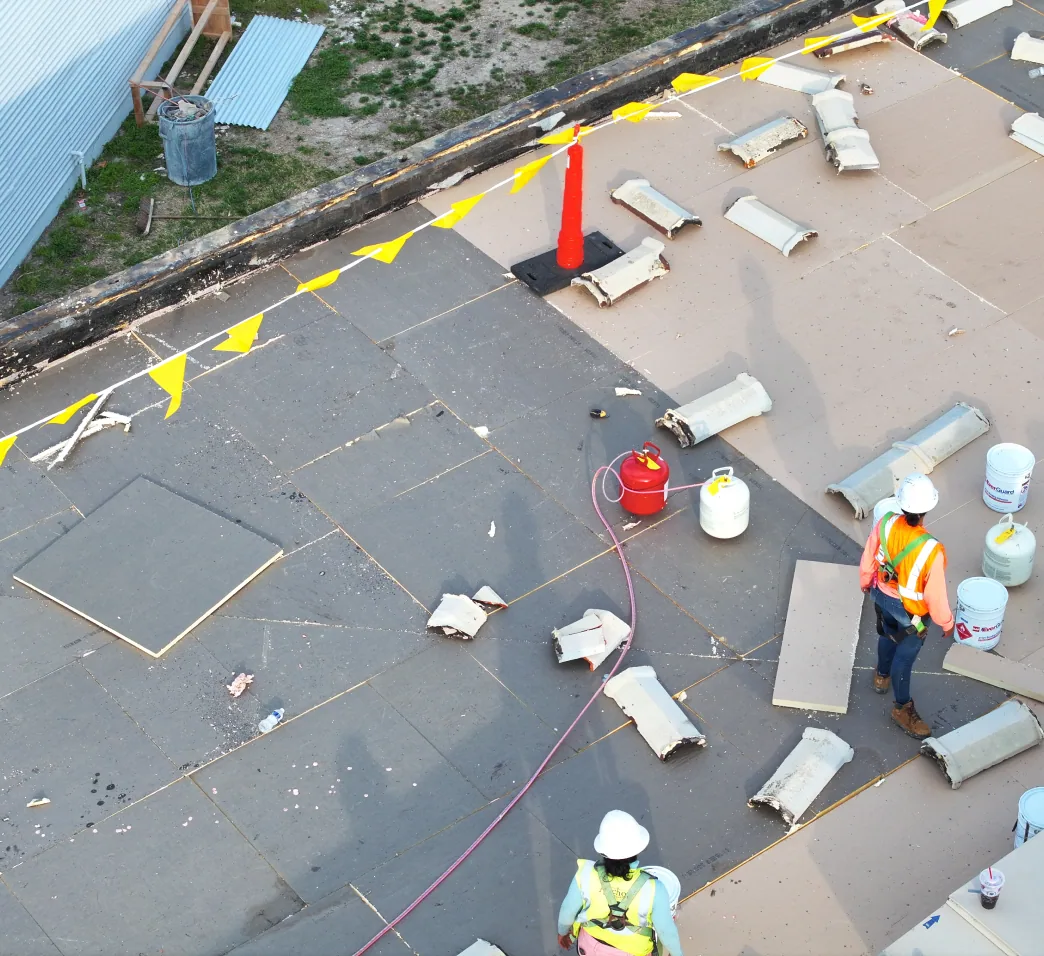
Damp or damaged layers need defined removal within the proposed repair. Dry, stable layers may remain if the new detail can attach suitably. We check the deck where removal exposes its condition. Damage there can change both the repair extent and the sequence. An infrared moisture investigation may help target confirmation under appropriate survey conditions. Thermal differences alone do not establish every wet boundary. The final scope separates observed damage from areas needing further confirmation.
A chalky seam edge needs preparation before its repair is chosen. Dirt, surface wear and previous treatments can affect joining performance. We inspect those conditions beyond the immediate open lap. A trial weld or prepared test area shows whether the old membrane will take a new seam. The correct procedure depends on the membrane that is actually installed. Appearance alone cannot establish the material or its repair requirements.
Where TPO roof material is present, suitable preparation precedes the new welded connection. A successful trial supports the selected repair boundary and technique. An unreliable connection may require extending to a more serviceable area. The repair must also avoid trapping damaged insulation underneath sound new sheet. We explain those limits before completing the written price. The owner can compare the work against the seam finding. A wider repair then has a visible technical reason rather than an unexplained allowance.
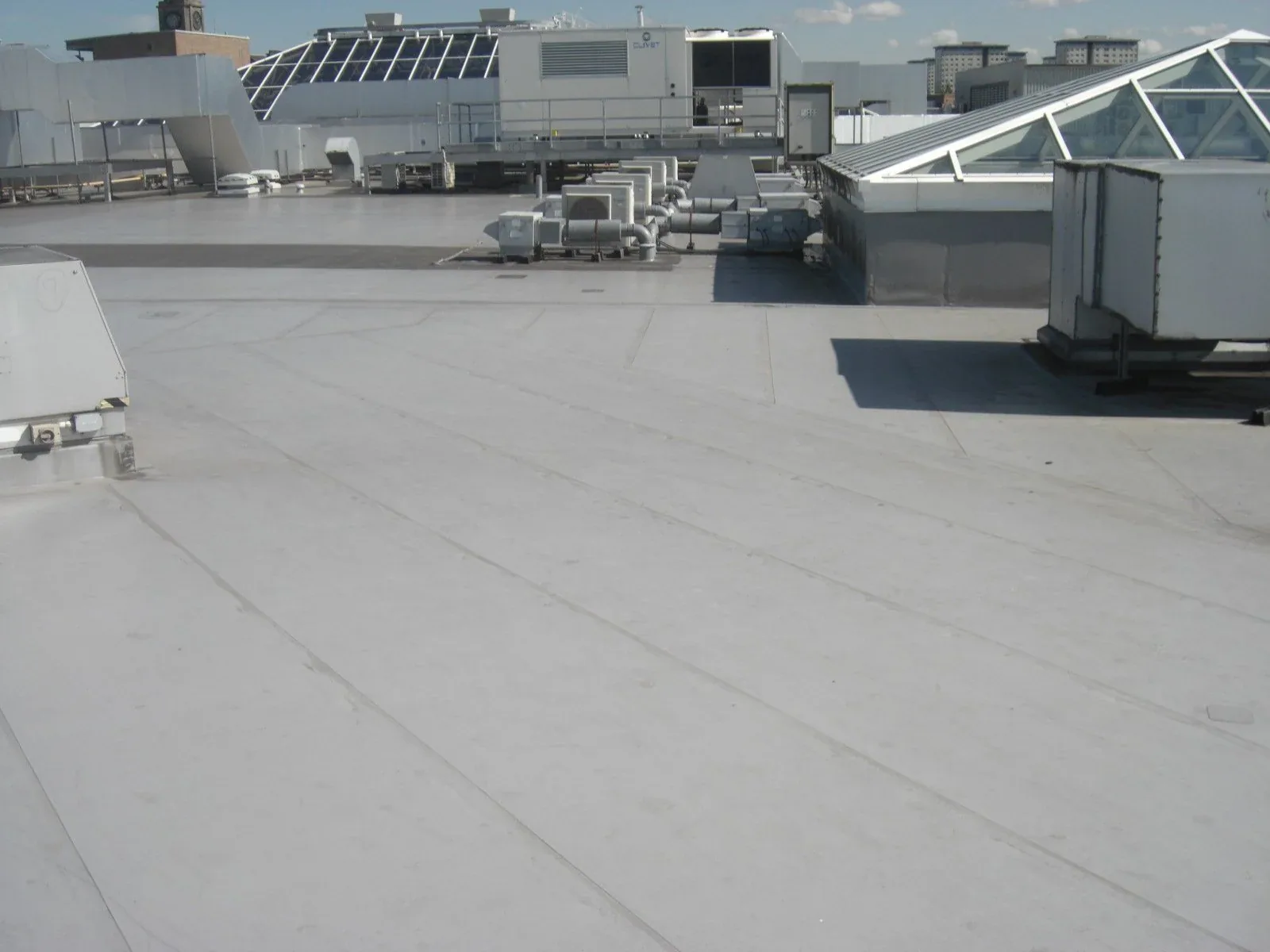
A usable roof hatch does not automatically provide a material route. We check its size, approach and the areas beneath it. Delivery equipment may need a separate lifting position outside the building. The manager identifies entrances that must remain protected during handling. We set the staging area after checking that available space. An occupied office floor should not become an unplanned material store.
A building on Park Avenue may have a completely different access setup than one near Salem Street, so we walk each one. If you also have roofs in West Berkeley or downtown Oakland, we can coordinate the inspections, but we do not assume the same delivery plan will work for each. Every visit confirms the entrance, the path to the roof and what needs protecting, so we bring the right lift and order the right materials.
A closed seam should leave a firm connection across its defined length. We examine the completed joints with the method suitable for that assembly. Ends and corners deserve the same attention as the central lap. We photograph the finished repair and its location on the roof. The record identifies any layers removed beneath the sheet. That gives the owner a clear account of what changed.
Another weak seam may remain outside the current authorized area. We label that finding separately, with its observed condition and urgency. Our roof condition reports for repair decisions keep completed work distinct from remaining defects. A maintenance visit can then return to those actual locations. Changes in attachment or new leakage prompt a closer follow-up. Stable connections may remain within the normal inspection route. The record supports the next decision without treating every visible mark alike.
If there is a chance of hidden deck damage, we agree before opening the roof on who gets the photos and who can approve extra work. That way a decision can be made quickly while the crew is on site, and we only open as much roof each day as we can close up safely.
Emeryville has changed from heavy industry to biotech, retail and mixed-use buildings, and many roofs now carry a lot of mechanical equipment over sensitive interiors. Before we start, we ask the facility manager about equipment shutdowns, clean rooms and any limits on new roof penetrations. We do not move or disconnect equipment unless the owner has arranged it. Where construction is going on next door, we confirm the site boundary and protect finished roof work from other trades. Our report separates the roof’s existing condition from any later damage caused by nearby work.
Let us check the open seam and the membrane around it. You get clear photos and a plain explanation of how big the repair needs to be.
Request a Roof Assessment