Local weather advisory
The National Weather Service has issued a coastal flood advisory covering Berkeley. Heavy rain and drainage loading can expose roof leaks, blocked drains, and ponding water. This is a weather exposure advisory; it does not establish damage to a specific roof.
Do not access a roof during hazardous weather. Protect people first, avoid water near electrical equipment, and request roofing help when conditions permit.
National Weather Service · Updated Oct 28, 2026, 7:20 AM UTC
Commercial roof repair in Albany from our Berkeley crew: loose fasteners, failed panel laps and leaking metal roofs fixed at the source, with clear photos.
Service Areas | Berkeley, CA
On a metal roof, a screw that has backed out is rarely just a loose screw. The panel has usually been working back and forth, and the hole under the washer may now be oval and too big to seal. Swapping the washer or tightening the screw buys a few months at best. We repair commercial roofs in Albany from our base in Berkeley, CA, and on metal roofs we look at the panel, the fastener and what it is screwed into together, then price the repair that actually fixes the leak.
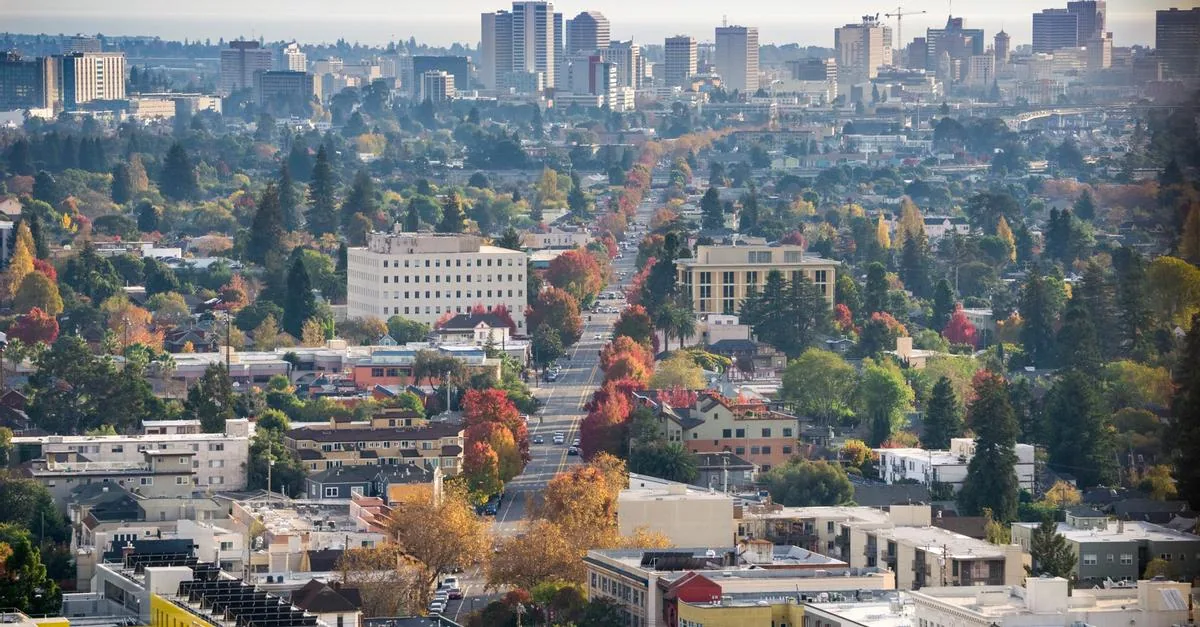
Albany has a mix of storefront buildings, small offices and civic properties, from City Hall near San Pablo Avenue to the library near Marin Avenue. Each roof is different, and the repair method depends on how that roof is built and fastened. Our commercial roof inspection documents the condition before anything is priced, and we check ladder and lift access during the same visit.
A loose screw can mean the purlin or deck it is driven into has rusted, rotted or cracked, or that the original screw was the wrong length. Panel movement also wallows out the hole over time. We look at the metal around the screw for wear, cracks and bent ribs, and we check what is underneath before picking a replacement. A bigger screw is not always the answer. It has to bite into something solid and seal against the panel.
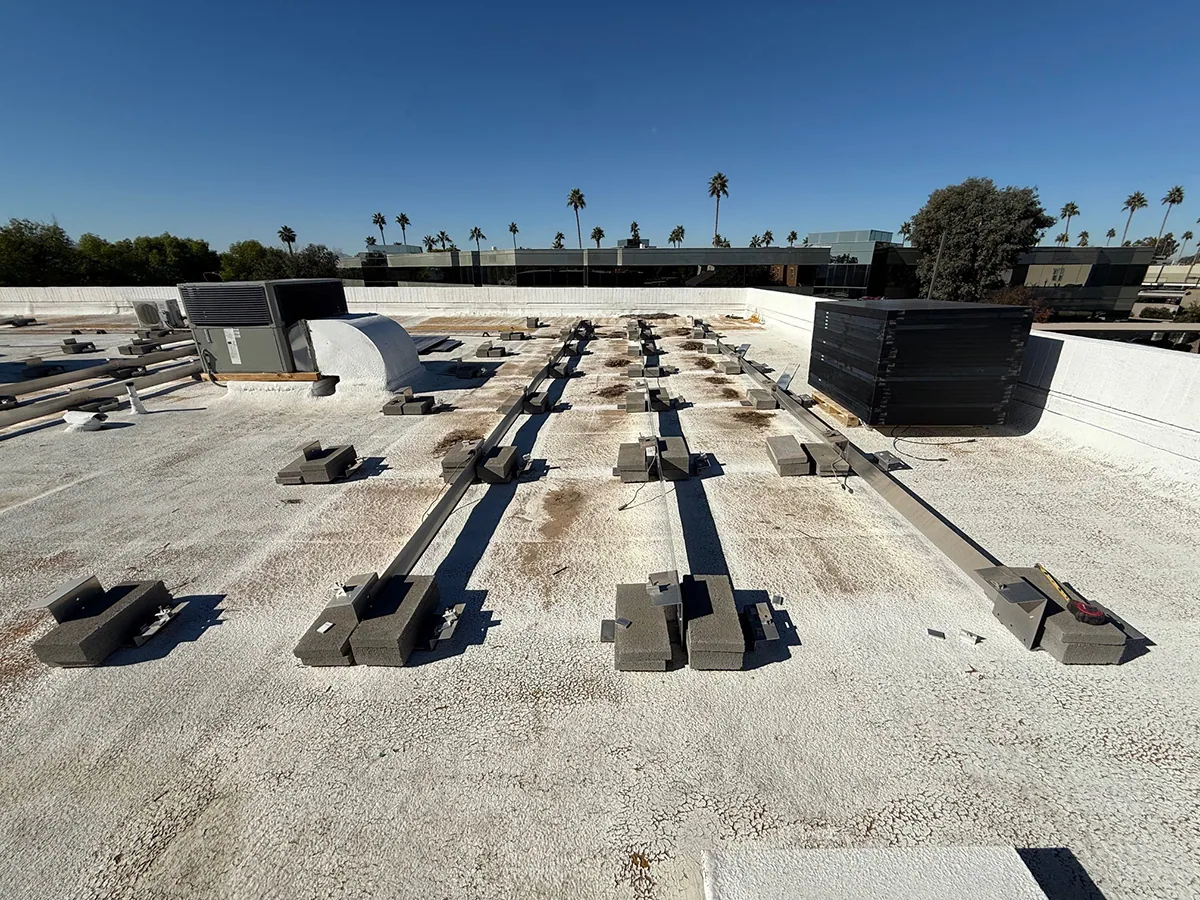
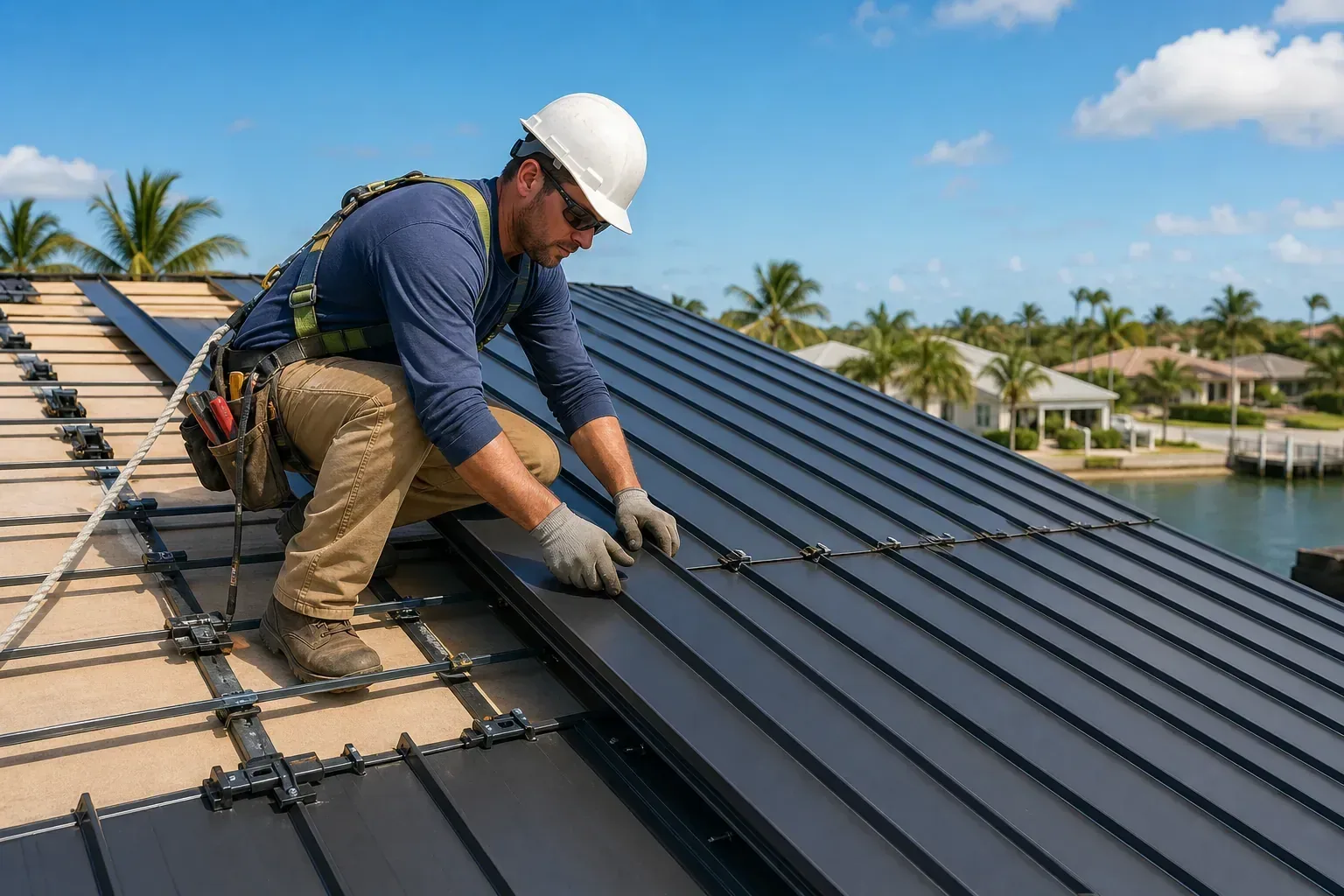
An exposed-fastener roof differs from a standing-seam assembly with concealed clips. We identify the installed arrangement before removing or tightening parts. Our work on standing seam metal roofs includes examining panel joints and clip-related movement. A surface mark does not establish the condition of every concealed connection. We investigate the particular defect and any comparable suspicious area. The repair recommendation states what was examined and what remains unresolved. That helps the owner distinguish a local fastening problem from a broader attachment concern.
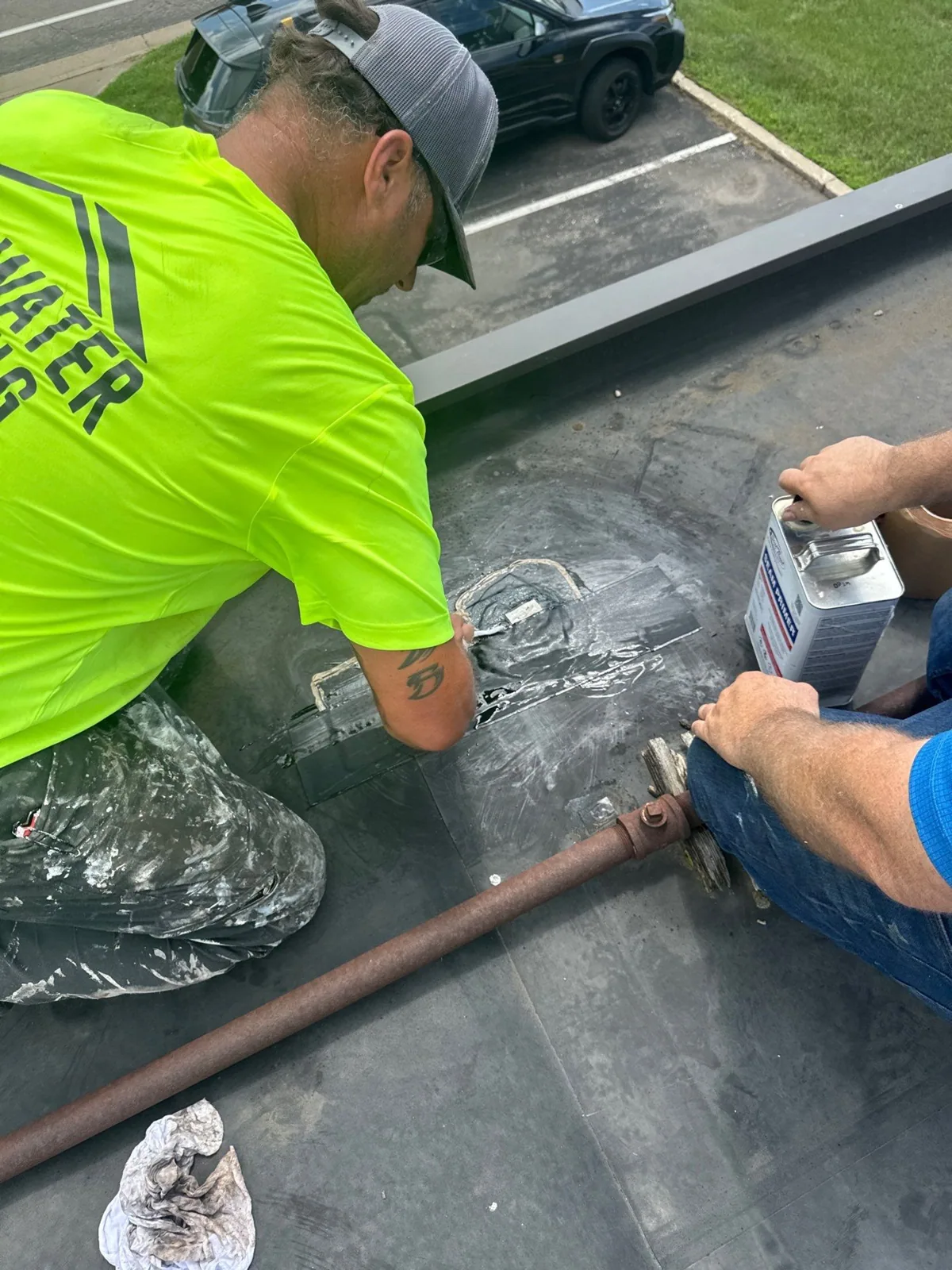
A failed panel lap can admit water beside otherwise sound fasteners. We examine its seal, overlap and nearby transitions for openings. Curbs and pipe flashings deserve attention wherever they interrupt the panels. A roof-side repair also needs to fit the panel shape. Smearing sealant over several details can make later examination more difficult. We locate the actual failed connections before defining permanent work.
Our leak repairs on commercial roofing compare the visible defect with adjoining water paths. A carefully controlled test may help distinguish an uncertain opening where conditions permit. It needs a plan for protecting the interior during examination. We check the rooms beneath the suspected area before testing. The owner receives the cause supported by findings and any remaining uncertainty. A fastener repair can then stay focused when other connections are sound. A second defect receives its own clearly identified correction.
An intact panel may remain serviceable beside a damaged attachment point. We inspect corrosion, cracking and deformation near the proposed repair. The underlying support can change whether that panel can stay. A repair may need local metal replacement if its opening cannot be treated reliably. Another roof may have broader deterioration that warrants a different approach. We compare the defect with the sound remaining assembly.
A metal roof retrofit may become an option when broader conditions justify it. Its attachment, added loads and drainage need evaluation for the particular building. A new roof over the old one does not fix rusted or rotted supports below. We describe any prerequisite correction within that proposed scope. For a local repair, the written limits identify retained panels and repaired connections. The manager can weigh the panel findings alongside the lifting requirements. The decision concerns the roof that is present, rather than a general preference for new material.
A steep or difficult-to-reach panel area can affect the access equipment needed. We examine the roof approach before establishing how materials will move. The manager identifies occupied rooms and protected entrance routes below. A small repair may still need a carefully separated ground work area. We identify that concern before ordering equipment or accepting a start date. The schedule reflects the actual route available to the detail.
Commercial frontage in Albany is tight, and a building near Marin Avenue may have very different room for a lift or delivery than one on San Pablo Avenue. We plan material handling for each address. If you have properties in El Cerrito or West Berkeley as well, we can line up the inspections on the same trip, but each roof still gets its own access plan and its own repair scope. We confirm entrances and how each roof will be closed up at the end of the day before work starts.
A repaired metal connection needs photographs showing the fastener and adjoining panel. We identify the fixed roof feature that locates the work. The record states which supporting material was corrected beneath the repair. It also distinguishes any separate lap or penetration treatment completed nearby. Those details help a later inspection examine the same connection. A changed panel position can then be compared with the finished condition.
Our maintenance of commercial roof connections follows the actual wear found during inspection. Comparable fasteners may need observation or correction if their conditions warrant it. We separate active defects from stable details in the report. Repeated loosening prompts another look at movement and backing. A secure connection beside intact material supports continued use of that area. The manager gets a specific reason for the next maintenance action.
Sometimes the problem underneath turns out to be bigger than expected, such as a rusted purlin or a rotted deck board under the panel. When that happens we stop, take photos and send you the extra work and price. Nothing extra is done until you or your designated contact approves it, and we only open as much as we can close up safely that day.
Solano Avenue and San Pablo Avenue have different traffic and storefront conditions, so we plan each job around the building’s frontage and access. We ask the property manager where a lift can go without blocking the sidewalk or a neighboring business. Buildings here often sit close together, so we pay extra attention to drains and wall flashings where roofs meet. If a leak shows up along a shared wall, we figure out which building’s roof the water is coming from before repairing anything, so you and the neighbor are not paying for the wrong fix.
Have us check the loose fasteners and what they are screwed into. You get straightforward photos showing whether the panels can stay and what needs repair.
Request a Roof Assessment