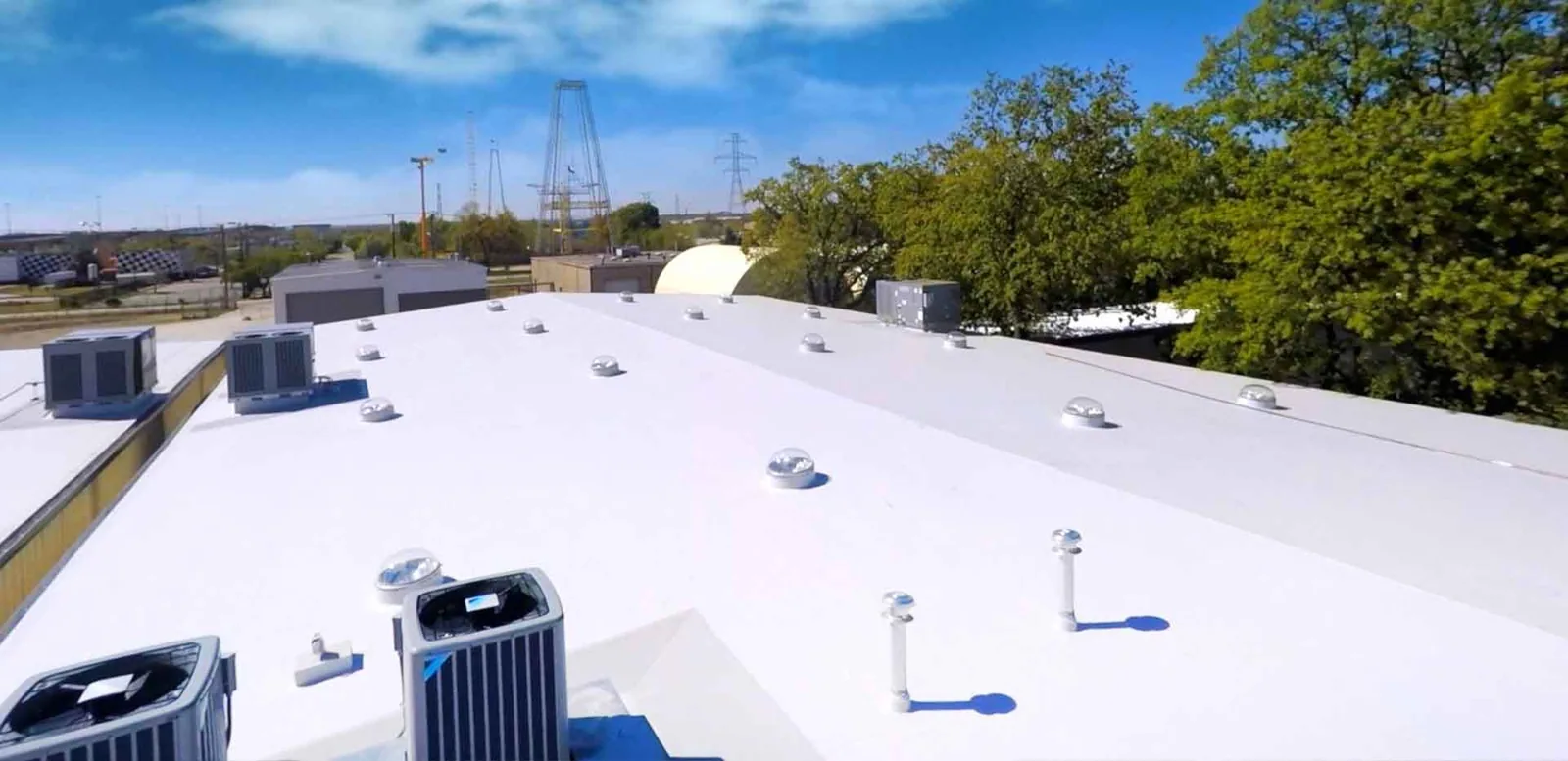
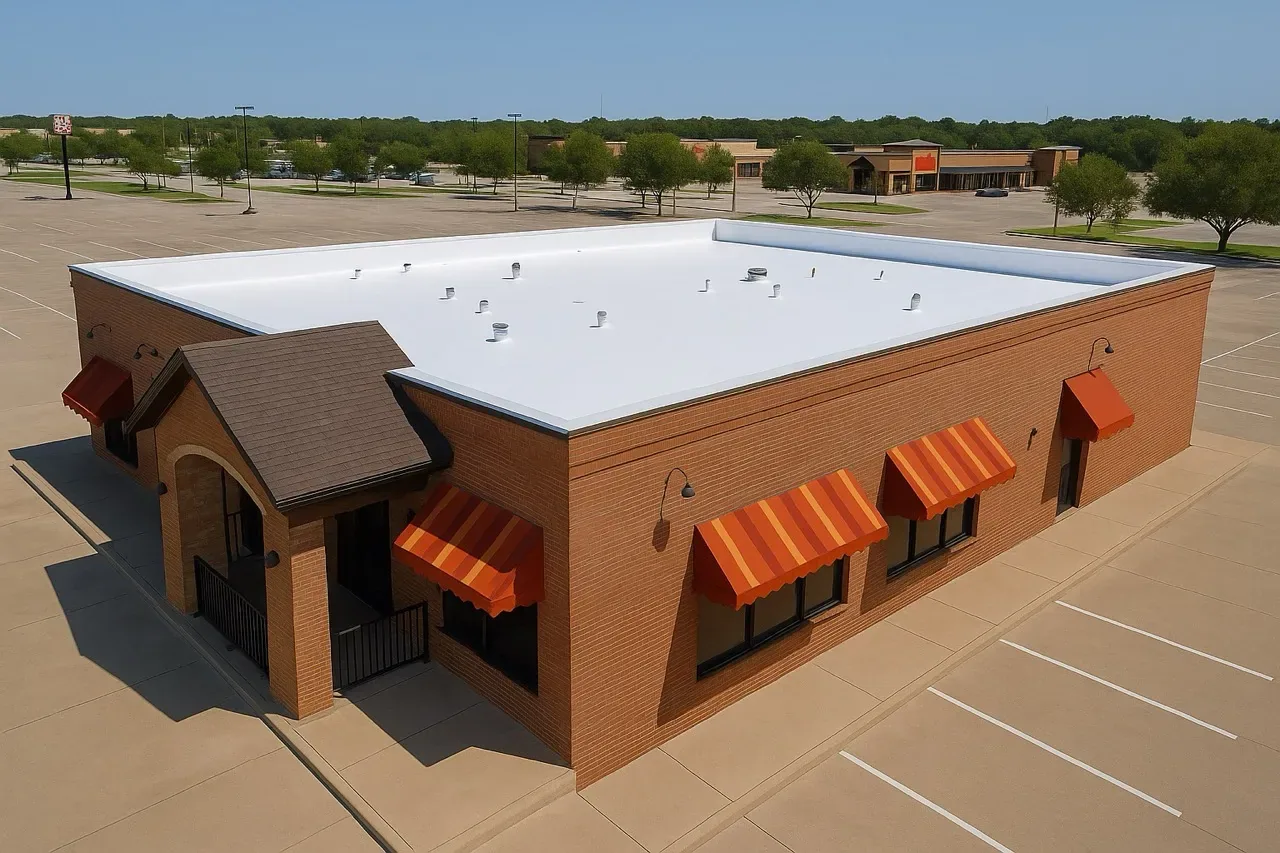
TPO roofing in Berkeley, CA: seam repairs, wet insulation replacement, welded curb and wall flashing, and new TPO roofs for campus and commercial buildings.
Roof Systems | Berkeley, CA
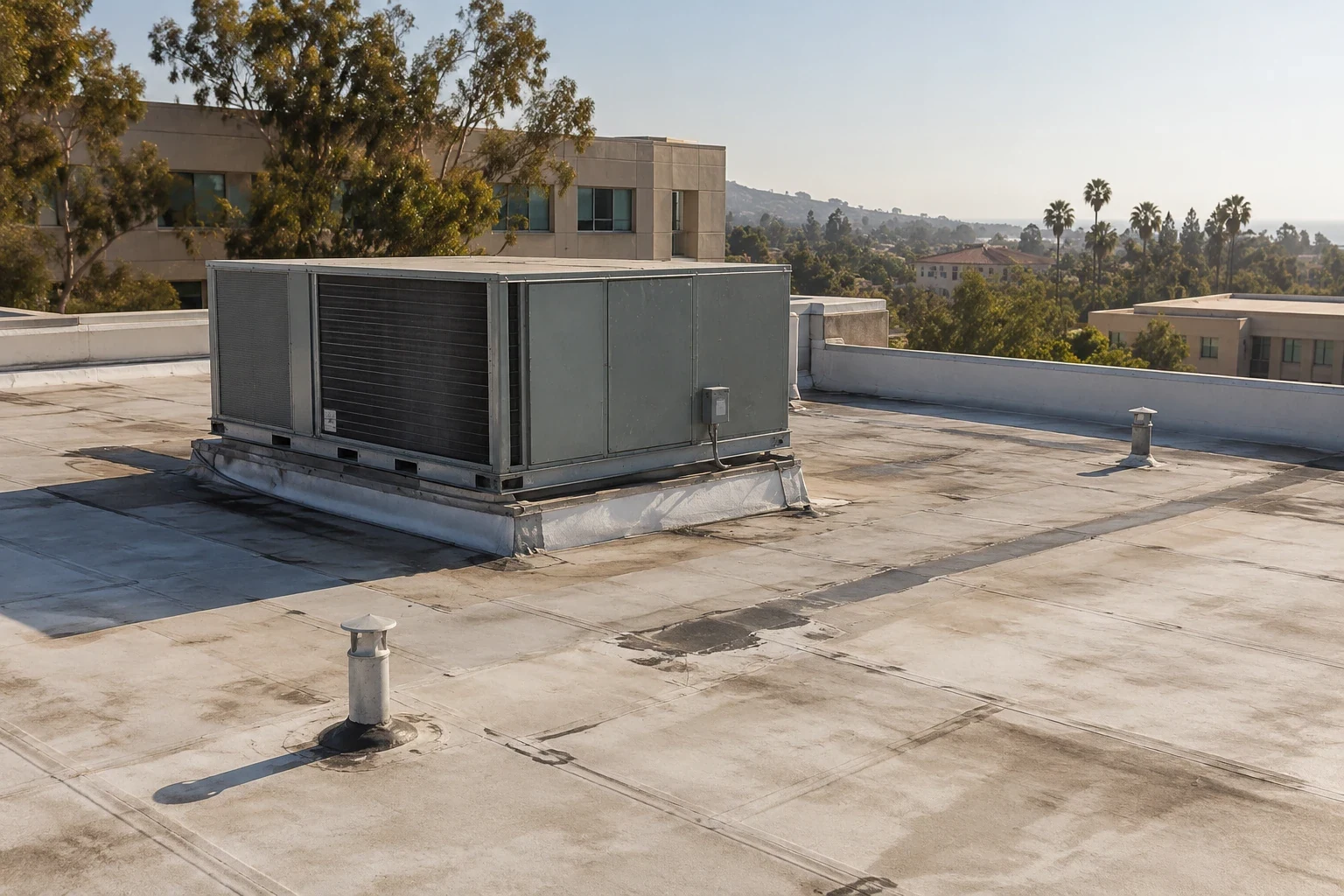
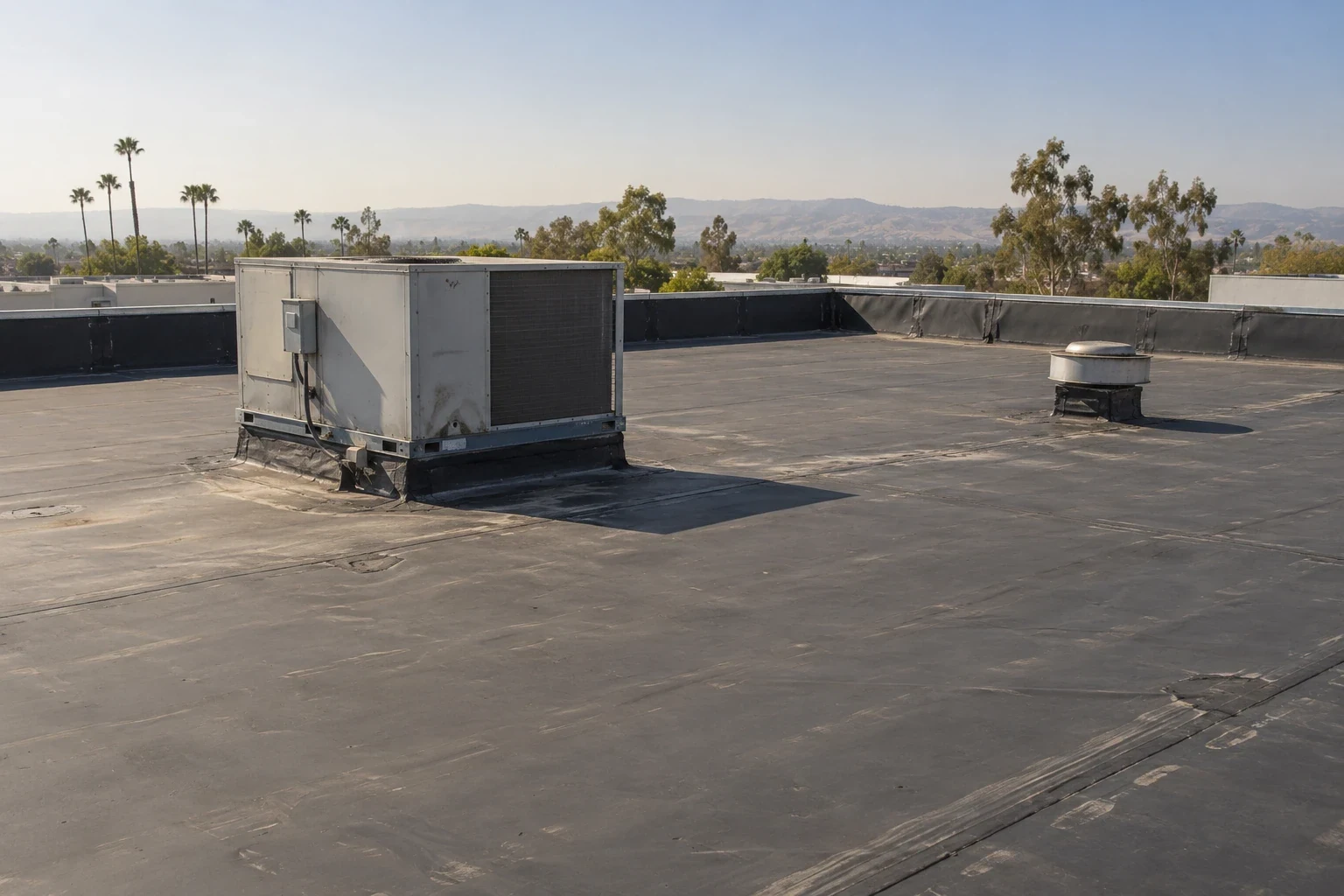
On a campus building, a TPO seam has opened at the corner next to a rooftop unit. The rest of the membrane looks fine, but that one corner lets water in every time it rains. TPO roofing in Berkeley, CA usually starts with a problem like that: a seam, a curb or a wall flashing that has failed while the field of the roof is still in decent shape. On a college or university roof we also plan around classrooms, labs and the equipment serving them. The estimate covers the seam repair, any wet insulation underneath and the welded flashing details, not just a square-foot membrane price.
TPO roofs in Berkeley and Oakland often have their weak points at the edges, curbs and drains rather than in the open field. We check the seams, test whether the membrane still welds cleanly, and look at how water moves toward the drains. A loose corner can mean the insulation under it got wet, so we probe or core before deciding how much to replace. If rooms below are occupied, we plan the work so any opening in the roof gets closed up the same day.
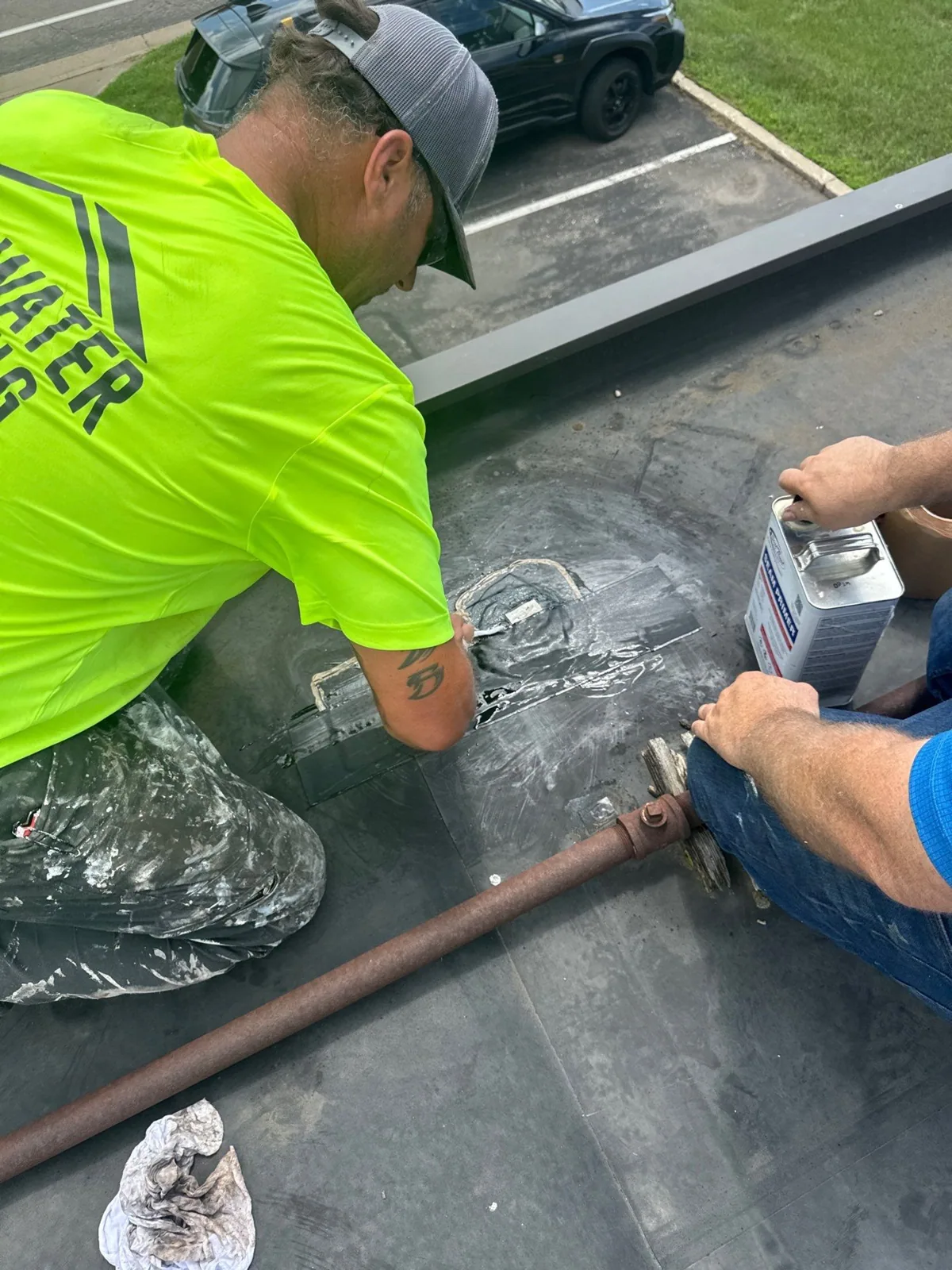
An open seam tells us where water can get in. It does not tell us how far the water has traveled. We look at the seam itself, the membrane on either side, and any nearby flashing or curb. Older roofs often have patches from past repairs, and some of those patches are not TPO at all, which means new material may not weld to them. We find out what is actually there before we decide whether to re-weld the seam, cut in a new strip or patch over it with a cover piece.
When we do leak repair, we compare where the drip shows up inside with what we find on the roof. Water can run along the deck and show up well away from where it got in. We check the roof seam, nearby curbs and the equipment itself. Sometimes the source is a rooftop unit’s cabinet or condensate line, which is a job for the mechanical contractor, not the roofer. We tell you which repair fixes which leak, so you are not left wondering after a seam repair why one ceiling stain is still growing.
Wet insulation stays wet when you cover it. If a seam has been open for a while, the insulation around it has likely soaked up water, and putting new membrane over it just traps the moisture. We probe and core around the problem area to see how far the wet spot goes, cut out the saturated insulation, and replace it before the new membrane goes on. We also check that the insulation and deck are still firmly attached, which is a separate question from whether they are dry.
Some owners compare TPO with PVC roofing. The two look similar and both have heat-welded seams, but PVC holds up better around grease and some chemicals, which matters on restaurant and lab roofs, and it usually costs more. Whichever you choose, the wet insulation and damaged deck still have to be fixed. We price both options with the same repairs included, so the difference in price reflects the membrane and not work left out of one estimate.
TPO seams are joined with a hot-air welder that melts the two sheets together. After the weld cools, we probe every seam with a metal pick to find any gaps, and we run test welds at the start of each day to set the machine for the temperature and humidity. That checks the seams. It does not check how the membrane is held to the roof, which is done with screws and plates, adhesive or both depending on the system. The attachment pattern follows the manufacturer’s requirements for that roof and the wind exposure, and we check it separately.
Some owners ask about EPDM rubber roofing instead. EPDM is a good membrane, but its seams are taped or glued, not welded, and it uses different flashing parts at curbs and walls. You cannot mix the two methods on the same seam. When we compare TPO and EPDM, we list what changes at the edges, curbs and drains as well as in the field, so the comparison shows the full job and not just the cost per roll.
When insulation is replaced or added, the roof surface gets thicker, and that can leave existing curbs too short. Most manufacturers require a minimum flashing height above the finished roof. We measure curb heights against the new roof thickness before we order materials, and if curbs need to be raised, that goes into the estimate. Our penetration and skylight flashing work uses TPO accessories welded to the membrane. If a rooftop unit has to be lifted to raise its curb, your mechanical contractor handles that and we schedule around them.
Walls are similar. The membrane runs up the wall and gets terminated under a metal bar or counterflashing. If the wall itself is cracked or the siding is failing, that is a separate repair, and we point it out rather than burying it in the roofing price. On occupied buildings, we also work out how materials get to the roof, where the crew can stage, and how much roof can be opened each day. Those details affect cost and schedule as much as the membrane does.
Across West Berkeley and Emeryville, many TPO roofs sit over light industrial, lab and office space where equipment and operations below set the pace of the work. We plan work zones and access around the people in the building. If you have a roof near West Berkeley, we look at that specific roof before quoting, because two buildings on the same block can have very different insulation, drains and curb layouts. Any curb or wall detail waiting on another trade is listed clearly so nothing gets missed.
At the end of the job you get photos of each repaired area, a roof plan showing where seams were re-welded, where insulation was replaced and which curbs were raised, and notes from the seam probing. Areas we did not open are marked as not inspected, so nobody assumes more was checked than was. Warranty coverage depends on the manufacturer and the installation, and we go over the actual warranty terms with you. That file makes the next repair faster and cheaper.
Tell us where the seam or leak is and send any roof records you have. We will inspect the membrane and insulation and give you a plain estimate with photos.
Request a Roof Assessment