Local weather advisory
The National Weather Service has issued a coastal flood advisory covering Berkeley. Heavy rain and drainage loading can expose roof leaks, blocked drains, and ponding water. This is a weather exposure advisory; it does not establish damage to a specific roof.
Do not access a roof during hazardous weather. Protect people first, avoid water near electrical equipment, and request roofing help when conditions permit.
National Weather Service · Updated Oct 28, 2026, 7:20 AM UTC
Emergency roof repair in Berkeley, CA: we stop active leaks, protect stock and occupants, then plan a permanent repair once the roof can be properly inspected.
Commercial Roofing Services | Berkeley, CA
When water is coming through the ceiling over a grocery aisle, the first job is to stop it from doing more damage. A torn flashing around a rooftop unit, a blown-off section of edge metal or a split seam can let in a lot of water during a storm. Emergency roof repair in Berkeley, CA, is about getting the roof closed up fast and safely, then figuring out the permanent fix once the weather and conditions allow.
We start by finding the opening and judging whether it is safe to work on. High wind, lightning, a slippery or weakened deck, or live electrical equipment can all mean waiting until conditions improve. Inside, you can move stock, cover shelving and set buckets while we work on the roof. For grocery stores, protecting food, freezers and customer areas is part of the plan from the first call. Temporary repairs are meant to buy time. We will tell you clearly what we did, how long it should hold and what the permanent repair is likely to involve, so the emergency patch does not quietly become the long-term fix.
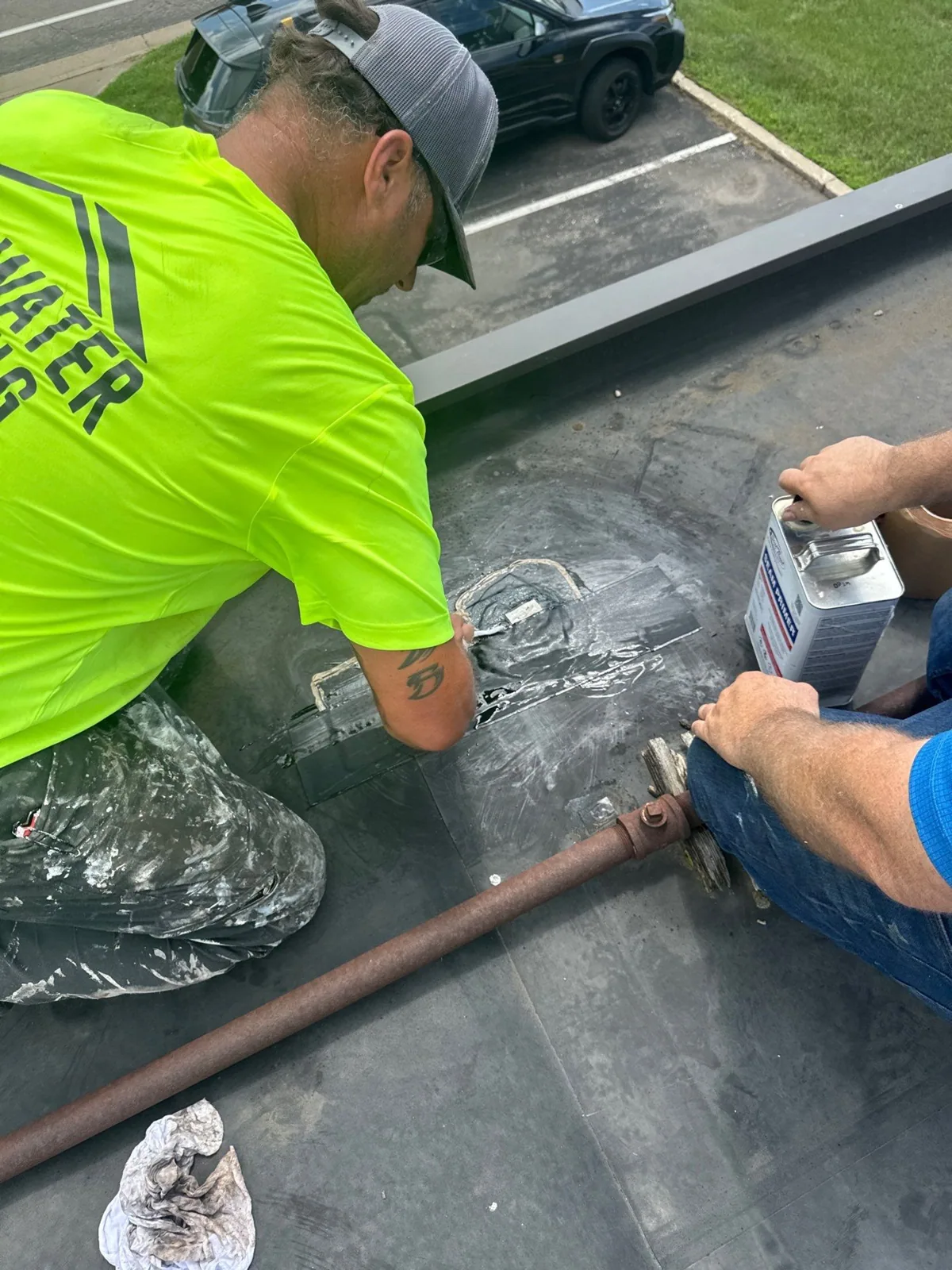
A temporary repair depends on what failed and the weather at the time. A torn seam might be sealed with a compatible tape or patch. A blown-off edge might be covered with membrane and weighted or fastened down. A large hole might get a secured tarp or temporary membrane. The goal is to keep water out until a proper repair can be made in dry conditions.
Once the immediate leak is stopped, a full leak repair follows. Emergency patches are often made in rain or wind on wet surfaces, so they rarely bond as well as a planned repair. We also check nearby areas while we are up there, because a storm that opened one seam may have weakened others. If we see more damage than we can safely secure that day, we tell you which areas are still at risk and what to watch for inside. Then we come back as soon as the weather allows for a proper look and a permanent solution.
Stopping the leak does not fix the water that already got in. Insulation under the membrane may be soaked, and wet insulation does not dry out on its own under a sealed roof. The deck around the opening may have been exposed to water for hours. Ceiling tiles, light fixtures and anything stored below may also be wet.
A follow-up roof inspection after the storm checks how far the water spread. We open the roof near the damage to look at the insulation and deck, and we may use a moisture meter to see how far wetness extends. Wet insulation needs to come out before the permanent repair. Rusted or weakened deck needs to be evaluated. This is also the time to note any other storm damage for your records or for an insurance claim. We separate what is confirmed from what is suspected, so the permanent repair is sized to the real damage rather than a guess made in the rain.
A permanent repair needs dry conditions, a clean surface and the right materials for your roof. We remove the temporary patch, cut out any damaged membrane and wet insulation, replace what came out and rebuild the flashing or seam properly. On a PVC roof, that means heat-welding new PVC to cleaned, existing membrane and probing each seam afterward. Temporary tapes and sealants used in the emergency usually have to be removed first, because new welds will not hold over them.
If the damage was at a curb or rooftop unit, the curb and flashing may need rebuilding to the right height. Sometimes the unit has to be lifted or disconnected by the mechanical contractor before the roofing can be finished. We line that up with you so the permanent repair happens in one well-planned visit rather than several partial ones. We also confirm that the material we are tying into is sound. If it is not, the repair area grows, and we tell you before going further.
Several things can slow down the permanent repair after an emergency. Weather has to cooperate. Special materials or flashing pieces may need to be ordered. Another trade may need to disconnect equipment or repair electrical or plumbing damage. Insurance adjusters may want to see the damage before it is repaired.
On a TPO roof, an older membrane that has weathered for years may not weld well to new material, which can expand the repair area or call for a different approach. We explain those factors and give you a realistic timeline. Meanwhile, we check the temporary repair after any significant rain to make sure it is holding. If the emergency revealed a roof near the end of its life, we will say so and help you weigh a larger repair or replacement against continued patching. You decide the next step with a clear view of the costs and risks.
In West Berkeley and Emeryville, emergency work keeps the quick weather protection separate from the permanent repair that follows inspection. Older industrial and retail buildings here often have past patches that fail first in a storm. Emergency calls in West Berkeley get the same approach: find the opening, secure it, then plan the real fix.
After the emergency, you get a short report with photos of the damage, the temporary repair and any wet areas found. It notes the date and time of the call, what we did and how long the temporary repair should hold. Recommendations for the permanent repair are listed with an estimate. Damage we suspect but could not confirm is marked as such. This record is useful for insurance claims and for tracking whether problems come back. If the leak returns before the permanent repair, call us right away and note exactly where the water appeared.
Tell us where the water is coming in and how to reach the roof. We will secure the opening and explain the permanent repair plainly.
Request a Roof Assessment