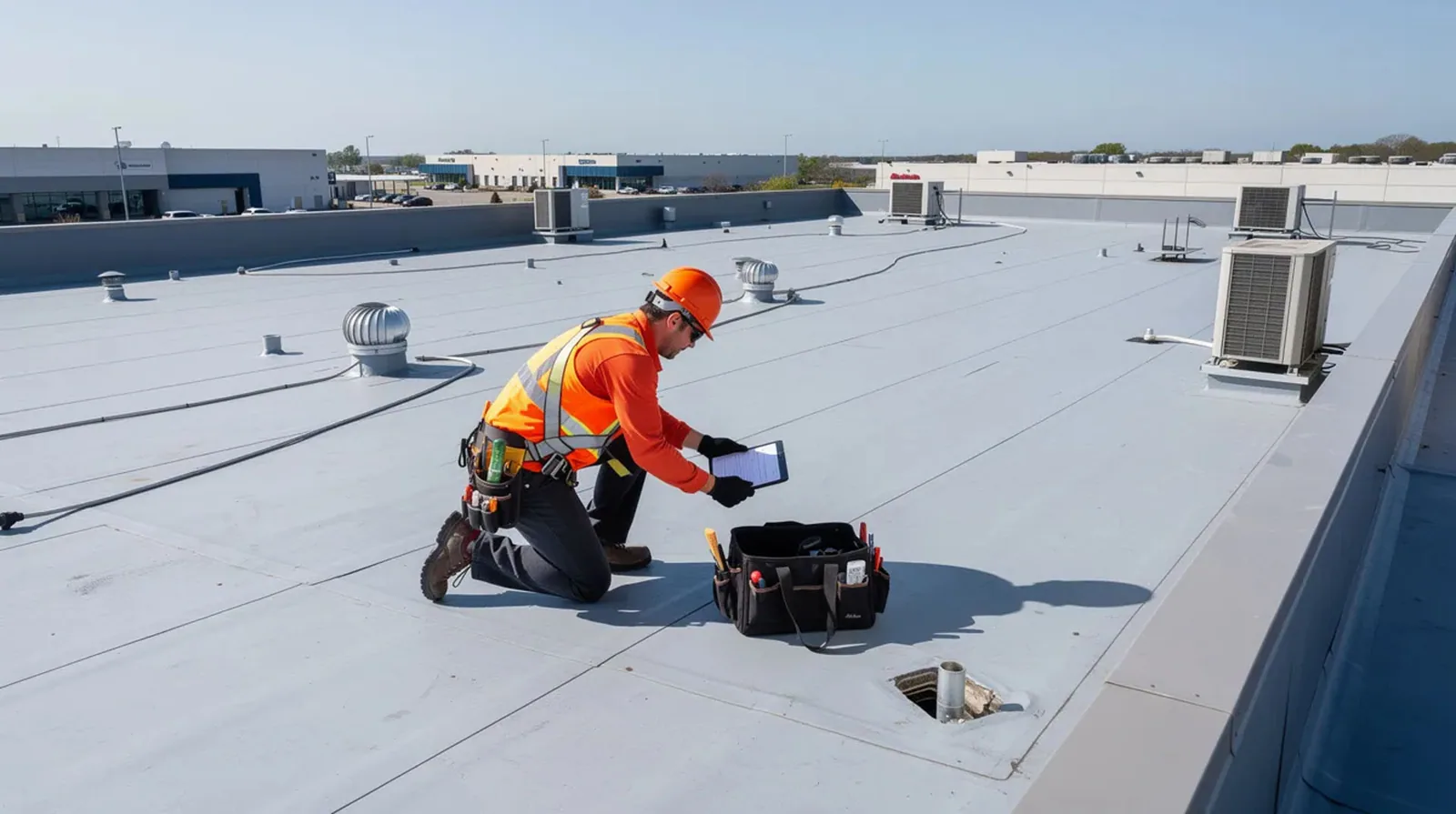
Roofing for property management companies in Berkeley, CA: tenant leak reports traced to the roof, clear repair scopes and records that stay with each building.
Industries We Serve | Berkeley, CA
When an office tenant reports water dripping near a light fixture, the property manager needs to know whether it's actually a roof leak before calling anyone else. Roofing for property management companies in Berkeley, CA starts with that question. We ask when the water appeared and what got wet first, then go up and look at the roof above that space. If the problem turns out to be a plumbing line, HVAC condensate or a window, we say so and point you to the right trade. You get a plain explanation of what's happening on the roof and what it will take to fix it.
A portfolio manager needs each roof issue tied to the right building and lease area. We inspect the reported leak, trace the water path and identify what is confirmed before proposing a repair. Berkeley’s office and older commercial stock differs from West Berkeley’s former industrial district, now mixed with research and production uses. The same inspection method applies to an office roof managed across multiple tenants, but access, interior protection and the permanent detail remain specific to each property.
Start with the basics: which room, when it happened, how much water and whether it was raining. Photos from the tenant help us match the leak to the roof above. A ceiling stain alone doesn't prove where water gets in, since it can run along the deck before it drips. If there's a wall, window or rooftop unit nearby, it could be the source instead. Service records for recent equipment work are worth checking, because new penetrations are a common cause. We keep possible causes separate from confirmed ones.
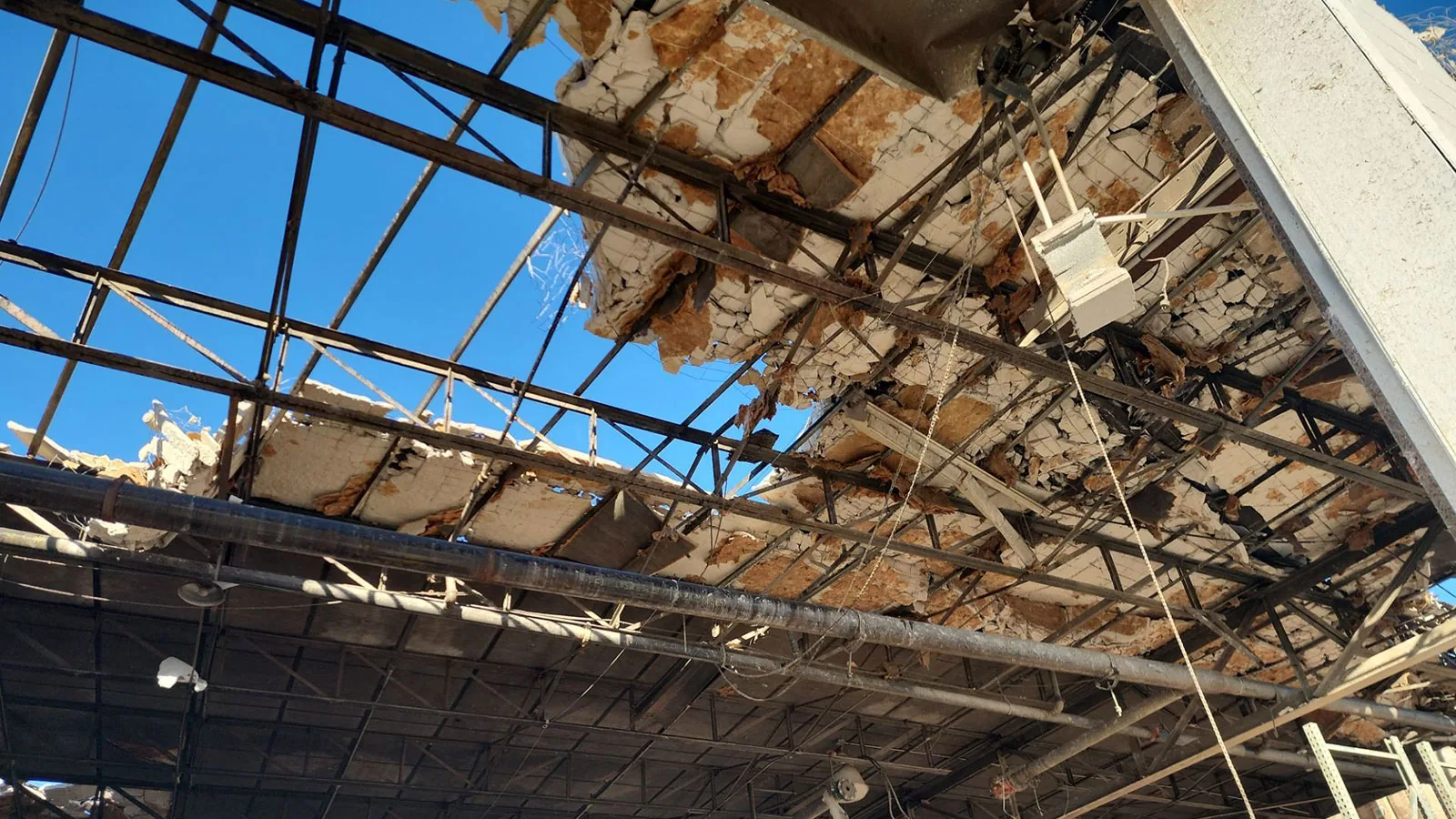
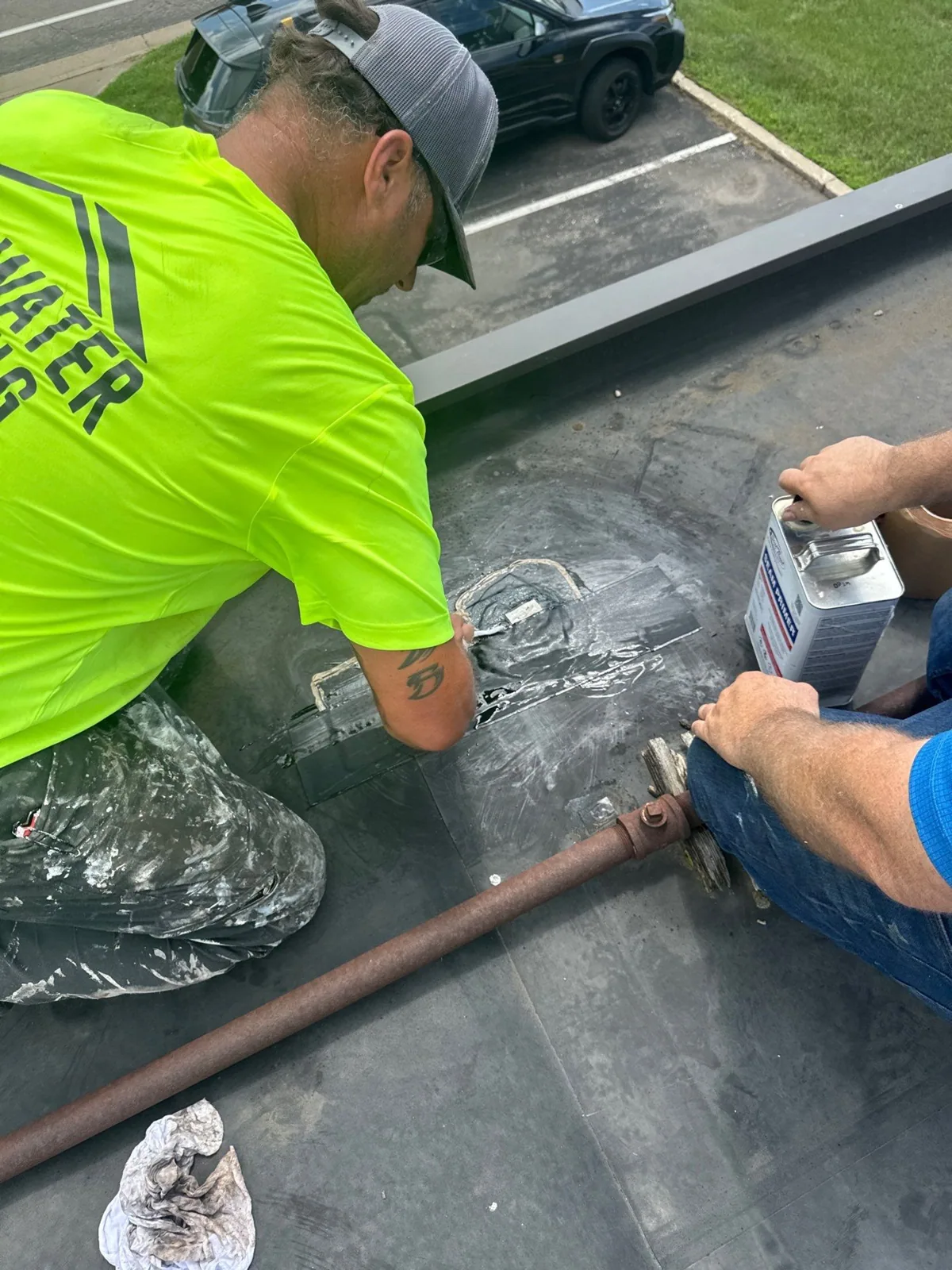
Commercial roof leak repair over a tenant space starts by checking the seams, flashings, curbs and drains above the reported spot. We identify the opening and check whether water has gotten into the insulation underneath. A roof that looks fine on top can still have wet insulation, so we test where it matters. Ceiling tiles, drywall and other interior damage go to the interior contractor. You get our roof findings with those other responsibilities clearly separated, which makes the repair easy to approve and explain to the tenant.
The tenant or building operator decides which rooms we can work over and when. We review the affected rooms, material routes and work hours with the right contact. Getting roof access doesn't automatically clear the space below. If the HVAC contractor has to work on a unit before we can flash its curb, that's noted in the plan. A tenant's request to fix the leak doesn't mean the equipment is ready. We plan the work around what's actually been approved.
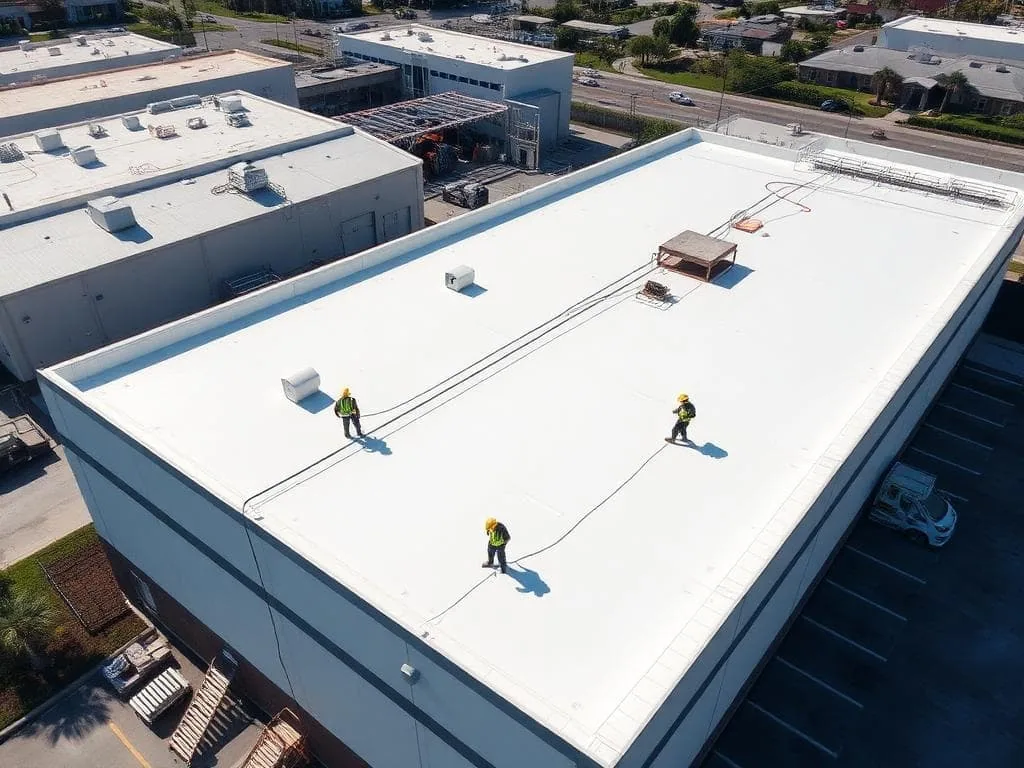
Reroofing an occupied building means opening only as much roof as can be sealed by the end of the day. We set up protection below and plan how each section gets closed. If we find more damaged substrate than expected, we stop and ask before opening more. Temporary seals are labeled as temporary. The property manager knows who approves extra work. Areas ready for permanent work are kept separate from any section waiting on another trade, so one schedule date doesn't hide an unfinished curb.
The repair proposal should name the problem, the membrane involved and how far the repair extends. If the insulation or deck underneath is damaged, that work is listed with removal and replacement. Anything suspected but not yet confirmed is listed separately, with a unit price so extra work can be approved quickly if it turns up. A big patch allowance doesn't tell you what's underneath. The proposal should say exactly what the finished repair will include.
A roof condition report backs up that proposal with photos and notes on what we could and couldn't see. It separates recommended work from work already done. A report for a different building, even one managed for a public agency down the street, says nothing about this roof. Once the scope of each option is clear, you can compare a targeted repair with a replacement. More testing is worth it only if the answer could change which option you pick.
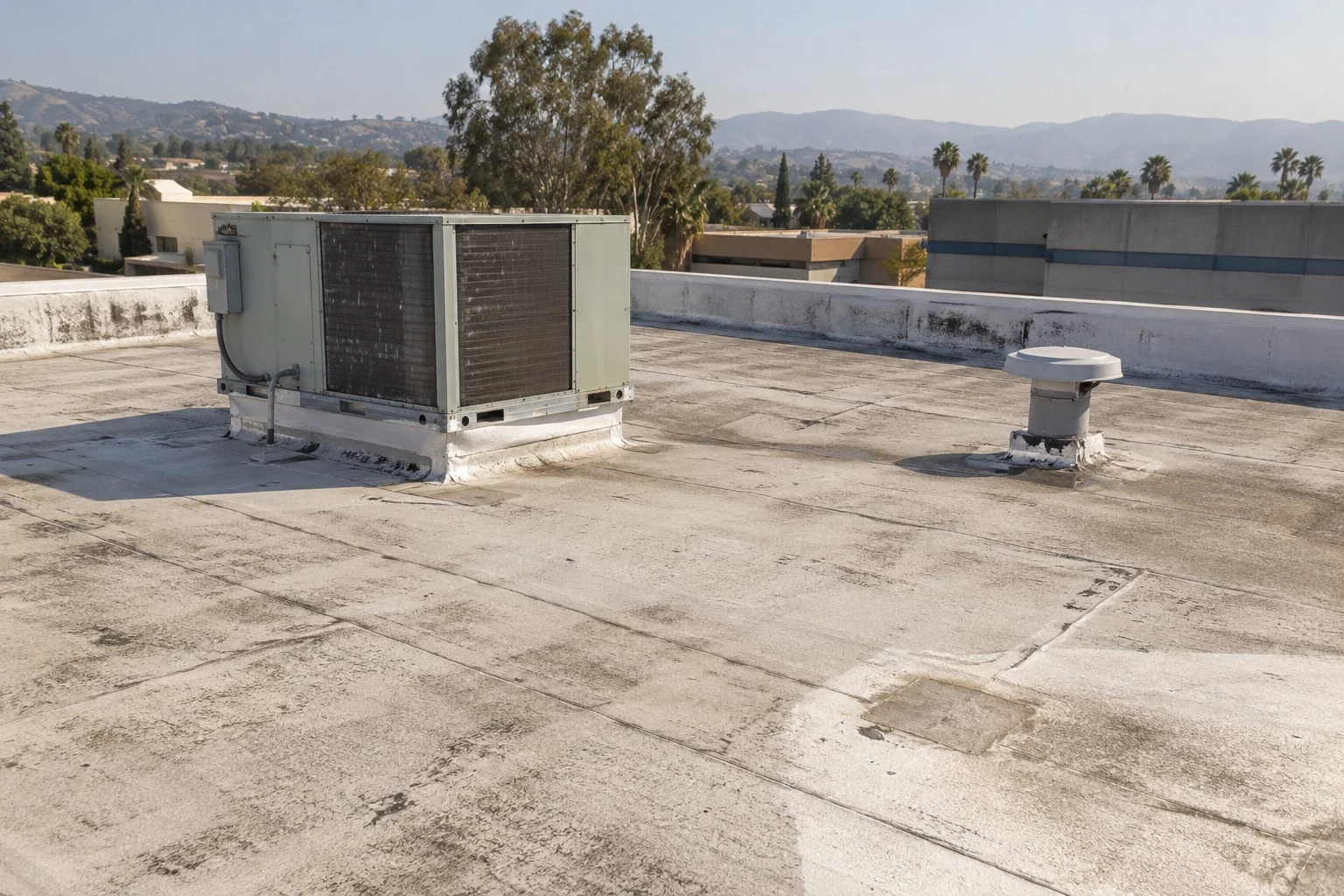
New rooftop equipment can change a sound weather connection into a maintenance risk. Before the unit is set, we check curb height, flashing clearance, access and drainage around the proposed work. West Berkeley’s research and production properties and nearby Emeryville lab buildings can have active service routes that make sequencing important. A managed roof in West Berkeley still needs the equipment provider’s scope coordinated with roofing; we document the exterior connection and keep each contractor’s responsibility clear.
When a rooftop equipment curb or support has been changed, we start by measuring what's there now. Old drawings often don't show current heights or curb sizes. If the roof is under warranty, check whether the manufacturer requires notice or an approved installer for new penetrations, and keep their response on file. The membrane brand alone doesn't tell you what's allowed. We keep our roof work separate from the HVAC contractor's unfinished items, so everyone can see what's left to do.
The closeout record shows where we repaired the roof and what we did, with photos of any substrate replaced and the finished details. Other roof problems we noticed are listed separately. Interior repairs are the restoration contractor's call; a dry ceiling doesn't prove the materials above it are dry. If the leak comes back, report it with the location and timing. We'll inspect the roof as it is at that point rather than assume the old repair failed.
When a general contractor is doing related work on the building, they get the same clear picture of where our work stops and theirs starts. Every open item has a name next to it so the next manager knows who to call. Scheduled dates are kept separate from completed work. Warranty documents stay with the roof sections they cover. A new manager should be able to pick up the file and know exactly what has been done and what's still open.
Send us the property address and where the water showed up. We'll inspect the roof and explain the repair and any coordination needed.
Request a Roof Assessment