Roofing for general contractors in Berkeley, CA: new penetrations, curbs and tie-ins flashed correctly, substrate issues flagged early and clear status for every roof detail.
Industries We Serve | Berkeley, CA
A new pipe through a Berkeley office roof isn't finished until it's flashed. The sleeve, the substrate around it and the roof flashing all have to fit together. We work with general contractors in Berkeley, CA to check those roof details and explain what has to happen before they can be closed. A pipe being set doesn't mean the roof around it is ready. We check the membrane and the actual dimensions on site. The goal is a finished, watertight detail, not a patch that covers a problem nobody solved.
A roof penetration can move between drawing issue and installation. We compare the approved opening with the sleeve, curb and roof assembly actually present, then flag a mismatch before permanent flashing is fabricated. West Berkeley’s former industrial stock, Berkeley’s campus-area buildings and Oakland’s port-side projects bring different roof and staging conditions. For an office-building roof interface, we coordinate the roof-side connection with the contractor’s current details and keep structural or mechanical decisions with the responsible designer.
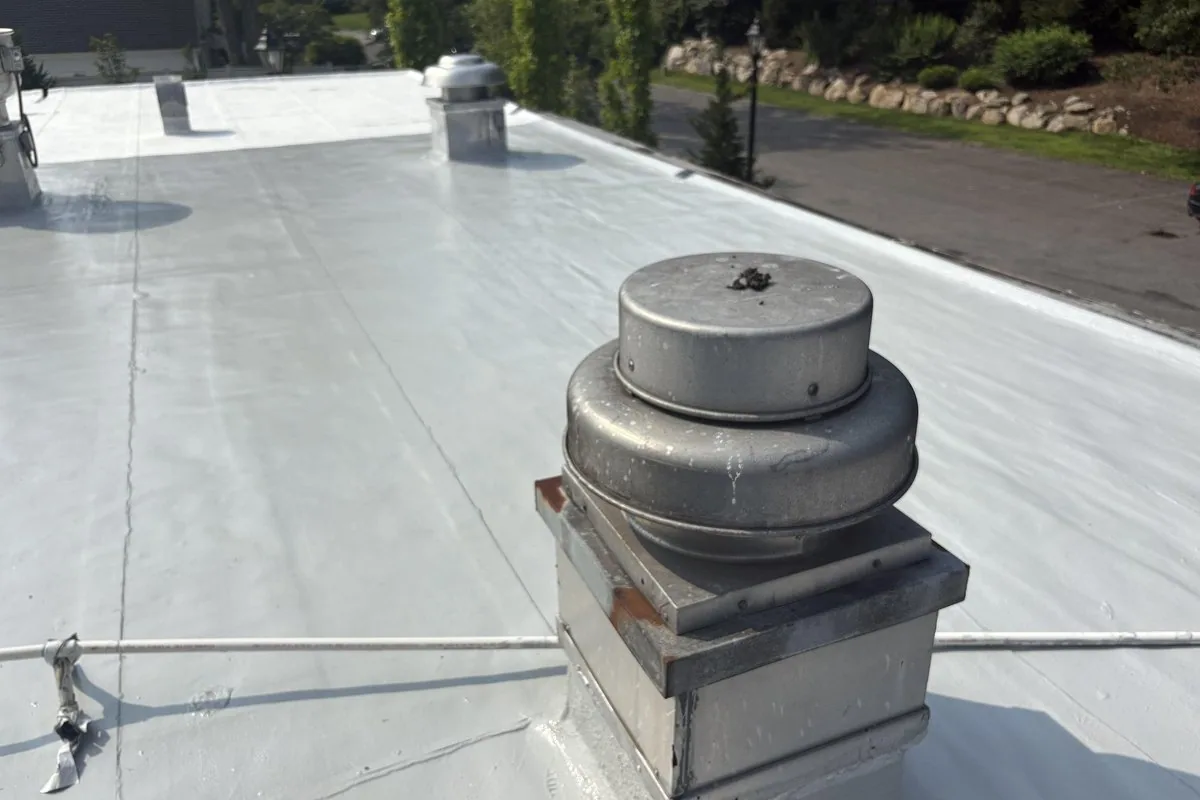
The flashing has to match the existing membrane and the shape of the pipe, curb or support. We check the roof around the opening, any old patches nearby and the substrate where we can reach it. An old mastic patch next to the new sleeve can mean extra prep. The flashing method has to bond to what's actually there. Questions about the pipe or equipment itself go to that trade or designer. We tell you how the final position of their work affects the flashing, so the sequence makes sense to everyone.
Penetration flashing has to wrap all four sides and corners and reach the right height. If equipment or ductwork blocks one side, the flashing can't be finished properly there. We flag what needs to be moved or removed so the full detail can be done. The trade that owns it should confirm they'll be there before the roof is opened. Finishing three sides and leaving the hidden fourth for later is how leaks start. We complete the whole detail the specification calls for.
Cutting into an existing roof sometimes shows layers that don't match the drawings. We record what's actually there. If insulation looks wet, we test before deciding how much to remove. Damaged material is replaced, and the new layers have to come out level with the existing roof and line up with the penetration and nearby drains. That can mean different flashing parts than were ordered. We document the condition and the changed dimensions together, so any change order has a clear reason behind it.
Replacing insulation and cover board around a new sleeve includes tying it into the existing roof. We mark where sound material starts. If the damage goes further than expected, we document it and follow the agreed change process. Someone on the project needs to be able to approve the change while the roof is open. Until then, the area gets a temporary seal that someone is responsible for maintaining. The superintendent knows what's done and what's waiting on a decision.
Equipment sometimes needs testing, adjustment or final placement before the roof can be closed around it. We ask the responsible trade what's still to come, and the GC sets the order. Flashing should go on once the equipment is in its final position, not before it moves again. We tell you what roof work can proceed now and what has to wait. A percentage-complete number for the whole roof can hide one unfinished detail. A detail-by-detail status gives the superintendent something to act on.
On hotel and hospitality projects, the rooms below matter too. The operator confirms protection needs and when work is allowed. Material lifts, debris and crane picks are planned with the other trades. If a detail can't be finished, we seal it temporarily and stop. The GC should know who keeps that seal in place and what needs to happen before we come back. A date on the schedule doesn't make a missing curb appear. Status reports should describe what's actually built and ready for the next trade.
Before a crew opens the roof, the superintendent should know where temporary closure, material travel and interior protection will sit. We confirm the roof section and tie-in boundary, then identify any equipment or wall work that must happen first. A West Berkeley roof project may involve active production or research space, while a downtown Oakland site can have different access limits. We set the work sequence against the actual building and its current construction documents.
When a property management company is involved, their rules for tenants, access and work hours carry into our plan for opening and closing the roof. If a drawing revision changes the roof work, we check it. Products are chosen once the assembly and dimensions are settled. Manufacturer and design questions go to the right party. Our scope spells out exactly which roof details we're delivering, which makes prep, equipment readiness and final inspection easier to coordinate.
We photograph the prepared substrate and the finished flashing at each new penetration, with locations marked. The record shows what was kept and what was replaced. Any equipment work still outstanding is listed next to the finished roof detail. Equipment testing is the responsibility of the trade that installed it; our roof sign-off doesn't cover it. The GC can use the combined status to close out the remaining items, and each trade signs off on its own work.
Adding new penetrations can affect the roof warranty, so roof warranty management matters even on small alterations. Some warranties require notice to the manufacturer or use of an approved installer, so check the actual warranty document. Another project's warranty terms don't apply here just because the roof looks similar. The owner should have the location of each new detail and any open warranty items. If the equipment moves later, the flashing needs to be checked again, and the closeout photos show what was there before.
Send the current penetration details and trade schedule. We'll check the roof around each opening and tell you what's needed for permanent flashing.
Request a Roof Assessment