Roof warranty management for Berkeley buildings: match warranty documents to the roof actually installed, handle equipment changes correctly and keep repair claims organized.
Roofing Capabilities | Berkeley, CA
When a mechanical contractor wants to cut a new curb into an office roof, the first question is often whether it will void the warranty. The answer is in the warranty document, not the membrane brand. Roof warranty management in Berkeley, CA matches the paperwork to the roof that is actually on the building. We read the relevant documents before any alteration is planned, and we look at the roof itself, because the new opening still needs solid substrate and proper flashing. You get a clear next step, and we never promise coverage that only the warranty holder can confirm.
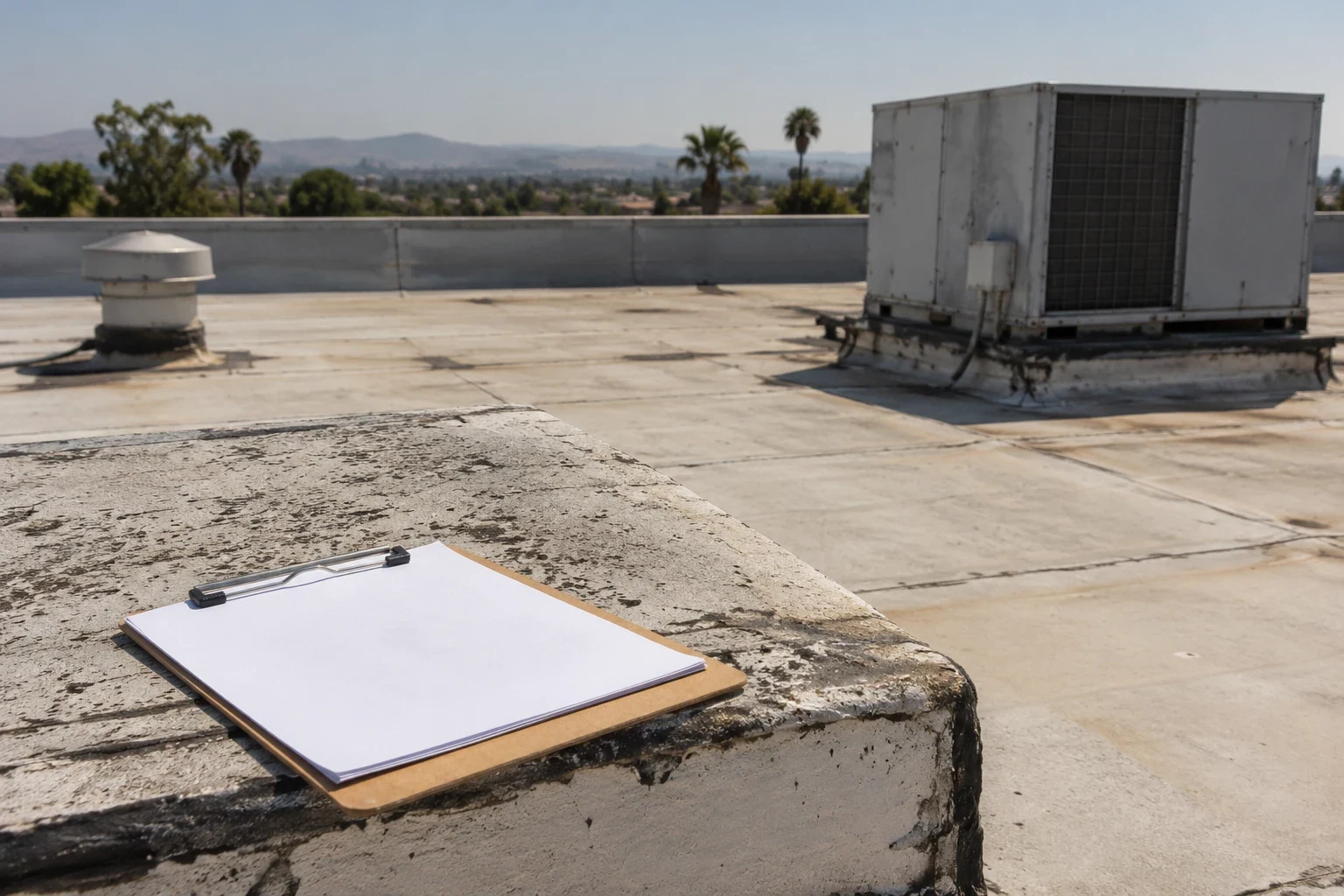
A warranty question starts with the agreement and the roof assembly it covers. We review available product, installation and service records, then compare the described detail with what can be observed on the building. Berkeley’s commercial roofs range from older built-up systems to newer single-ply assemblies, so the material and installation history matter. For an office-roof document review, we identify missing records and avoid treating a roof system name as proof of current coverage.
A roofing project can leave several documents behind. A manufacturer's material warranty, a full system warranty and the contractor's workmanship warranty all cover different things, for different lengths of time. We sort out which ones you have and which building or roof section each one names. A folder labeled "roof warranty" sometimes holds a sample or a proposal rather than an issued document. Before you rely on any of it, confirm who issued it, what it covers, how long it runs and what the owner has to do to keep it in force.
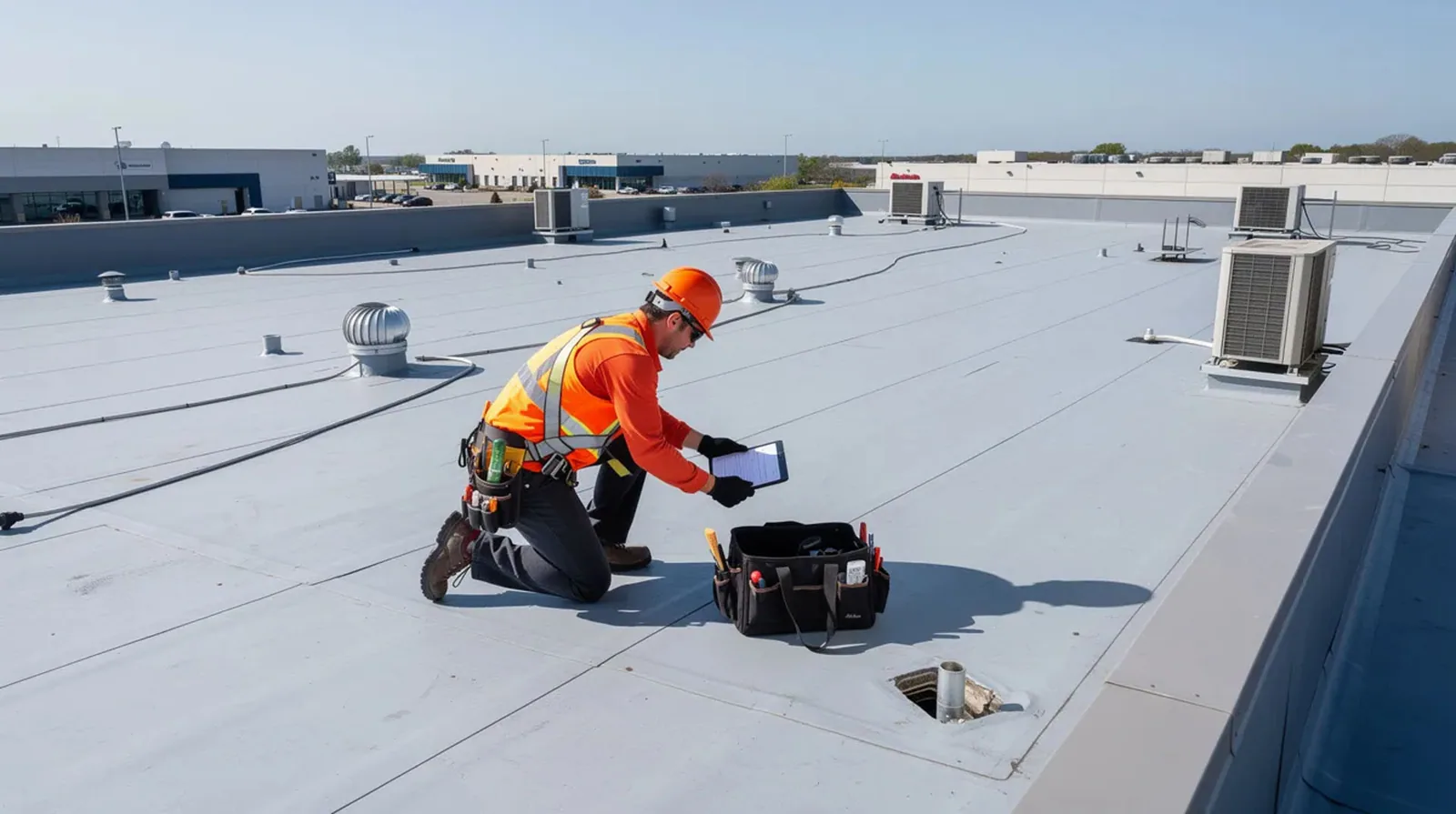
A roof condition report records what is physically wrong with the roof. It doesn't decide whether the warranty covers that problem. We compare the original installation records with the roof as it is now. Rooftop units, new penetrations and other changes made after the roof went on often aren't in the original paperwork. If documents are missing, the right move is to ask the manufacturer or the original installer, not to assume either way. We list those document questions separately from the repair so each one gets handled properly.
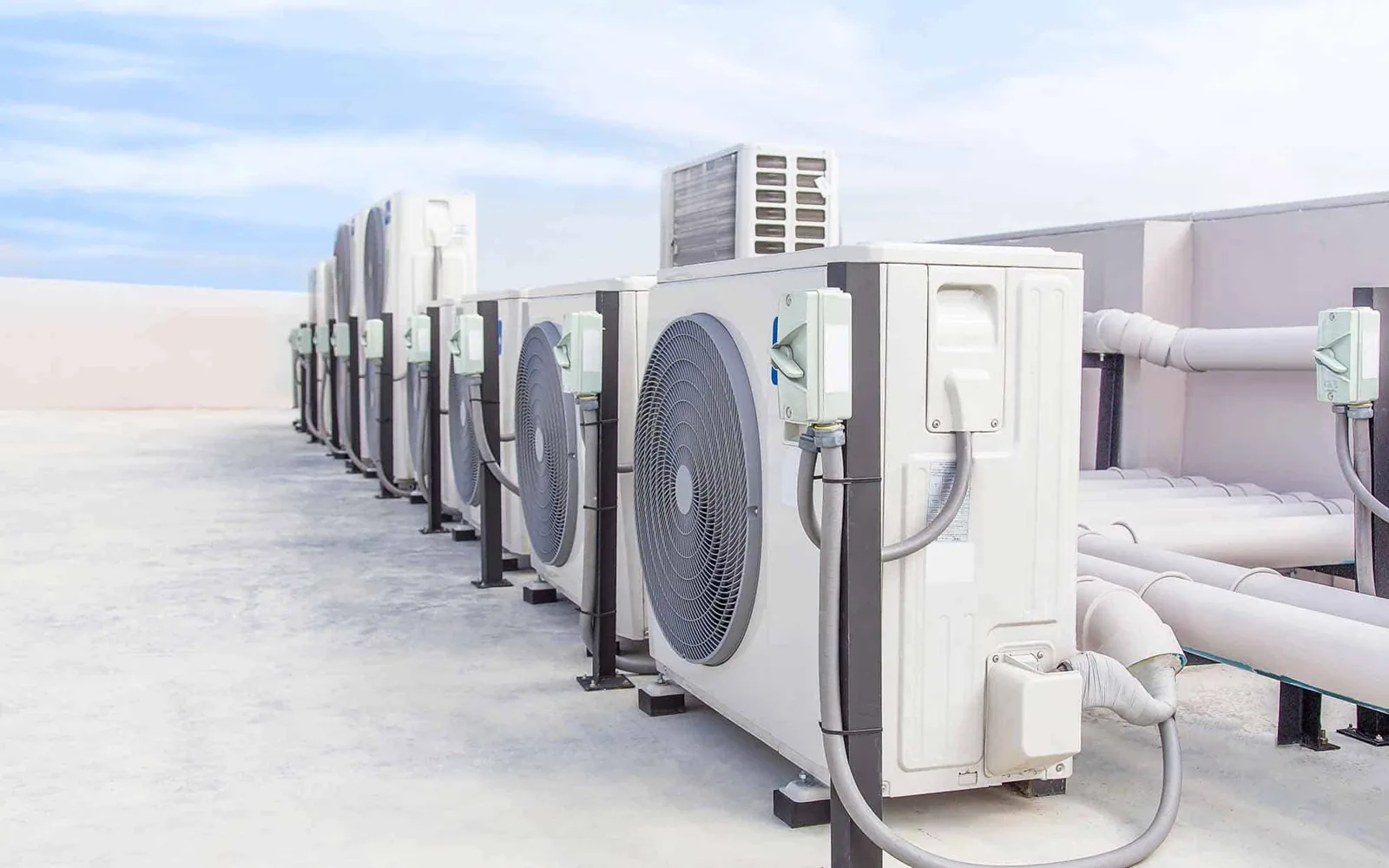
A new penetration needs a curb or flashing detail that fits it and membrane in good enough shape to tie into. Many manufacturer warranties also require that the manufacturer be notified, or that an approved contractor do the roof work around a new opening. Those requirements come from your warranty, not from a warranty on some other building, so we check the actual document. The mechanical contractor sets the unit; the roofer flashes the curb. Both jobs need to be clear and assigned before anyone cuts a hole in the roof.
When planning rooftop equipment curbs and supports, we look at the existing insulation, curb heights and the area around the new opening. An approved equipment drawing shows where the unit goes, not how the roof will be sealed around it. If insulation has to come out or the curb has to be taller, the flashing materials change too. The products used should match what the warranty allows. The goal is that everyone knows who does what and the warranty question is answered before work begins, not after.
When a leak shows up, we record exactly where it is and what we see, with photos of the membrane and nearby flashing. If water is coming in, a temporary fix may be needed right away to protect the space below. That temporary work is documented separately from the permanent repair. Most warranties have rules about how and when to report a leak and who may make repairs, so the document should be checked early. A temporary patch keeps the building dry, but it doesn't decide whether the warranty holder will accept the claim.
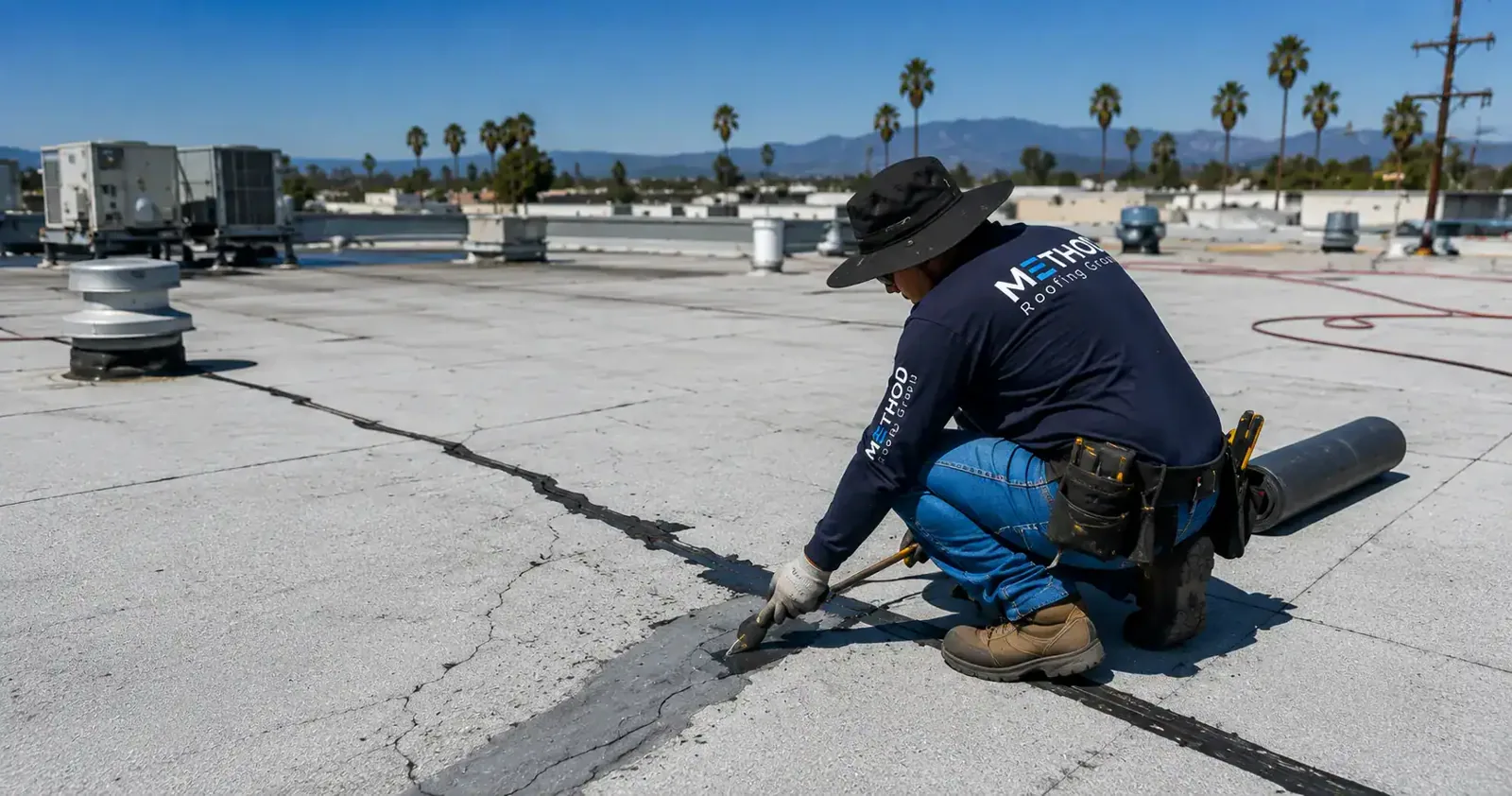
A commercial roof repair on a warrantied roof needs sound material to tie into. We explain any substrate repair and how the new material will join the existing membrane. Some warranties require the manufacturer's approval or an authorized installer for repairs, and doing the work without that can create a problem later. Product brand alone doesn't tell you whether a repair meets the warranty terms. You get a clear repair plan and a clear warranty question, so the work moves ahead while the paperwork is checked properly.
When a leak appears, the owner needs a clear account of the location, observed condition and any recent repair or equipment change. We can document roof-side findings and organize the question for the party responsible for the agreement; only that party interprets its terms. West Berkeley’s research and industrial properties and downtown Oakland offices may hold different records. A West Berkeley roof record should keep each building’s agreement, service history and unresolved detail together.
Including warranty items in your roof asset management file makes later reviews much easier. We describe what we found on the roof without guessing at the coverage result. You can see which claims are open and which repairs are still pending. A claim that has been sent in is not the same as one that has been approved. Materials that have been delivered are not the same as work that has been installed and signed off. Keeping those differences on record means a new property manager isn't working from memory.
At the end of a roofing job, the closeout package should list the products installed and the work completed, with photos and locations of any repairs. If some details, like a curb waiting on the mechanical contractor, aren't finished, they're listed even if the main roof is done. Open warranty questions should name who is handling them. A completion date is not the same as an issued warranty, so keep the actual warranty certificate or the manufacturer's response once it arrives. If something is still unconfirmed, it stays on the to-do list.
When roof capital planning starts, the warranty file matters as much as the condition report. We compare options by the full scope of work and the warranty actually offered with each one. Don't assume a new proposal comes with the same warranty length as a past project or another brand. Any future rooftop changes will need to be checked against whatever warranty you end up with. Warranty management works when the paperwork matches the roof that was actually built.
Send us the warranty documents and the building address. We'll look at the roof and explain both the repair and the warranty steps involved.
Request a Roof Assessment