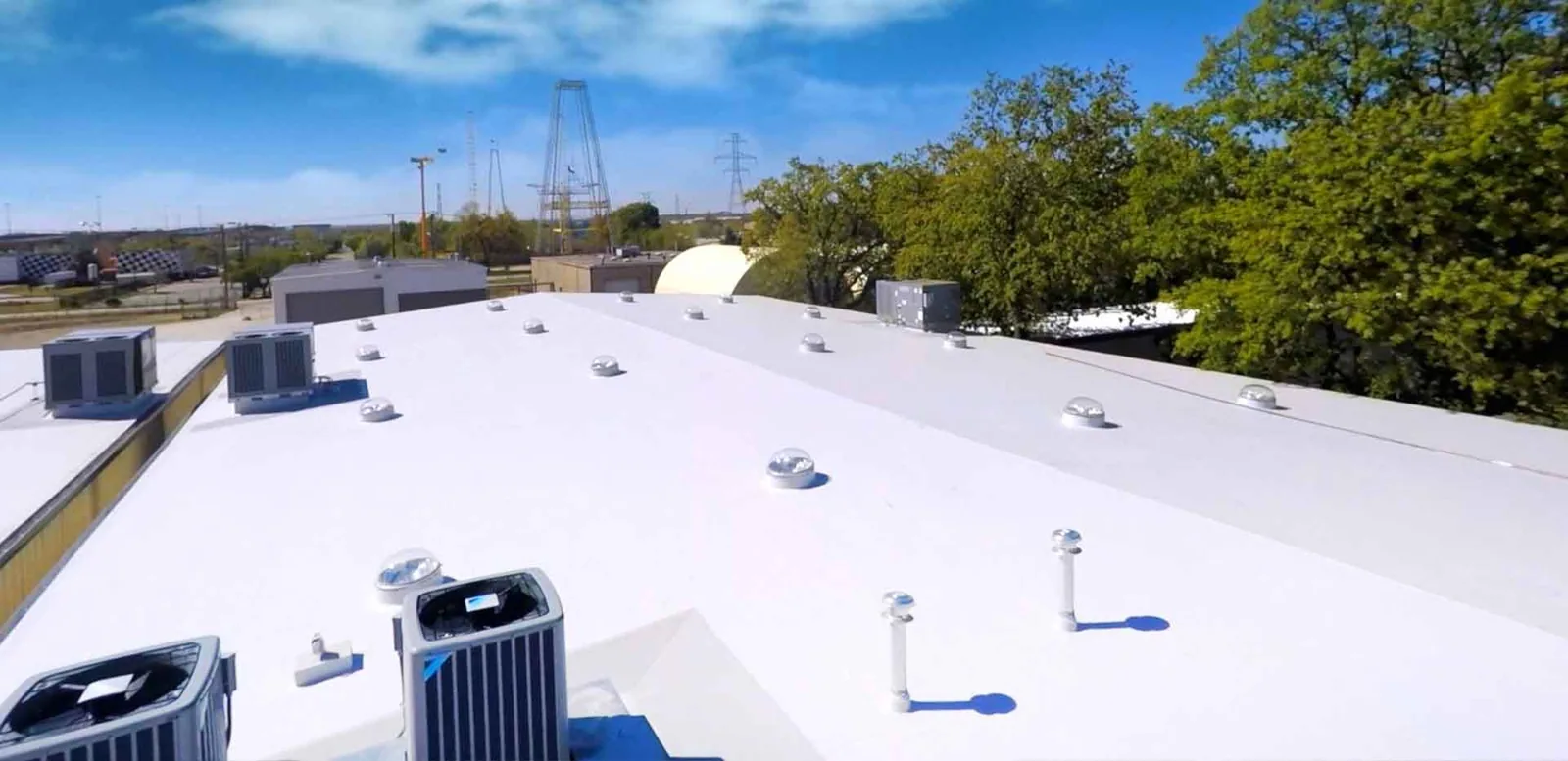
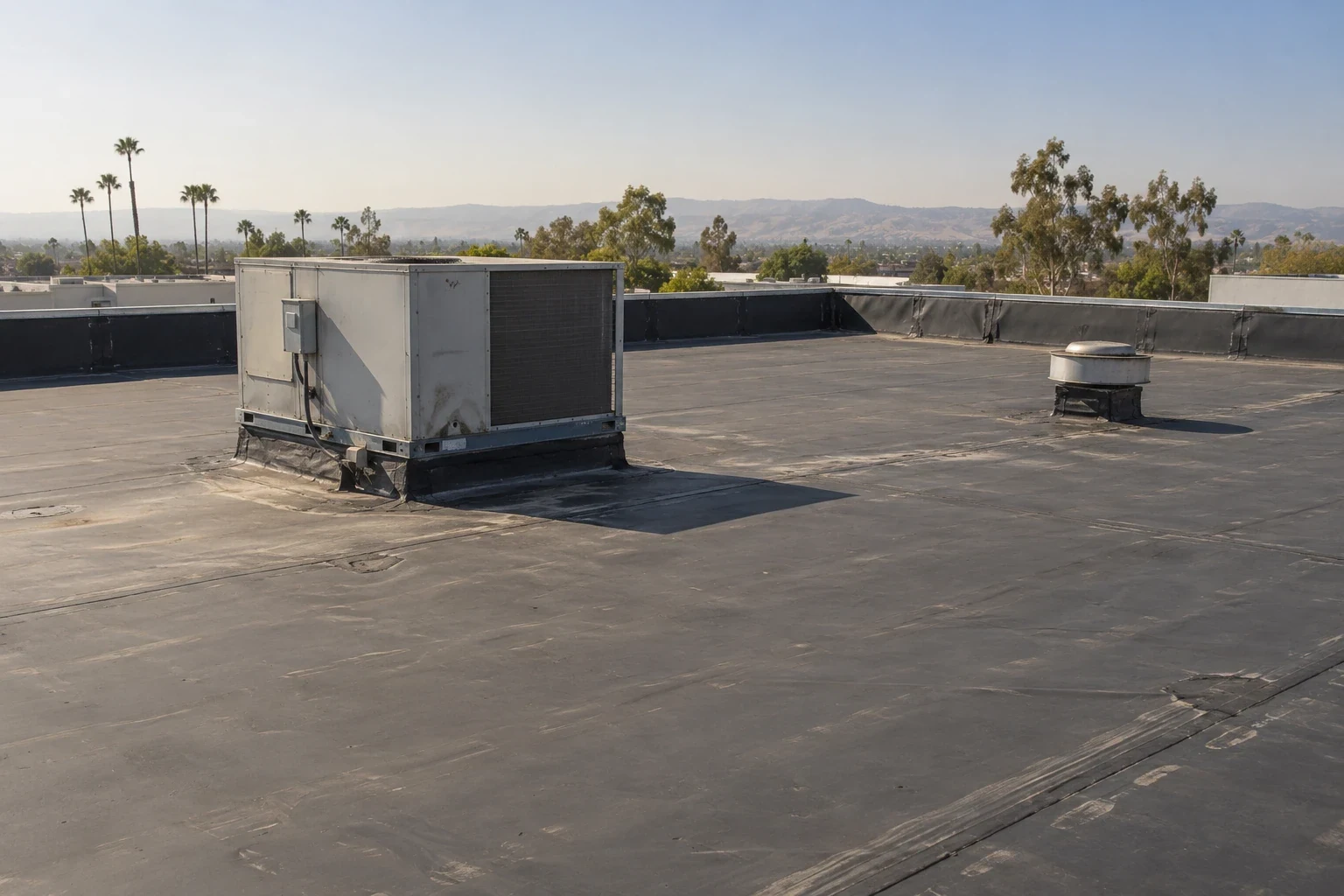
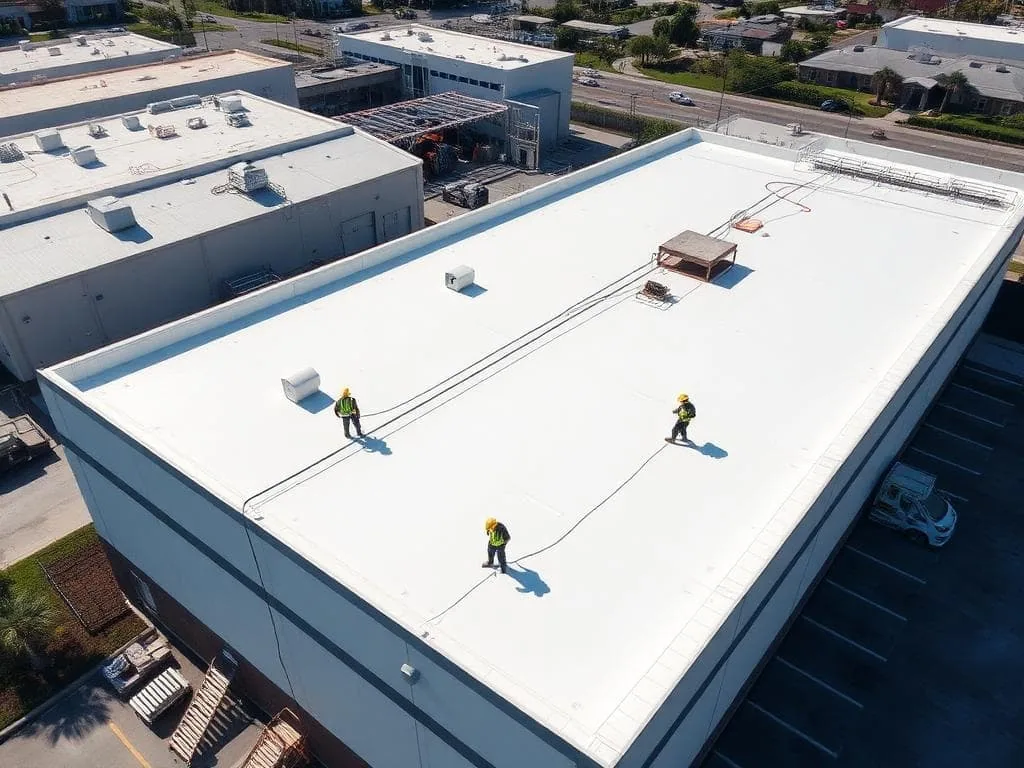
Rooftop equipment curbs and supports in Berkeley, CA: we rebuild shifted or rotted curbs, raise short ones, and reflash units so they stop leaking.
Commercial Roofing Services | Berkeley, CA
A rooftop unit on a lab building that has shifted on its curb leaves the flashing stretched on one side and loose on the other. That is a leak waiting to happen, and sometimes it is already leaking. Rooftop equipment curbs and supports in Berkeley, CA, are some of the most common leak points on any commercial roof, because they carry heavy, vibrating equipment through the roof and need flashing that stays sealed while everything moves.
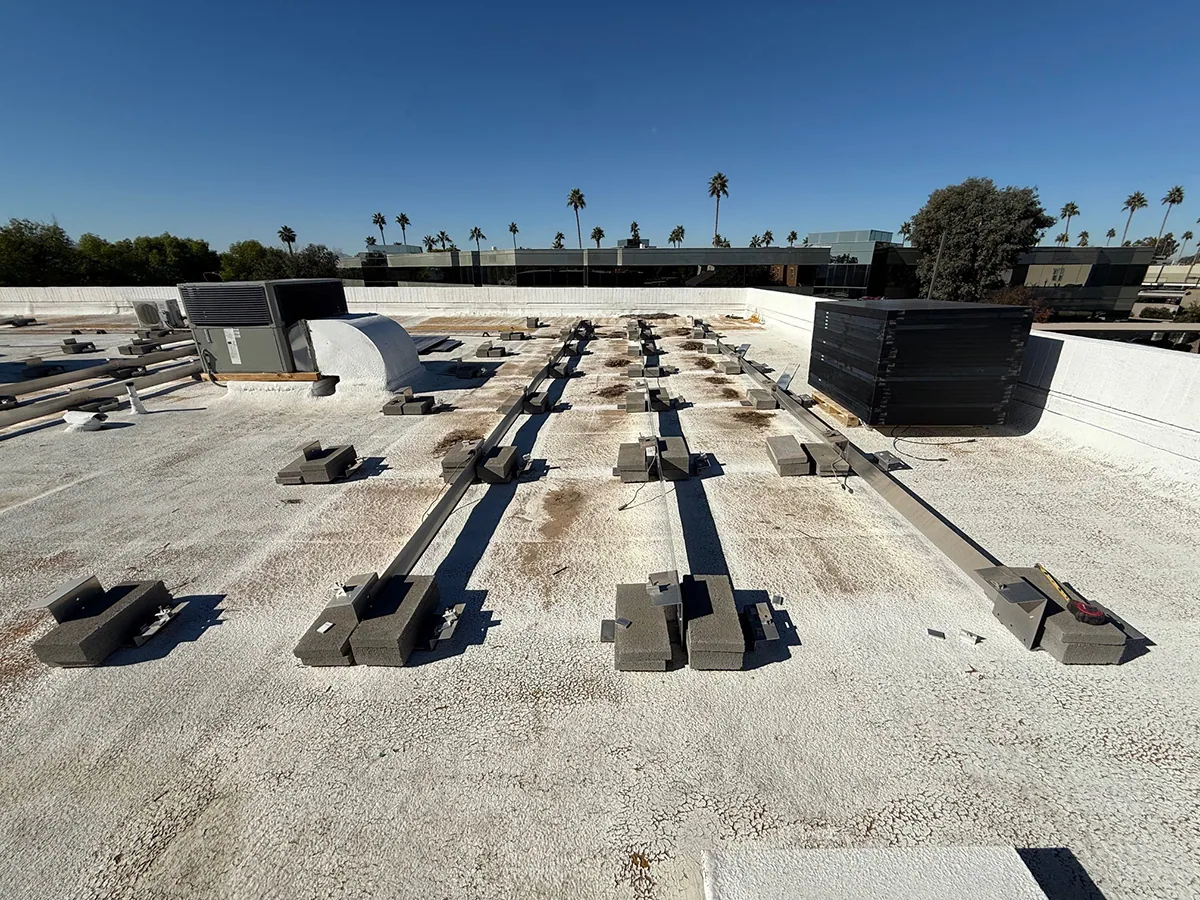
Before we touch the flashing, we figure out why it failed. The curb may be rotted, rusted or too short. The unit may have been set crooked or moved during service. Pipe and duct supports may be sitting directly on the membrane and wearing through it. For manufacturing and industrial buildings, there are often process lines, exhaust fans and heavy equipment that cannot be shut down casually. We sort out which parts are roofing work and which belong to the mechanical contractor or equipment owner, so the fix covers the real cause. Pipe supports and conduit stands get the same look, since a support sitting on bare membrane can wear a hole through it.
A curb is the raised frame that holds a unit above the roof surface. The roof membrane is flashed up the sides of the curb and sealed under a metal cap or the unit's own flange. When a curb moves, sags or rots, that flashing tears or pulls away. When a unit is not sitting square on its curb, gaps open where water can get in.
We check whether the curb is solid, level and tall enough, and whether the unit is seated properly. Structural concerns, like a curb that is sagging because the framing underneath is overloaded, are flagged for an engineer. Unit problems, like a cracked base pan or a leaking condensate line, are flagged for the mechanical contractor. Once the curb and unit are sound, our penetration flashing work rebuilds the roof seal around it. We will not reflash a curb that is still moving, because the new flashing will fail the same way. Pipe and duct supports that sit directly on the roof are moved onto proper pads or stands.
Water that gets past a curb flashing usually soaks the wood nailers at the base of the curb and the insulation around it. Over time, the wood rots, the insulation crushes and the deck can rust. By the time a stain shows up inside, the damage around the curb is often bigger than the visible flashing problem.
A roof inspection at the curb includes pulling back the flashing to check the wood and cutting a core nearby to check the insulation. If they are wet or soft, they have to be replaced before new flashing goes on. Rotted curb wood gets cut out and replaced with treated lumber. Wet insulation is removed and replaced at the same thickness so the area stays flat and drains away from the curb. We photograph what we find under the flashing and include the replacement quantities in the estimate, with unit prices for any extra damage found once the work is underway.
Curbs need to be tall enough for the roof flashing to extend well above the roof surface, typically eight inches or more, depending on the roof system's requirements. Many older curbs barely met that height when they were built. When a new roof goes on with thicker insulation, those curbs end up too short, and the flashing has nowhere to terminate safely above standing water.
On a TPO roof, curb flashing is heat-welded membrane carried up the curb and secured under a termination bar or metal cap. On an EPDM roof, it is cured or uncured rubber flashing bonded with primer and seam tape. Either way, the curb has to be high enough. Raising a curb usually means lifting the unit, adding a curb extension and resetting the unit, which takes a mechanical contractor and often a crane. We measure every curb during the inspection and list the ones that need raising, so it is planned and priced up front.
Rebuilding a curb often means shutting down the unit on top of it. That might be a rooftop air handler serving occupied offices, an exhaust fan for a lab, or a refrigeration unit that cannot be off for long. The equipment owner has to agree on when it can be down and for how long, and the mechanical contractor has to be on site to disconnect and reconnect it.
We plan curb work around those shutdowns. If a unit cannot be shut down on the planned day, we move on to other work and come back, leaving any opened area sealed in the meantime. For buildings where people are working below, our occupied building reroofing approach applies: small, controlled openings sealed each day. Crane lifts are scheduled early in the day when possible, and street or parking closures are arranged in advance. The schedule we give you shows which curbs depend on a shutdown, so everyone knows what is waiting on what.
Across West Berkeley and Emeryville, a lasting curb repair depends on solid wood, dry insulation and access to the unit itself. Many older industrial and lab buildings here have curbs that were added, moved or abandoned as tenants changed. Curb and support work in West Berkeley follows the same steps: find out why it failed, fix the curb, then reflash it.
The completed record shows each curb on a roof plan with before and after photos, the wood and insulation replaced, the curb height before and after and the flashing materials installed. Work done by the mechanical contractor, such as disconnecting, lifting and reconnecting units, is noted separately. Abandoned curbs we found and closed off are listed too. If a unit is replaced in the future, this record tells the next contractor how the curb was built and flashed, which helps keep the roof watertight through the swap. It is also a good reference when budgeting for future equipment changes.
Tell us which units are leaking or sitting crooked on their curbs. We will inspect the curbs and explain plainly what needs fixing, with photos.
Request a Roof Assessment