Roof capital planning for Berkeley commercial buildings: condition-based budgets that compare repair, recover and replacement and flag the hidden items that move the price.
Roofing Capabilities | Berkeley, CA
If the deck under a warehouse roof is rusted or the insulation is soaked, the replacement budget changes, sometimes a lot. An asset manager needs to know that before comparing membrane prices. Roof capital planning in Berkeley, CA starts with what the roof actually needs. We inspect it, note what could change the quantities, and say how sure we are. Keeping wet insulation in place to save money can lead to blisters and early failure. Tearing off dry, sound material without a reason wastes money. We show the difference so you can decide which unknowns are worth testing before you go out to bid.
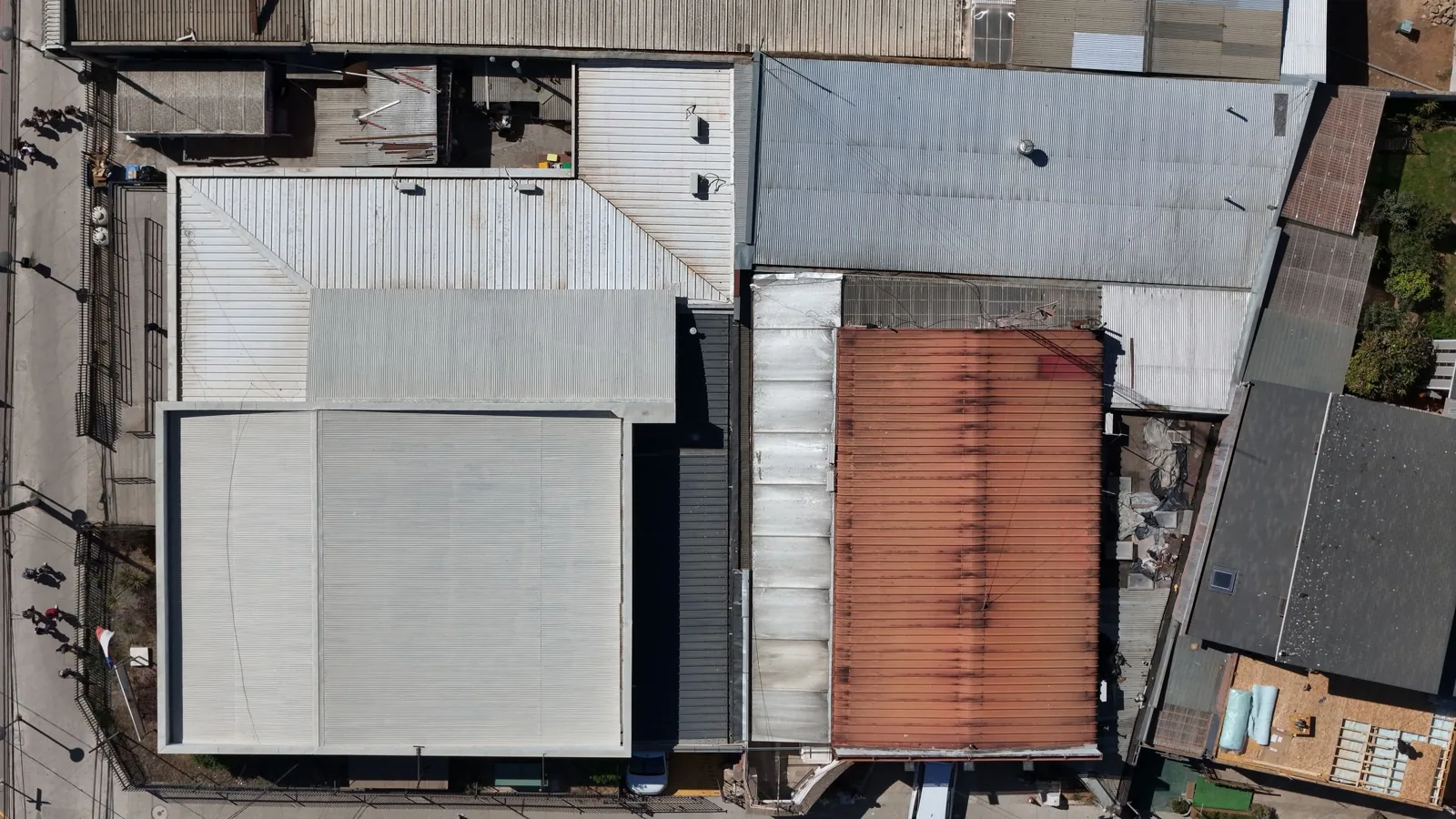
A roof capital plan begins with condition, not an assumed replacement date. We identify areas that need immediate repair, systems that may remain after corrective work and details that could change the scope. Berkeley sites with several past additions call for a plan that separates verified repairs from questions requiring an opening before a budget is fixed. A warehouse roof plan should separate known removal from concealed risk, then compare repair, recover and replacement using the same finished boundary.
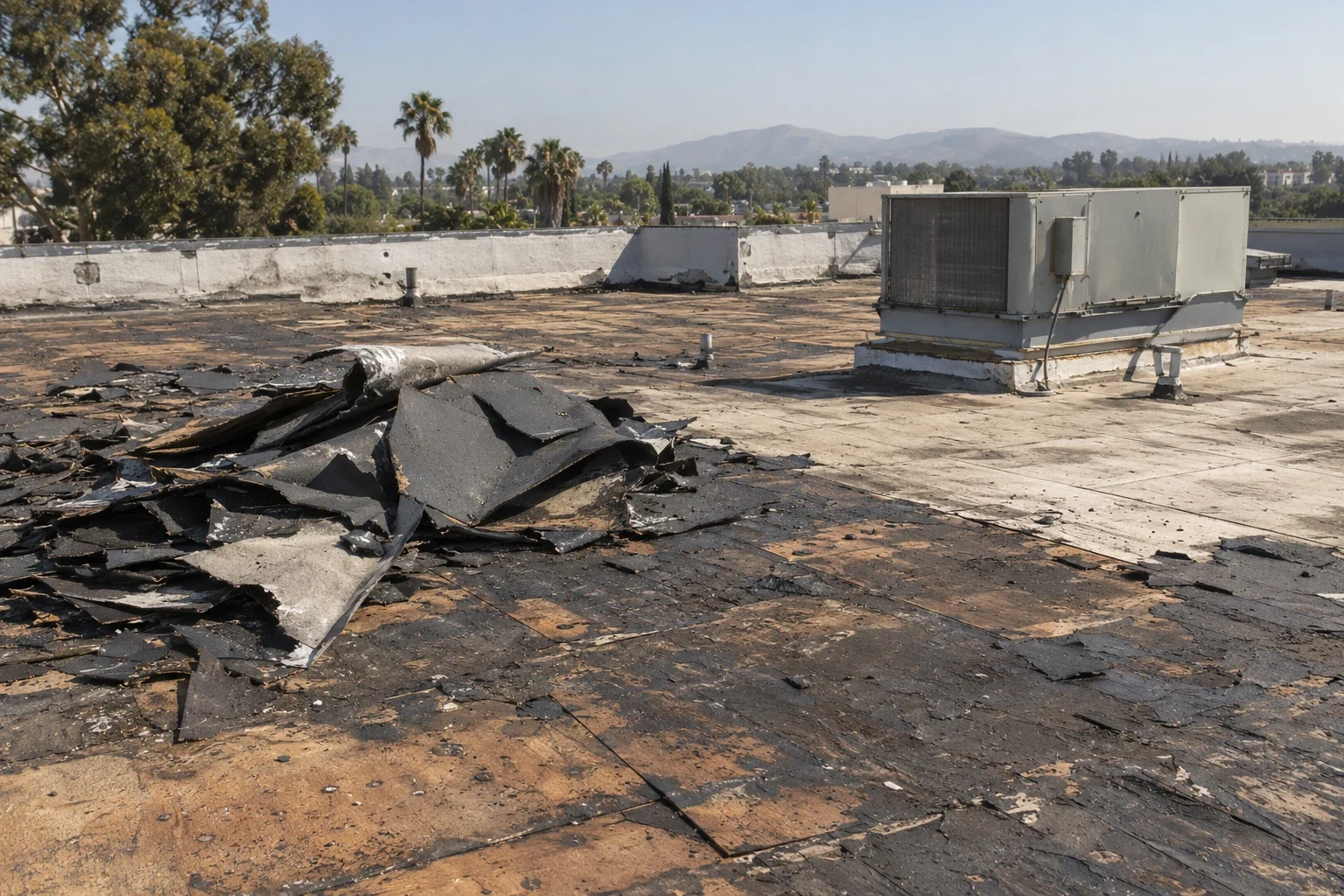
A square-footage number for new membrane is only part of the cost. The budget also has to say what comes off, what stays, and what goes underneath: insulation, cover board, deck repairs. We can confirm a defect we can see, but how far wet insulation spreads under a sound-looking surface is often unknown until we test or cut. If that unknown could swing the price, the plan says so and carries a line for it. Otherwise a budget that looks complete can leave out the work needed to actually stop the leak.
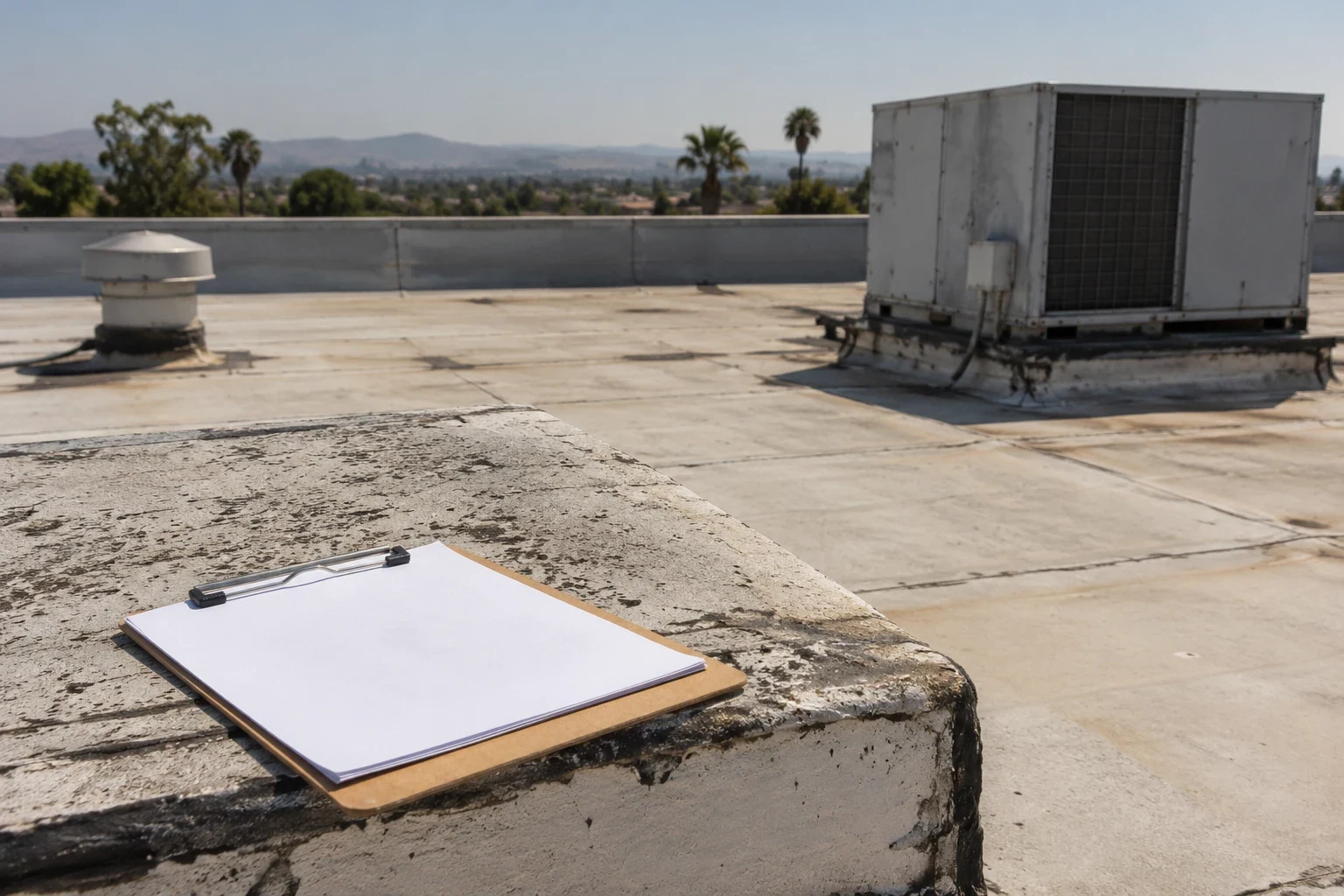
A due diligence roof survey should answer the specific question in front of you, usually whether the existing roof can stay under a recover or has to come off. We check drawings and records against what is on the roof today and note any areas we could not reach. A moisture scan that flags a suspect area is not the same as a confirmed wet zone, so we mark which is which. Where the answer is still open, the plan sets a unit price for extra removal so the cost is agreed before work starts.
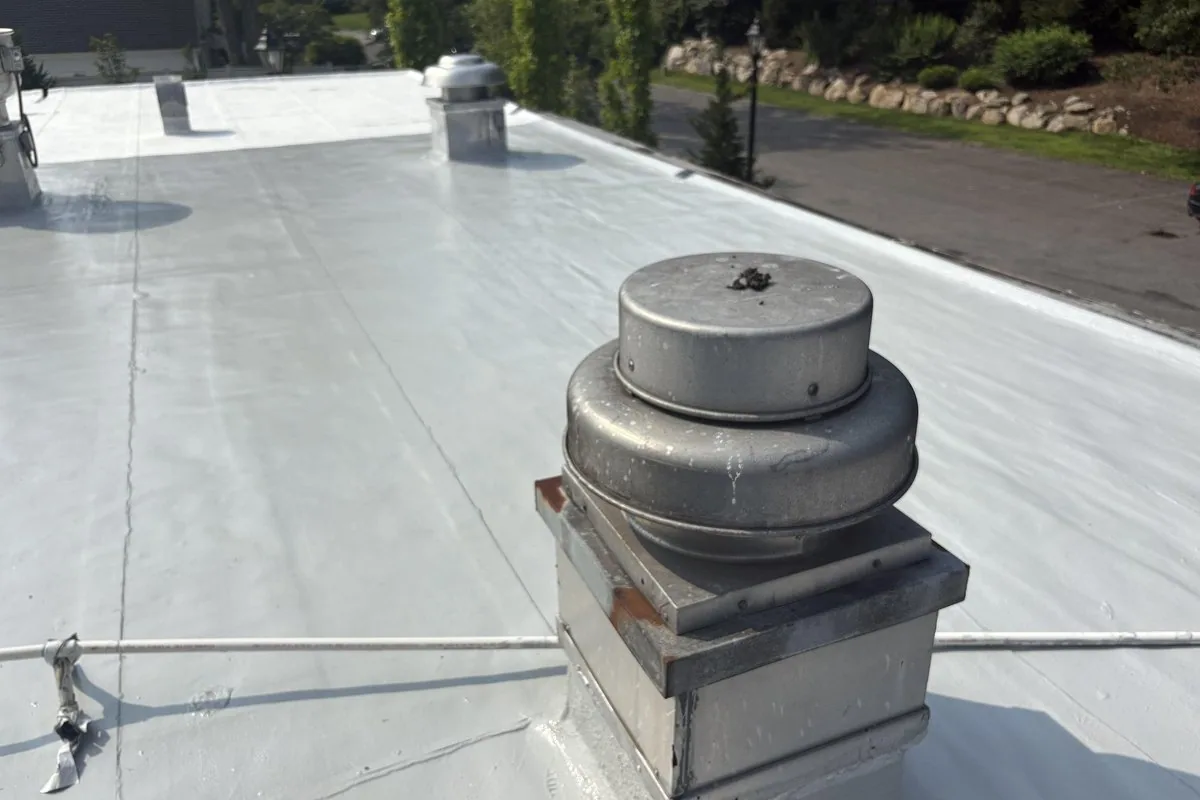
Adding insulation raises the roof surface. That can mean higher wall flashings, taller curbs and new edge metal, because the old pieces no longer reach. Drains may need extensions or new bodies so they still sit at the low point. We measure curb heights and parapet heights before the scope is set. Old sheet metal sometimes has to be replaced rather than reused. These items are easy to leave out of an early budget, and they are a common reason a roofing project runs over. A good capital plan lists them next to the membrane cost.
Choosing insulation and cover board is where much of that cost is decided. We look at what is already in place and what the new system needs. A thicker assembly may save energy, but it also changes every edge and opening, so it can't be priced as a simple add. If a rooftop unit has to be lifted or replaced by the mechanical contractor before a curb can be raised, the plan notes who does that and when. Comparing options on the same scope makes the numbers honest.
A targeted repair and a full replacement solve different problems. We spell out which defect each option fixes and what each leaves alone. A repair costs less now but leaves more of the old roof in service, with the risk that comes with it. A replacement should explain why it removes as much as it does. Material and labor numbers mean little without that context. Two bids for the same square footage can deliver very different results if one includes new flashings and drains and the other does not.
Roof asset management keeps that comparison on file after the decision is made. We record why the chosen option was picked. Areas you decide to defer stay on the list with their own notes, because approving work on one section does not make the next section sound. If tear-off reveals rotted deck or wet insulation beyond the plan, the contract should already say how extra work is measured, priced and approved. Planning for surprises does not mean pretending you know every hidden condition in advance.
Budget timing improves when supporting work is visible beside the membrane quantity. We include access, edge metal, curbs, drainage, removal and temporary protection as separate scope drivers, then flag any design decision still open. Emeryville research properties and Oakland warehouses add different operating constraints across the East Bay. For downtown Berkeley roof work, the owner can stage capital by verified condition while preserving a clear allowance for items that require further opening or engineering review.
A commercial roof replacement needs a clear phasing plan: how much roof is opened each day, how it is dried in at night, and who approves changes when tear-off turns up something new. If the mechanical contractor's work holds up one area, the crew can keep moving elsewhere while that spot stays temporarily protected. Tracking those areas separately keeps one overall completion date from hiding a section that is still unfinished.
At closeout you should have a record of what was actually installed. That includes what was removed, deck or substrate repairs, insulation and membrane used, and photos of finished flashings, curbs and drains. If quantities changed during the job, the record shows why. Punch-list items stay listed until they are done rather than disappearing under a general completion note. The warranty paperwork needs its own review, since the membrane brand alone does not tell you what future changes are allowed. Keep all of it together in one file.
Roof warranty management starts with the actual warranty document. We keep its requirements next to the record of products and work installed. If a manufacturer warranty was quoted, confirm it was issued and what it covers. Installation photos are not the same as a coverage decision. Later rooftop changes, like a new unit or penetration, should be logged with their location so they can be reviewed against the warranty terms. That way the capital spend leaves you with a clear picture of the roof you paid for.
Send us the building address and the options you're considering. We'll inspect the roof and tell you what could change the scope and the price.
Request a Roof Assessment