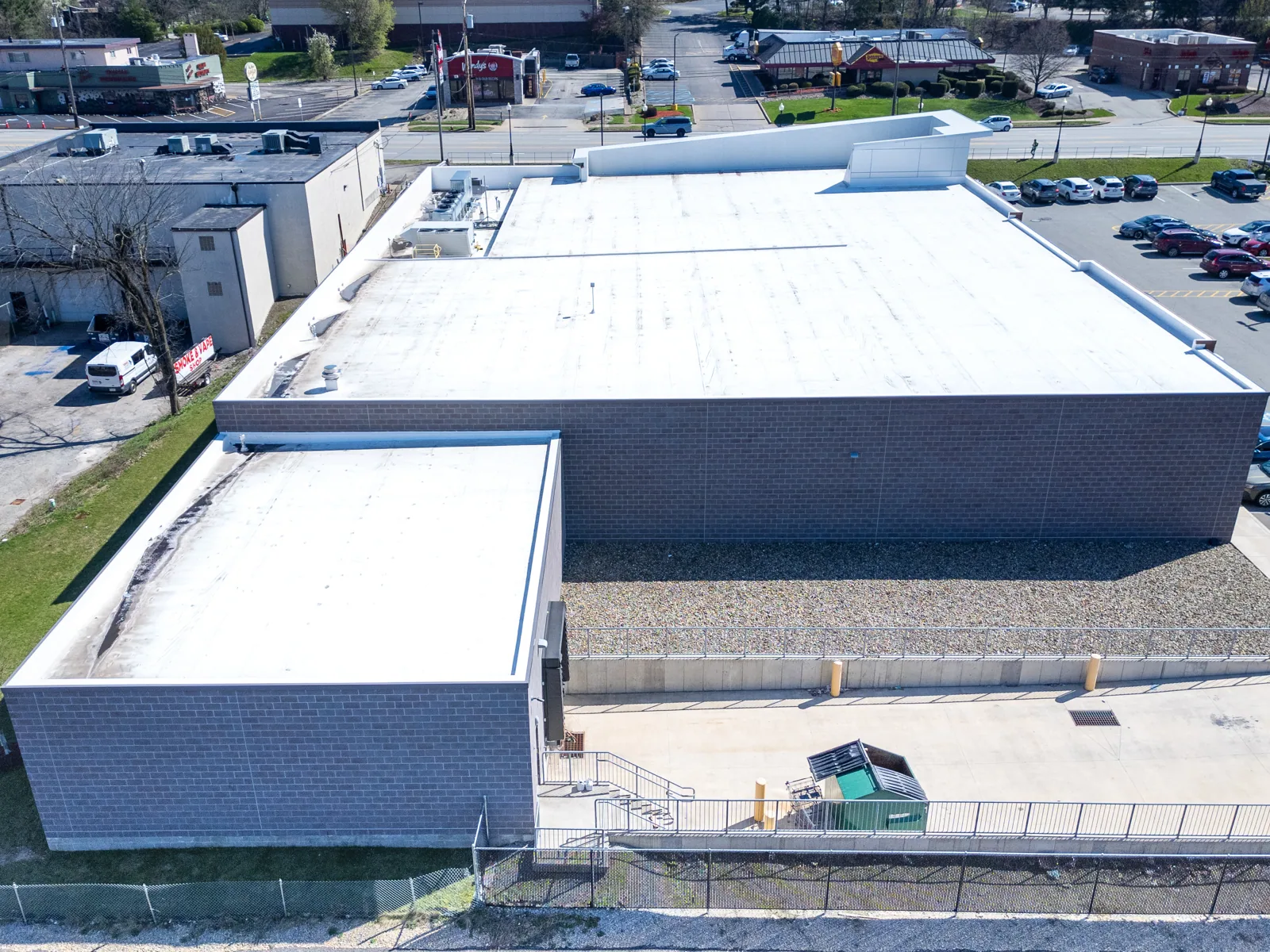
Seam failure repair in Berkeley, CA: we identify the membrane, find out why the seam opened, check for wet insulation and re-weld or splice it to clean, sound material.
Roof Damage Repair | Berkeley, CA
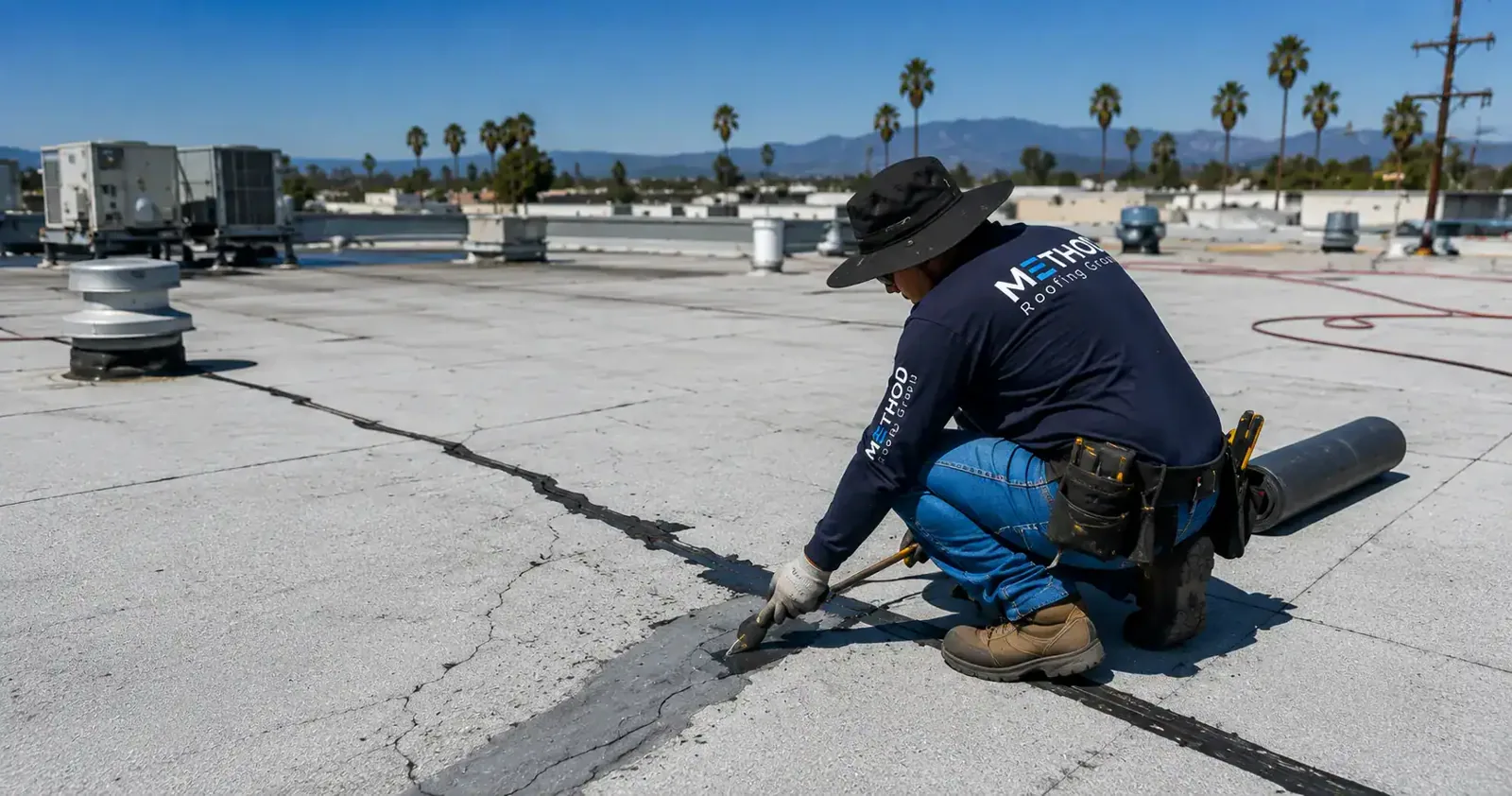
An open seam over a grocery store can let in a thin line of water right above the produce aisle or a freezer case. Seam failure repair in Berkeley, CA comes down to one question: is the membrane on both sides of the gap in good enough shape to bond to? We identify the membrane, find the open section and check the insulation underneath. Laying a strip of tape or another layer over the top rarely holds if old mastic or dirty membrane is underneath. We explain what prep the seam needs and what the permanent repair will involve.
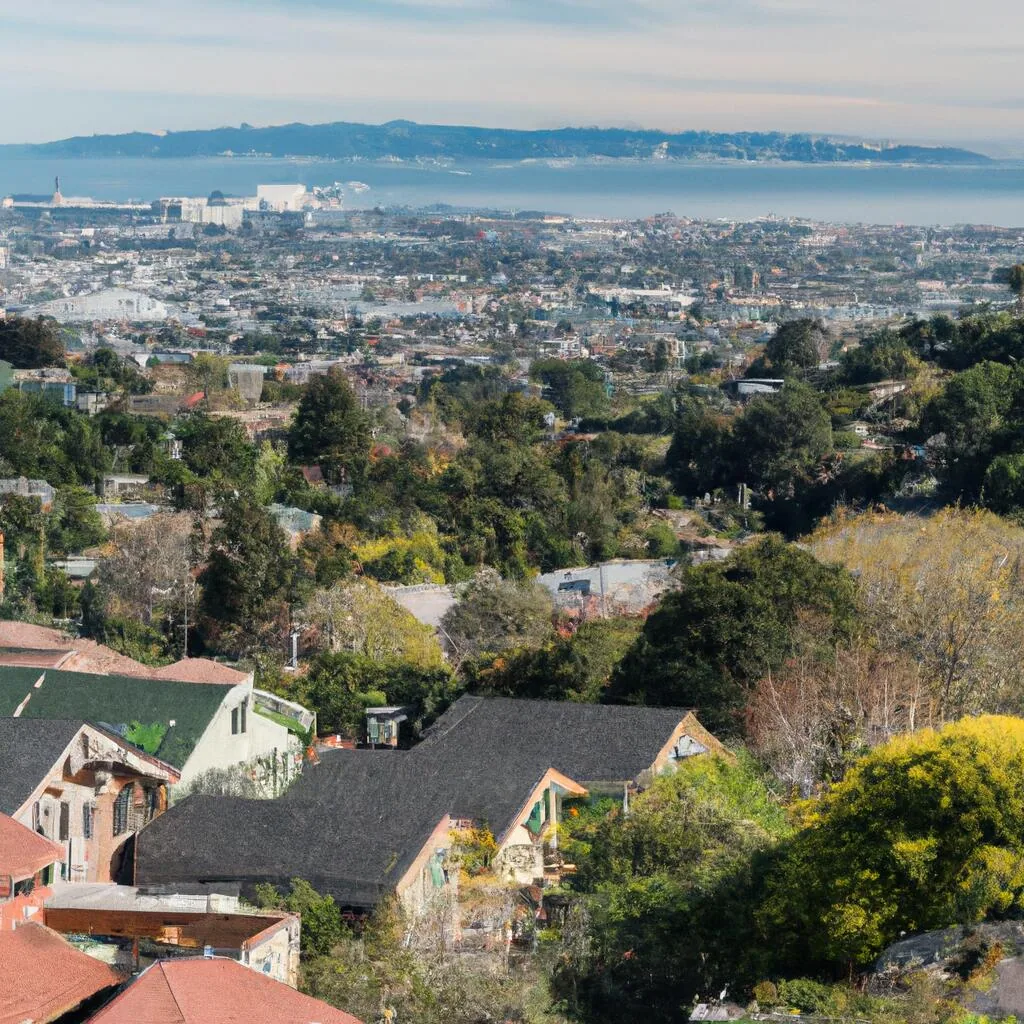
A seam can separate because of contamination, poor fusion, movement or an incompatible earlier repair. We test the accessible edges, identify the membrane family and inspect the support beneath the opening before choosing a permanent join. West Berkeley’s industrial and research buildings and Oakland’s warehouses contain different assemblies, so we verify the material rather than infer it from a nearby roof. For a grocery-roof seam investigation, the repair has to reach clean, compatible material on both sides.
TPO and PVC seams are heat-welded. EPDM seams use tape or adhesive. Modified bitumen laps are torched or set in adhesive. Each needs its own repair method, so the first step is confirming what's there. We compare what we see with any roof records. Old repairs often cover the original seam, and we need to know what they're made of too, because some patch materials won't bond with the membrane underneath. Even within one membrane type, not every repair product works with every brand.
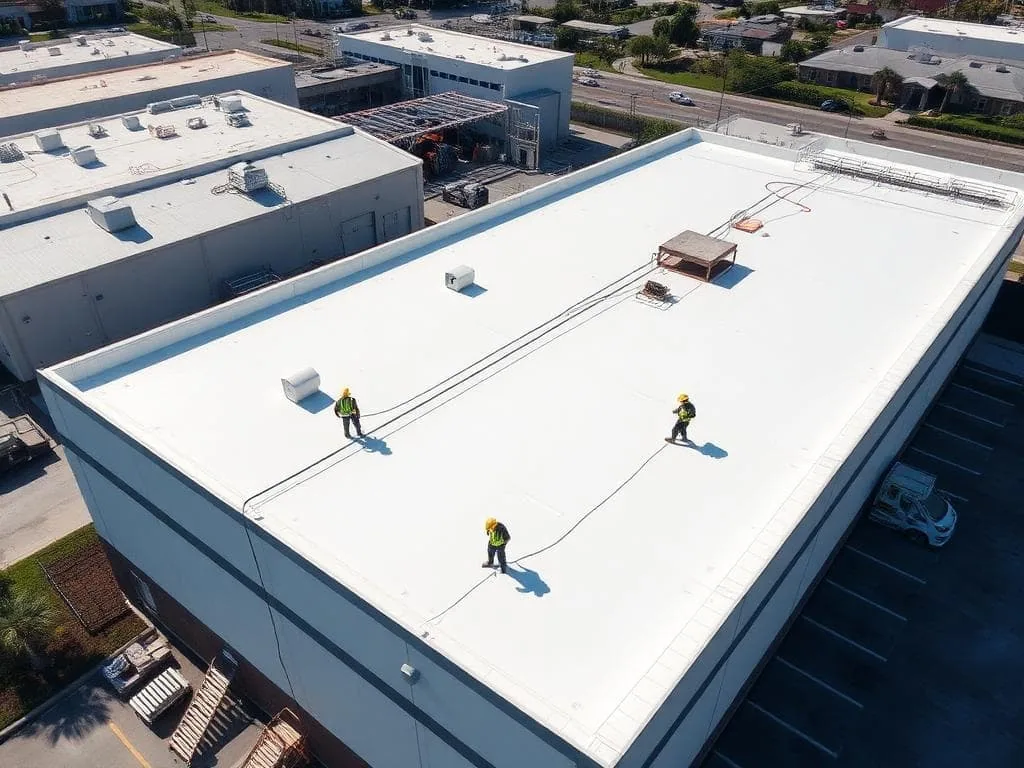
A proper commercial roof repair on a seam extends past the visible gap. We probe the seam in both directions to find where it's still well bonded. Weathered, chalky or contaminated membrane may need cleaning, priming or cutting back. Laying a wider strip over a bad surface doesn't fix the bond underneath. We explain what will be removed and what stays, and we follow the manufacturer's current repair details. The repair should close the seam for good, not just cover it.
An open seam tells you that seam failed. It doesn't tell you the whole roof is going. Common causes include a weld that was never fully fused, dirt or moisture during installation, building movement, and shrinkage at a corner or curb. We look at the seam and its surroundings before deciding which applies. If the deck seems to be moving, an engineer may need to look. A tight seam next to the failed one doesn't prove the rest are fine either. We keep what we found separate from what we suspect.
A commercial roof inspection of failed seams marks each one on a roof plan with photos you can find again later. We check whether the area has been patched before. A photo can show a gap without showing whether the insulation is wet, so we test where it matters. If a pattern shows up, such as many seams failing the same way, that changes the conversation from repair to a broader fix. The report explains the evidence for the scope.
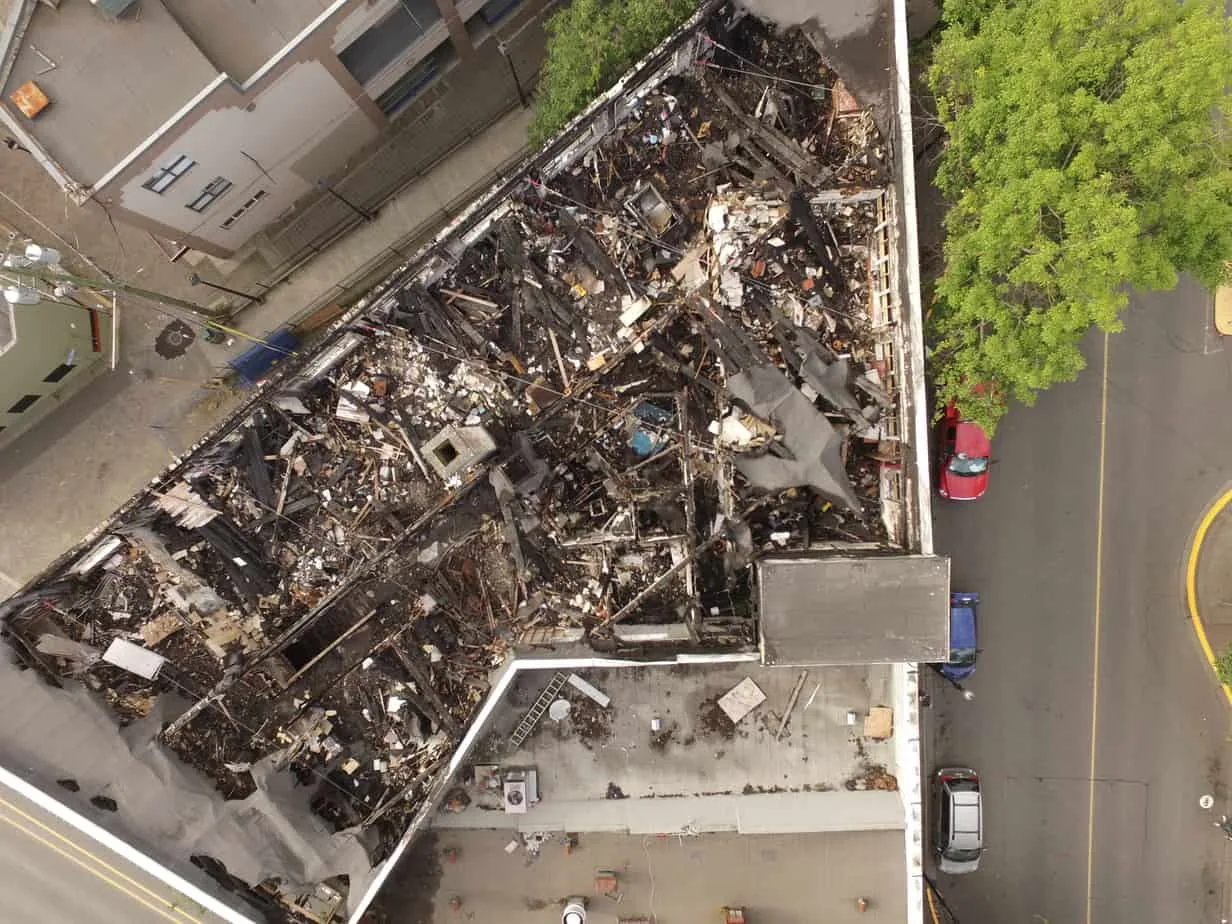
Water that gets through an open seam spreads sideways through the insulation, sometimes well past the length of the gap. We probe and cut cores to see how far it went. Wet insulation has to be replaced; sealing the seam on top won't dry it out. If we remove insulation, the estimate covers new material and the tie-in to the existing roof. The new section has to be level with the old so the seam repair lies flat. If more wet insulation turns up, the extra work is measured and approved before we continue.
Ponding water near a failed seam makes the leak worse, but it's a separate problem. Fixing the seam won't drain a low spot, and a flowing drain doesn't mean its flashing is sound. We point out each issue so you can schedule repairs together without assuming one fixes the other. If the drainage needs redesign or the drain pipe needs work, the right specialist handles it. The seam repair reaches sound, dry material around it.
Before permanent joining, loose or damaged material must be removed to a boundary the selected system can accept. We check adjacent laps and penetrations that may channel water below the visible split, then plan a secure daily closure if the repair spans shifts. West Berkeley’s wet-season exposure makes exposed seams a concern between storms. A West Berkeley seam repair records the corrected connection, supporting condition and any separate equipment work that remains.
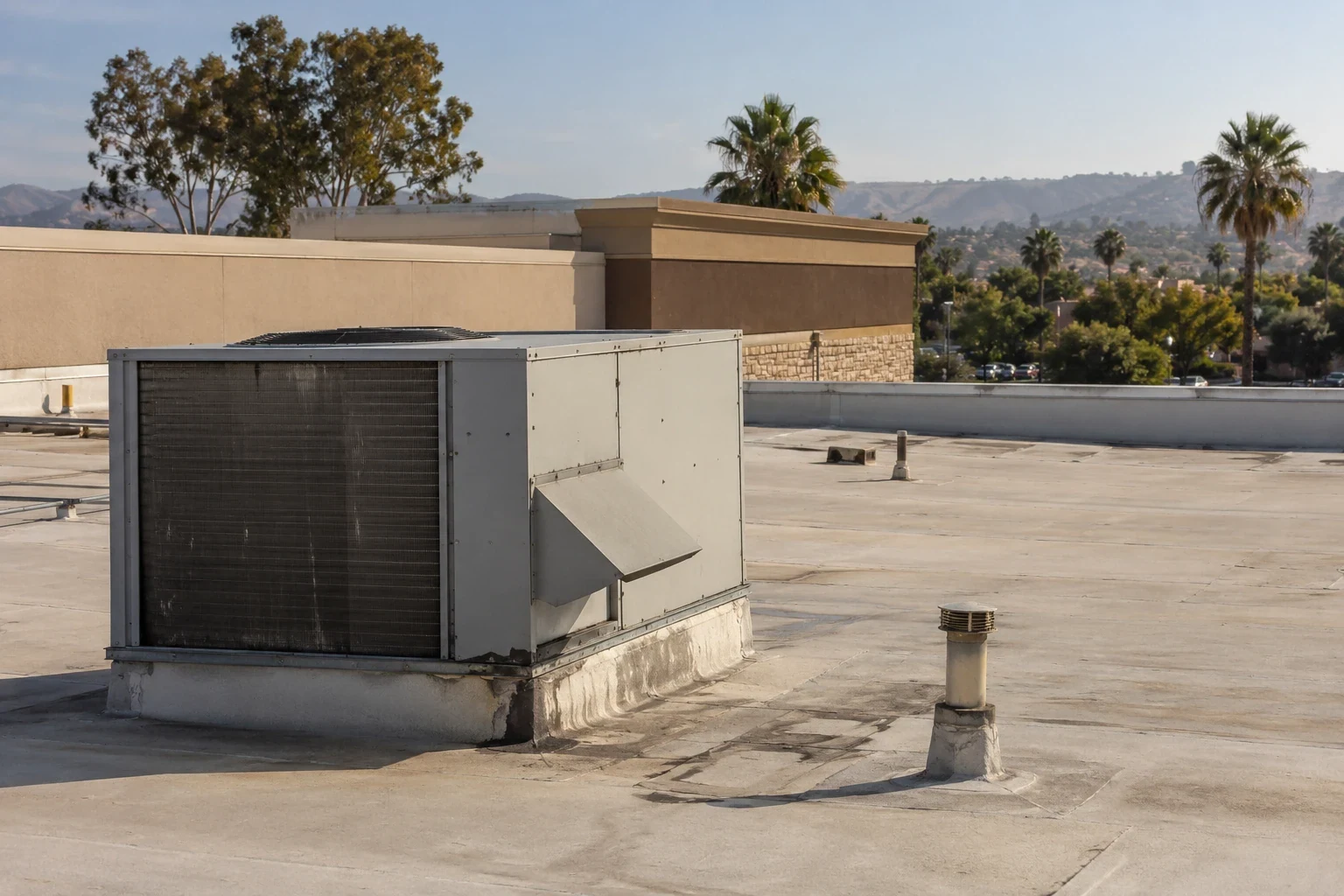
Working over an occupied building means planning with the store or building manager. We agree on how materials get to the roof, when noisy or smelly work happens and what needs protection below. Any opened area is sealed at the end of each day. If we find more damaged insulation than expected, we stop and get approval before opening more. If a seam runs under a unit the HVAC contractor needs to move, that section waits. Welding temperature and test methods are set for the actual membrane, not a generic procedure.
The repair record marks the rebuilt seam on a roof plan with photos, the materials used and any insulation replaced. Probe tests or other checks done at completion are listed. If we saw other weak seams we weren't asked to repair, they're listed separately. You should know exactly where our repair starts and stops. Warranty questions are checked against the actual warranty document. A clean-looking seam on top doesn't prove everything below it is dry, so the record says what was confirmed.
A membrane puncture found near the seam is its own repair. We note the damage and what it takes to patch it properly. If a leak shows up later, it might come from a new penetration or a different spot entirely, so we inspect before blaming earlier work. The seam record helps show what was fixed and where. You get a plain explanation of what we found and what we did, and anything still open stays on the list.
Send the address and photos of the seam. We'll check the membrane and insulation around it and explain what a lasting repair will take.
Request a Roof Assessment