Membrane puncture repair in Berkeley, CA: we find the hole, check the insulation underneath for water, and install a patch that matches your roof membrane.
Roof Damage Repair | Berkeley, CA
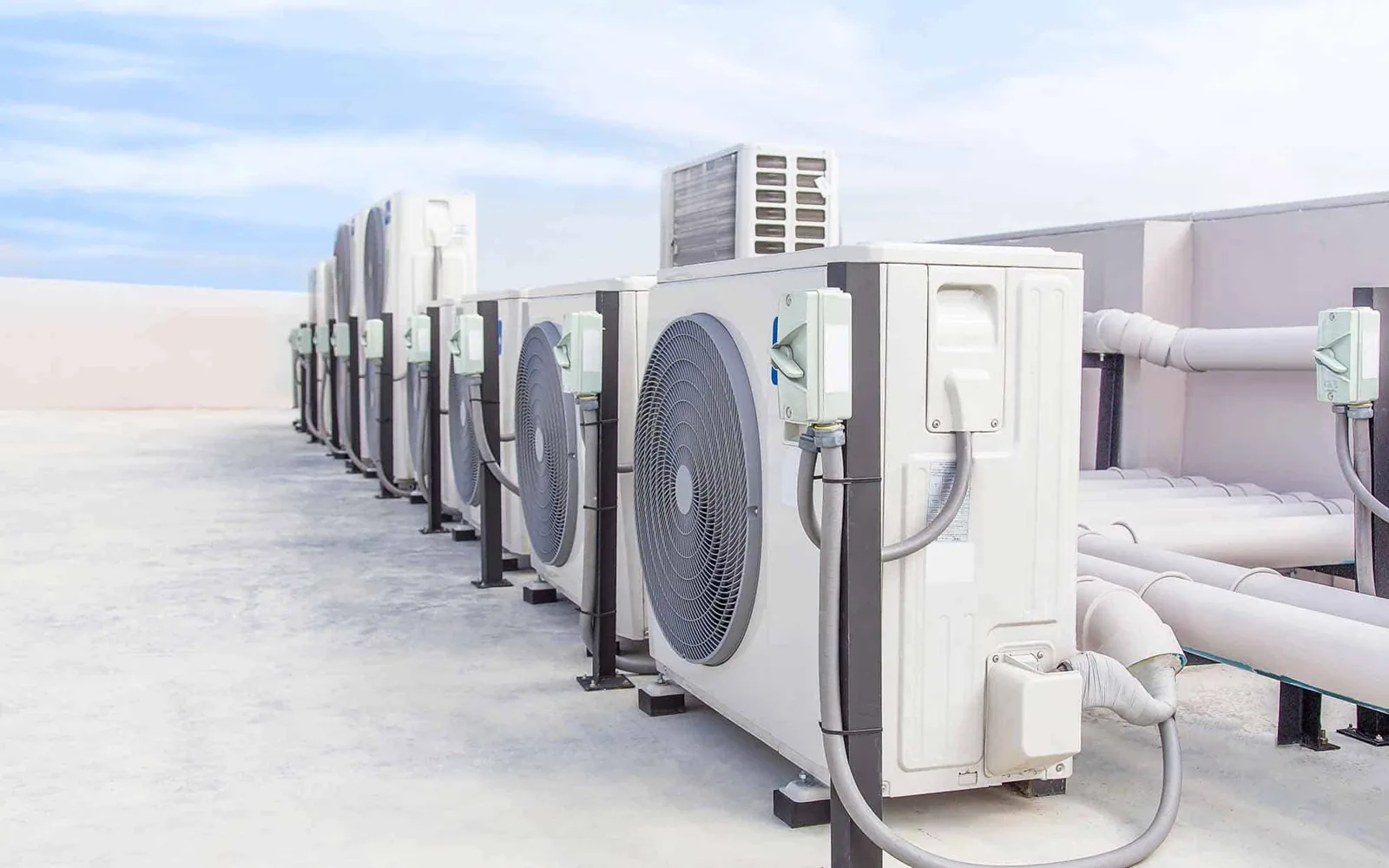
Punctures often show up next to rooftop units on flex and industrial buildings, where service techs walk, kneel and drop tools. Membrane puncture repair in Berkeley, CA starts with finding the hole and checking the membrane around it. A small cut can let in a lot of water over a rainy season, and that water may have soaked the insulation underneath. Recent equipment work can point to where to look, but we don't assume who caused it. We identify the damage, check what's under it, and recommend a patch that will bond to this roof and last.
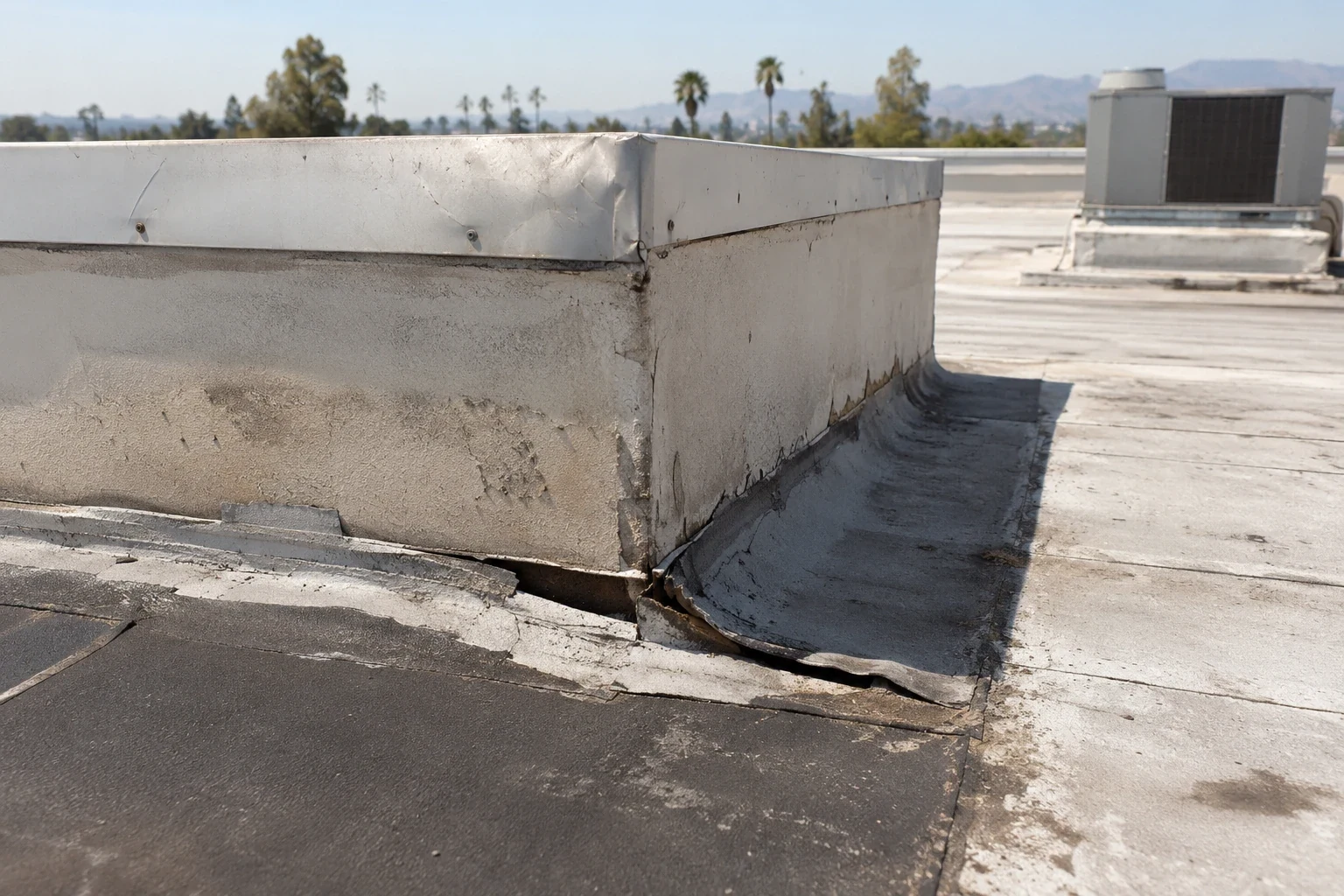
A puncture may be small at the surface and wider below a loose patch or damp board. We identify the membrane, inspect the surrounding support and expose only as much as needed to find sound receiving material. West Berkeley’s converted industrial buildings and Emeryville’s research properties can have different roof assemblies and equipment layouts. An industrial roof puncture review includes protection for the area beneath the opening and a permanent patch compatible with the installed system.
A puncture is a hole through the membrane. It might be a clean cut from a blade, a tear from a dropped panel, or a worn spot from repeated foot traffic. We look at the membrane around it for scuffs, cracks and other small holes, because where there's one there are often more. We keep what we see separate from how it happened. A service log showing a technician was on the roof that week is useful, but it isn't proof. The repair has to tie into clean, sound membrane beyond the damaged area.
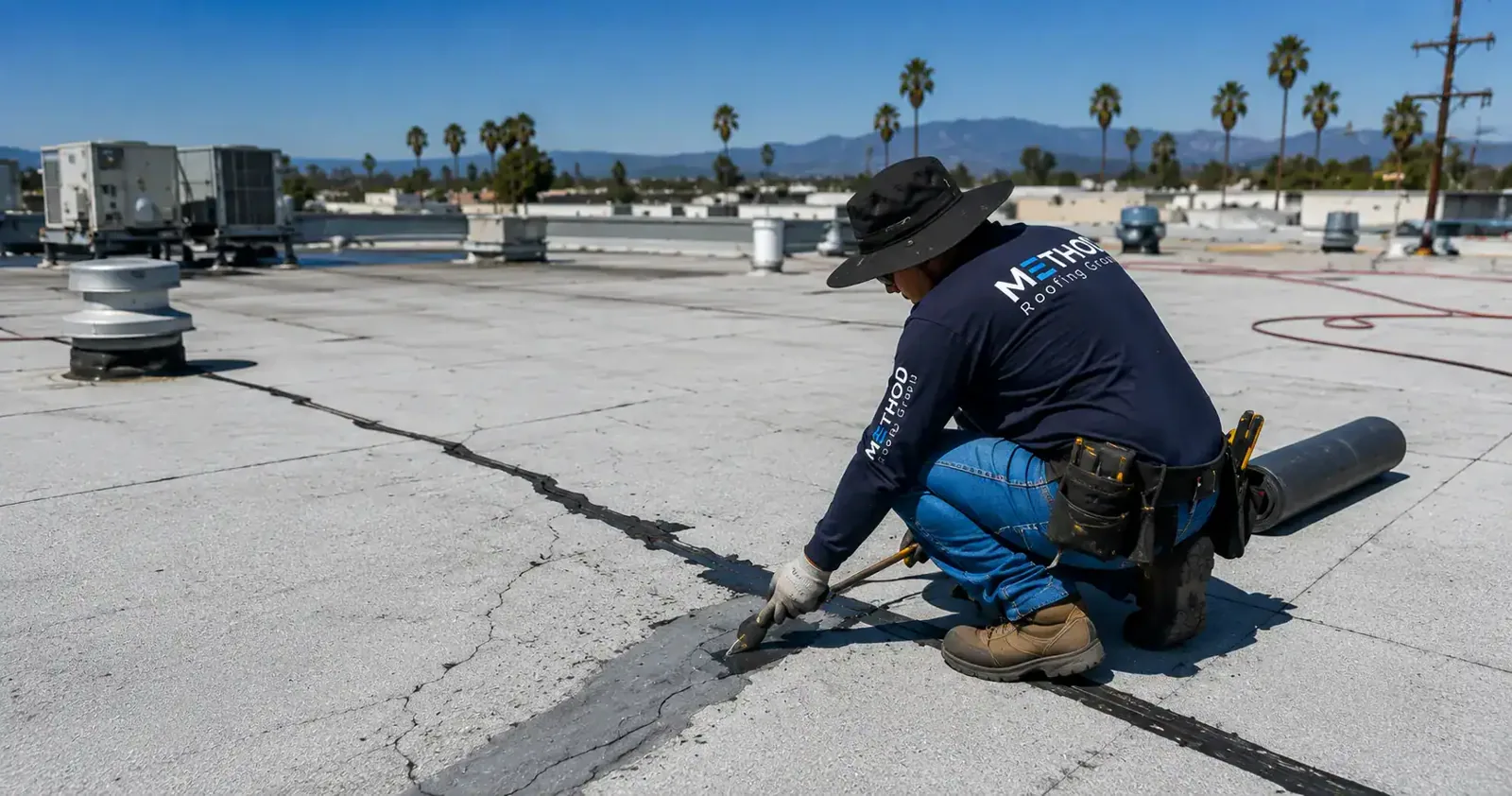
A proper commercial roof repair starts with identifying the membrane: TPO, PVC, EPDM, modified bitumen or something else. Each one needs its own patch material and bonding method. Old mastic patches near the hole can keep new material from bonding, so they may have to be cleaned or cut out. That's why a patch is often bigger than the hole. We size it to reach good membrane and follow the manufacturer's repair method. Putting a large patch over damaged or incompatible material just hides the problem.
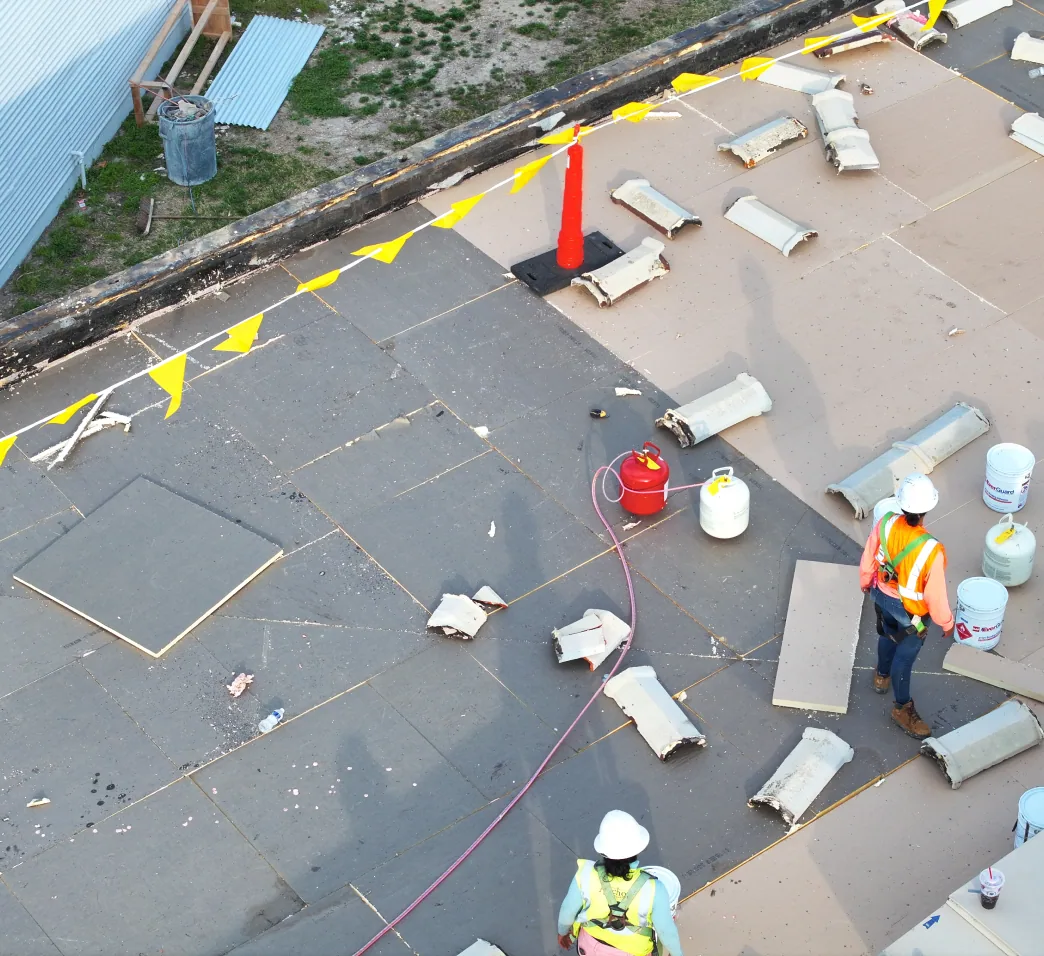
Rain that gets through a puncture can spread through the insulation well beyond the hole. You can't tell how far by looking at the surface. We probe, cut a small test core or scan the area to see whether the insulation is wet. Wet insulation has to come out; a patch on top won't dry it, and trapped moisture will rot the board, rust the deck and cause blisters. If we remove it, the estimate includes replacement and the tie-in back to the existing roof. If the wet area turns out larger, the extra is measured and approved before we continue.
A commercial roof inspection around the puncture answers a specific question: how far did the water go? We pick the method that fits the roof. Moisture scans and core cuts answer different questions, and one test spot only tells you about that spot. If more testing could change the repair, we'll recommend it; if not, we won't. If the deck looks damaged, we bring in an engineer. The final repair is based on what the testing confirms.
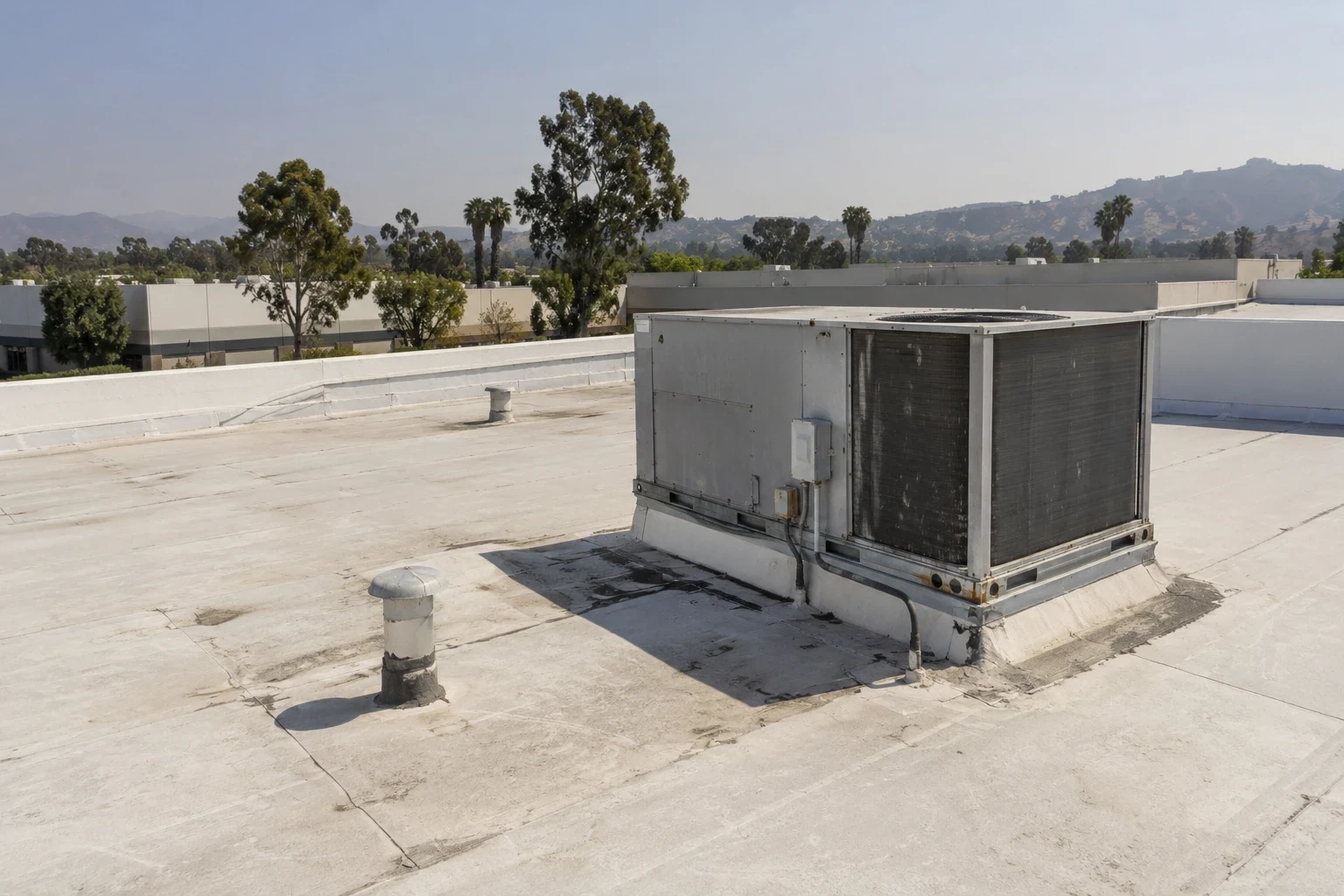
Most punctures near units come from service traffic. We talk with the building manager and the HVAC contractor about how techs get to the equipment. Walk pads along that path can prevent the next puncture. If the unit itself is leaking condensate or has a loose panel, the mechanical contractor needs to fix it; a roof patch won't solve an equipment problem. If a new unit support is planned near the damaged area, the roof detail around it should be worked out before it's installed.
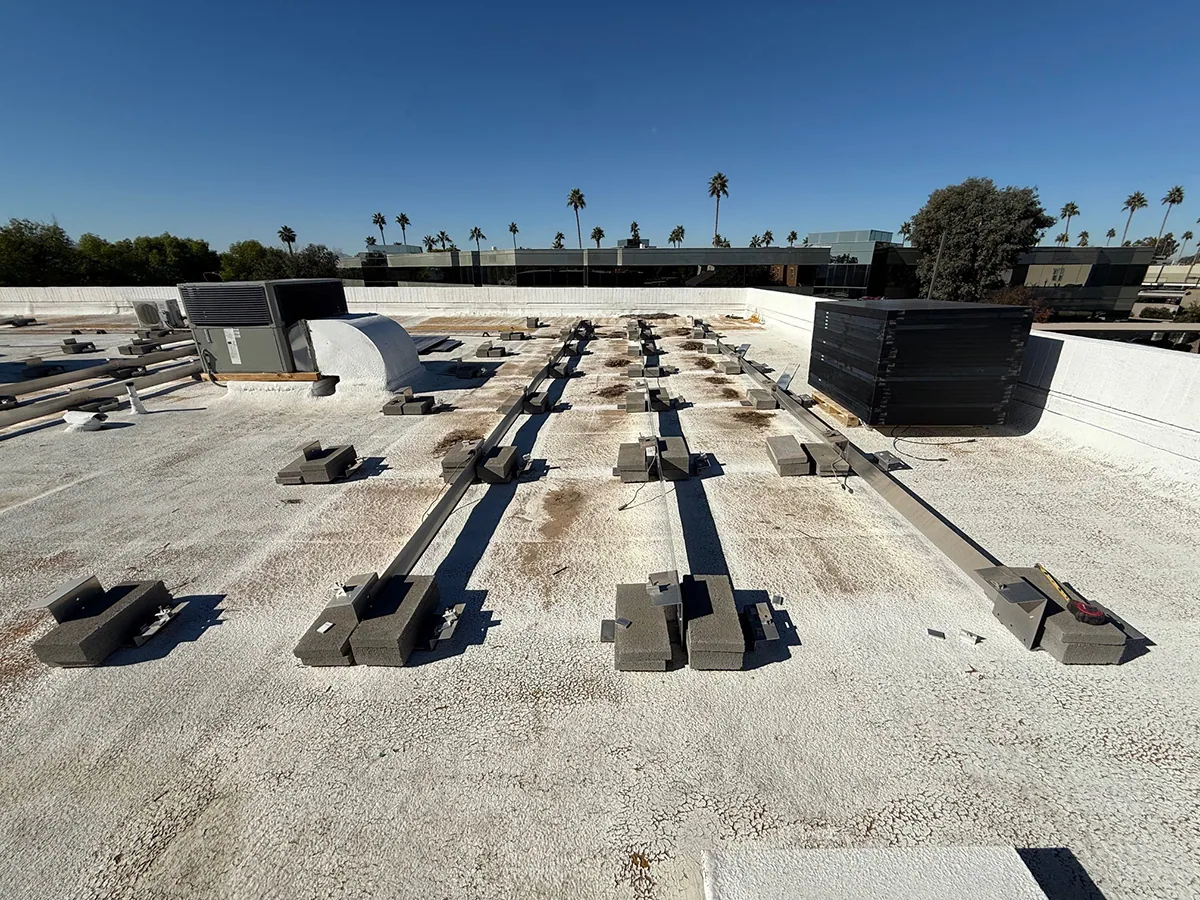
We also check the rooftop equipment curbs and supports near the puncture. Support heights, flashing and the membrane around them all affect the repair. If the mechanical contractor has to lift or move a unit before we can get at the damage, that spot waits on their schedule. We can repair the rest of the roof in the meantime. Setting a new unit doesn't mean the roof around it is sealed, so those details are checked and finished separately.
The membrane around the hole has to be clean and in good shape for the patch to bond. Weathered surface, chalking or old coatings may need to be scrubbed, primed or cut away. The patch method has to match the actual membrane. Sometimes we do a small test weld or adhesion test, and that result applies to that spot, not to the whole roof. If insulation was replaced, the new section has to sit flush with the existing roof so the patch lies flat.
If we find a seam failure near the puncture, it's a separate repair. Patching the hole won't close an open seam a few feet away. We note whether the two repairs overlap or are separate jobs, and what prep each needs. Not every membrane uses the same repair method. Each problem we confirm gets fixed to sound material, and anything else we noticed but didn't repair is noted in the record.
Temporary cover limits exposure while we confirm whether moisture spread beyond the visible hole. The permanent repair follows the material family, backing condition and water path, with adjoining seams and penetrations checked before the patch is closed. Research roofs around West Berkeley may have active equipment and service routes, while Oakland industrial sites can bring separate access limits. For a West Berkeley roof opening, we record the final patch boundary and distinguish roofing from any equipment or interior work.
If a flashing failure turns up nearby, it gets its own repair with the right materials. The job record shows where the puncture was patched and any other work done, with photos, materials used and any checks performed. Open items, like equipment work or a flashing repair still to come, are listed. If a new leak appears later, we look at the roof as it is then. You end up with a clear record of what was damaged and what we fixed.
Send the building address and photos of the damage. We'll inspect the membrane and insulation and tell you what a permanent repair will take.
Request a Roof Assessment