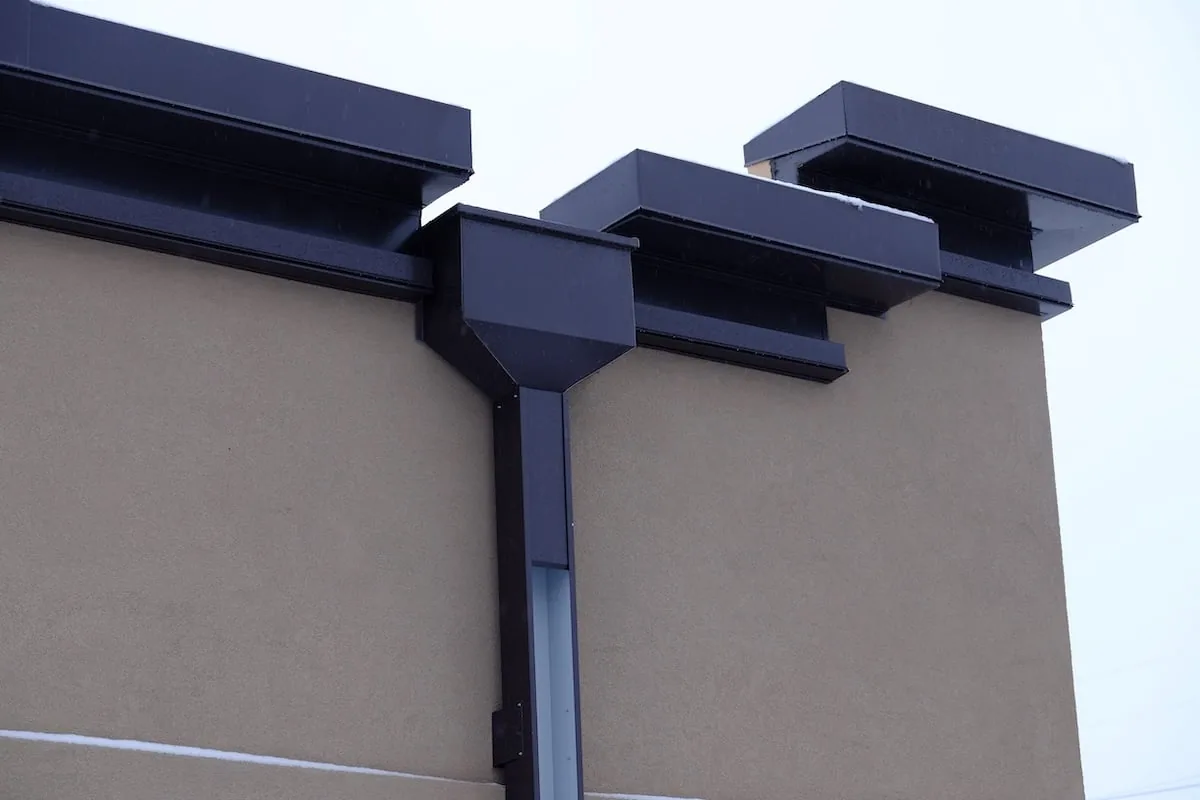
Edge metal, coping and gutter repair in Berkeley, CA: we secure loose caps, rebuild rotted nailers, seal roof edges and fix gutters that overflow or pull away.
Commercial Roofing Services | Berkeley, CA
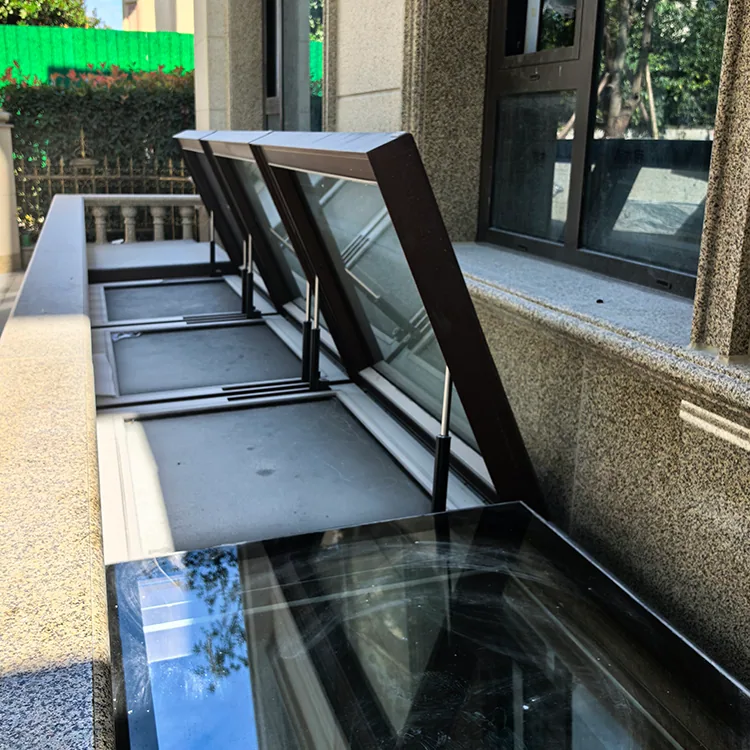
A loose coping cap over an apartment entrance is more than a cosmetic problem. Each time the wind lifts it, the joint opens a little more, and rain gets into the top of the wall. Eventually the cap can come off entirely, which is a real hazard over a doorway or sidewalk. Edge metal, coping and gutter work in Berkeley, CA, starts with finding out why the metal came loose, not just screwing it back down.
Roof edges have to do several jobs at once: hold the membrane down against wind, shed water away from the walls, and carry it into gutters or scuppers. When any part of that fails, leaks show up inside walls and at ceilings near the perimeter. For apartment buildings, we also plan around residents, balconies, entrances and parking, since edge work happens right over the places people walk. We look at the metal, what it is fastened to, how the roof membrane ties in and where the water ends up. Wall cracks or drainage problems beyond the edge itself are noted separately so they are not lost.
Coping caps and edge metal are fastened to a wood nailer or a continuous cleat along the top of the wall or roof edge. When a cap works loose, the cause is often a rotted nailer, rusted cleat, missing fasteners or fasteners driven into crumbling masonry. Re-fastening the metal into the same bad wood will not hold for long.
We pull back sections of the loose cap to look at what is underneath. A roof inspection of the perimeter checks every run of edge, not just the piece that is flapping, because if one section has failed, the ones next to it are often close behind. Rotted wood gets replaced, rusted cleats come out, and new metal goes on with fasteners at the spacing the system needs for wind. We also check the joints between cap sections. Covers and sealant at those joints wear out, and an open joint lets water straight into the wall below. The estimate shows how many feet of nailer and metal need replacing and why.
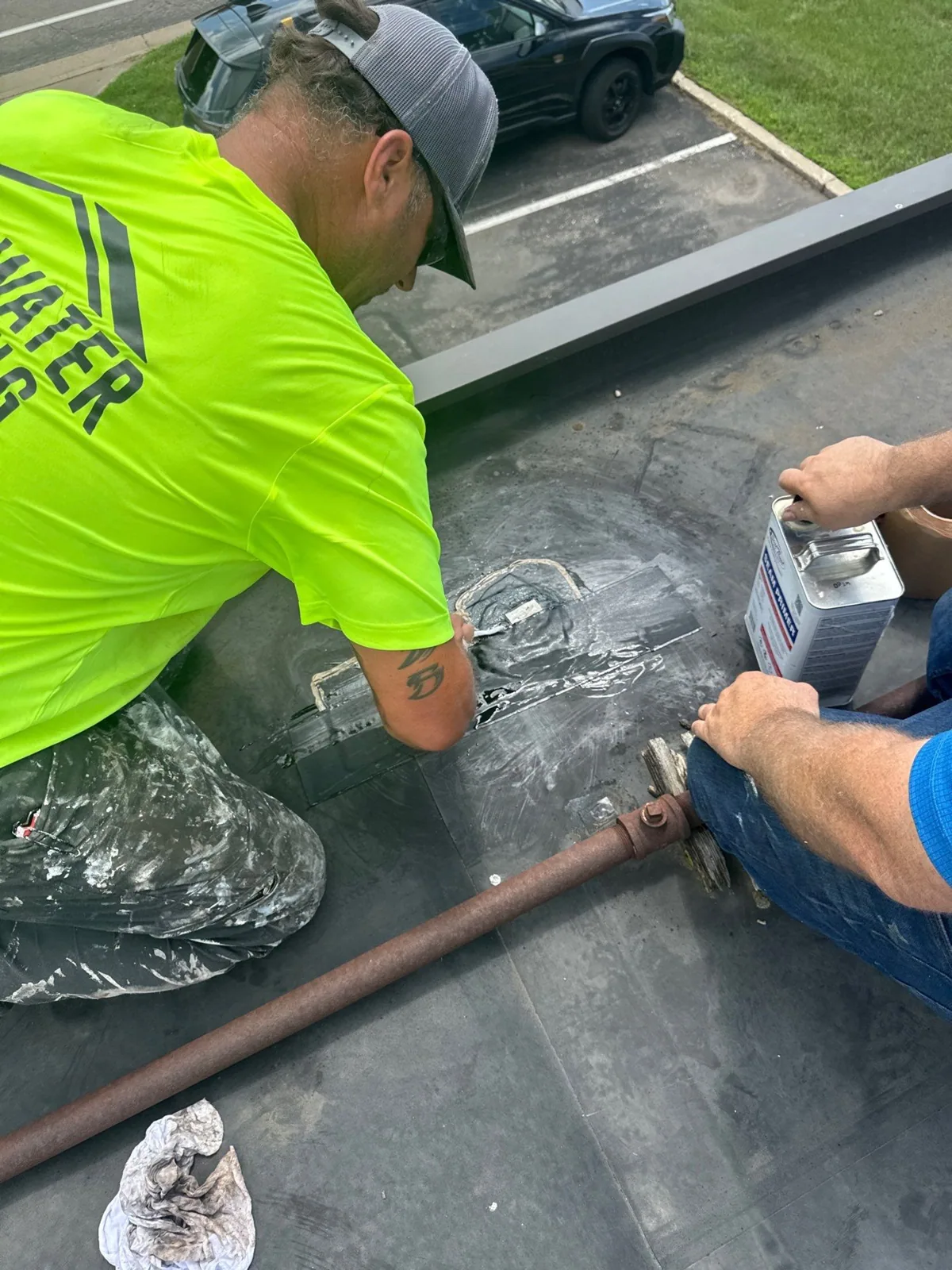
At the roof edge, the membrane has to be properly sealed to the edge metal or turned up the wall under the coping. That connection is a common leak point. Membrane can shrink and pull away, sealant dries out, and metal flanges that were never stripped in properly let water underneath.
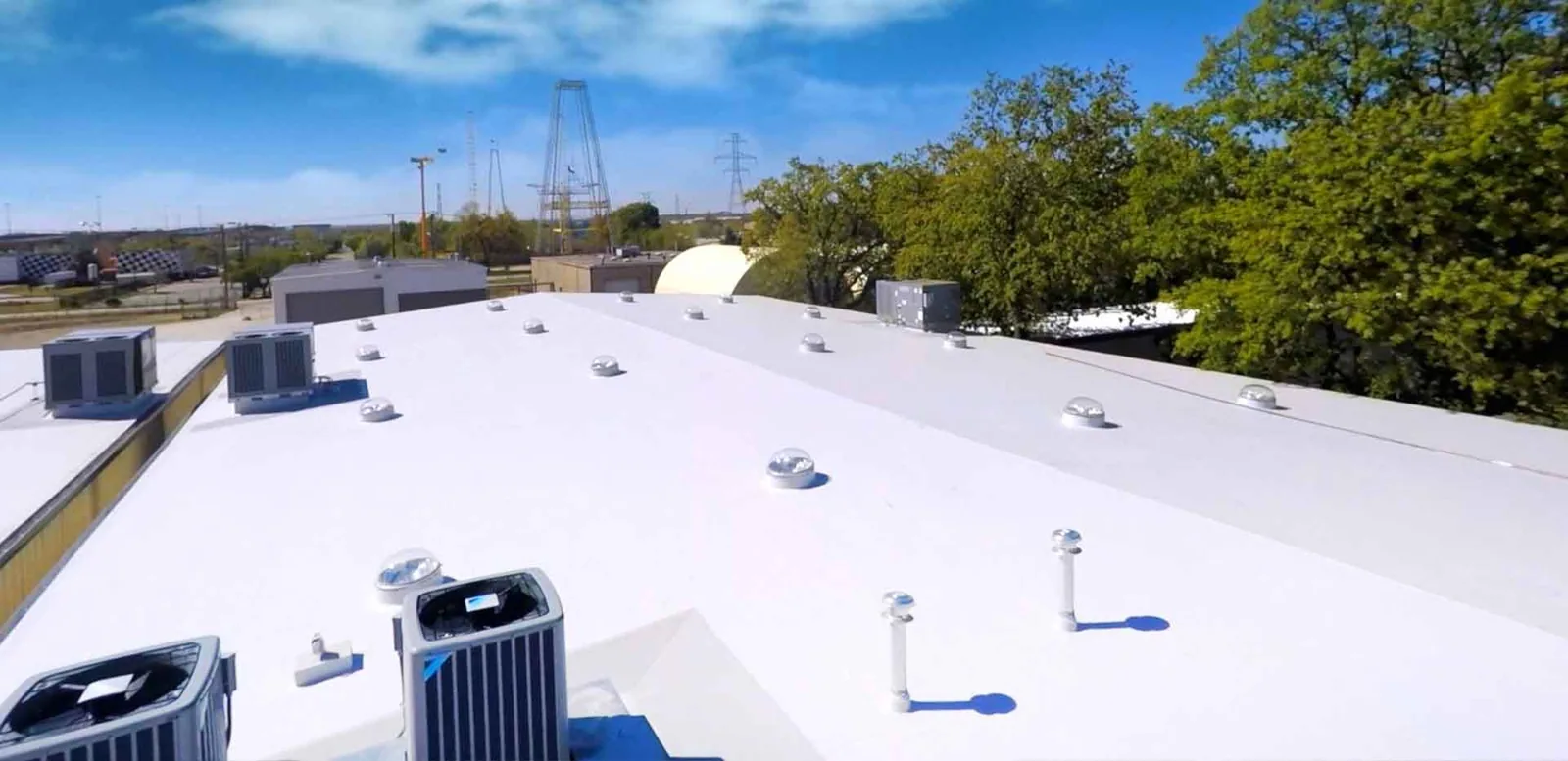
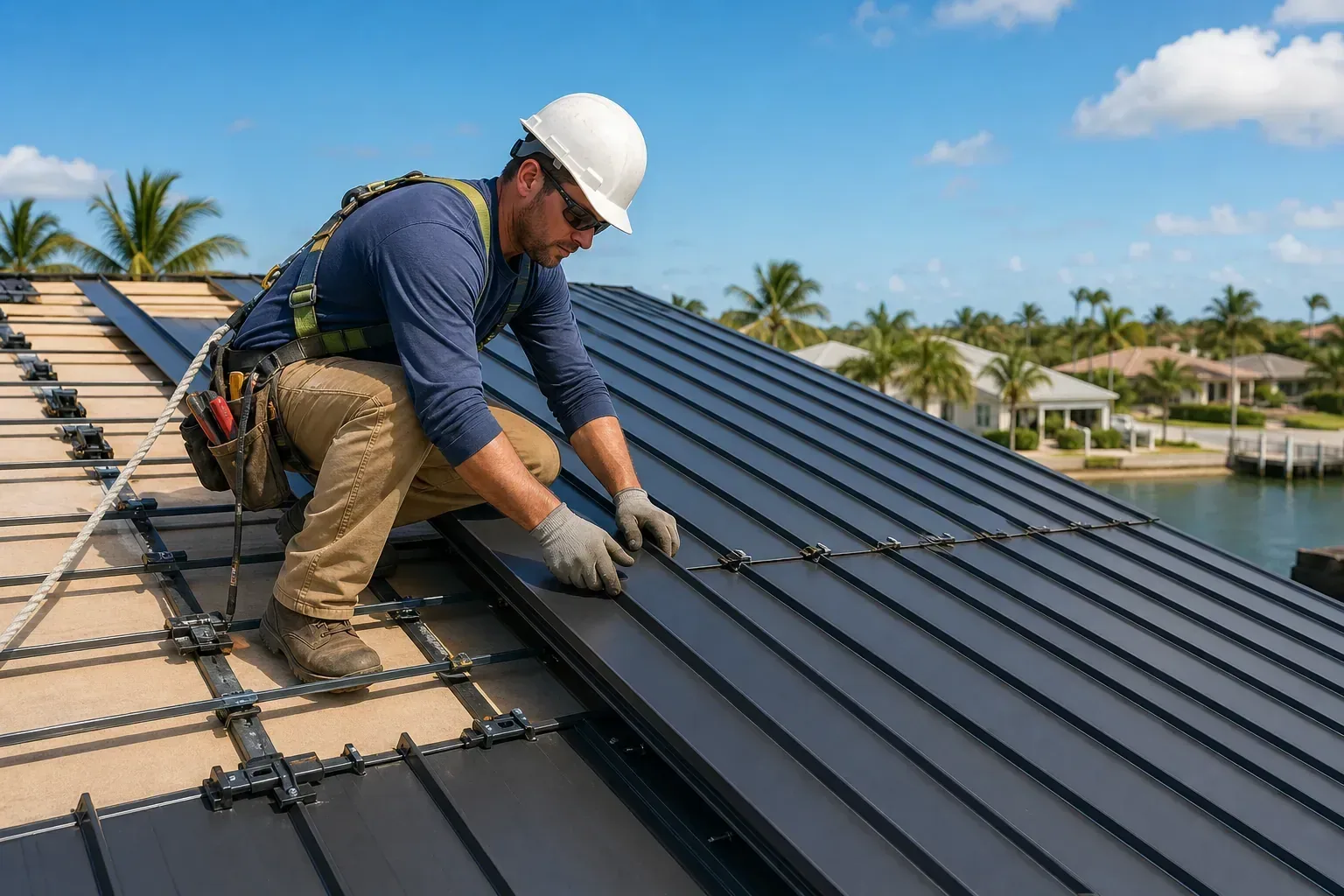
On a TPO roof, the edge is usually finished with membrane-clad metal welded to the field sheet or with a cover strip welded over the metal flange. If those welds open, water gets in at the most exposed part of the roof. Metal roofs work differently. On a standing seam metal roof, the eave, rake and ridge trim have to allow the panels to expand and contract while keeping water out, and loose trim or failed closures are common. Whatever the system, we rebuild the edge connection with materials that match the roof so the new metal and the membrane work together instead of fighting each other.
A lot of perimeter leaks come from water getting behind the edge rather than through it. Wind-driven rain can push under a cap with no proper drip edge. Water can run down the inside face of a parapet when the coping does not slope inward. Through-wall flashing at the base of a parapet can be missing or failed, letting water into the wall cavity.
When interior leaks show up near outside walls, we trace the path before replacing metal. A roof leak repair sometimes turns out to be a wall problem: cracked stucco, failed window flashing or open masonry joints below the roof line. We check the roof edge first and tell you clearly if the water seems to be coming from somewhere else. If the wall needs work from a masonry or waterproofing contractor, we say so and do not sell you new coping that will not stop the leak. Where the roof edge is the culprit, we rebuild it so water is shed outward and away from the building.
Gutters that overflow, sag or pull away from the fascia are common on low-slope commercial buildings. Sometimes the fix is simple: clear leaves and debris, re-secure the hangers and reseal the joints. Other times the gutter is too small for the roof area it drains, the outlets are too few, or the downspouts are crushed or blocked underground.
We check the gutter size, slope, hangers, joints and outlet connections, and run water through them if needed. Overflowing gutters can send water back over the fascia and into the wall, which looks like a roof leak from inside. Where water leaves the roof through a scupper into a conductor head, that connection may need its own drain and scupper repair. We separate routine gutter cleaning from real replacement or resizing so you only pay for what the building needs. Underground drain lines and storm connections usually belong to a plumber; we point them out when we find them blocked.
Across West Berkeley and Emeryville, older buildings often have edge metal that has been patched, painted over or replaced in sections over the years. Wind off the Bay can work on loose caps and open joints, so we check every run, not just the obvious one. Buildings in downtown Berkeley, with their tighter sidewalks and entrances right below the roof edge, often need extra protection and scheduling during edge work.
When the work is done, you get photos of the old edge, the nailer or wall condition underneath and the finished metal, with locations marked on a roof plan. The report lists the metal type and gauge installed, the fastening used and any joints or terminations sealed. Gutter work is described separately. If we found wall cracks, underground drain problems or other issues outside our scope, they are listed so the right trade can be called. Keep the record for future inspections and any warranty questions.
Tell us where the edge metal is loose or the gutters are overflowing. We will inspect the perimeter and send a plain report with photos.
Request a Roof Assessment