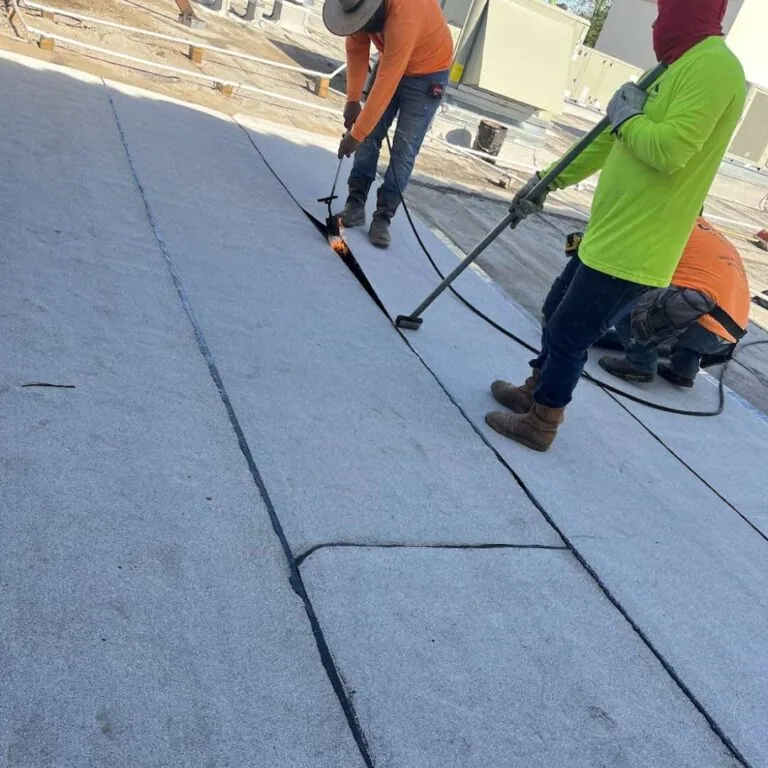
Roof drain and scupper repair in Berkeley, CA: we clear blockages, rebuild leaking drain and scupper flashing, and fix standing water around outlets.
Commercial Roofing Services | Berkeley, CA
Water standing next to a scupper on a warehouse roof after the rain has stopped means something is wrong. The outlet may be blocked, the roof around it may have sagged, or the scupper may be set too high to drain the last few inches. Roof drains and scuppers in Berkeley, CA, are where water is supposed to leave the roof, so when they fail, water backs up across the membrane and finds every weak seam nearby.
We look at two things separately: whether water can get to the outlet and out, and whether the roof is sealed properly around the outlet. A drain can be perfectly clear and still leak at a loose clamping ring. A scupper can be well flashed and still overflow because its downspout is crushed. For warehouse buildings, large roof areas often drain to just a few outlets, so a single blocked drain can put a lot of water on the roof. We also note problems below the roof, like blocked pipes or underground lines, for a plumber to handle.
Most outlet problems start with debris: leaves, trash, gravel, bird nests or broken pieces of old roofing. We clear the strainer or basket, check that it is in place and secure, and look for water backing up from the pipe below. If the basket is missing, debris goes straight into the pipe and can block it farther down where it is harder to clear.
Clearing debris is part of preventive roof maintenance, and drains on most commercial roofs should be checked at least twice a year and after major storms. Sometimes standing water is not a blockage at all. The roof around the drain may have settled, the insulation may be crushed, or the drain may sit higher than the roof around it after years of patching. Those problems need a different fix, such as tapered insulation or resetting the drain. We tell you which one you are dealing with, so you are not paying for repeated cleaning when the real problem is the slope.
A drain is sealed to the roof by a clamping ring that squeezes the membrane against the drain bowl. When the ring is loose, the bolts are missing or rusted, or the membrane under it has split, water runs past the seal and into the building. Scuppers are sealed differently, with membrane or metal flashing wrapped through the wall opening. Those flashings crack and pull away over time.
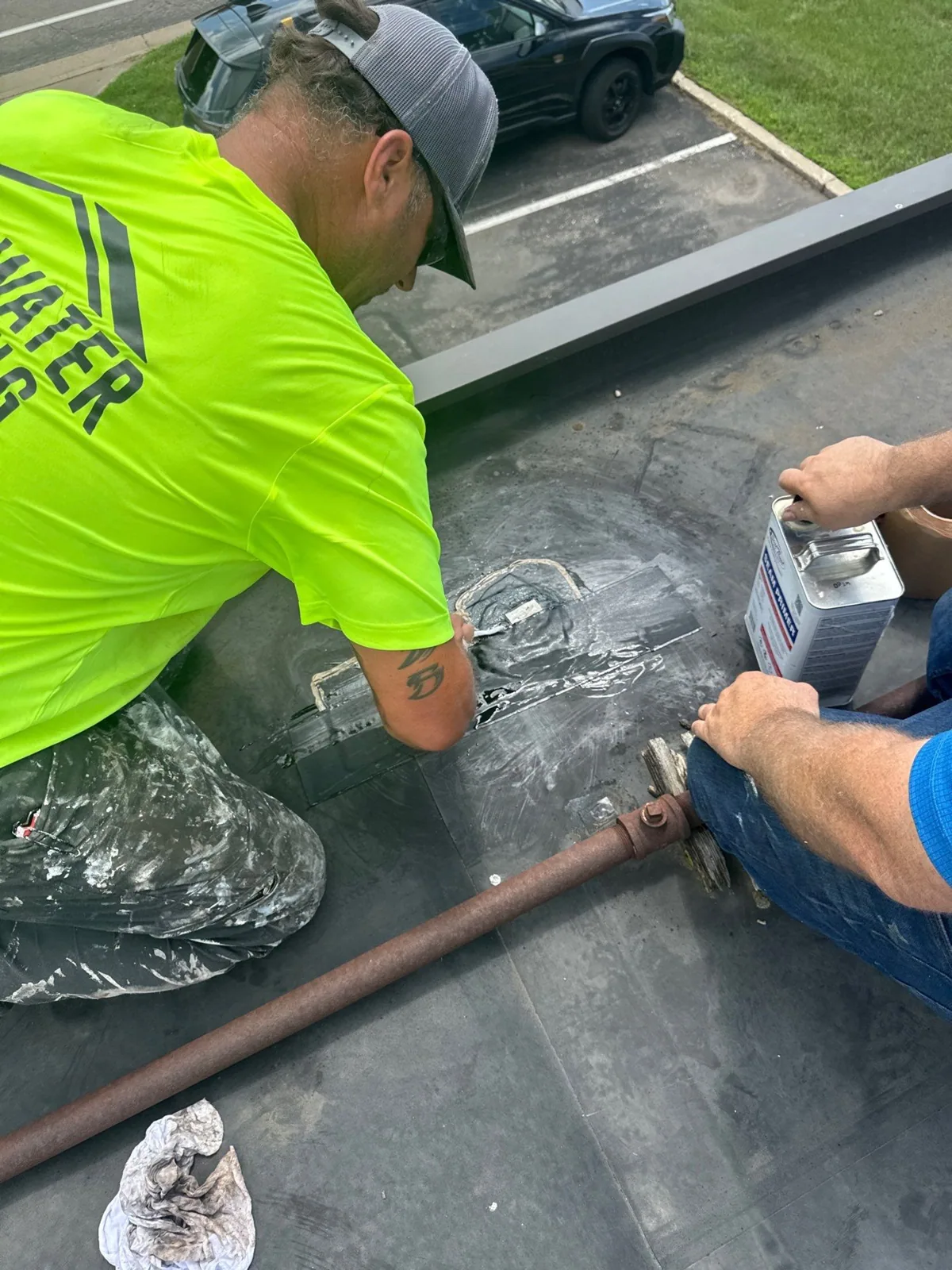
A leak repair at a drain usually means removing the clamping ring, cutting out the old membrane around the bowl, replacing any wet insulation, installing a new membrane target and re-clamping with new bolts. Sometimes the drain body itself is cracked or corroded and needs a retrofit insert or replacement. At scuppers, we rebuild the flashing through the opening and seal it to the wall and edge metal. Mastic smeared around a drain might stop a drip for a few weeks, but it will not hold under standing water. We fix the seal itself.
When a roof is replaced or recovered, the new roof is often thicker than the old one. That can leave scuppers sitting too low, so the opening sits partly below the new roof surface, or too high if the roof was built up around them. Drains can end up in a low bowl or a high spot. Either way, water does not leave the roof the way it should.
On a TPO roof, scuppers are usually flashed with membrane-clad metal sleeves welded into the field sheet. On a modified bitumen roof, the scupper is flashed with built-up plies and sealed metal. In both cases, the scupper opening needs to be the right size and at the right height for the new roof. We measure outlets during the inspection and include any resizing, lowering or new sleeves in the scope. If the wall opening has to be enlarged, a mason or carpenter may need to be involved, and we coordinate.
Roofing and plumbing meet at the drain. The roofer handles the seal between the drain and the roof membrane, the strainer and the clamping ring. Inside the building, the drain pipe, its connections and the lines that carry water away belong to the plumber. When a drain backs up because the pipe below is blocked, clearing the roof basket will not fix it.
We check the roof side and tell you clearly if we suspect a blockage, crack or loose fitting below the roof. If water is showing up inside near a drain pipe but the roof seal looks good, the leak may be at a pipe joint in the ceiling. Downspouts, conductor heads and underground storm lines from scuppers are a similar split: we fix the scupper and the connection at the roof edge, and a plumber or site contractor handles what is underground. Knowing who owns which part keeps the problem from bouncing between trades.
In Berkeley and Oakland, drain work starts by confirming where water flows and how the membrane is sealed around each outlet. Many older buildings have drains that were patched many times, and some have overflow scuppers that were never connected properly. Drain repairs in West Berkeley follow the same order: clear it, check the seal, check the slope, then decide on the repair.
The completed record shows each outlet on a roof plan with before and after photos. It notes whether the outlet was cleaned, re-sealed, rebuilt or replaced, what materials were used and whether wet insulation was removed. Problems below the roof, such as a suspected blocked pipe, are listed separately for the plumber. If water backs up again, compare its location and timing against this record. It will usually show quickly whether the outlet itself has failed or the problem is somewhere downstream.
Tell us which drains or scuppers are holding water and send any roof records. We will check the flow and the seals and explain what we find, with photos.
Request a Roof Assessment