Roof recover and overlay in Berkeley, CA: we confirm the existing roof is dry and well attached, fix wet areas and raise curbs and drains before adding a new layer.
Commercial Roofing Services | Berkeley, CA
An old patch on an office roof can hide a seam that has been leaking for years. That matters a lot if you are thinking about a recover, because a recover leaves the existing roof in place and adds a new one on top. Roof recover and overlay in Berkeley, CA, can save real money on tear-off and disposal, but only when the roof being covered is dry, well attached and not already carrying a second layer.
For office buildings, a recover is often appealing because it is faster, quieter and less disruptive than a full tear-off. We start by checking what is actually on the roof: how many layers, what kind of insulation, whether it is wet and how well it is fastened. Lower disposal cost is only a saving if the roof left underneath is sound. We tie our recommendation to what we found, explain what can stay and what has to come out, and make sure every curb, wall and drain will work with the new roof height.
Downtown Berkeley’s offices and institutional buildings can have several penetrations, parapets and active rooms beneath one roof. A recover makes sense only when we identify the layers in place, confirm the existing roof can hold the new roof's fasteners or adhesive, and trace every curb, wall and drain through the added height. For an occupied building, we map the removal boundary and protected route before material is staged. We document what can stay and what must come out.
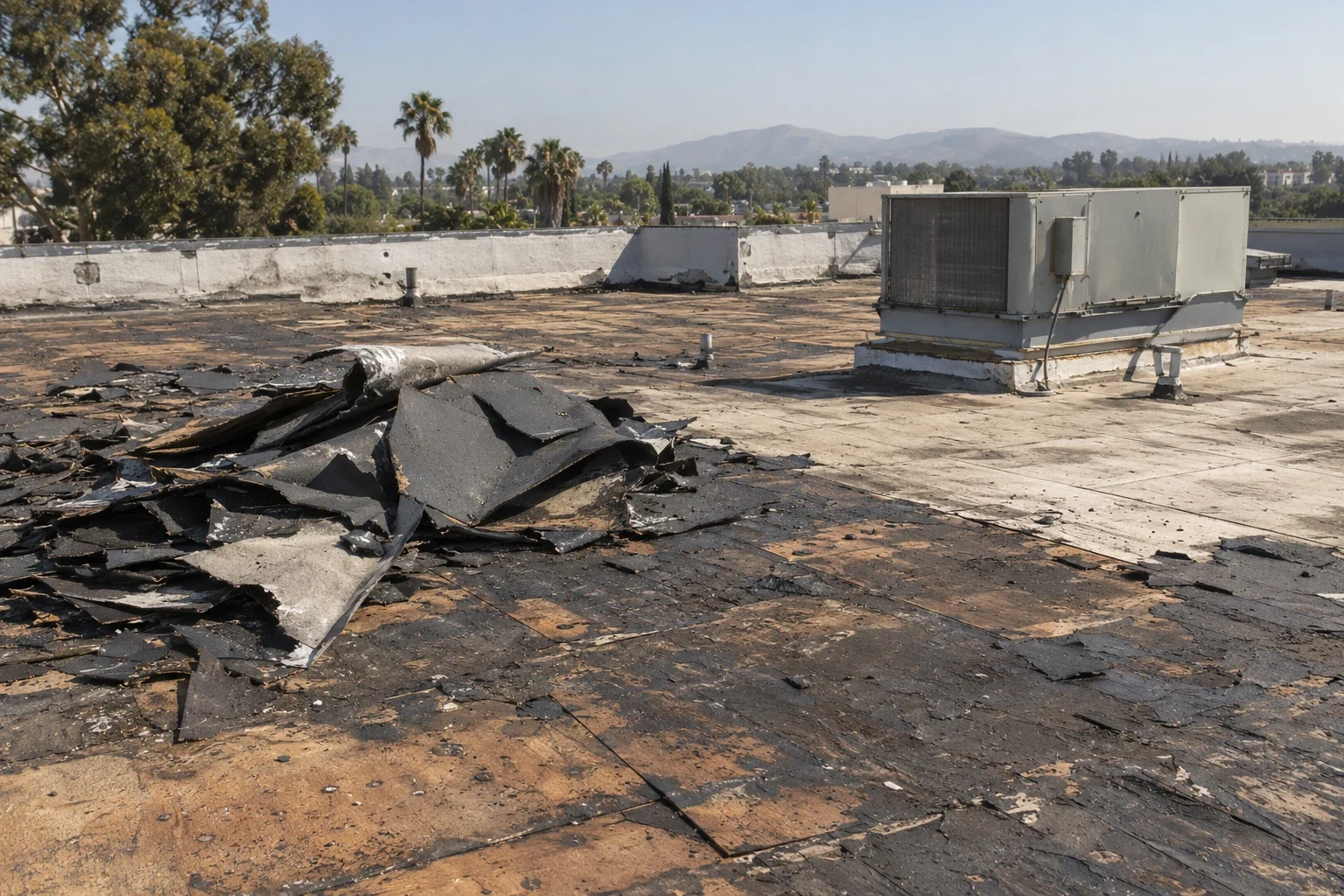
A membrane that looks intact can still be sitting on wet insulation. Water trapped under a recover stays there. It can cause blistering in the new roof, weaken the attachment and rust the deck. Building codes generally limit roofs to two layers, so if one recover is already in place, a tear-off is usually required.
A roof inspection before a recover includes core cuts to see how many layers there are and what they are made of, and often an infrared scan to map wet areas across the roof. We check how well the existing roof is attached by looking for loose areas, billowing in wind and soft spots underfoot. We also compare the roof against any drawings, since equipment and penetrations often change over the years. The report separates confirmed findings from areas we could not test, so the decision to recover is based on real information. If the roof is too wet or too loose, we recommend against a recover and explain why.
A new roof installed over an old one has to be fastened or adhered through the existing layers into the deck, or bonded to a cover board laid over them. Whether that works depends on the deck type, the condition of the existing layers and the wind requirements for the building. Fastener pull-out tests can confirm whether the deck will hold.
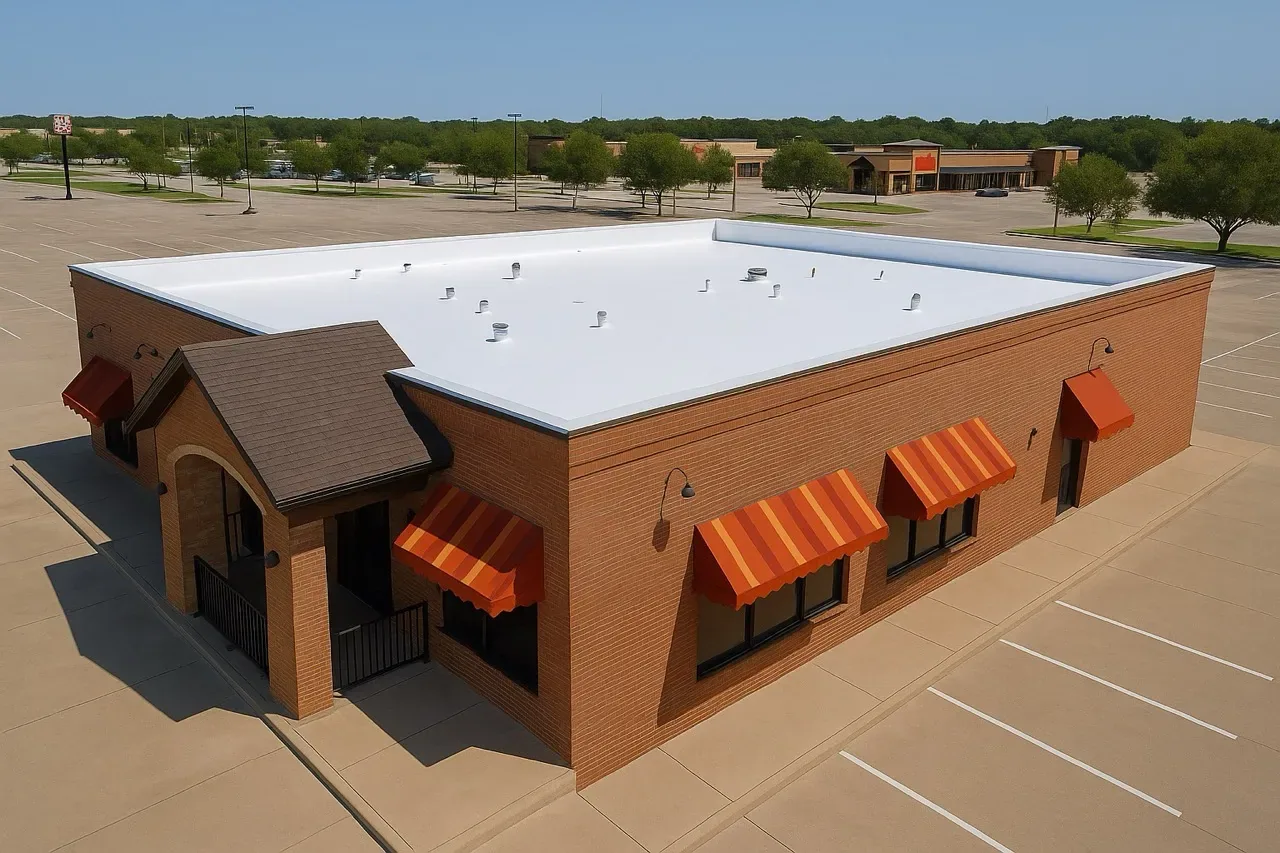
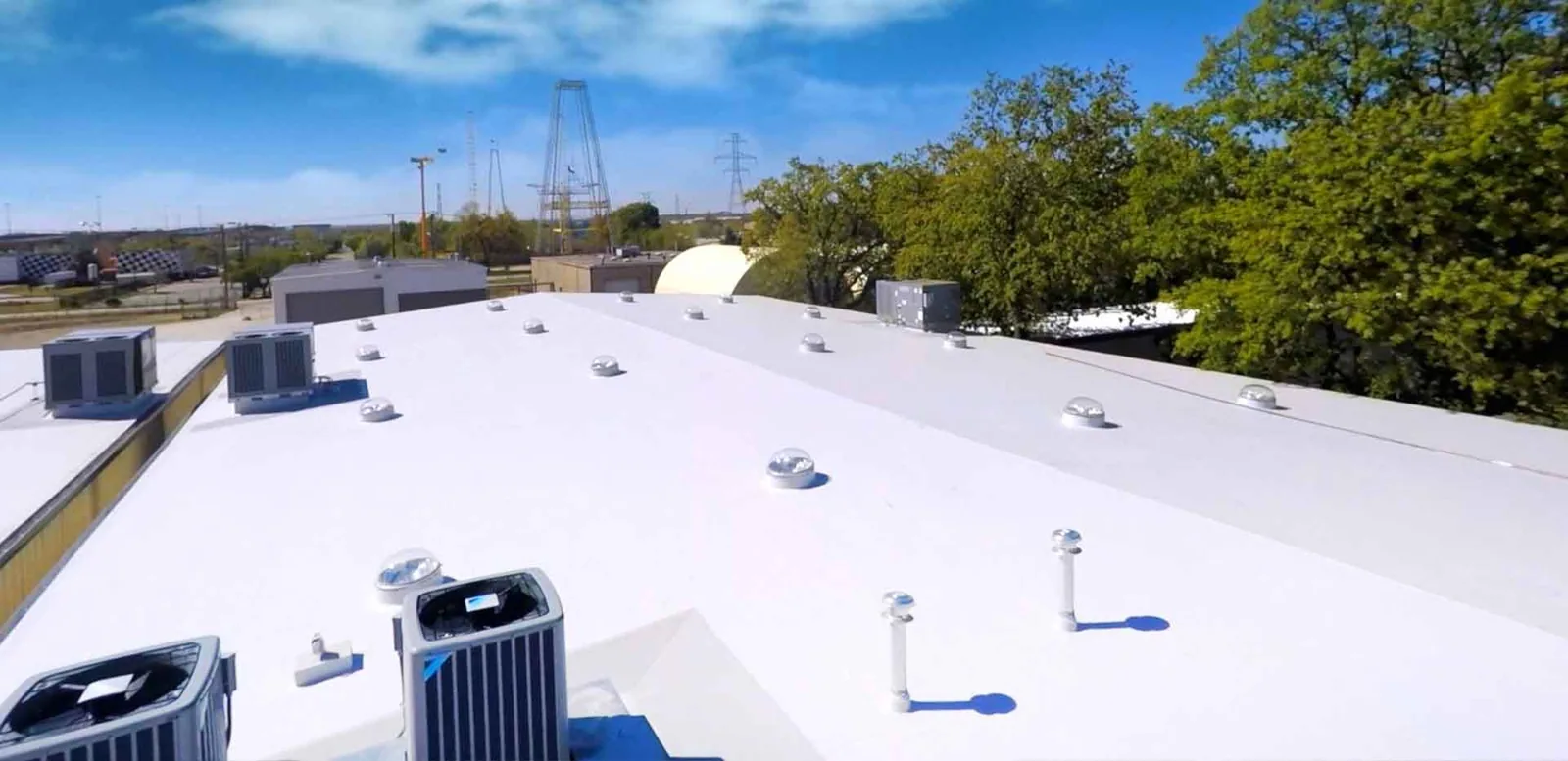
A PVC roof is one common recover option, usually mechanically fastened or adhered over a new cover board, with heat-welded seams and flashings. A cover board gives the new membrane a smooth, firm surface and separates it from the old roof, which matters because some old materials, like asphalt, are not compatible with PVC. The manufacturer's requirements set the fastening pattern, cover board and adhesive. We confirm the existing roof meets those requirements before ordering, because a warranty can depend on it. The proposal names the specific system and attachment method, not just a membrane type.
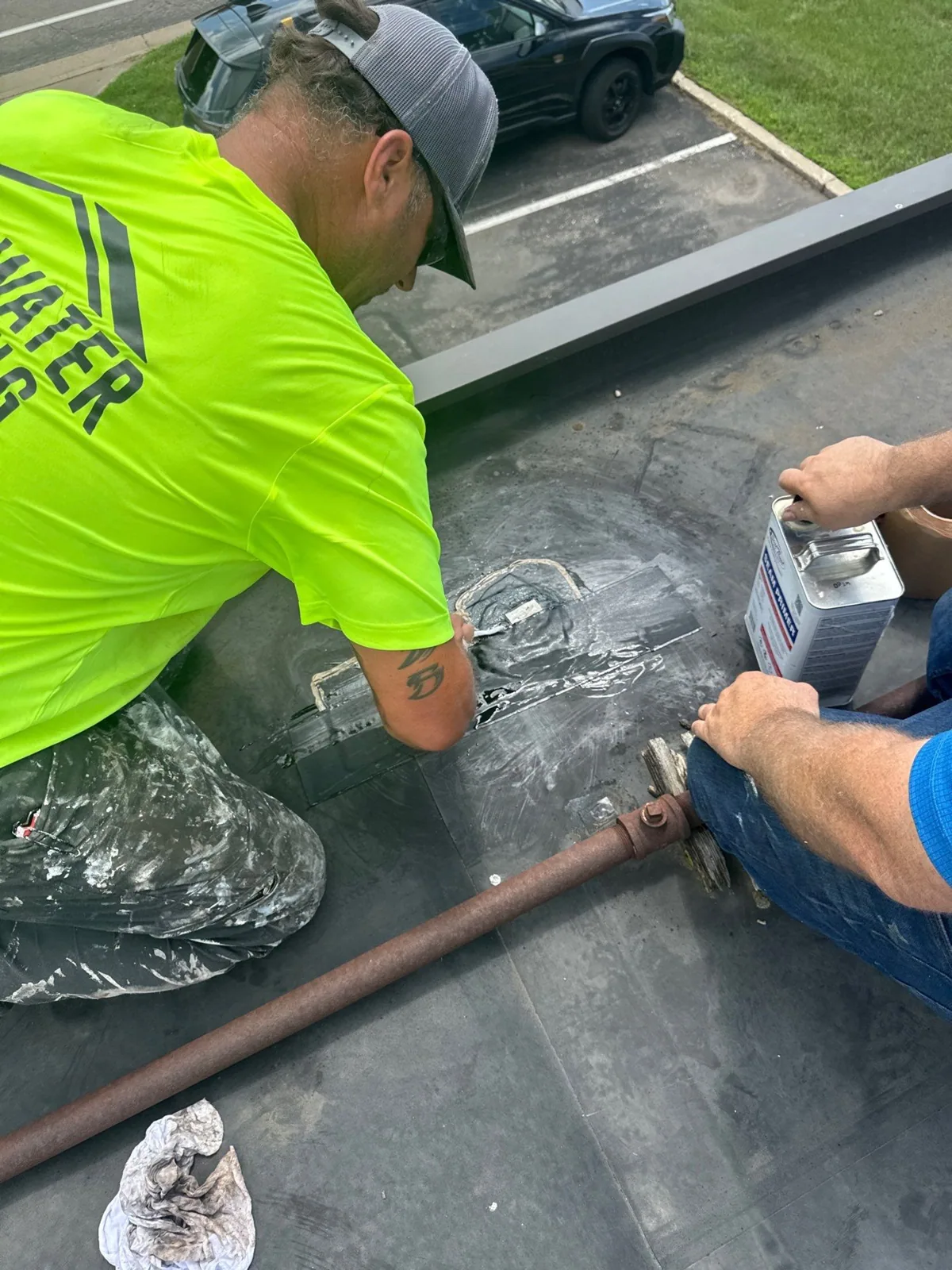
Any wet or damaged insulation has to be removed before the recover goes on. We cut out the wet areas found in the survey and core cuts, replace them with new insulation at the same thickness and patch the old roof surface so the new roof sits flat. Damaged deck in those areas gets repaired at the same time.
If wet areas cover a large share of the roof, a full roof replacement may cost about the same as a recover with heavy patching, and you end up with a completely new system. We compare the two with the same scope: same insulation, same edge and flashing work, same equipment moves. Unit prices in the proposal cover any extra wet material found once work begins. During the job, any area opened is sealed by the end of the day. The comparison shows clearly which layers stay and which come out under each option, so you can see where the savings really come from.
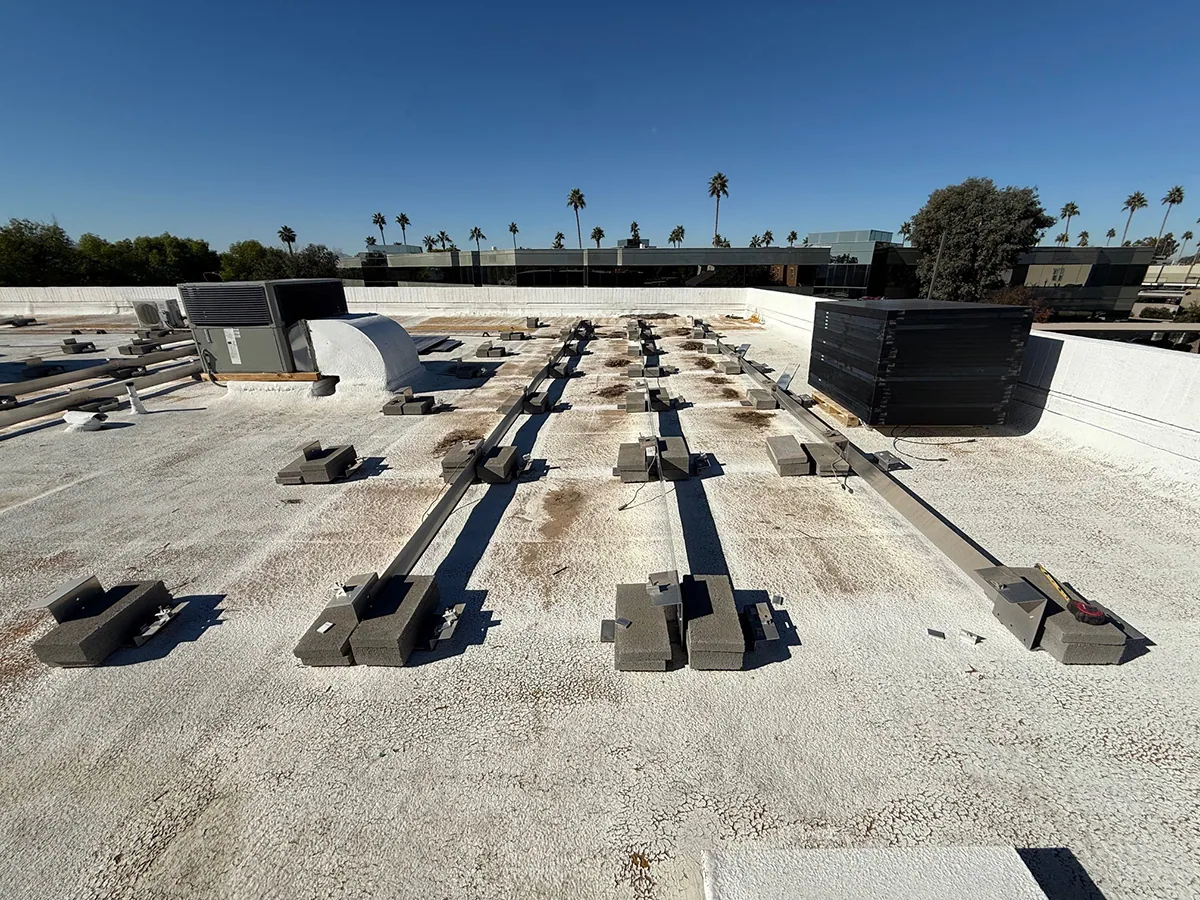
A recover adds height, usually a cover board and a new membrane, sometimes extra insulation too. That changes the details at every edge. Curbs under rooftop units may become too short for proper flashing. Drains may end up sitting in a low bowl that collects water, or they may need extension rings. Door thresholds, scuppers and wall flashings may need to be raised.
On a TPO recover, the new membrane has to be turned up each curb and wall to the proper height and welded to new flashings. We measure every curb, drain and wall during the inspection and include the needed changes in the proposal. If a unit has to be lifted to raise its curb, we coordinate that with the mechanical contractor. The field of the roof can be finished while a curb is waiting, but that curb is not done until its flashing is complete. We track those open details so none get left behind.
Berkeley’s lab and light-industrial roofs can have equipment, exhaust and active service paths. A recover schedule must leave those systems accessible while exposing enough of the assembly to verify attachment and moisture. In West Berkeley, we plan each lift around the building’s operating zones, then close the roof at shift end with a secure temporary tie-in. The record separates finished work from areas that still need access.
When the recover is complete, you get photos of the existing roof, the wet areas removed, the new layers going on and the finished details. The report lists the system installed, the cover board and fastening or adhesive used, and the location and size of any insulation or deck replaced. Manufacturer warranty documents come with their own terms, which often depend on how the existing roof was prepared. Keep the record with your building files. A future contractor will need to know there are two roofs on the building, not one.
Send us any roof records and the location of the patched area. We will check whether a recover makes sense and send a plain report with photos.
Request a Roof Assessment