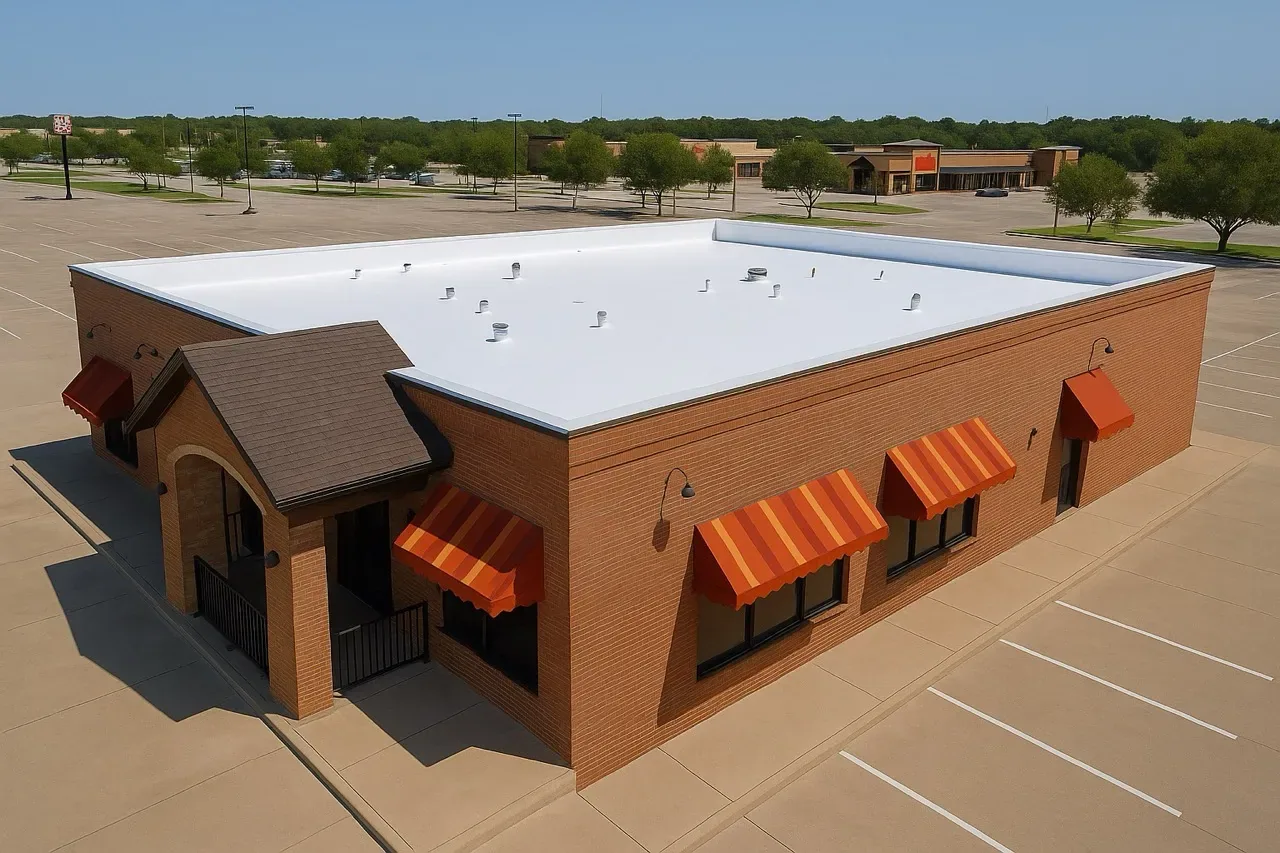
Cool roof installation in Berkeley, CA: reflective membranes and coatings installed over a sound, dry roof, with flashing and equipment details done right.
Commercial Roofing Services | Berkeley, CA
A cool roof reflects more sunlight and holds less heat than a dark roof, which can lower cooling loads and keep top-floor spaces more comfortable. But a white surface does not fix anything underneath it. On a retail building with a loose flashing lap around a rooftop unit, a new reflective finish over that lap just hides a leak. Cool roof installation in Berkeley, CA, starts with making sure the roof under the new surface is dry, well attached and properly flashed.
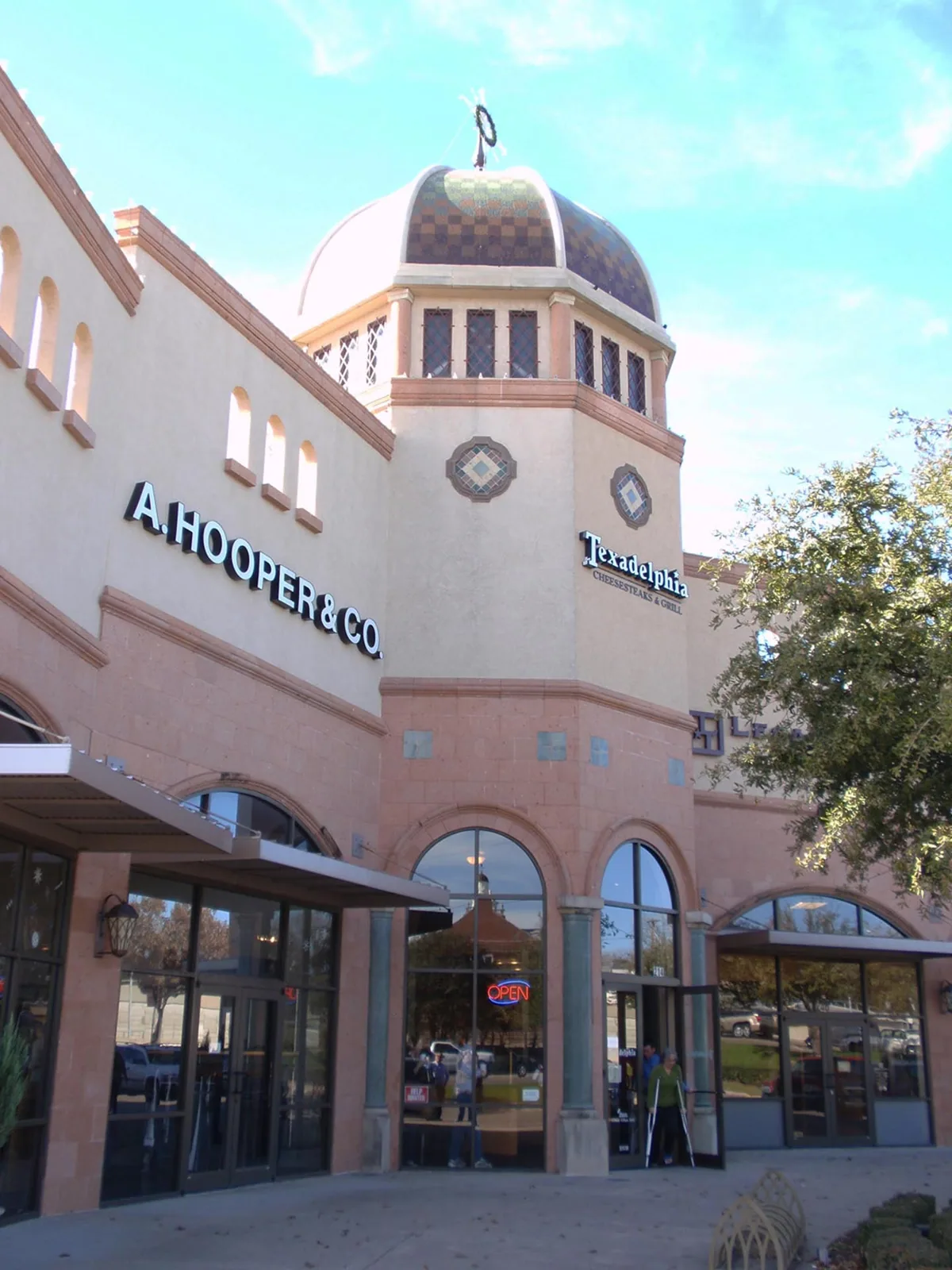
For shopping centers and retail buildings, there are extra things to plan around: store hours, customer parking, deliveries and tenant rooftop units that belong to different businesses. We look at the whole roof, identify what needs repair first, and then talk through which reflective options fit your building and budget. Some roofs are good candidates for a reflective coating. Others need a new reflective membrane. A few need more work before either makes sense. You get a straight answer about which group your roof falls into, and why, along with photos of what we found.
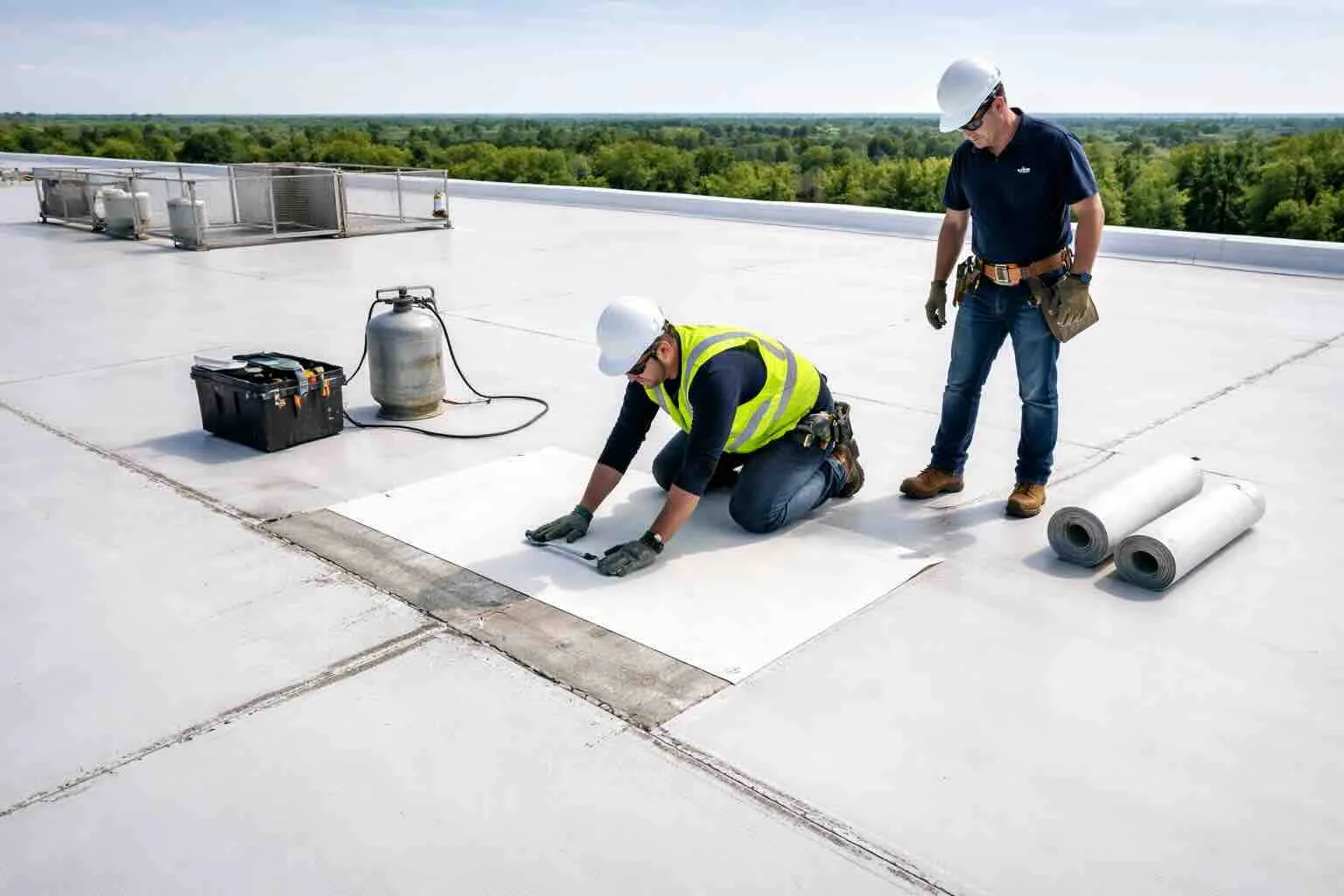
The two main paths to a cool roof are a reflective single-ply membrane or a reflective coating over the existing roof. White TPO roofing is one of the most common choices for a new cool roof. It is heat-welded at the seams, reflective out of the box, and widely available. PVC is similar, with better resistance to grease and chemicals, which matters around restaurant exhaust.
We look at what you need from the roof besides reflectivity: how long you plan to own the building, how much foot traffic it sees, whether there is kitchen exhaust or chemical discharge, and what the current roof is made of. Product reflectivity and emissivity ratings come from the manufacturer and third-party rating programs, and we give you the actual product data rather than a general claim. If your project has to meet an energy code or a utility rebate program, we check the specific requirements for your building before ordering so the product chosen actually qualifies.
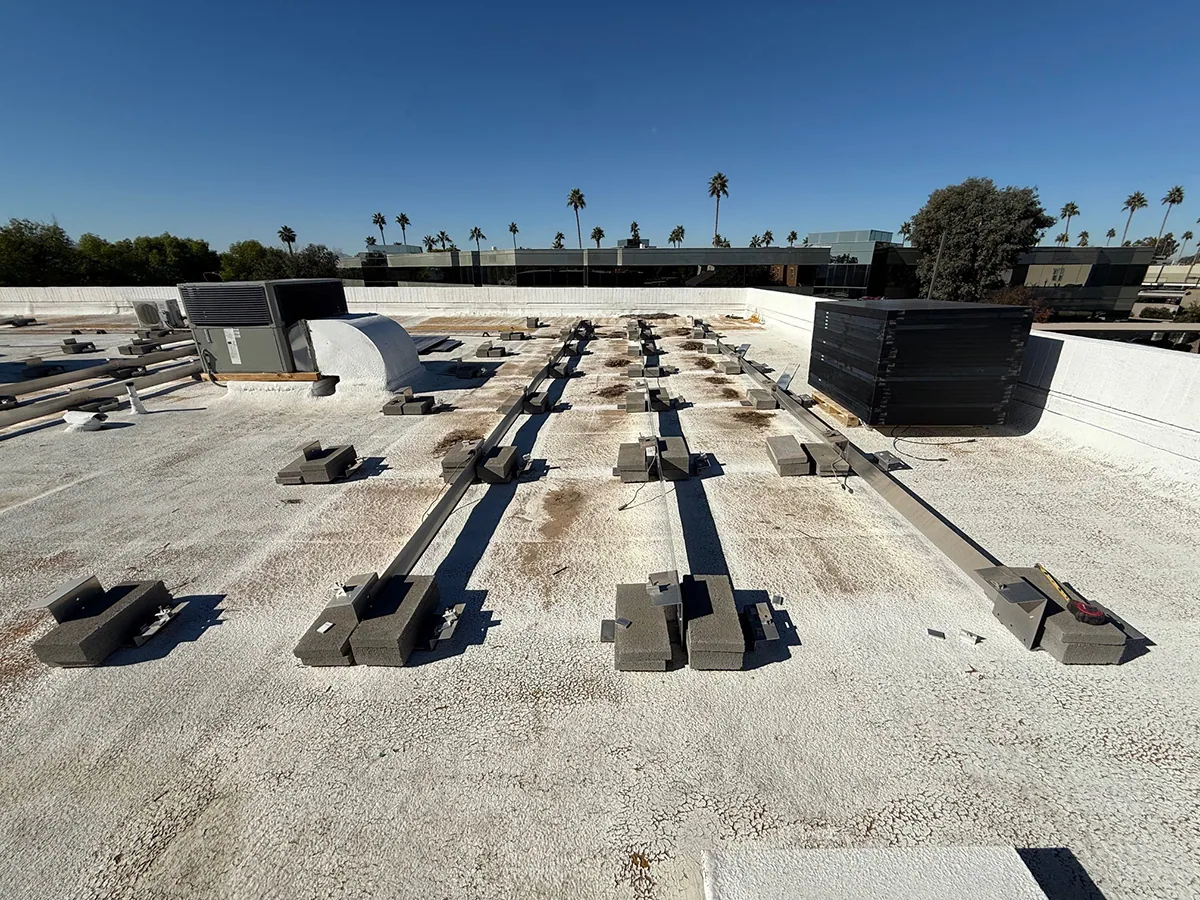
A reflective finish is only as good as what it sits on. Before installing a cool roof, we check for wet insulation, loose membrane, open seams, blisters, failed flashing and soft spots in the deck. Wet insulation is the big one. A new membrane or coating over wet boards traps the moisture, which leads to blistering, poor adhesion and a shorter roof life.
A roof inspection, sometimes with core cuts or an infrared scan, tells us how much of the existing roof is sound. Wet areas get cut out and replaced with new insulation. Loose membrane gets re-secured or removed. Failed flashing gets rebuilt. Only then does the new surface go on. That prep work is often a meaningful share of the cost, and we list it separately in the proposal so you can see how much is repair and how much is the reflective system itself. Skipping it to hit a lower price usually means paying for the same work later.
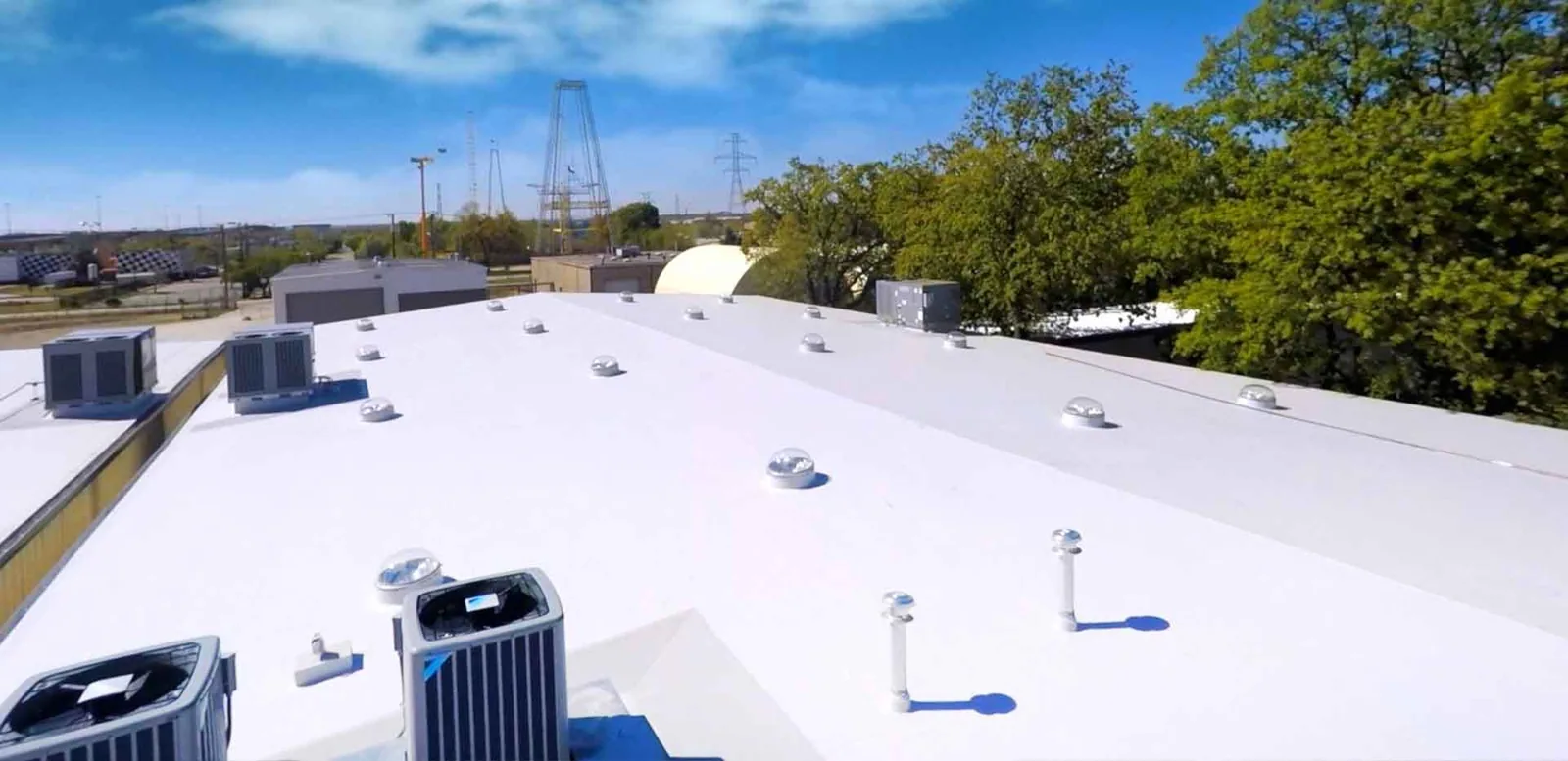
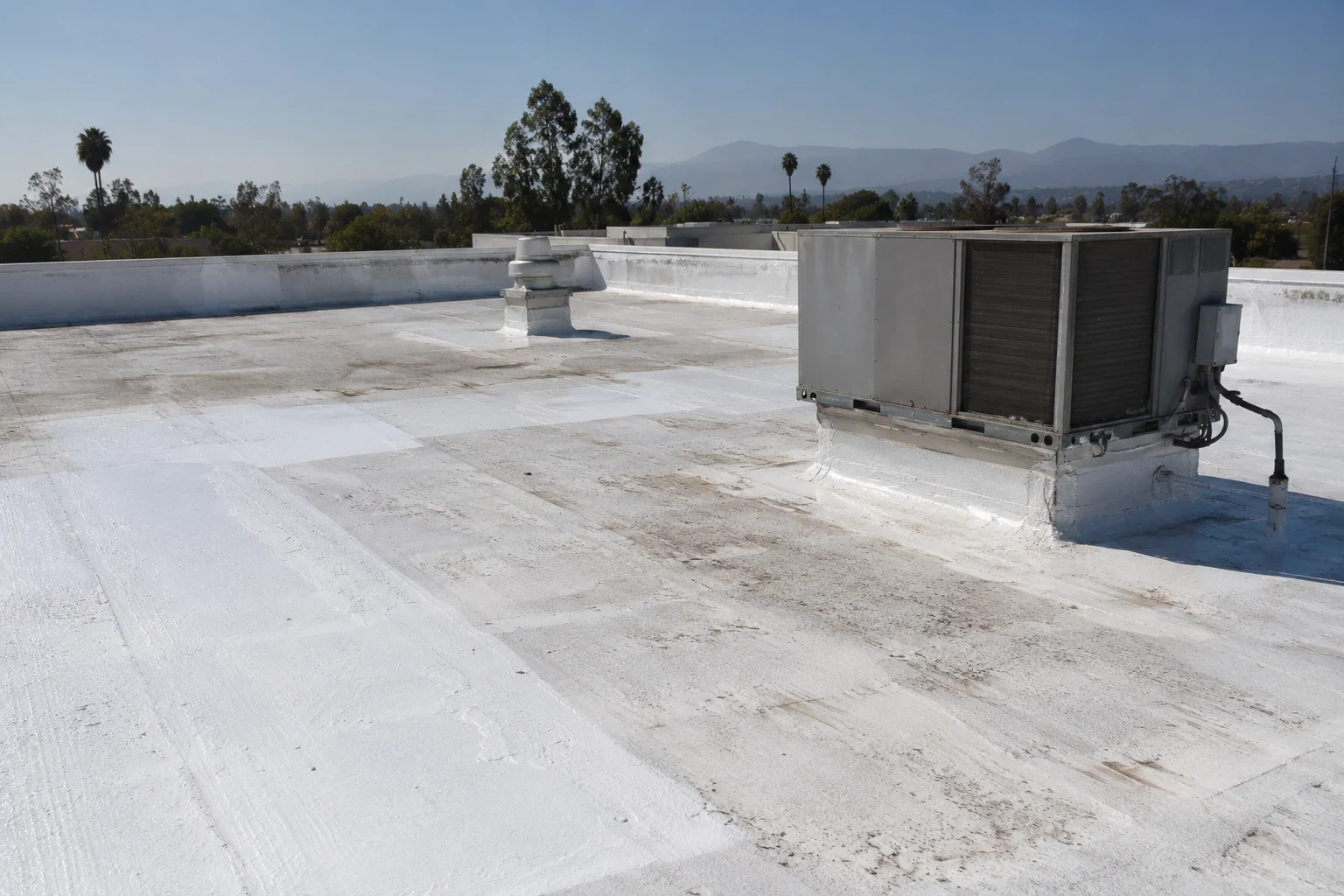
Adding a new membrane, especially with extra insulation, raises the roof surface. That can leave curbs under rooftop units too short for proper flashing and drains sitting slightly high. A reflective coating adds very little height, but it still has to be detailed properly at every curb, pipe and skylight, because coatings fail first at those edges.
We measure curbs and check every skylight and penetration flashing detail during the inspection. Any flashing that is cracked or pulled away gets rebuilt before the cool roof goes on, not coated over. If a unit has to be lifted to raise its curb, we coordinate with the mechanical contractor or tenant who owns it. On a retail center, that can mean scheduling around several tenants. We list those dependencies in the proposal, along with who is responsible for each one, so the schedule is realistic and no rooftop unit gets left half-flashed.
When you are comparing bids, make sure they cover the same work. A low price for a reflective coating may not include repairs to wet insulation or failed flashing. A higher price for a new membrane may include a full tear-off, new insulation and new edge metal. Those are very different jobs, and both might be called a cool roof.
A PVC roof is a strong option where grease or chemicals reach the roof, while TPO is often the more economical membrane on a plain retail box. If the existing roof is sound, a roof coating can add reflectivity for much less than a new membrane, though it will need recoating over time. We lay out the expected service life, maintenance needs and upfront cost for each option on your roof, so you can compare the full picture and not just the first number on the page.
Across West Berkeley and Emeryville, a reflective roof has to suit the surface and transitions it goes over, whether that is an older built-up roof on a warehouse or a newer single-ply on a retail building. Buildings in downtown Berkeley may add tighter access and tenant coordination to the job.
When the work is done, you get photos of the prep work and the finished roof, the product name and data sheet, and any manufacturer warranty documents with their own terms. If you need the work documented for an energy code inspection or a utility rebate, we provide the product ratings and installation details you need to submit. We also note any repairs we found but left out of scope, and any maintenance the system needs, such as periodic cleaning to keep the surface reflective. Dirt build-up reduces reflectivity over time, so a light cleaning schedule is worth keeping.
Tell us about your current roof and any problem areas. We will inspect it and explain which cool roof options make sense, with photos.
Request a Roof Assessment