Built-up roofing in Berkeley, CA: we find out what layers are on the roof, fix wet insulation and cracked wall flashing, then repair or rebuild the BUR properly.
Roof Systems | Berkeley, CA
On an older industrial building, the strip of roofing that runs up a wall has cracked, and water is getting into the shop below. That crack is only the top layer. A built-up roof in Berkeley, CA usually has several layers underneath, and some of them may be wet or damaged too. Before we recommend a patch or a new layer, we look at what is under the surface and check any drawings or past repair records. For a manufacturing plant roof, we also plan around equipment and production. The goal is a repair that ties into sound material, not just a patch over the crack.
Built-up roofing may contain several plies, surfacing and repairs from different periods. We check the cap sheet, seams, drains and exposed layers to locate the water path before recommending another layer or selective removal. Berkeley’s older commercial buildings and West Berkeley’s industrial conversions can have distinct roof histories. A reliable scope identifies which material can remain, what backing needs correction and how each drain or parapet will meet the renewed surface.
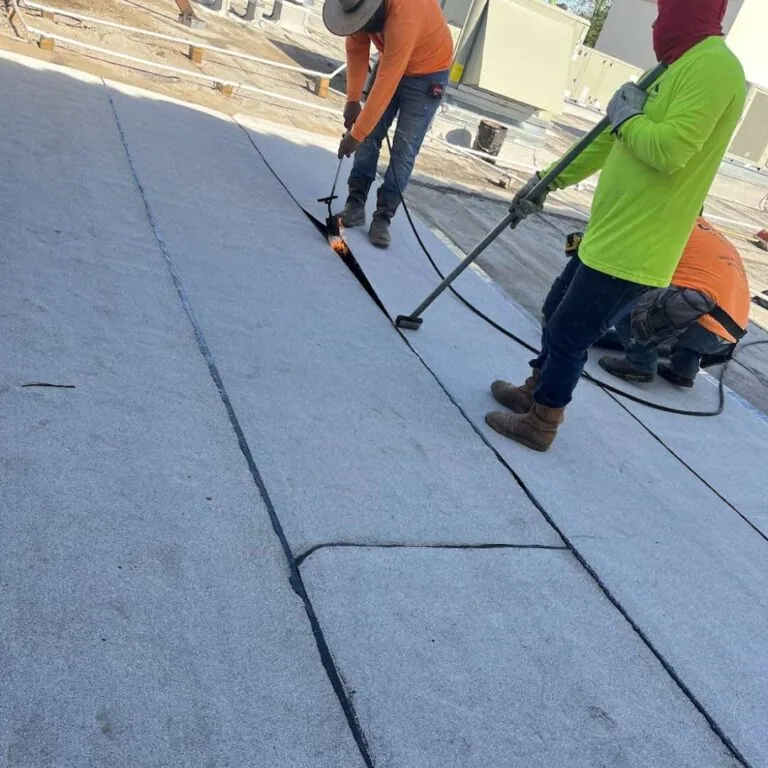
A built-up roof is made of alternating layers of bitumen and reinforcing felt, usually topped with gravel or a mineral cap sheet. Over the decades, many have been patched, coated or recovered, so the roof on top may not match the original drawings. We cut small test openings where needed to see how many plies are there, whether the insulation is dry and what earlier repairs were used. That tells us which repair materials are compatible. Guessing from the surface is how roofs end up with patches that do not stick or new layers over wet insulation.
Some owners replace a worn built-up roof with a modified bitumen roof, which uses fewer, thicker sheets and is easier to install around equipment. We compare the two on the same roof area, with the same insulation and flashing repairs included, so the price difference is real. Labor differs between them, and so do the details at walls, curbs and drains. A low price that leaves out wet insulation replacement or blocked equipment curbs is not a fair comparison. We show you what each option actually includes from edge to edge.
A solid-looking top layer does not mean the insulation underneath is dry. Before any new layer depends on the old roof, we confirm the insulation with core cuts or a moisture scan. Wet insulation has to be removed and replaced; a new layer on top will not dry it, and it will keep rotting the deck and holding water. We also check that the existing roof is still well attached, which is a separate question from moisture. Old drawings help, but they do not show later changes, so we confirm in the field.
A commercial roof inspection tells you what we could see and what still needs testing. We separate suspected wet areas from areas we have confirmed. If more damage turns up once the roof is open, we stop, show you, and agree on the extra area before going further, with a temporary seal over the opening in the meantime. One crack at a wall does not mean the whole roof is bad, and one ceiling stain does not show the size of the wet area. The recommendation follows what the tests show.
The repaired section has to bond to the roof around it. That means cutting back to sound plies, preparing the edges and building the new layers so they overlap the existing roof properly. Some old patch materials do not bond well with fresh bitumen, so we identify them first and remove them where needed. The manufacturer's instructions set the products and methods for the new section. We check the finished laps and flashing at the repair, but that check covers the repair itself, not every area of the roof we have not opened.
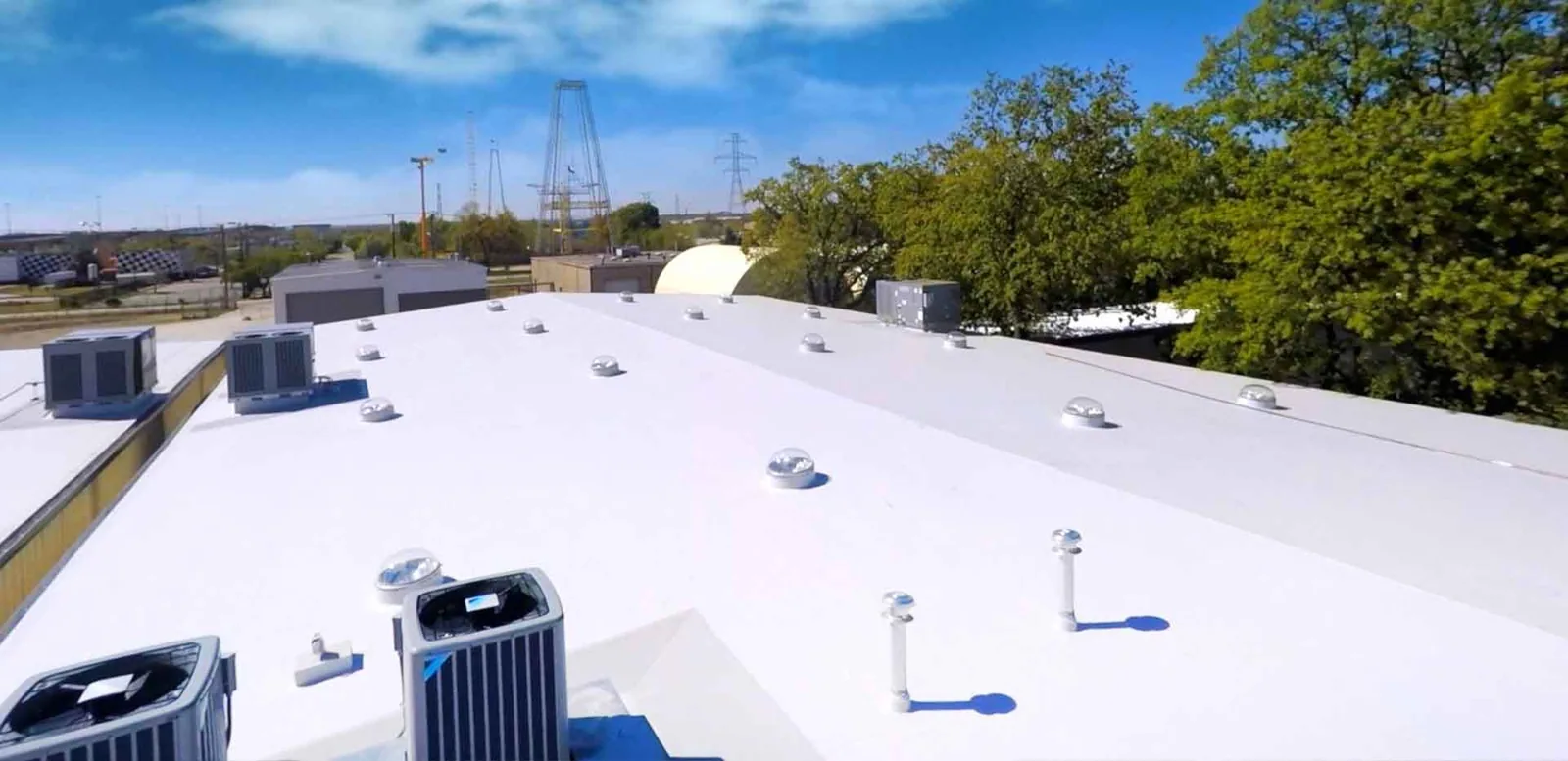
Some owners switch to a TPO roof instead, a single-ply membrane with heat-welded seams. It is a different system with its own attachment, insulation and flashing details. Whichever option you choose, wet insulation and damaged wall flashing still have to be fixed; a lighter-looking roof does not make that work go away. We price each option over the same area with the same repairs included, so you can compare them fairly. The materials for the walls and curbs have to be on site with the field materials, or the job stalls.
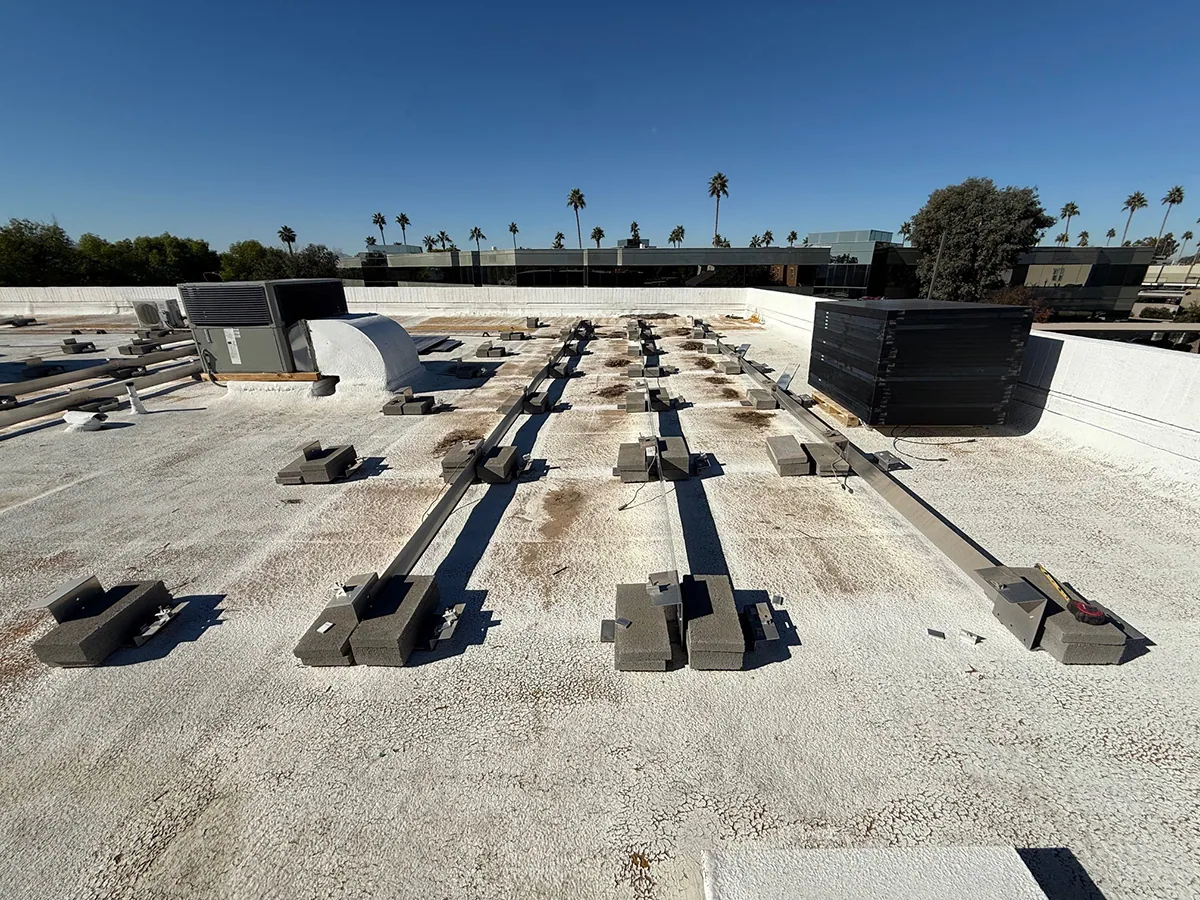
New insulation raises the finished roof. That can leave curbs too short, put drains too high or bury the bottom of a wall flashing. We measure curbs and edges before pricing, and include any curb raising or edge rebuilding in the estimate. Our edge metal and coping repair work rebuilds roof edges and wall caps so they sit at the right height for the new roof. If the wall itself needs a mason or framer, that trade goes first. Field work cannot finish a wall that is still waiting on someone else.
Access can add real time to a built-up roof job. Hot asphalt or torch work, kettle placement, material lifts and narrow roof access all need planning. We ask about access limits before pricing so the estimate does not assume open access. If the work has to be done in sections, each section needs its own setup and temporary tie-in. Insulation, felts, flashing and edge materials need to be on hand together. A delivery of field materials cannot finish a curb still waiting for the HVAC contractor, so the schedule follows the whole job.
A new ply cannot solve wet insulation or an open wall transition underneath. We confirm the condition that controls retention, then specify surface preparation, compatible material and the final edge detail. For a built-up roof in downtown Berkeley, access and occupant protection also shape the work period. Emeryville research buildings bring different equipment routes, so we plan lifting and closure for the actual property and record every completed layer.
When the work is done, you get photos of the replaced insulation, the new plies and the finished wall, edge and curb details, along with the checks we made at each repair. Areas we did not open are noted as not tested. If a manufacturer warranty is offered, its terms depend on the system and how it was installed, and we walk you through them rather than promising coverage up front. The closeout notes record what products went where. If a leak shows up later or someone adds equipment, you can compare it against that record and see whether it is near the new work.
Send any roof drawings you have and tell us where the cracked flashing or leaks are. We will check the layers underneath and send a plain repair plan with photos.
Request a Roof Assessment