Local weather advisory
The National Weather Service has issued a coastal flood advisory covering Berkeley. Heavy rain and drainage loading can expose roof leaks, blocked drains, and ponding water. This is a weather exposure advisory; it does not establish damage to a specific roof.
Do not access a roof during hazardous weather. Protect people first, avoid water near electrical equipment, and request roofing help when conditions permit.
National Weather Service · Updated Oct 28, 2026, 7:20 AM UTC
Drone roof inspections in Berkeley, CA: aerial photos of hard-to-reach roofs, edges and parapets, followed by hands-on checks where the images raise questions.
Commercial Roofing Services | Berkeley, CA
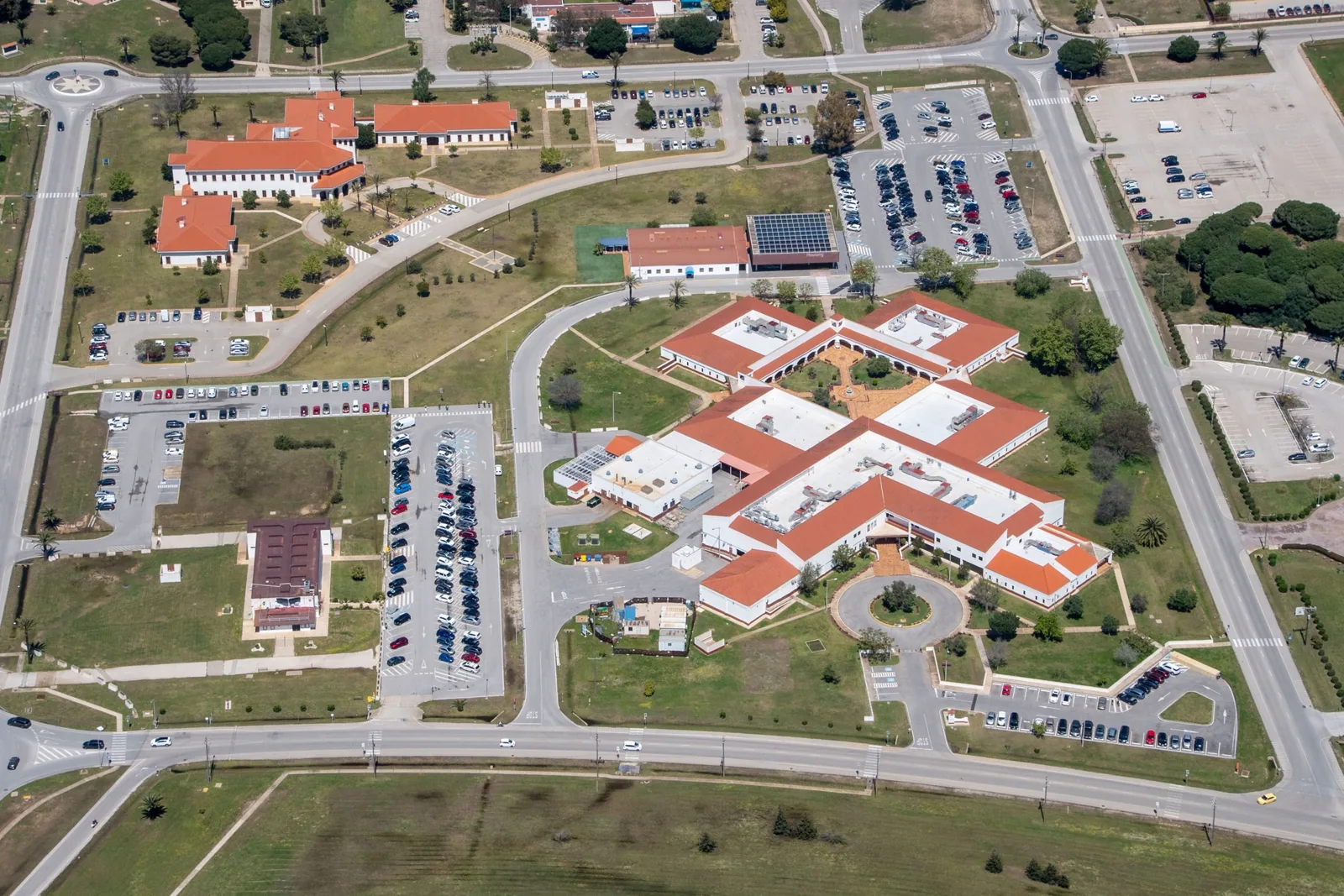
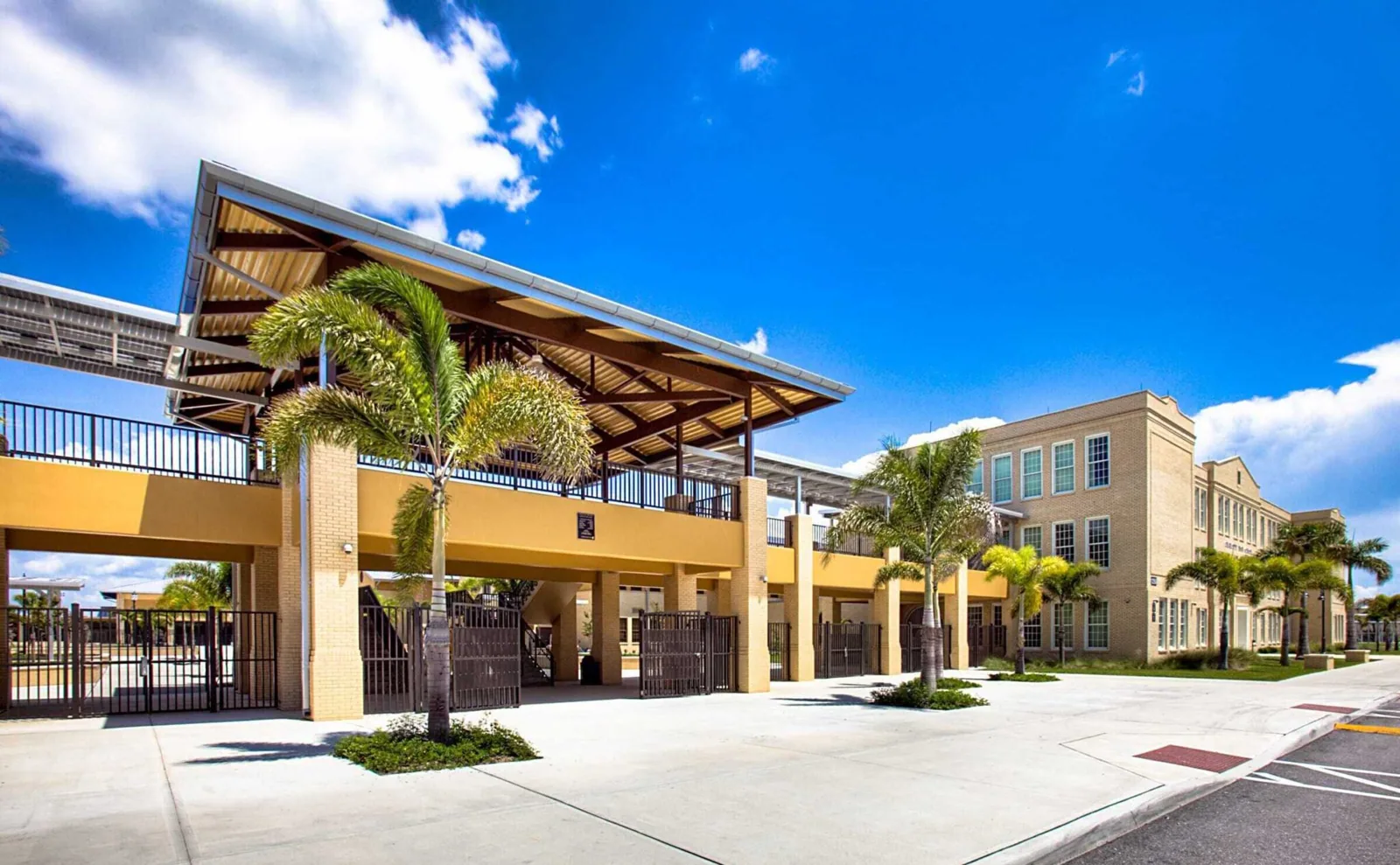
Some roofs are hard to see well. A school with steep or high sections, a parapet corner you cannot reach without a lift, or a large roof where walking every inch takes most of a day are all good cases for aerial images. Drone roof inspection in Berkeley, CA, gives you a clear, overhead view of the whole roof and close-up photos of details that are difficult or unsafe to reach on foot.
A drone is a good tool for spotting problems. It is not a complete inspection on its own. It can show a gap in a parapet cap, a torn seam, ponding water or debris around a drain. It cannot tell you whether the insulation underneath is wet or whether a loose-looking flashing is still fastened. For school buildings, a drone flight can cover the whole campus quickly and with no one on the roof during class hours. We then decide with you which spots need someone up there in person. You get photos of the whole roof, a list of what we saw, and an honest note about what the images can and cannot confirm.
Before we fly, we ask what you want to know. Are you trying to find the source of a leak, check for storm damage, plan a replacement budget, or document the roof before selling or leasing the building? Each goal changes what we photograph and how closely. A leak search needs tight shots of curbs and seams near the stain. A budget review needs an overview of the whole roof and the condition of each section.
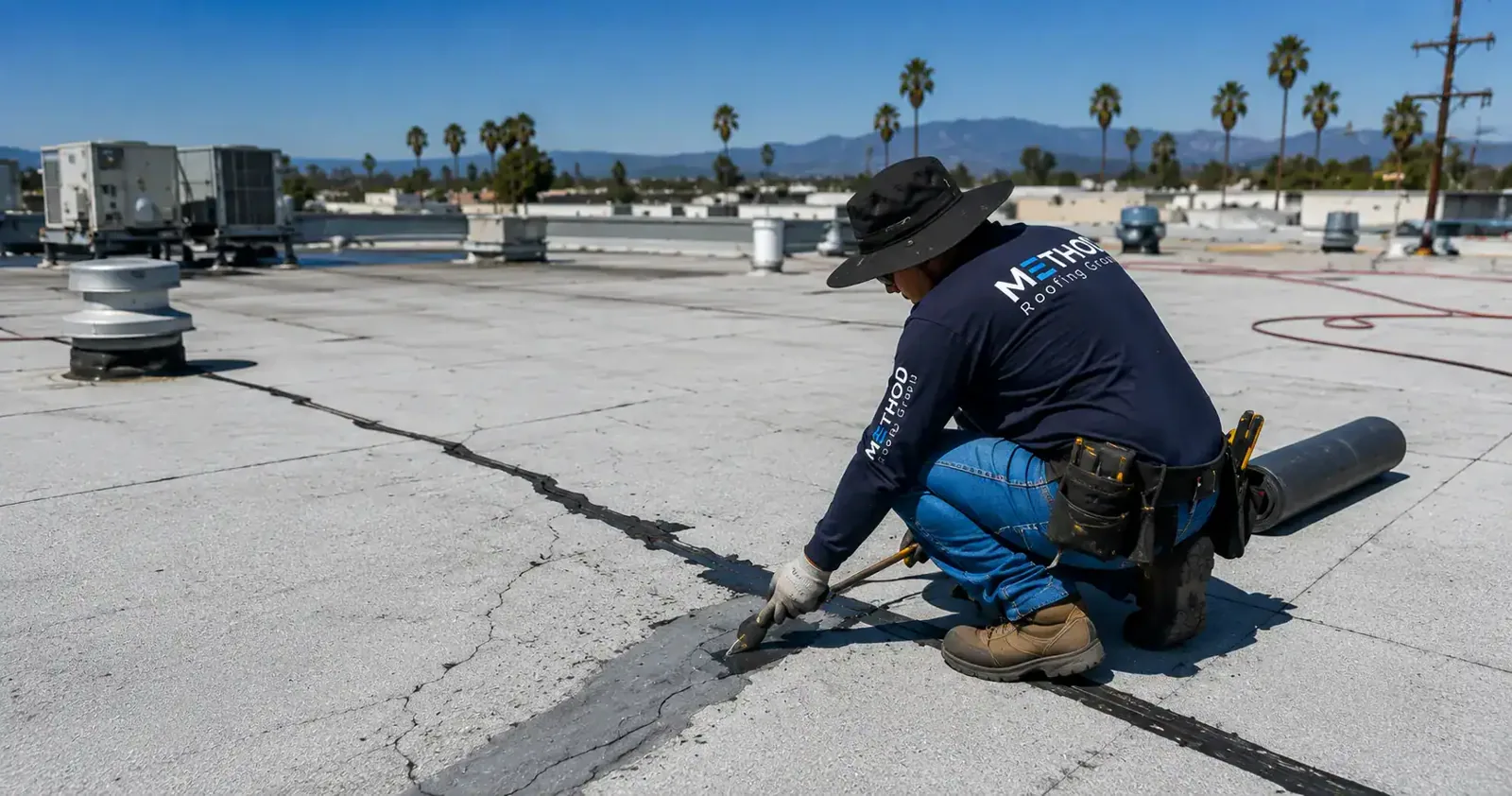
The aerial images help us decide where a hands-on roof inspection is worth the time. If the photos show a seam that looks open, someone still needs to probe it. If a section of edge metal looks loose, someone needs to check what it is fastened to. Using the drone first means the walking inspection focuses on the areas that matter instead of the whole roof. On large or complicated roofs, that can save a lot of time and lets us mark every finding on an accurate roof map.
A photo shows the surface of the roof. It does not show what is happening underneath. Wet insulation, rotted wood nailers, a rusting deck and loose fasteners can all hide under a membrane that photographs well. A roof that looks fine from 100 feet up may still have soft spots underfoot or water trapped in its layers.
When the visual signs suggest trapped water, such as ponding, blisters, stains inside or a long leak history, we may recommend an infrared moisture survey. Infrared scans are usually done in the evening after a sunny day, when wet areas hold heat differently than dry ones. A few core cuts then confirm what the scan shows. That is a separate service with its own conditions and cost, and we only recommend it when the answer would change your decision. We will not describe a roof as dry or sound based only on aerial photos, and the report says that clearly.
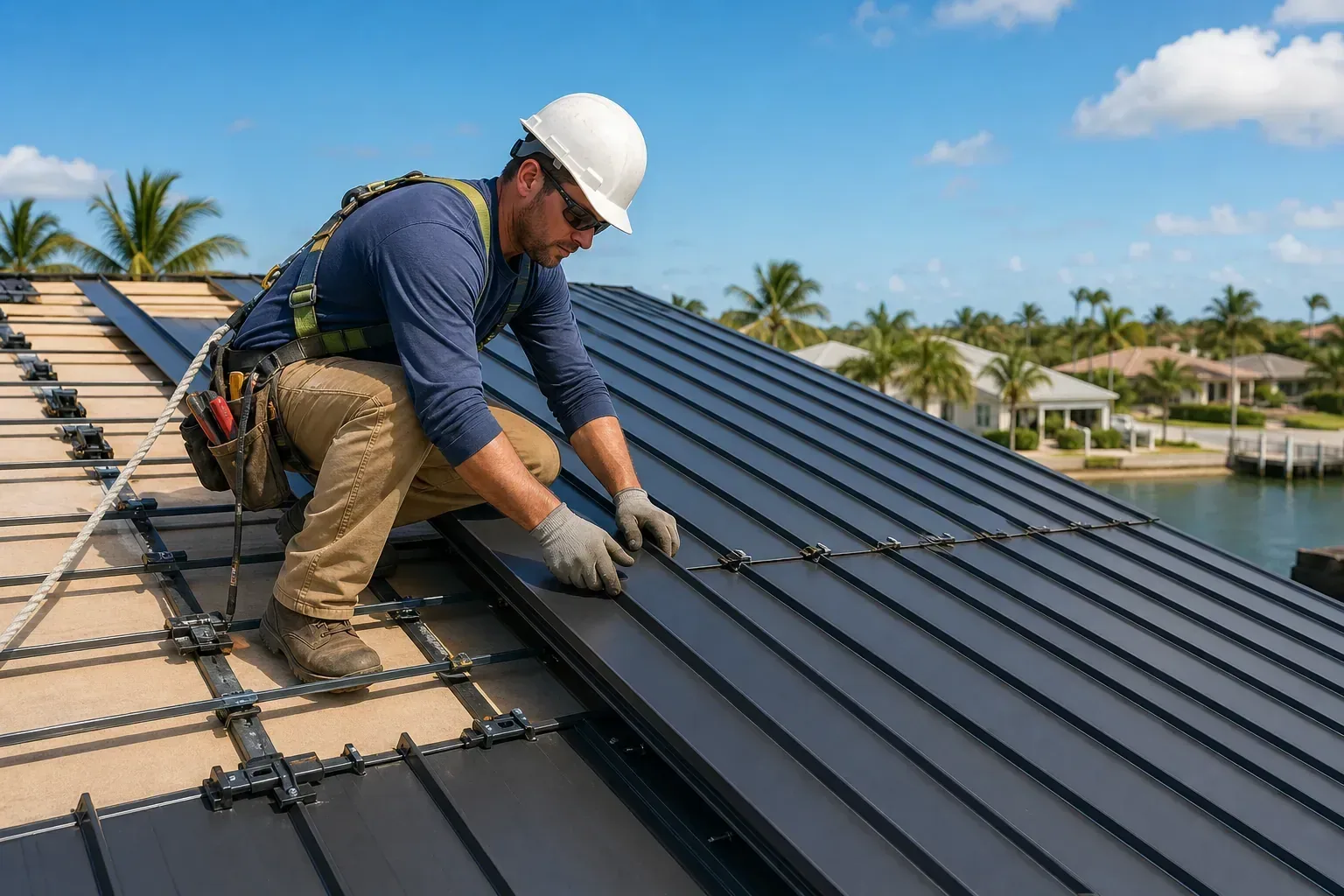
Details are where most roof problems start, and the drone helps us find which ones need attention. On a standing seam metal roof, close-up images can show loose trim, failed sealant at end laps, rust at panel overlaps and fasteners backing out. Those findings tell us where a technician needs to go with tools in hand.
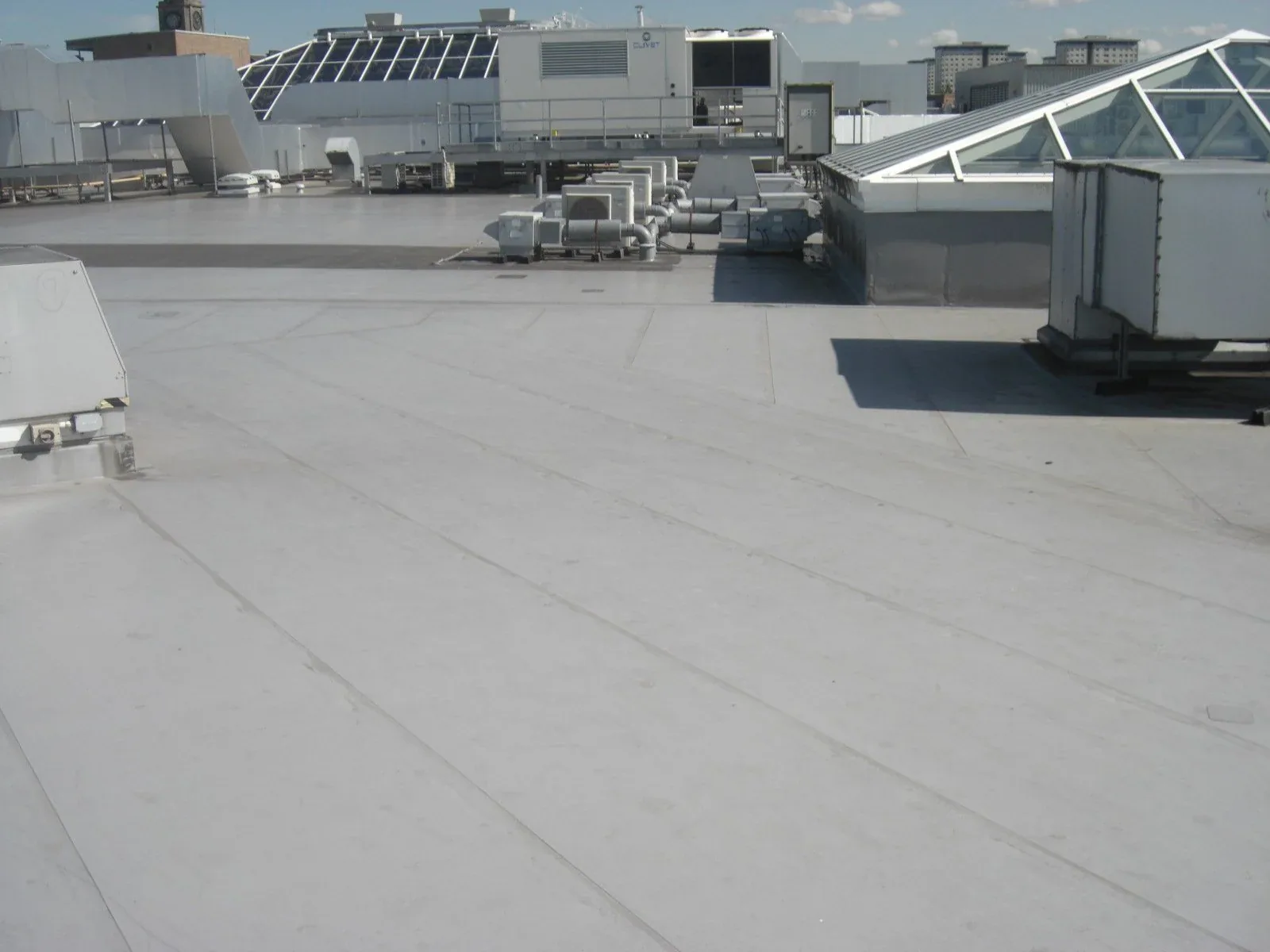
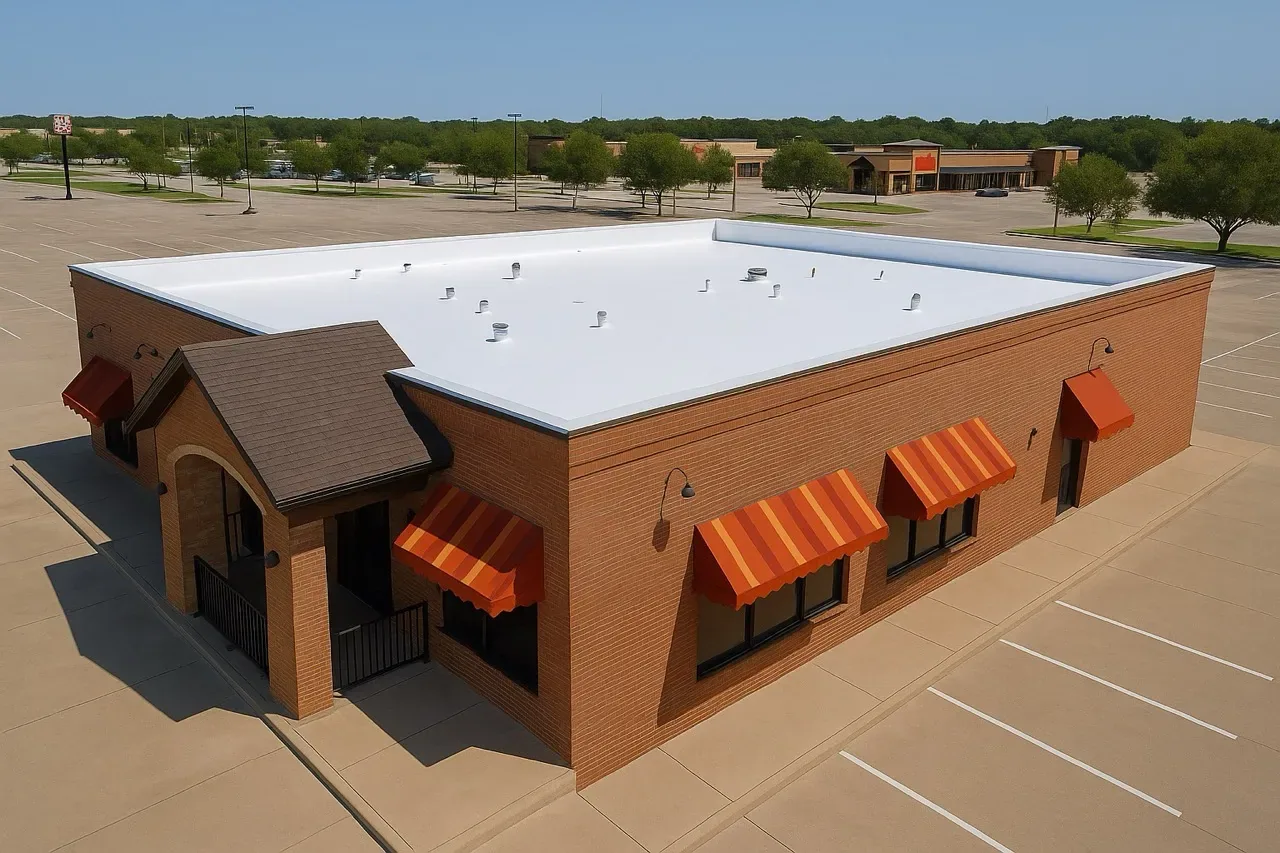
Single-ply roofs show different warning signs. On a PVC roof, we look for open seams, shrinkage pulling the membrane away from walls and curbs, cracking near rooftop equipment and areas where grease or chemicals are reaching the surface. Photos help us spot these from above, but checking a weld means probing it by hand. We flag each suspect detail with its location and a close-up photo, and recommend which ones to inspect in person. That keeps the follow-up visit short and focused, and you can see for yourself why each item was flagged.
Several things affect when and how we fly. Wind and rain can ground the drone or make images unusable. Commercial drone flights follow FAA rules, and some locations near airports or other controlled airspace need extra authorization ahead of time. We also need to know about people, vehicles and events around the building, since we avoid flying over crowds or busy entrances.
On a school, a hospital or any building with active operations, we coordinate the flight time with you so it does not disrupt anyone below. If the images turn up something that needs fixing, the next step may be a commercial roof repair estimate. We keep that separate from the inspection so you can decide on the repair after seeing the findings. The flight itself is usually short. Planning, any authorizations and the follow-up review of the photos take more time than being in the air, and we build that into the schedule we give you.
In West Berkeley and Emeryville, aerial images are useful for finding problems on large or awkward roofs, but close inspection is still needed to confirm attachment or moisture. Older buildings here often have many add-ons, abandoned curbs and patched seams, and a full overhead view makes it easier to map them. Drone inspections in West Berkeley follow the same steps: fly, review, then check the important details by hand.
You get a set of labeled photos, including an overhead view of the whole roof with findings marked, close-ups of each issue and a short written summary. The summary separates what we confirmed from what still needs a hands-on check. It also lists anything the drone could not capture clearly, such as areas under equipment or behind tall parapets. If repairs follow, the same photo set gives the crew a clear map of where to go. Keep it on file; it also makes a good baseline for comparing the roof after future storms.
Tell us about the building and the areas you want a clearer look at. We will plan the flight and send labeled photos and a plain summary.
Request a Roof Assessment