Roof insurance claim help in Berkeley, CA: clear photos, a written condition report and a detailed repair estimate for your adjuster. Coverage decisions stay with your insurer.
Commercial Roofing Services | Berkeley, CA
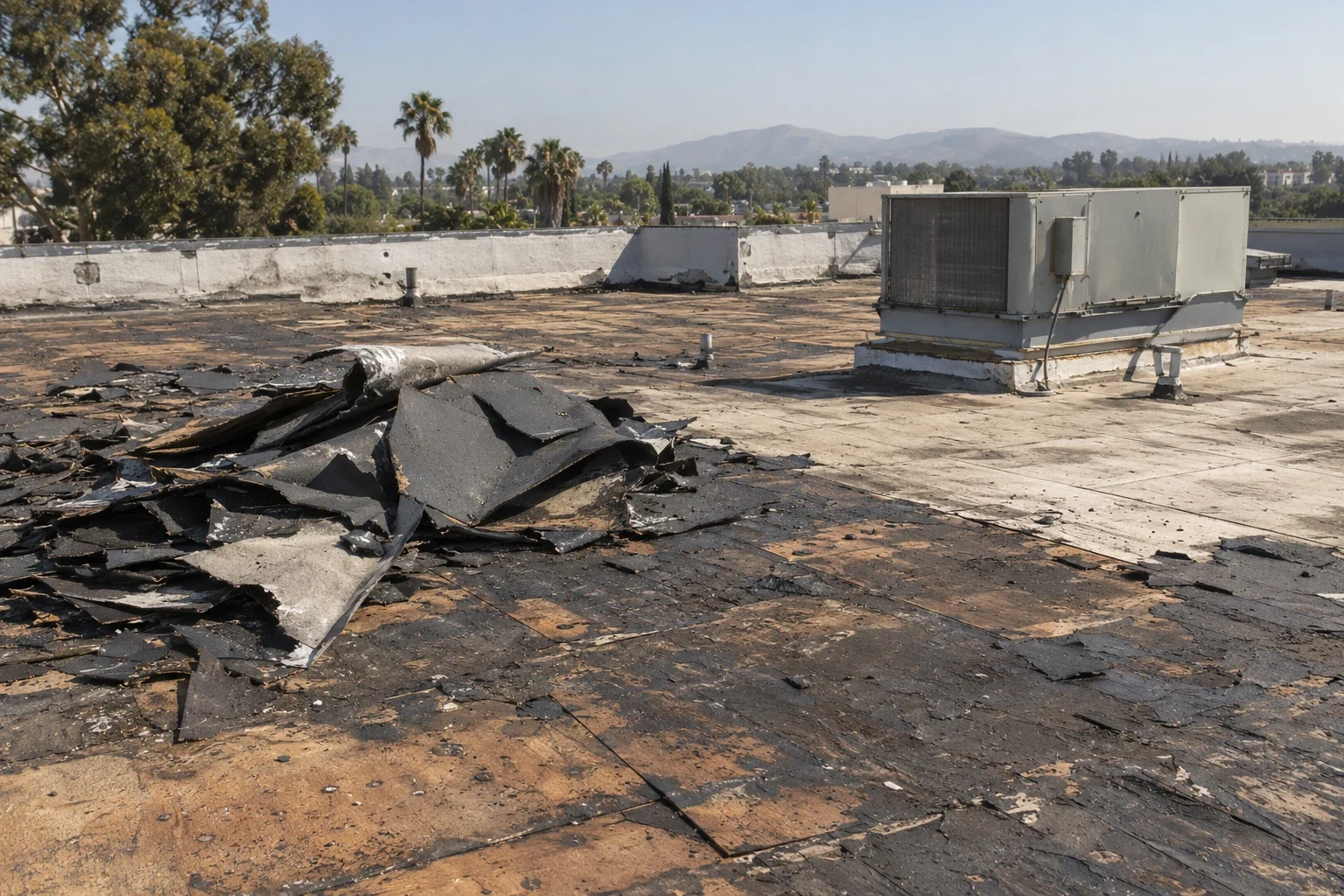
A bent section of edge metal above an office suite after a windstorm is the kind of damage an insurance adjuster will want to see clearly. So is the wet ceiling below it. Roof insurance claim assistance in Berkeley, CA, means giving you and your adjuster an accurate, well-photographed account of the roof's condition and a detailed estimate for the repair. We document the roof. Your insurer decides what the policy covers.
That split matters. We are roofers, not public adjusters or attorneys, and we do not negotiate your claim or interpret your policy. What we can do well is show exactly what is damaged, where, how badly, and what it will take to fix it properly. For office buildings, that often includes noting which suites were affected inside and when leaks started. We also separate storm damage from older wear and earlier repairs, because adjusters will ask, and a report that mixes the two is less useful to everyone. Clear, honest records tend to make the claim go more smoothly. They also give you a solid starting point if the adjuster wants a second visit to the roof.
Good damage photos do three things: show where on the roof the damage is, show the damage up close, and show the surrounding roof for context. We take wide shots that locate each area, close-ups of torn membrane, displaced flashing, bent metal or punctures, and photos with a tape measure or marker for scale. Every photo is tied to a location on a roof plan.
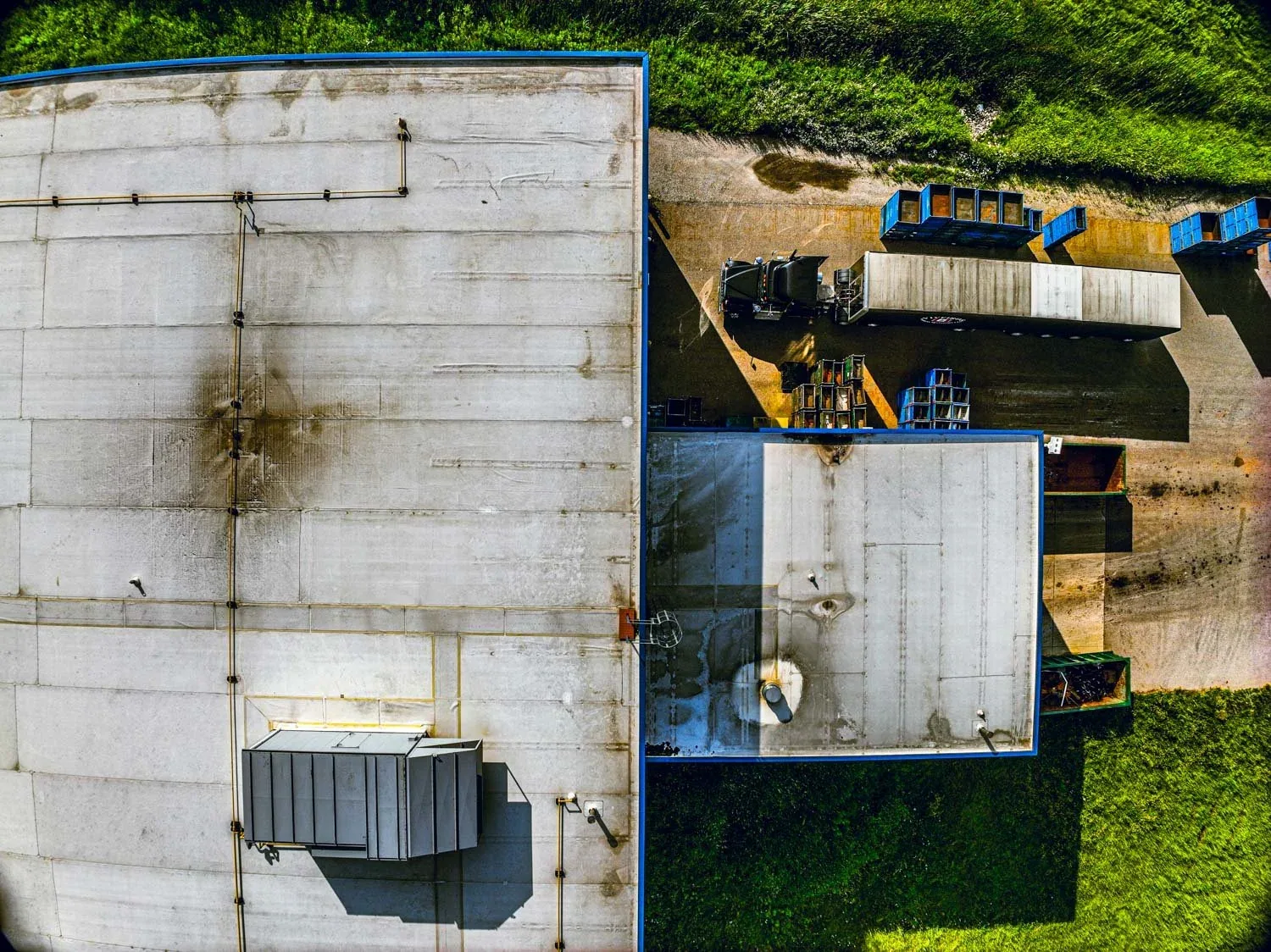
For large roofs or areas that are hard to reach safely, a drone roof inspection can capture the whole roof and the edges quickly. Aerial images are useful for showing the extent of damage and for comparing sections. Close-up hands-on photos are still needed for detail. We also photograph interior water stains and damage if you give us access, and we note the date and weather conditions of our visit. If you have photos from right after the storm, or older photos of the roof, send them along. Before-and-after comparisons are often the strongest evidence of when damage happened.
Some things can be confirmed on the roof, and some cannot. A torn seam or a missing section of edge metal is clear. Whether the insulation underneath is wet, or whether a dent in metal panels came from one storm or several over the years, may need more investigation or may not be possible to say for sure.
A roof inspection for a claim records what we confirmed, what we suspect and what we could not determine. If wet insulation is suspected, core cuts or a moisture survey can confirm it. If damage could be from wear or an earlier event, we say so rather than guess. We do not overstate damage to make a claim bigger, and we do not understate it either. Adjusters and insurers see a lot of reports. One that clearly separates facts from possibilities is easier for them to trust, and that helps you. Our report states the cause only when the evidence supports it.
The repair estimate should describe the work needed in enough detail that an adjuster can follow it line by line. That means quantities for membrane, insulation, flashing, edge metal and any deck repair, along with labor, access and disposal. A single lump-sum number is hard for anyone to review.
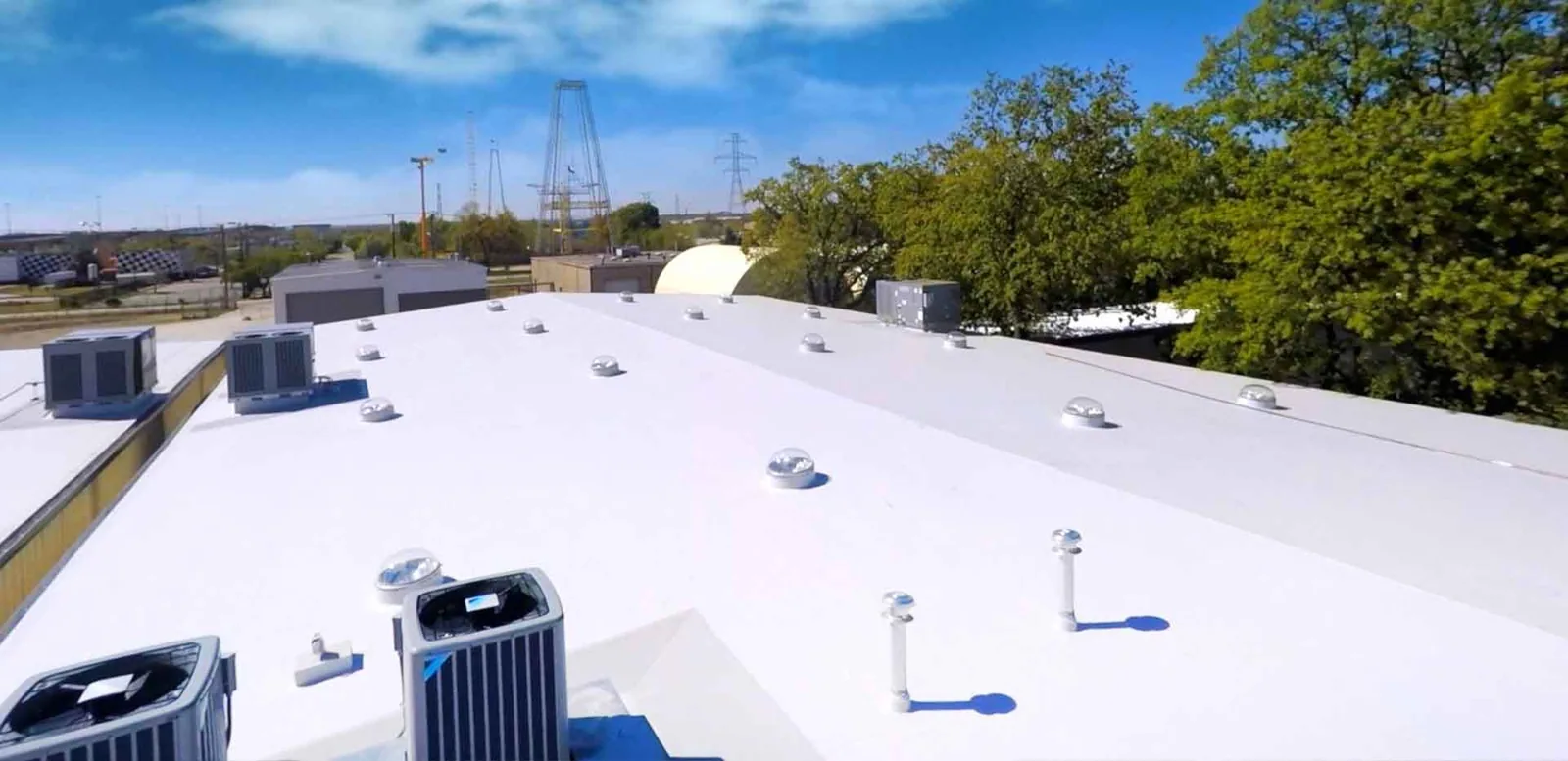
On a TPO roof, a storm repair might include cutting out torn membrane, replacing wet insulation, welding in new membrane and rebuilding damaged flashings. We list each of those as a separate line with its quantity and location. Where damage is extensive enough that repair may not restore the roof properly, we explain why and include the replacement option for the damaged section. We also note any matching issues, like an older membrane that will not weld well to new material. The estimate reflects our pricing for the work. The insurer will compare it to its own pricing, and we can answer questions about how we arrived at each item.
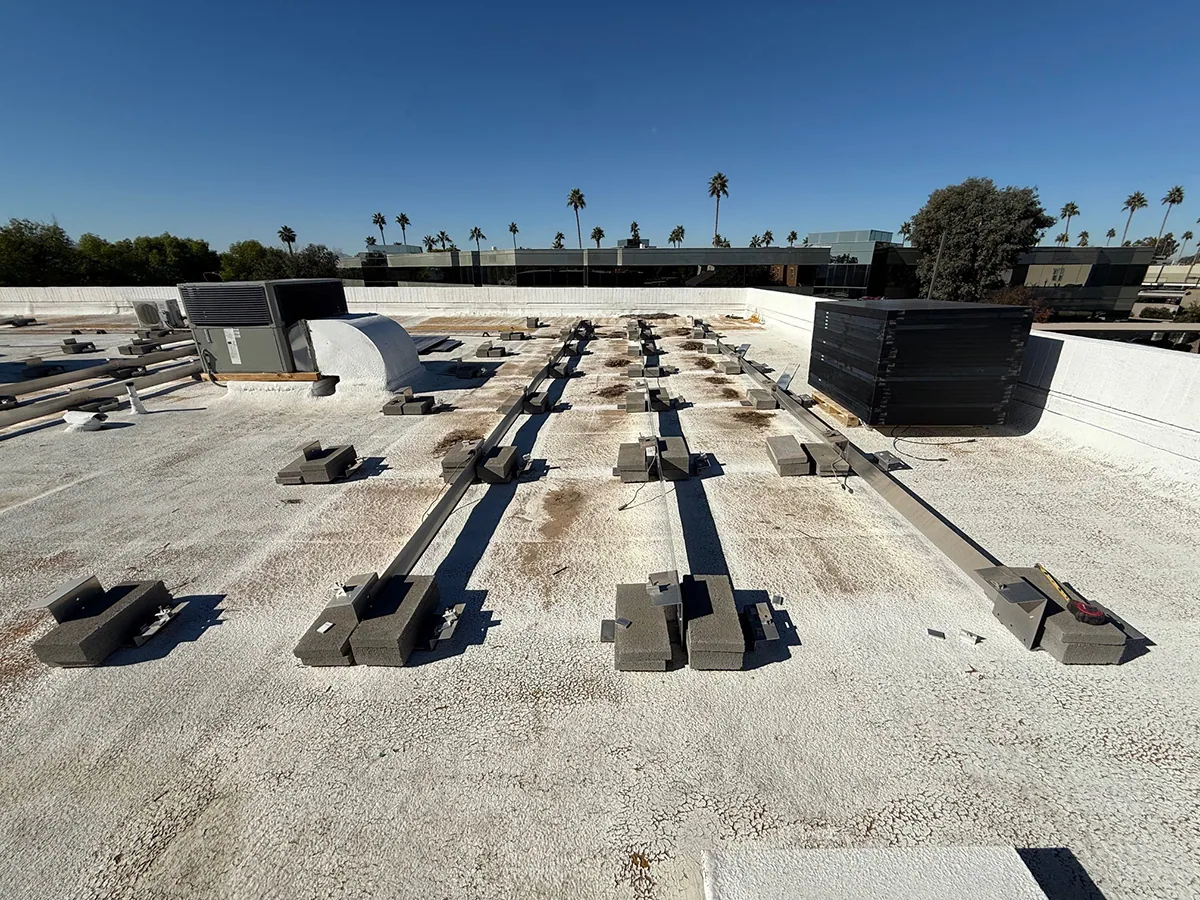
Some costs in a roof repair have nothing to do with the size of the damage. Getting crews and materials to the roof may require a crane or lift. Working above occupied suites may require interior protection and shorter work days. Rooftop equipment may have to be disconnected by another trade. Code requirements for the repaired area may add work beyond simply putting back what was there.
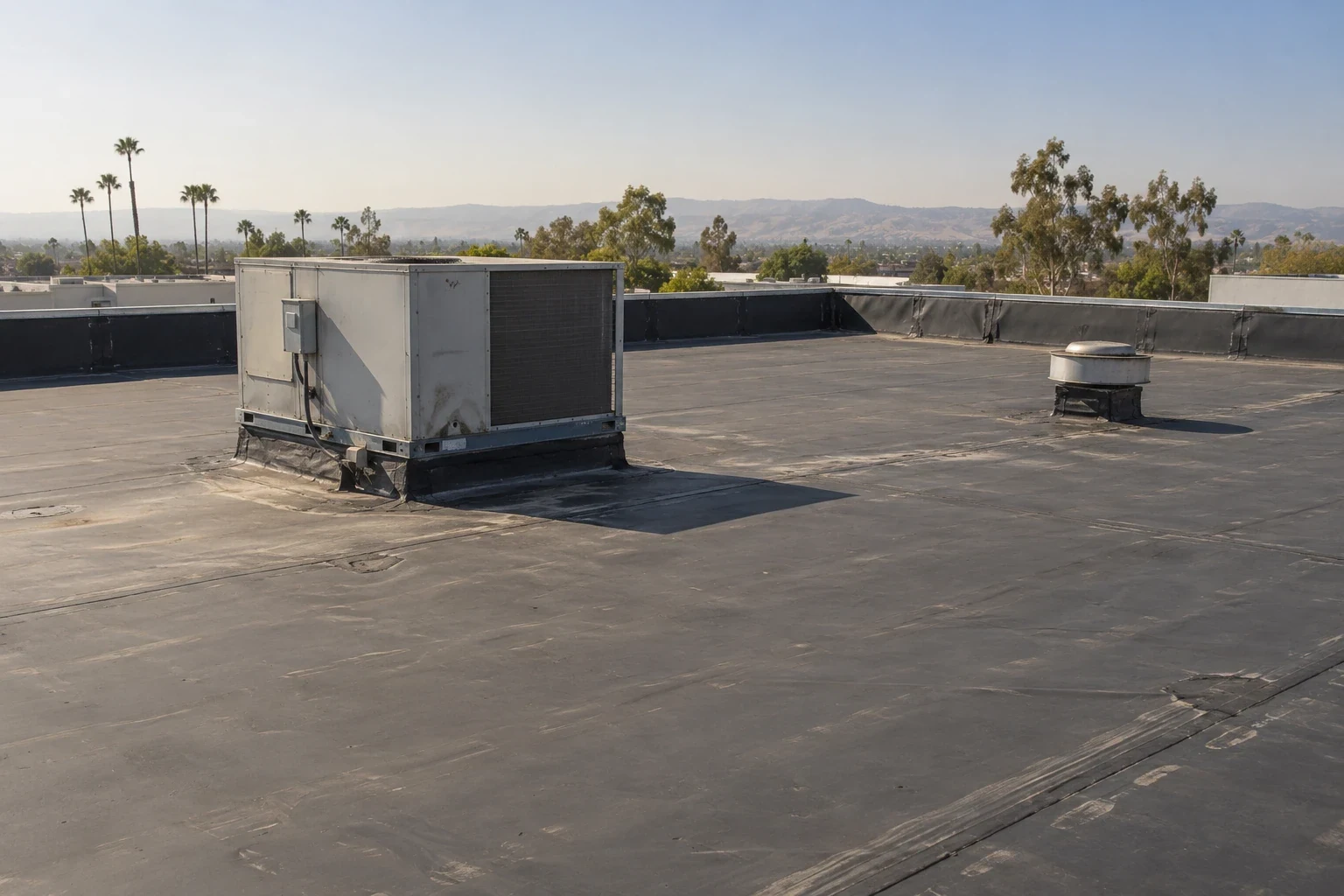
On an EPDM roof, repairs need dry weather and clean surfaces for primer and seam tape to bond, which can affect scheduling. We list access, protection and equipment items separately so the adjuster can see them. If concealed damage turns up once the roof is opened, such as more wet insulation or rotted wood, we photograph it before repairing it and provide a supplement with the added quantities. Getting that documentation right at the time of the repair is much easier than trying to prove it afterward.
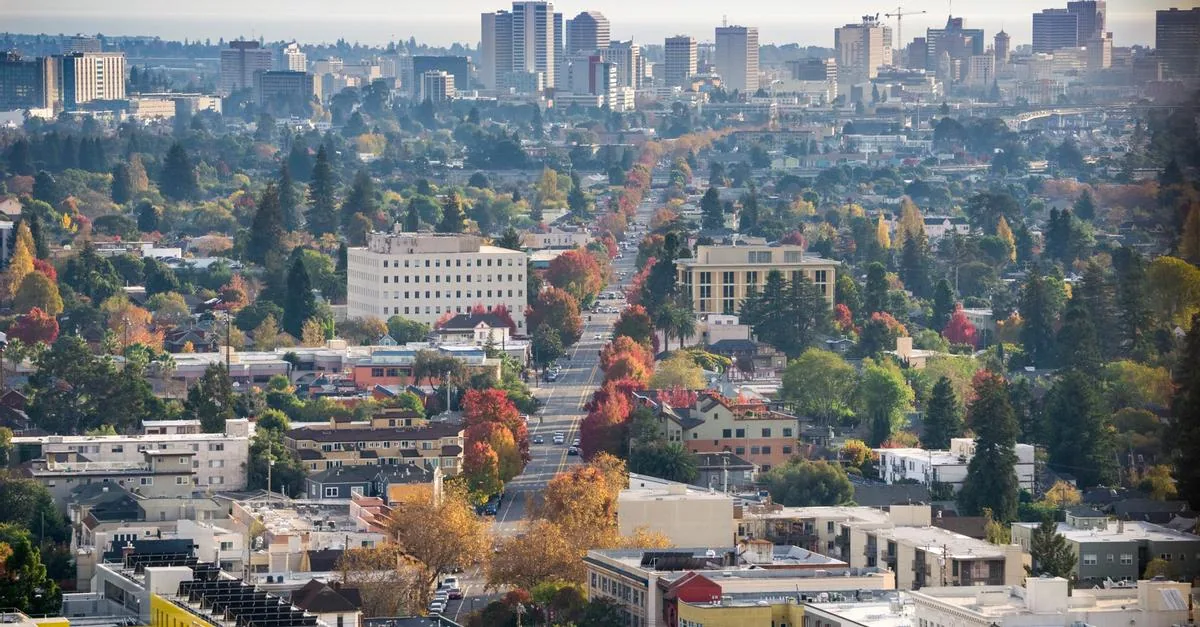
Across West Berkeley and Emeryville, claim documentation is most useful when photos and reported leaks are tied directly to the roof areas inspected. Wind and blown debris are the usual storm concerns for roofs here, so we look closely at edge metal, flashing, loose seams and punctures from branches. Properties in downtown Berkeley get the same careful photo record.
Keep the full package together: our inspection report and photos, the repair estimate, any supplements for hidden damage, photos of the repair as it was done and the final invoice. Add your own photos, the date you first noticed damage and any interior repair records. If the insurer asks for more information, we can provide additional photos or explanation of the roof work. Keep in mind that our documents describe the roof and the repair. Decisions about coverage, deductibles and payment are between you and your insurer.
Tell us where the roof was damaged and send any photos you already have. We will inspect it and give you clear photos and a detailed estimate.
Request a Roof Assessment