Local weather advisory
The National Weather Service has issued a coastal flood advisory covering Berkeley. Heavy rain and drainage loading can expose roof leaks, blocked drains, and ponding water. This is a weather exposure advisory; it does not establish damage to a specific roof.
Do not access a roof during hazardous weather. Protect people first, avoid water near electrical equipment, and request roofing help when conditions permit.
National Weather Service · Updated Oct 28, 2026, 7:20 AM UTC
Commercial roof repair in Alameda Point from our Berkeley crew. We open up layered patches, find what is underneath and repair to sound roof, with photos.
Service Areas | Berkeley, CA
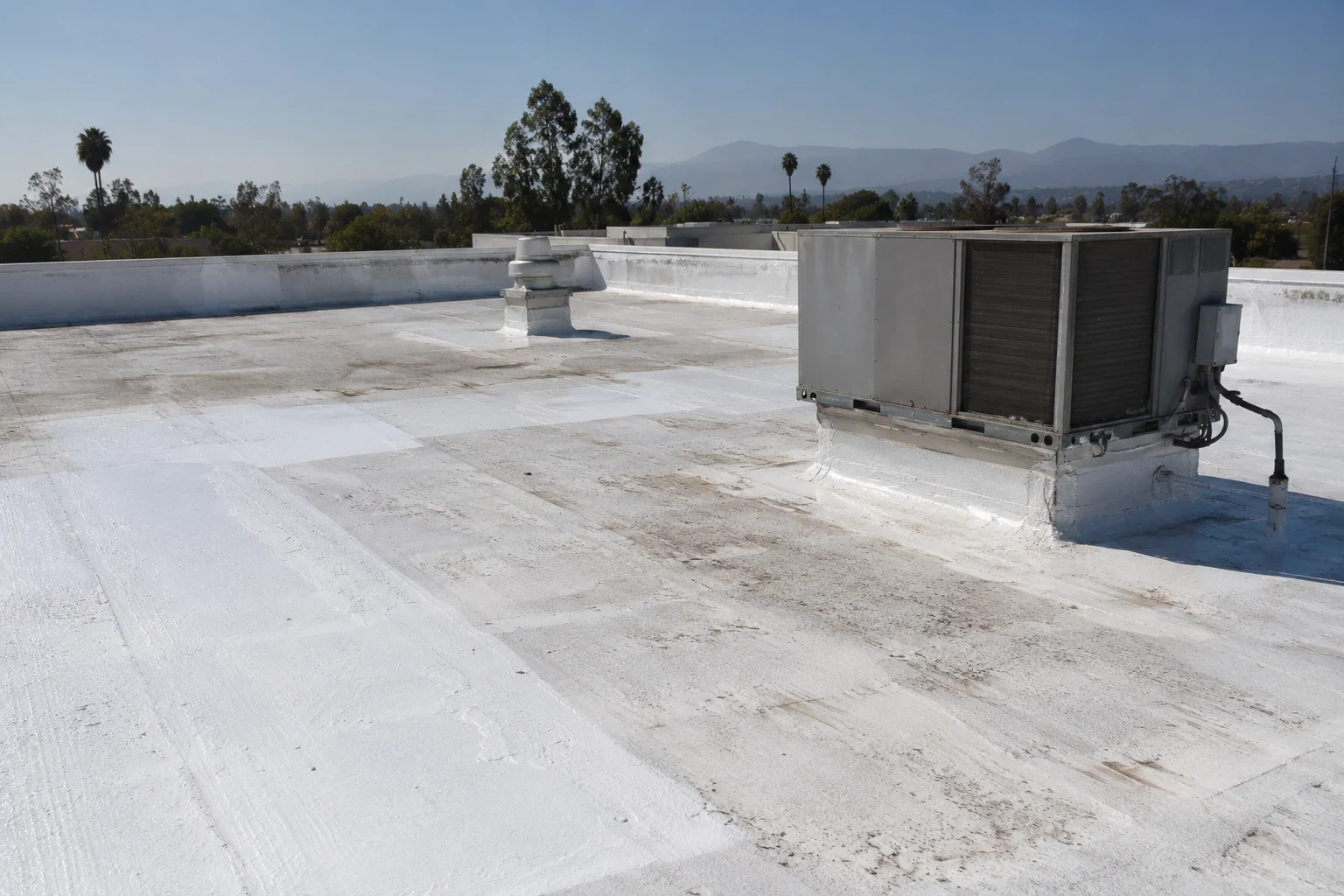
Older commercial roofs often carry layer after layer of patches, and after enough of them nobody remembers what the original seams and flashings look like. We repair and replace commercial roofs in Alameda Point from our base in Berkeley, CA, and patched roofs are a big part of that work. The first job is figuring out what the patches are hiding. Several patch edges may belong to one old repair, or they may sit over two different roof materials. We sort that out before recommending another patch, a coating or a tear-off.
Alameda Point is a large waterfront district at the west end of Alameda Island, redeveloping former Naval Air Station land for mixed uses. Its broad geography includes more than one operating property, so we identify the building, roof assembly and active use before recommending work. The owner receives a record tied to the roof actually examined. Our roof condition reports separate visible findings from concealed questions and avoid treating the former base history as evidence of current roof construction.
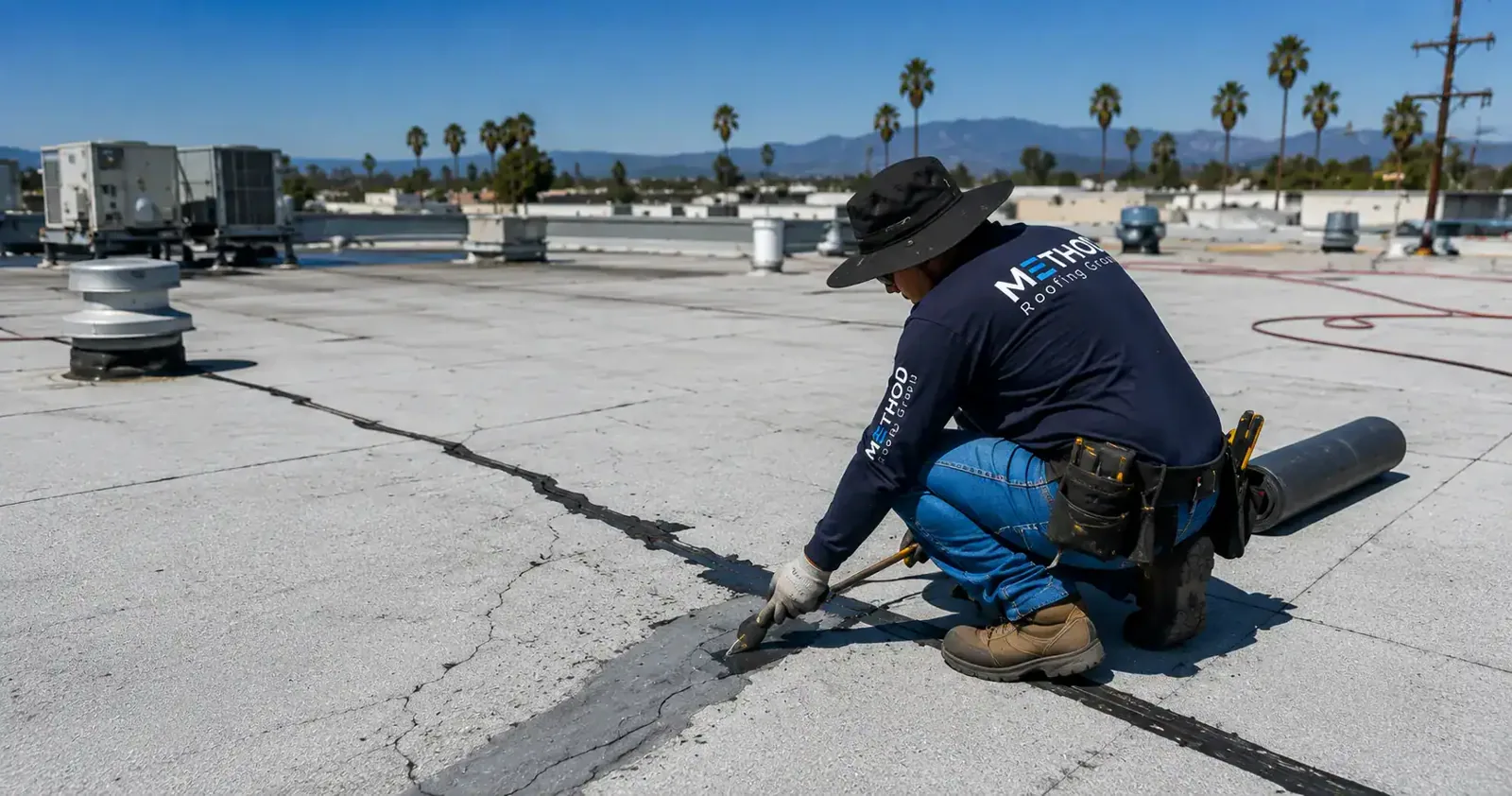
An outer patch can conceal a failed lap or an abandoned attachment. We look for the original connection around its accessible perimeter. Differences in surface height help identify where earlier material was added. An approved opening may be needed to establish the layers underneath. We explain the question that opening should answer before making it. The exposed area then gets recorded and closed with a suitable roofing detail.
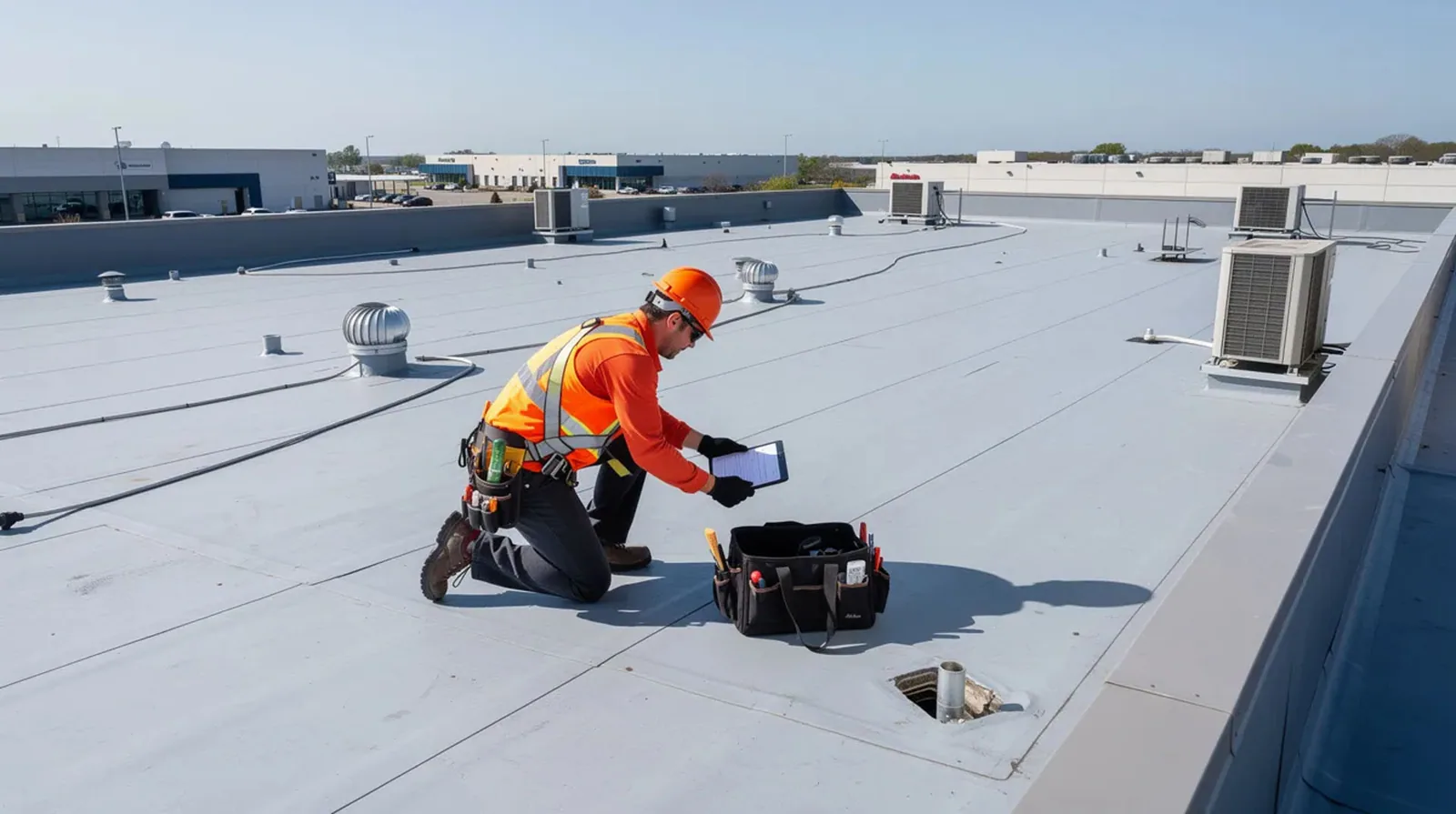
A patch is not automatically defective because it looks different. What it is stuck to, how it is attached and how water drains past it matter more than appearance. We compare those conditions with the surrounding roof. Our roof inspection separates what we can see is wrong from what we cannot yet confirm, and the report marks spots that need a closer look. A patch that is still stuck down on top can sit over a wet or failed layer, so we do not call it sound just because the surface looks intact.
Pulling up one patch often shows damage that runs past its edge. The repair has to reach roof that is dry, firm and clean enough for new material to bond to. We check the layers around the opening before deciding how far to cut back. Sometimes the old membrane is solid but its surface is dirty, oxidized or coated with something the new material will not stick to. Then we cut back farther or prepare the surface so the new seam holds.
Our commercial roof repair estimates explain where we expect the repair edge to land and why. Because damage under old patches is hard to measure ahead of time, we agree up front on what happens if we find more: we stop, take photos, show you the extra area and the price, and wait for your approval before closing it up. We only open as much roof each day as we can seal again by the end of the day.
A removal boundary also needs room for the finished connection itself. We account for that working width around the exposed defect. A nearby curb or outlet can restrict the available transition. The proposed detail may need to extend around that obstruction. We show the arrangement before pricing the correction. That helps the owner understand why the repair footprint exceeds the damaged material.
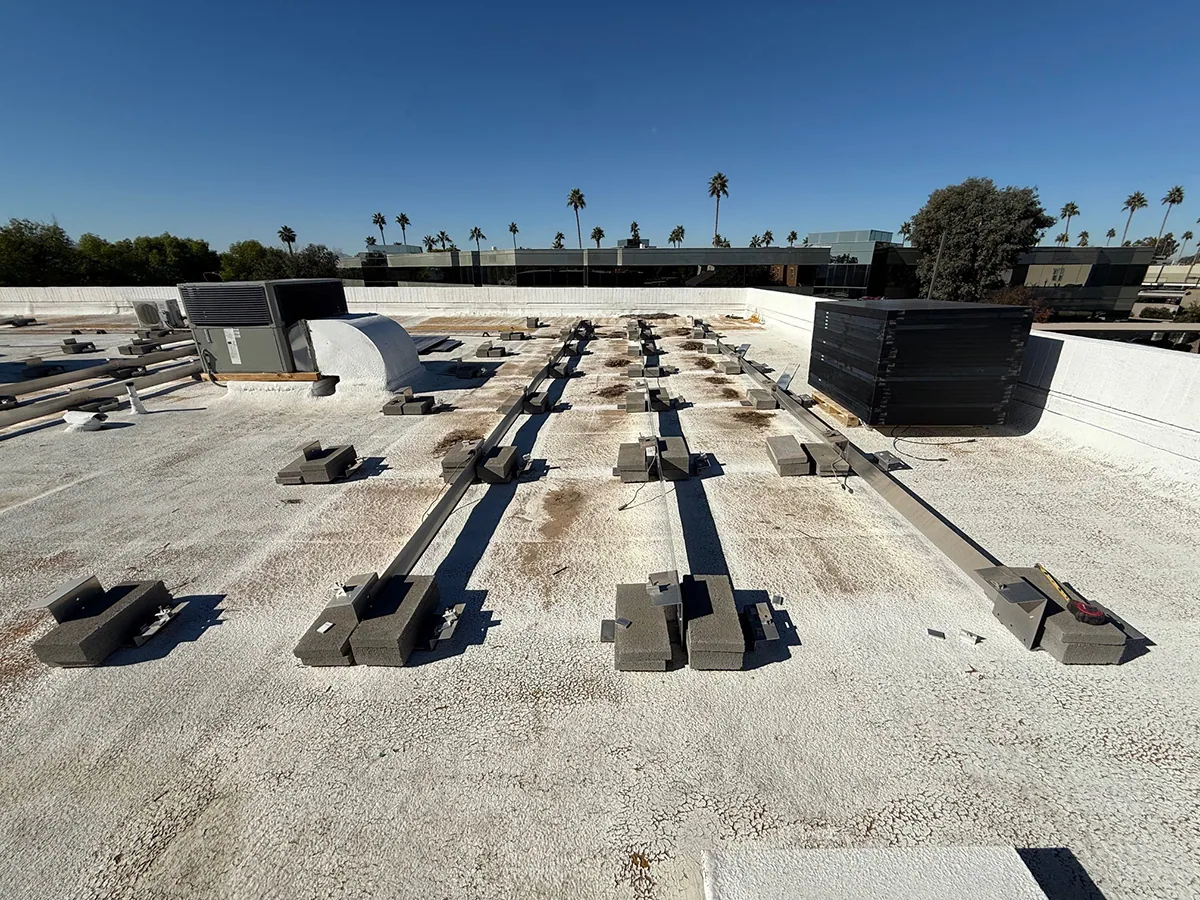
A coating only works on a roof that is solid underneath. Loose patch edges, open seams and wet insulation have to be fixed before any coating goes on, because a smooth new surface will not hold together layers that are coming apart. We check the existing materials and what preparation they need. The coating also has to be one the manufacturer approves for that roof surface, and some old patching compounds are not compatible.
When we plan roof coating restoration on a patched roof, the repairs and surface prep are listed right next to the coating. Adhesion tests in a few spots can tell us whether the coating will bond, but one good test does not prove every patch on the roof will behave the same, so we note where we tested. If the roof turns out to have wide areas of failing layers, a tear-off of those sections may be the better choice, and we price both so you can compare.
An exploratory removal can sit above a room that remains in use. We identify that room and its contents before lifting roof layers. The manager confirms the protection arrangement and available working period. Material and debris need a route that fits the building. A larger correction may require staged removals with separate closure boundaries. The work plan should show those practical limits before ordering materials.
Each property here has its own site layout. A building off West Midway Avenue may have a very different path for the crew and materials than one near Pan Am Way, and we walk the site to plan that before ordering. Our reroofing over occupied buildings work plans the staging, debris removal and interior protection for that specific building. If you also own property in Alameda or West Oakland, we can schedule the inspections together, but each roof still gets its own access and protection plan.
One failed connection within firm, dry surrounding material may support focused correction. Repeated unstable layers across wider areas raise a broader roof question. We compare those observations with the remaining useful assembly. The owner sees which condition supports repair and which supports larger removal. A recommendation should explain the material problem that additional work addresses. It should also identify unresolved findings that could change the final scope.
Completion photos show the exposed layers, the edge of the repair and the finished seam. Wider views tie those details to fixed roof features. A later visit can return to the same location without guessing. New leakage elsewhere remains a separate investigation until evidence connects it. We distinguish that new finding from the completed repair. The record can then support maintenance and budget planning. Clear locations keep a long roof history useful rather than a collection of disconnected close-ups.
Where several buildings share a budget, each report still needs its own limits. We identify inspected areas and places that remained inaccessible. The manager can compare findings with different levels of confirmation. A clearly marked unknown may deserve another investigation before construction pricing. Confirmed damage can proceed to a defined correction scope sooner. That distinction helps the owner choose a practical sequence of work.
Let us walk the patched area and find out what is underneath. You get clear photos and a plain explanation of how far the repair needs to go.
Request a Roof Assessment