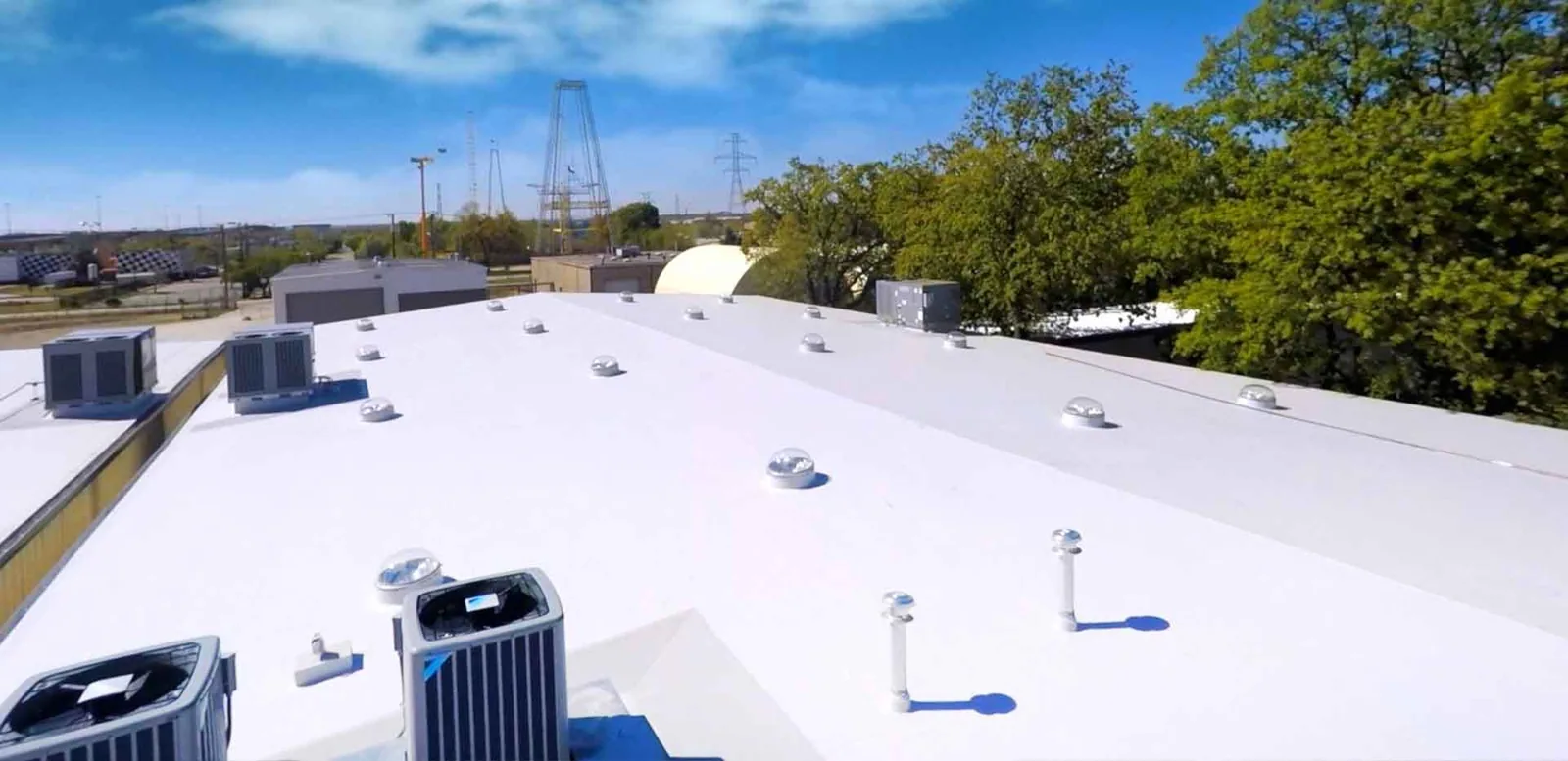
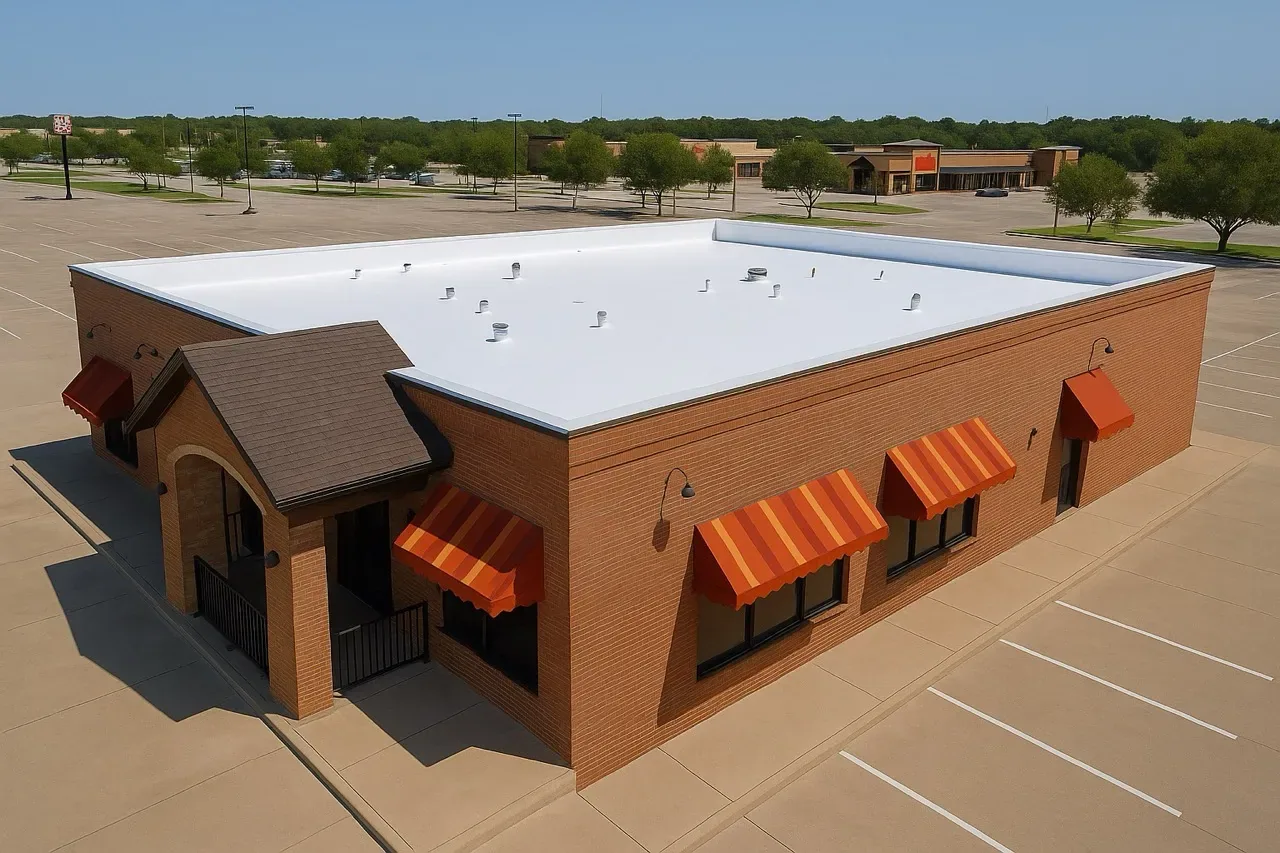
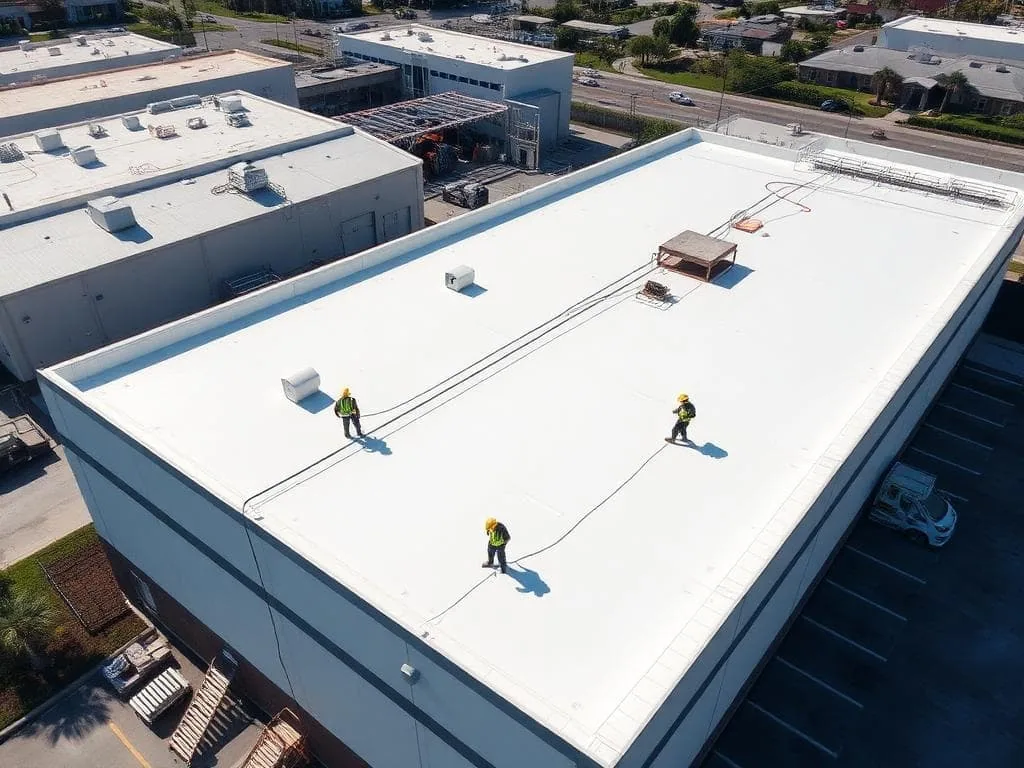
Solar-ready roofing in Berkeley, CA: fix or replace the roof before panels go on, plan mounts and wire penetrations, and leave room to maintain the roof later.
Commercial Roofing Services | Berkeley, CA
A planned row of solar panels running right across an old patch on an office roof is a problem waiting to happen. Once panels are installed, they sit on the roof for twenty years or more, and every repair underneath them means removing and reinstalling part of the array. Solar-ready roofing in Berkeley, CA, is about getting the roof into shape before the panels go on, so the roof lasts as long as the system on top of it.
For office buildings, solar is often part of a broader energy or sustainability plan. The roof is the foundation for all of it. We look at the roof's age, condition and expected remaining life, then compare that with the planned solar layout. If the roof has only a few years left, replacing it before installation usually costs far less than removing and reinstalling the panels later. We do not design the solar system or certify the structure. We make sure the roof under it is sound and that every mount and wire penetration is flashed properly. That way the roof and the solar system can each do their jobs without one shortening the life of the other.
Before the solar layout is locked in, the roof needs a close look. A roof inspection checks the membrane, seams, flashings and drains, and core cuts show whether the insulation is wet. We compare the age of the roof with the expected life of the panels. A roof with ten years left under a system designed to last twenty-five is a mismatch worth solving now.
We also look at the layout itself. Panels placed over drains, too close to roof edges or blocking access to rooftop units create problems later. Rows that run across the natural water path can trap debris and slow drainage. Old patches, soft spots and seams that are starting to open should not end up under the array. We mark those areas on a roof plan and share it with the solar designer, so the layout can be adjusted or the repairs can be made first. Small changes at this stage are cheap. Changes after installation are not. We would rather move a row of panels on paper than cut around them on the roof.
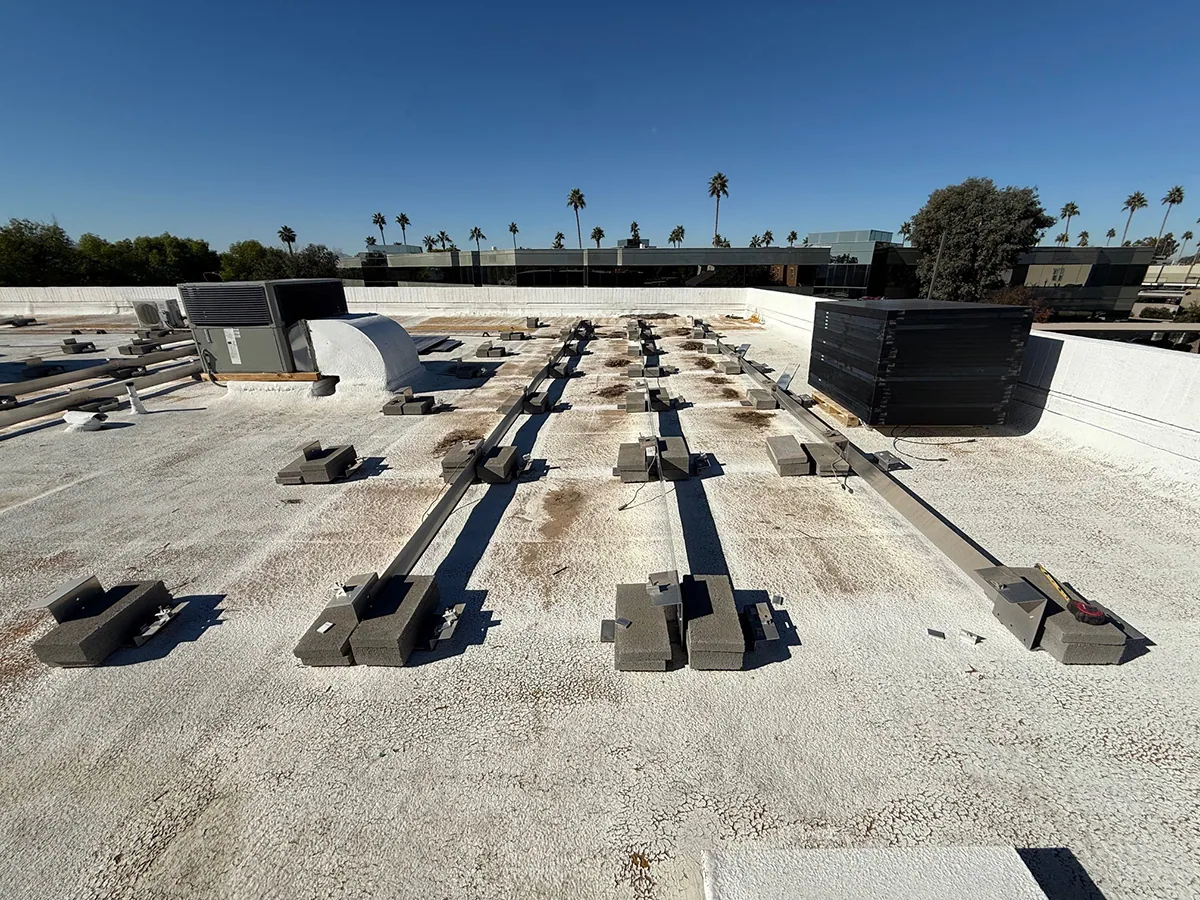
Solar mounts come in two main types: ballasted racks that sit on the roof held down by weight, and attached systems fastened through the roof into the structure. Each puts different demands on the roof. Ballasted racks add weight and need protection pads under them. Attached mounts create penetrations that have to be flashed.
The solar contractor designs the racking, and a structural engineer confirms the building can carry the load. Those are not roofing decisions, and we do not make them. What we handle is how each mount meets the roof. Where mounts are attached through the roof, they need properly flashed bases, much like a pipe or small curb. Our rooftop curbs and supports work covers those mount bases and any equipment stands for inverters or combiners. We coordinate with the solar contractor on mount locations and flashing details, so each one is sealed with materials that match the roof membrane. Ballast pads and slip sheets are checked for compatibility with the membrane too.
Any repairs that would be hard to reach after the panels go on should be done first. That includes replacing wet insulation, fixing open seams, rebuilding failed flashings and correcting ponding under the planned array area. Wet insulation under solar panels is especially bad, because it is nearly impossible to reach without removing the array.
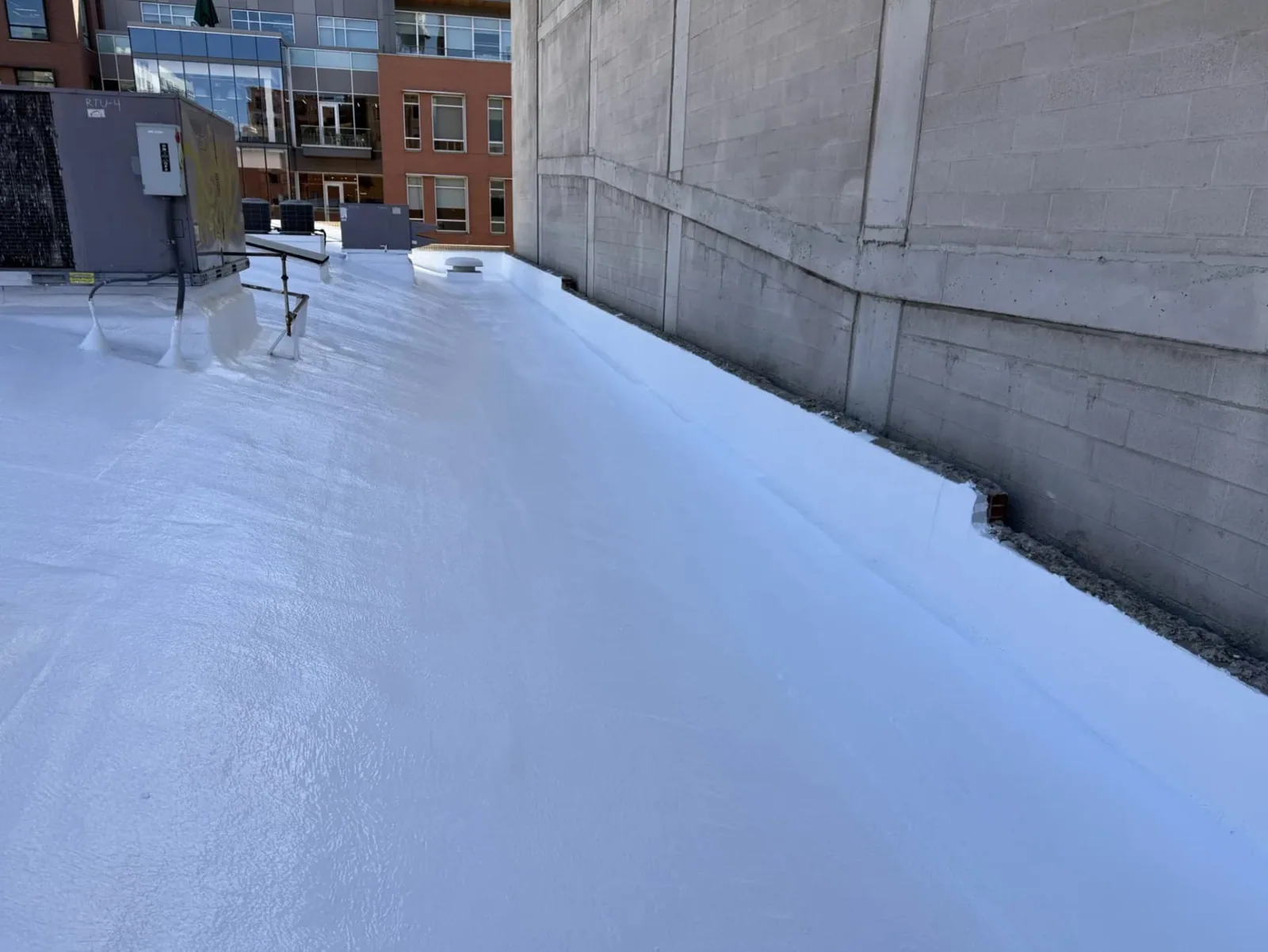
On a TPO roof, we often add a cover board under the array area during a replacement, since it protects the insulation from the foot traffic of installers and later maintenance. Walkway pads between rows protect the membrane where people walk to service the panels. If the roof needs full replacement, we plan it so the solar contractor can start as soon as the new roof is complete. The proposal separates roof repair or replacement from the solar work, so you can see what each part costs and who is responsible for it. Drains under or near the array are cleared and checked as part of the prep.
Even a well-prepared roof will need maintenance and occasional repairs over the life of the solar system. The layout should leave clear paths to drains, roof edges, rooftop units and any areas likely to need work. Rows should be spaced so people can walk between them without stepping on the membrane edges or the wiring.
A PVC roof is sometimes chosen under solar arrays for its durability and welded seams, though TPO is also common. The choice depends on budget, roof exposure and the solar mounting system. Wire runs across the roof should be on proper supports, not lying on the membrane. When a building stays occupied during roof work, our occupied building reroofing approach keeps daily openings small and sealed. We also recommend a plan for how roof repairs under the array will be handled later, including who removes and reinstalls panels if needed.
Across West Berkeley and Emeryville, roofing work should settle membrane transitions and access before the solar installer arrives. Many buildings here have older roofs and a lot of rooftop equipment, which leaves less room for an array and more details to plan around. Solar-ready roofing in West Berkeley follows the same steps: inspect, repair or replace, flash the mounts and leave service paths clear.
The record should include a roof plan showing the array area, mount locations, walkway pads and service paths, along with photos of the roof before panels went on. It lists the roof system, insulation and cover board installed, any repairs made and the flashing details used at each mount. Roof warranty documents come with their own terms, and some manufacturers have specific requirements for solar installations, which should be checked before installation. Keep the record with the solar system documents. It will matter for any roof warranty question or repair in the years ahead, and it helps any future roofer plan work around the array.
Send us your roof records and the proposed solar layout. We will inspect the roof and explain plainly what should be done before installation.
Request a Roof Assessment