Local weather advisory
The National Weather Service has issued a coastal flood advisory covering Berkeley. Heavy rain and drainage loading can expose roof leaks, blocked drains, and ponding water. This is a weather exposure advisory; it does not establish damage to a specific roof.
Do not access a roof during hazardous weather. Protect people first, avoid water near electrical equipment, and request roofing help when conditions permit.
National Weather Service · Updated Oct 28, 2026, 7:20 AM UTC
Commercial roofing near Berkeley Marina and Aquatic Park: blistered coatings, wet insulation and wind-exposed edges checked and repaired by our Berkeley crew.
Service Areas | Berkeley, CA
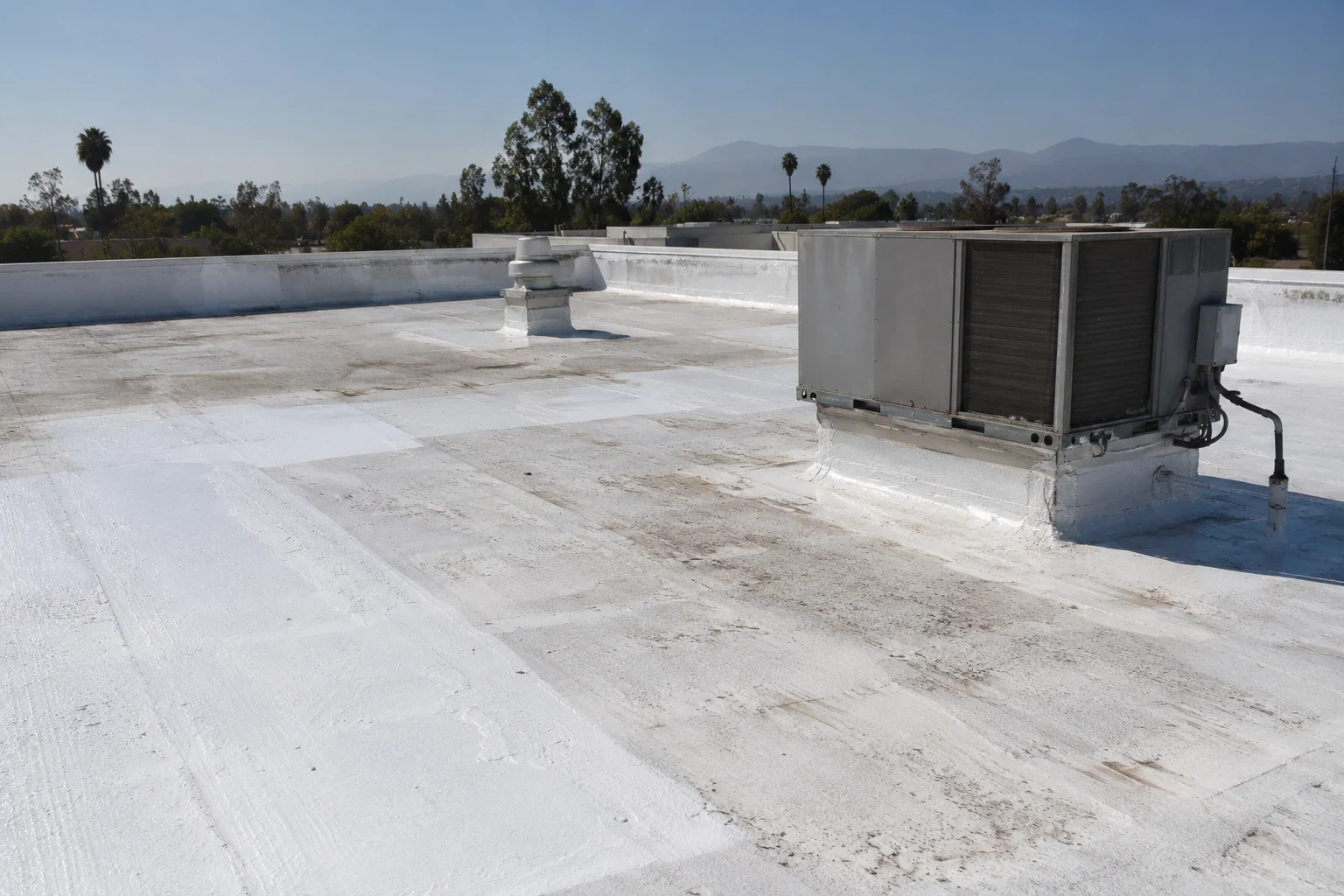
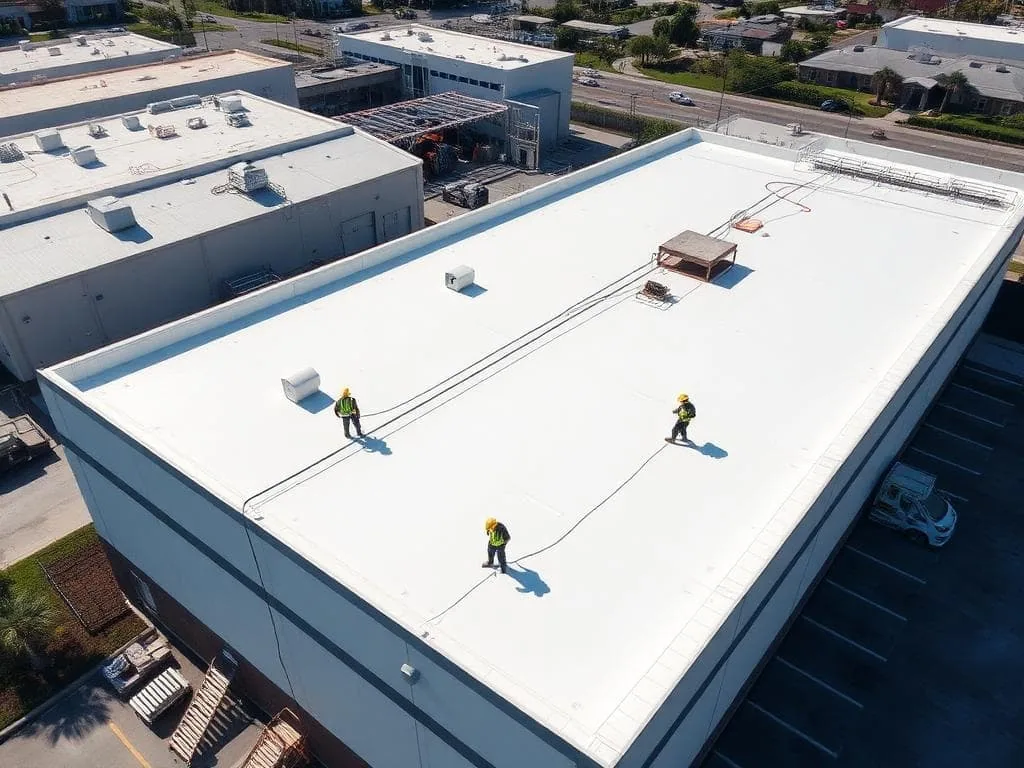
Blistered coating is one of the most common things we see on roofs near the water. A blister may be a cosmetic problem in the coating, or it may mean water is trapped underneath and the membrane below is breaking down. Rolling another coat over it hides the bump but not the cause. We inspect and repair commercial roofs near Berkeley Marina and Aquatic Park, and we cut into blisters to see what is actually going on before recommending anything.
Buildings around Aquatic Park off Bolivar Drive and out along Marina Boulevard and Spinnaker Way each have their own access, parking and delivery limits, so we check the route onto the roof before ordering materials. Our roof coating restoration work starts with the condition of the roof under the coating. A few blisters are a reason to investigate, not a reason to recoat the whole roof.
A blister may separate within the coating or at its bond. Trapped moisture, inadequate preparation or incompatible material can contribute to that separation. We examine its edge and the surface exposed beneath it. The original roofing may remain serviceable beyond the damaged treatment. It may also need repair before any new coating is considered. We record which interface actually releases during the examination.
With your approval, we open a small test area to see how many coatings have been applied over the years. More layers usually means more scraping and prep. Loose coating has to come off until we reach material that is firmly stuck down, and that surface has to be clean and strong enough to hold the new coating. A small test patch of the new product, with an adhesion check after it cures, tells us whether the system will bond. You see that result before committing to a full restoration.
A softened roof area beside a blister needs examination below the treatment. Wet insulation can remain hidden beneath an attractive new surface. We compare direct observations with testing suited to the roof conditions. Small exploratory openings can confirm suspicious areas when the owner approves them. Each opening is recorded and restored after its layers are examined. The findings establish whether restoration remains a workable option.
Our infrared surveys for targeted moisture checks use thermal patterns to guide further investigation. Those patterns need confirmation before removal limits are set. Wet or unstable layers require correction rather than encapsulation beneath new coating. We inspect the supporting deck where removal makes it visible. Deterioration there may need evaluation beyond the roofing surface. The written recommendation distinguishes a prepared dry area from an unresolved damp area. The owner can then budget for the correction that the material actually needs.
A firmly bonded area may remain beside a localized coating failure. We check the transition carefully before defining a retained boundary. A repair must suit the existing membrane and any remaining treatment. Product compatibility requires confirmation for the specific surfaces involved. We do not select by coating color or by appearance alone. The prepared test area gives a practical check before production work.
Where a silicone coating system is appropriate, preparation follows its project-specific requirements. Another installed assembly may need a different material or removal method. Flashing and drainage defects still require correction within the restoration scope. A coating over a loose drain connection cannot rebuild that connection. We explain the repairs needed before the broader surface treatment begins. The price identifies preparation, local removal and application as distinct tasks. That makes a limited repair and full restoration easier to compare.
Pressure washing and scraping can affect people in the building before any coating goes on. Water and debris can get into air intakes, and doors near the work need protection. We check entrances, intakes and the spaces under the roof, and the facility manager tells us which areas need extra care. Debris removal needs a planned route too. The daily work area is set after we know those limits, not just by how much open roof there is.
A building near Bolivar Drive may have a very different delivery setup than one out on Marina Boulevard, so each gets its own plan. Our reroofing over occupied buildings work includes interior protection and closing the roof up each day. If you have other roofs in West Berkeley or Emeryville, we can schedule the inspections together, while each building keeps its own access and repair scope.
A prepared and repaired area needs photographs before its final treatment covers it. We record what released, what stayed and what was removed. Completion photos then show the new transition and surrounding surface. That sequence explains what the repair accomplished beneath its visible finish. The manager can compare later blistering against a specific completed condition. A changed finding deserves inspection at that actual location.
Our written roof findings with location photos identify areas needing continued observation. A repaired blister may remain separate from unrelated seam or flashing defects. We mark those distinctions rather than labeling the whole roof uniformly. Later inspection checks the repaired boundary and any changed bond nearby. Newly soft layers or recurring release can prompt further material examination. A stable bond supports keeping the completed detail in its normal inspection route.
Application conditions also need checking on the day of the work. The selected material has its own preparation and curing requirements. We evaluate the actual roof surface before opening the application area. An unsuitable surface condition may require a changed work period. That decision protects the repair connection even when the access equipment is already scheduled.
Berkeley Marina sits on fill along a windy stretch of shoreline, and roofs here take more wind and salt air than buildings a mile inland. We look at each building’s own roof, drains and edges rather than judging it by its neighbors. After strong wind we check copings and perimeter metal for loose fasteners or lifted edges. Before the crew arrives, we coordinate parking, access and any events near the public paths. When we leave, the work area is clean and you have photos of each repaired detail.
Let us cut into the blisters on your waterfront roof and see what is causing them. You get plain findings, photos and a clear repair or restoration recommendation.
Request a Roof Assessment