Local weather advisory
The National Weather Service has issued a coastal flood advisory covering Berkeley. Heavy rain and drainage loading can expose roof leaks, blocked drains, and ponding water. This is a weather exposure advisory; it does not establish damage to a specific roof.
Do not access a roof during hazardous weather. Protect people first, avoid water near electrical equipment, and request roofing help when conditions permit.
National Weather Service · Updated Oct 28, 2026, 7:20 AM UTC
Commercial roof inspection, leak repair, restoration, and replacement across San Francisco’s office, retail, civic, and institutional districts.
Service Areas | Berkeley, CA
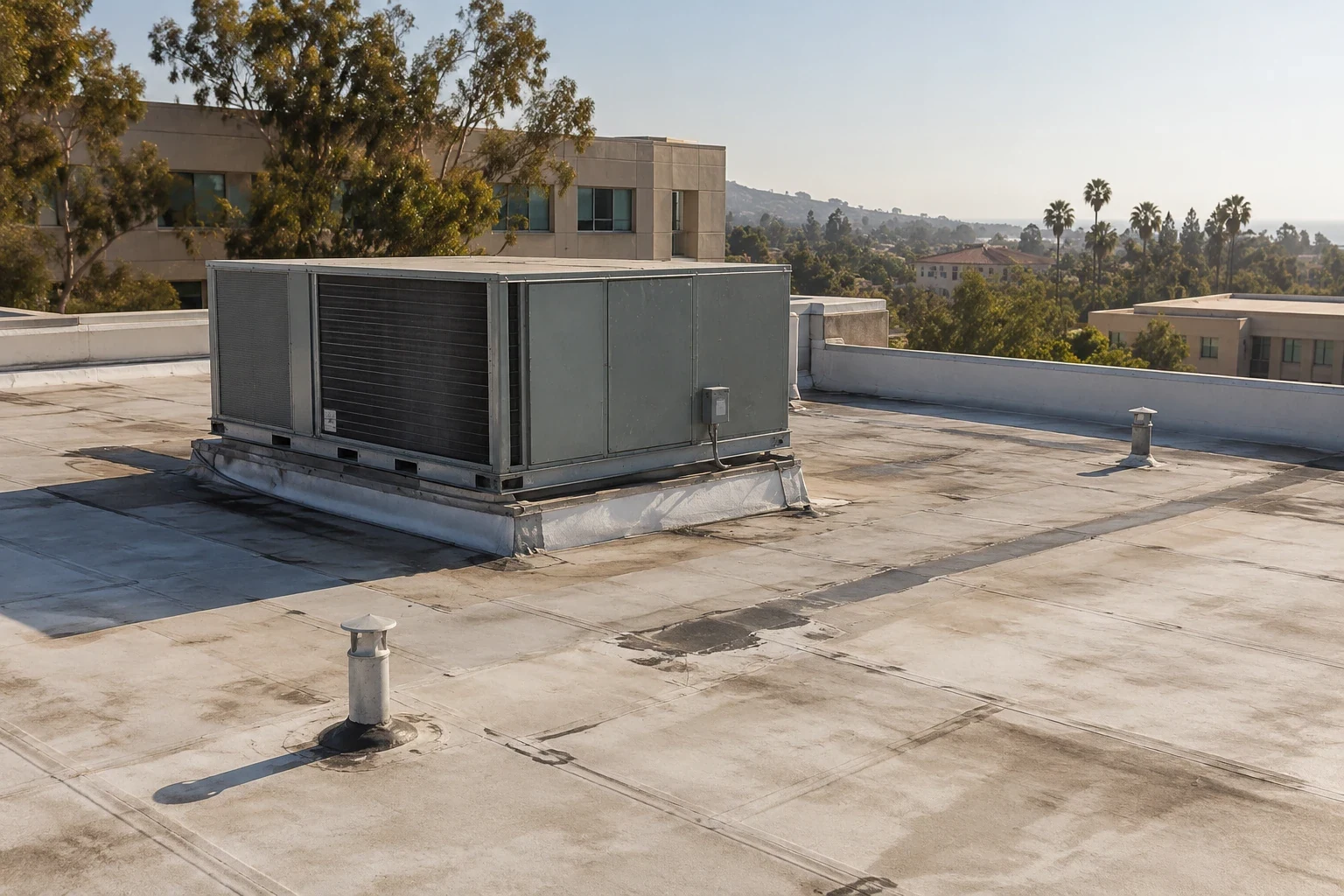
On a lot of San Francisco commercial roofs, the leak traces back to a rooftop unit curb where the flashing has split at a corner. Wind-driven rain finds that gap fast. We inspect, repair and replace commercial roofs across the city, and on a curb leak the first job is to check the flashing, the curb itself and the roof around it. A small split at the corner can mean the curb is moving, which a patch will not fix. You get that answer before approving a repair.
San Francisco’s commercial core runs from the Financial District and Market Street through Union Square, Yerba Buena, the Embarcadero, South of Market and Mission Bay, with a large stock of office buildings and a dense transit network. Every building still has its own loading dock, freight elevator and roof access, and those set how materials get up. Our institutional and campus roofing work starts with that specific building. We confirm which rooms are occupied and who controls access.
A stretched corner can show where material runs short of movement. The curb may shift differently from the adjoining roof field. An unsupported transition may also strain whenever someone approaches equipment. We examine the curb base and the membrane turn together. Past sealant can obscure a split without stabilizing the connection. We look under the old sealant to find the actual failure.
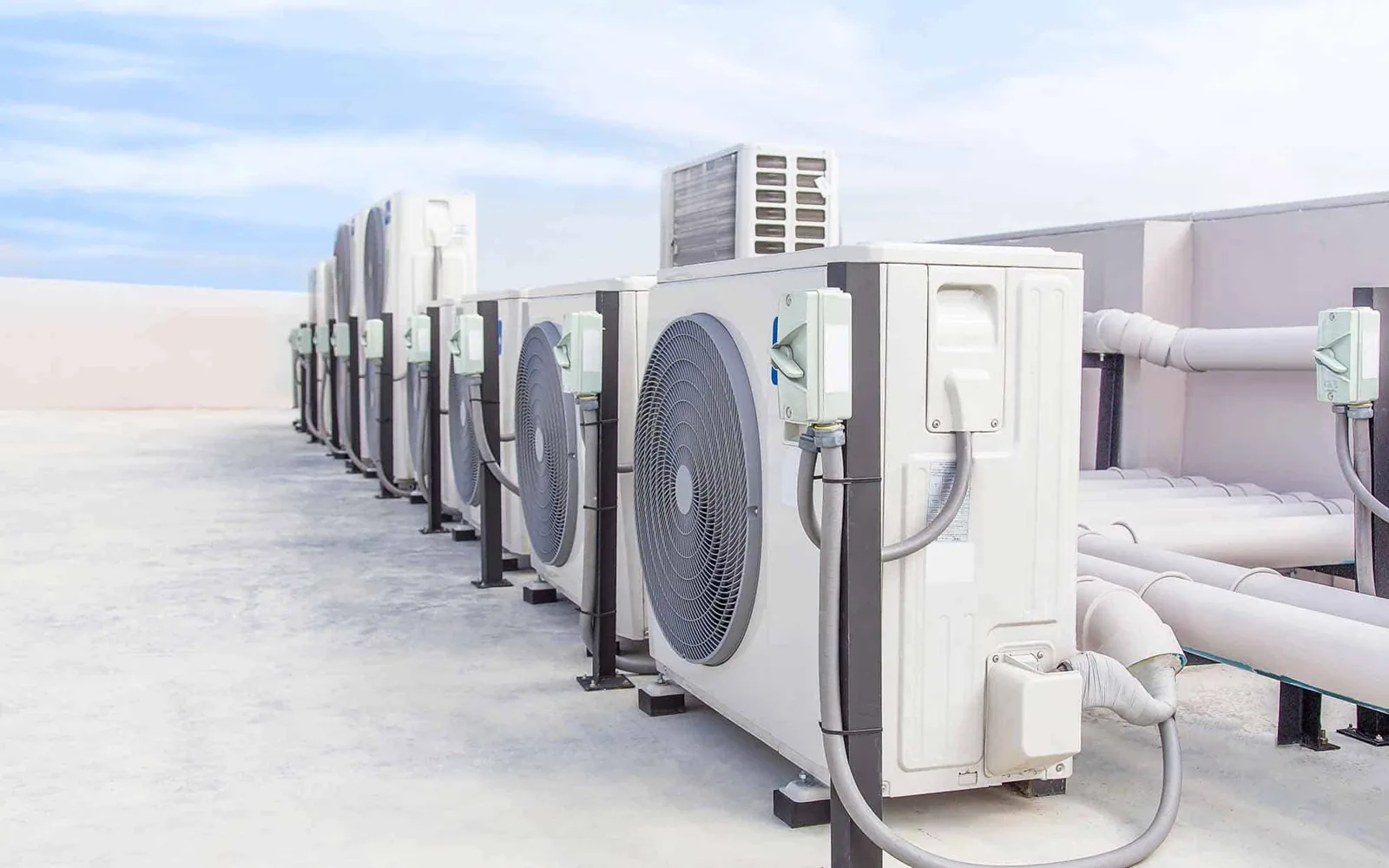
The equipment above the curb changes how repairs are approached. A mechanical service visit may be needed before removing attached components. We confirm which parts can remain secured during flashing work. Our repairs at equipment curbs and supports include that interface in the scope. A sound curb can receive a new compatible flashing detail. A deteriorated curb may require rebuilding before the roof connection is finished. Photos show the owner why those two scopes differ.
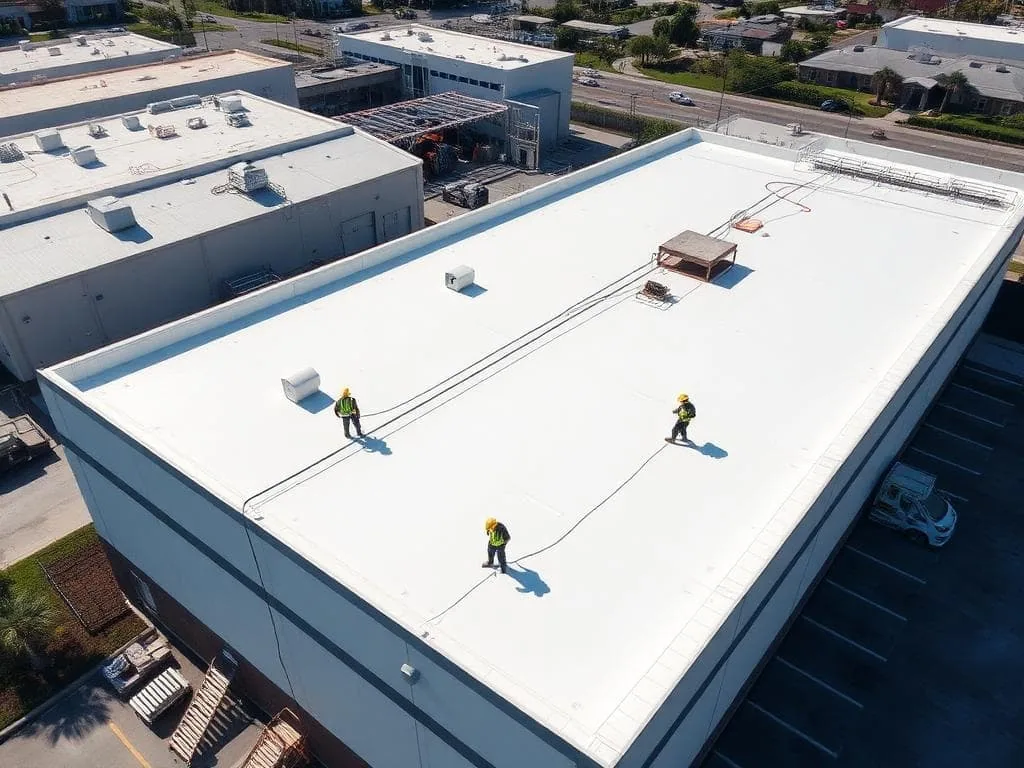
Downtown blocks need planning around freight access, loading times, neighboring rooflines and the route a lift or material cart will take. The property manager tells us which tenants need notice and which equipment requires another trade. We tie those limits to the roof section being repaired and give a clear plan for what is protected and when it will be closed up. If you manage several buildings, we can schedule them together, but each roof gets its own problem map, repair area and record. That keeps the plan practical and tied to the building we actually inspected.
An opening above an occupied office or public room needs a defined work boundary. The property contact identifies the room and its current use. We discuss what needs protection before removing roofing layers. Sensitive contents or restricted access may change the available work period. The roof condition determines the technical repair; room requirements determine how that repair can proceed safely.
A curb repair near equipment should also identify its service contact. We agree who can shut down or disconnect equipment if needed. The roofing scope does not silently include a mechanical alteration. Our roofing over occupied spaces coordinates those responsibilities before materials arrive. A changed room assignment can require adjusting protection without changing the flashing detail. The manager receives the revised daily plan before the opening begins. That prevents a roof-side decision from overlooking conditions inside the building.
A firm membrane beside the corner gives us a possible joining area. We inspect that area for contamination, brittleness and past coatings. Material identification comes before the choice of adhesive or welding method. A thermoplastic sheet and a rubber sheet need different repair procedures. The installed assembly controls the detail, including its attachment method. We confirm it at the roof rather than reading appearance alone.
A small preparation trial can reveal whether the existing membrane will take a new weld or adhesive. Its result may move the repair boundary farther from the curb. Where PVC roof material is confirmed, the welding area needs suitable preparation. Insulation below a leaking corner also needs checking before it is retained. We remove damaged layers where the findings call for it. New flashing should join sound material with adequate support below. That leaves a repair with a defined reason for its extent.
A cramped curb can make a compact repair slow to execute. Equipment clearance, roof access and staging affect the daily work sequence. We check whether material can reach the detail without disturbing other equipment. A missing disconnect approval can delay an otherwise ready repair. We identify such dependencies beside the roof condition findings. The owner can then assign approvals before scheduling the start.
Market Street and the downtown transit lines tie San Francisco’s commercial core together, but every property has its own access rules. If you also manage roofs in downtown Berkeley or San Rafael, each gets its own contact and access plan. We can line up inspections on a single schedule, but delivery and room protection are planned building by building, and the final schedule reflects the access each roof really has.
A repaired curb should leave a supported transition with closed corners. We inspect the connection before covering any concealed part of the detail. The finished work must also preserve equipment clearances and the drainage path. We photograph the completed corner and adjacent sheet for the owner. A location key makes those photos useful during later inspections. The repair record identifies the installed material and the retained assembly.
A later service visit can disturb a finished connection near the equipment. We identify the route that avoids stepping on vulnerable flashing. Roof protection may be needed where maintenance traffic reaches the unit. Our preventive checks around rooftop equipment compare the repair with its completion photos. A newly strained corner prompts another look at movement and support. An unchanged connection supports keeping that detail in normal service. The manager gets a finding that relates to the actual repaired location.
A simple drawing of the repair marks every side of the curb, the corner that failed and the area we prepped. The manager can compare it with the equipment layout, and the HVAC contractor can see exactly where our work ends. That keeps each day’s opening matched to the approved scope.
Have us look at the leaking curb on your roof. You get plain photos, with the roof repair and the access plan laid out separately.
Request a Roof Assessment