Local weather advisory
The National Weather Service has issued a coastal flood advisory covering Berkeley. Heavy rain and drainage loading can expose roof leaks, blocked drains, and ponding water. This is a weather exposure advisory; it does not establish damage to a specific roof.
Do not access a roof during hazardous weather. Protect people first, avoid water near electrical equipment, and request roofing help when conditions permit.
National Weather Service · Updated Oct 28, 2026, 7:20 AM UTC
Commercial roof leak repair, inspection, and replacement for San Rafael offices, retail centers, civic buildings, and properties across the city.
Service Areas | Berkeley, CA
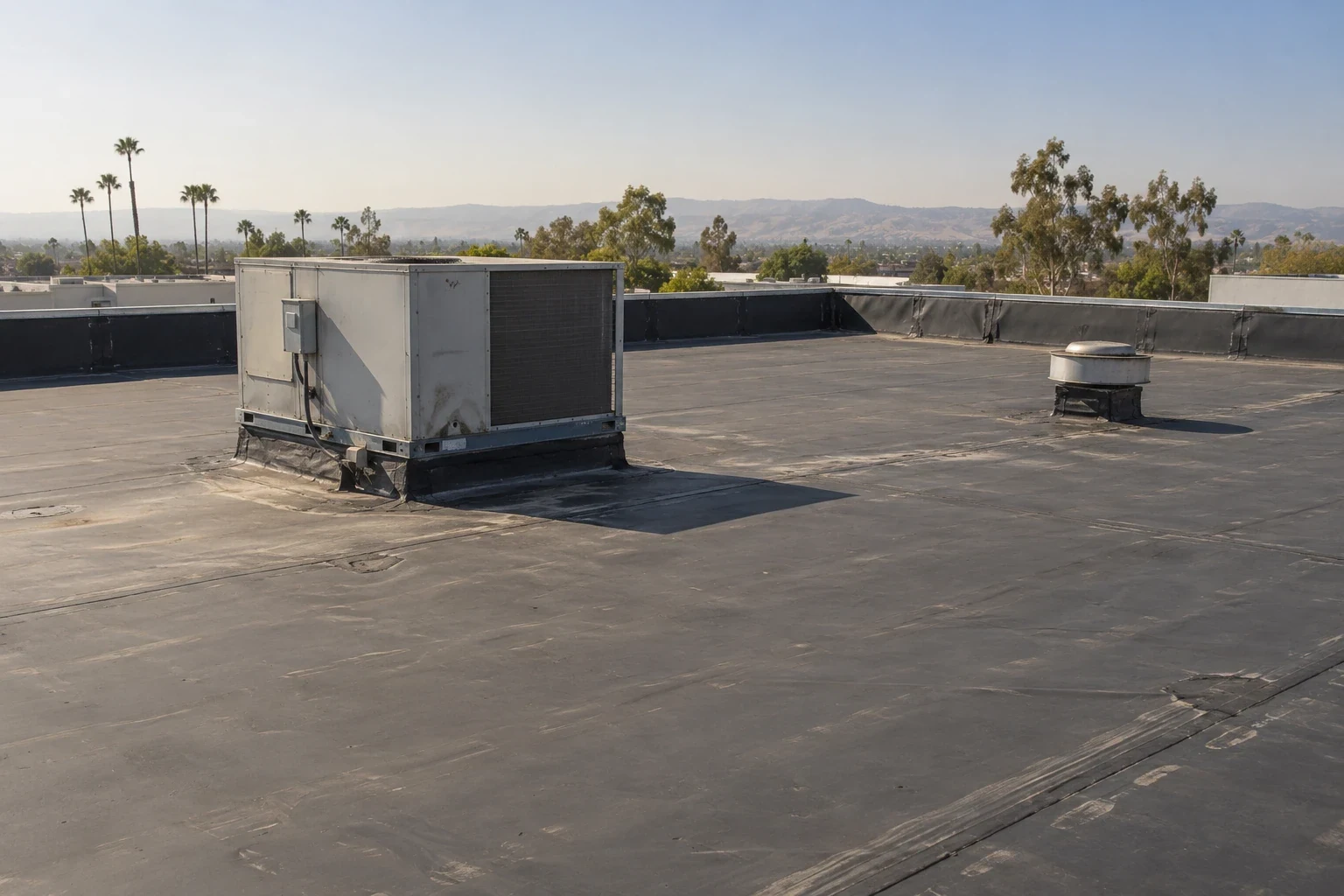
Around a commercial roof penetration in San Rafael, split flashing needs a closer look. We provide roof work for office, retail, civic, and institutional buildings throughout the city. A visible gap may sit beside a sound membrane field, while its connection to the pipe or curb can still fail. We inspect the surrounding support before selecting a permanent detail. The property manager receives the finding and its repair implications together.
San Rafael’s business and shopping district runs along Fourth Street and its side streets, from downtown out toward the West End, and the Downtown Business Improvement District supports shops, events and shared public spaces there. Commercial roofs across the city vary a lot by building use and access. We confirm the property contact and the approved way onto the roof before sending a crew. Our penetration and skylight flashing repairs are based on the actual opening and how that roof is built.
A torn flashing neck can show repeated movement at the pipe. An unsupported run may transfer strain into the roof connection. A rigid patch could hide the tear without accommodating that movement. We inspect attachment and clearance before choosing the repair material. Equipment specialists may need to address the support separately. The roofing detail must fit the condition that remains afterward.
A pipe cluster can leave limited space for cleaning and installation. We check whether each penetration can receive a sound individual detail. A boxed treatment may suit some configurations and fail others. Our work at rooftop supports and curbs separates support defects from waterproofing defects. No pipe should depend on flashing alone for physical support. That boundary prevents a membrane repair from carrying an equipment problem. The manager sees which trade must act before the final closure.
A wet insulation sample near the penetration changes the removal limits. Moisture can collect around an opening before it becomes visible inside. We look for softened cover board and deterioration beneath the membrane. An authorized opening can confirm the condition at that location. We record its position and restore it after examination. The repair then follows confirmed damage rather than just the split neck.
An office or institutional building may include rooms that need special protection during openings. The property contact identifies those rooms and their operating restrictions. We plan containment and the size of each daily opening accordingly. An infrared investigation of roof moisture can help target examination when conditions are suitable. Temperature differences need direct confirmation before wet layers are mapped. The combination gives a reason for every proposed removal area and distinguishes confirmed findings from conditions that remain unresolved.
A coated penetration may conceal the original roof membrane below it. We identify the sheet and past treatment before selecting new material. Adhesives, primers and welding methods are not interchangeable across assemblies. The existing surface needs enough strength and preparation for the chosen detail. A trial connection can show whether the immediate area remains usable. An unsuccessful trial may require extending the repair boundary.
Where rubber roofing is confirmed, an EPDM flashing repair uses an appropriate compatible joining method. The detail must also suit the penetration shape and expected movement. A liquid treatment requires a suitable substrate and project-specific preparation. We compare those options against the actual crowded opening. The owner receives the reason for the chosen method in writing. A low material price alone cannot establish whether a repair can bond. The sound connection is what supports keeping adjacent roofing in service.
A planned opening near mechanical equipment needs clear responsibility for protection. We identify the property contact and any equipment specialist involved. The work plan records what can continue and what requires coordination. We check lifting, staging, and approved roof access during the visit. A restricted work period can change cost and duration. Those limits belong beside the technical scope before materials are ordered.
Downtown San Rafael links the Fourth Street business district with civic, cultural and commercial buildings out toward the West End. If you also manage roofs in San Francisco or West Berkeley, each building gets its own access plan and delivery setup. We can coordinate the appointments, but we never assume two properties share permissions or staging space. You get a schedule that works for each building, not a generic start date.
A completed penetration detail should show clean transitions and firm support. We examine its connection to the sheet and to the penetrating component. The finished detail must leave a usable drainage path beside it. We record any support work completed before the waterproofing closed. Photographs identify the repaired opening against fixed rooftop features. That lets a later inspection return to precisely the same connection.
The owner also needs to see what remains outside this repair. Another strained penetration may need separate work or continued observation. We distinguish those findings from defects corrected during the current job. Our photo-based condition reports make that separation visible in plain language. Equipment service personnel can use the record when planning access nearby. A newly disturbed repair then has a clear location and starting condition. Follow-up work begins with a comparison rather than an unexplained new patch.
A repair photograph should include enough surrounding detail to identify the opening. A close-up alone may leave similar pipes difficult to distinguish. We pair the close view with a wider location image. That small addition helps the facility manager assign later maintenance correctly. It also keeps the repair history connected to the right penetration.
San Rafael has a busy downtown commercial corridor and a wide mix of properties elsewhere in the city. We confirm who can approve roof access and any work near mechanical equipment. A neighborhood’s age or building type does not tell us a roof is damaged, so we inspect the attachment, equipment supports and flashing on your building. If a penetration or curb needs to be opened, we document the plan and how the space below will be protected. Findings are recorded by property and roof area so later service can find the repaired detail.
Have us check the split flashing around your pipe or curb. You get straightforward photos, what we found, and the decisions needed before the permanent repair.
Request a Roof Assessment