Local weather advisory
The National Weather Service has issued a coastal flood advisory covering Berkeley. Heavy rain and drainage loading can expose roof leaks, blocked drains, and ponding water. This is a weather exposure advisory; it does not establish damage to a specific roof.
Do not access a roof during hazardous weather. Protect people first, avoid water near electrical equipment, and request roofing help when conditions permit.
National Weather Service · Updated Oct 28, 2026, 7:20 AM UTC
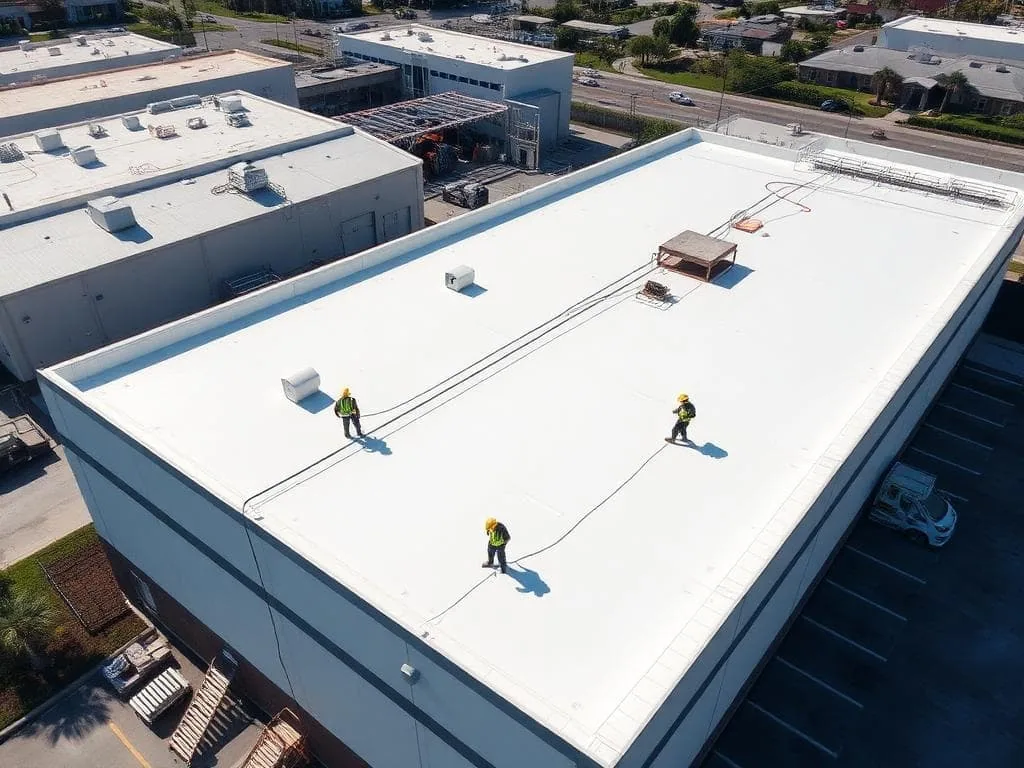
Commercial roof repair in San Leandro from our Berkeley crew: soft spots near roof hatches checked for wet insulation and deck damage, then repaired properly.
Service Areas | Berkeley, CA
A spot on the roof that feels soft or spongy underfoot, often right outside the roof hatch, usually means something underneath has given up. The insulation may be crushed or wet, the cover board may have broken down, or the deck itself may be damaged. We repair commercial roofs in San Leandro from our base in Berkeley, CA, and we find out which layer failed before choosing a repair, so you know what can safely stay.
San Leandro has offices, public buildings like the main library on Estudillo Avenue and the Manor Branch on Manor Boulevard, and a large base of industrial and warehouse buildings. Each roof gets its own inspection. Our roof inspection connects the soft spot to what it means for the repair. New membrane over a crushed or wet base will not last.
A yielding surface can have several causes within the roof assembly. Insulation may compress beneath repeated access or become damaged by water. Cover board can lose strength where its condition has deteriorated. The supporting deck may also need evaluation at that location. We inspect accessible areas before proposing an authorized exploratory opening. The opening should answer a specific question about the affected layers.
We photograph each exposed layer and identify its location near the hatch. A damaged board differs from a concern about structural support below. The latter can require an appropriate specialist's evaluation before roof work continues. Our repairs to insulation and cover board define their own material boundary. They do not silently include every underlying support concern. The owner receives the findings and the needed responsibilities together. That lets repair planning move forward without concealing an unresolved deck issue.
A damp opening establishes a finding at that inspected location. Water may extend through neighboring layers farther than the visible soft area. We investigate outward where observations support that concern. Suitable testing can help choose other locations for confirmation. Each authorized opening gets recorded before its roofing connection is restored. The result should identify a sound transition for the proposed repair.
Our thermal surveys to guide moisture confirmation need appropriate conditions and direct follow-up. A temperature pattern alone does not establish the exact removal boundary. We compare it with sampled layers and accessible roof observations. Confirmed damaged material belongs in the correction scope. Dry, stable layers may remain where the new detail permits retention. The owner sees why the proposed work reaches beyond one soft spot. That distinction helps compare a material correction with a simple surface patch.
People walking to and from the hatch put pressure on the same few square feet over and over. We look at where they step when they come out onto the roof. A damaged area there may need new insulation and a walkway pad on top. The pad has to be compatible with the membrane and must not block drainage. The facility manager tells us who uses the hatch and what they carry, which helps us plan the right protection.
During preventive roof maintenance visits, we compare the repaired area with its completion photos. A pad that has slid out of place leaves membrane exposed. The repair should not create a bump at the hatch or block water from draining. If the area starts feeling soft again, we look underneath. If it stays firm and protected, it just stays on the regular checklist.
An opening near the hatch may sit above an occupied interior space. We identify that room before layers are lifted for repair. The manager confirms its contents and the protection that can be provided. Debris and replacement material need a route separated from building users. We choose the daily removal area after those conditions are settled. The opening must remain small enough for its planned secure closure.
A building on Estudillo Avenue may need a different access plan than one near Manor Boulevard. Our reroofing over occupied buildings work includes protecting the space under the repair. If you also have roofs near Oakland Airport Business Park or in Alameda, we can schedule them together, but each building keeps its own access plan, daily work area and contact for approvals.
A local soft area beside firm, dry roofing may support focused removal. Its supporting deck must still be suitable for the chosen repair. Broad saturation or repeated loss of support raises a different question. We compare those affected areas with the sound remaining assembly. The owner receives the reason for any recommendation that expands beyond the hatch. A larger project should address broader material findings rather than a single alarming photograph.
Completion records identify which layers were removed and what remained below them. We photograph the repair connection and its position near fixed features. Added hatch-route protection gets a separate image showing the intended arrangement. Later inspection can compare that area with its completed condition. Another soft spot remains a distinct finding until it is examined. That helps the owner prioritize the next investigation or repair. The record stays specific enough to support the next budget decision.
If the deck turns out to be damaged when we open the roof, we send photos to your designated contact before adding any work. If it looks structural, we recommend an engineer review it. We keep each day’s opening small enough to close up safely while that decision is made.
San Leandro’s industrial and logistics buildings often have production running, trucks moving and HVAC service happening all at once. We confirm the operator’s work hours and any shutdowns before opening the roof. If our access crosses a loading yard, we keep equipment out of truck and emergency lanes. The inspection notes the roof area, curbs, drains and membrane, and the repair plan is built to protect operations below. For owners with several buildings, each report is tied to the right address and roof plan.
Let us check the soft area near your roof hatch. You get plain photos showing which layers failed and how big the repair needs to be.
Request a Roof Assessment