Roofing for insurance and restoration projects in Berkeley, CA: documented roof damage, test cuts for hidden water, clear repair scopes and coordination with restoration teams.
Industries We Serve | Berkeley, CA
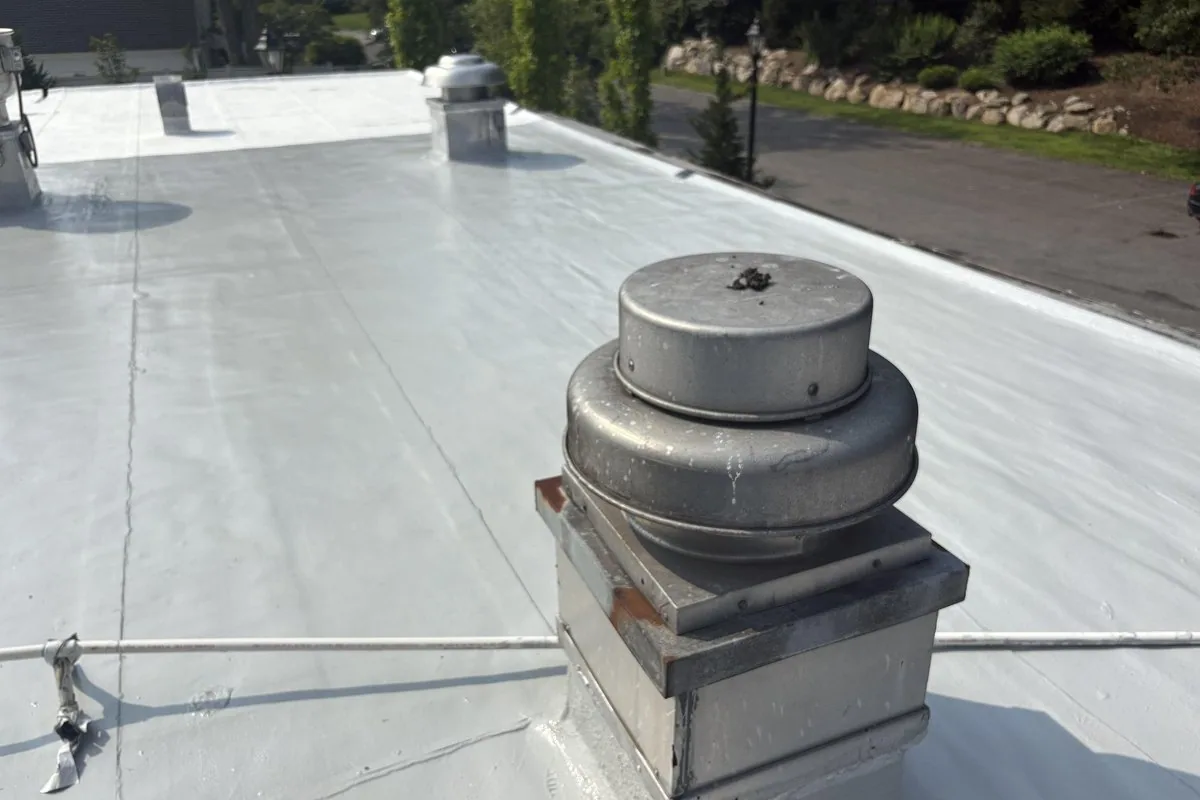
A puncture next to a rooftop unit that was knocked out of place is something a restoration team needs documented: where it is, what it damaged and what it will take to fix. We work with insurance and restoration teams in Berkeley, CA by inspecting the roof and explaining the repair it needs. Our report covers what we found on the roof. Whether the damage is covered, and who is responsible for it, is decided through the policy and the adjuster's review, not by the roofer. Our job is to make the roof condition and the repair clear.
A roof claim begins with a reported event, but the repair basis comes from what the inspection can establish. We photograph the affected area, inspect the membrane, edges and penetrations, and separate visible damage from older conditions or concealed questions. The November 2024 atmospheric river brought flash-flood warnings to Berkeley, Oakland and Richmond; those warnings do not prove damage at any individual roof. For an office-building restoration, we tie each finding to the property and the observed assembly.
A hole in the membrane is easy to document. What caused it is often less certain. We photograph the damage with enough of the roof around it to show where it is, and we note the condition of the edges. If equipment nearby was moved or damaged, we document that separately. The report describes how the two might be related without claiming a cause we can't support. Older photos can help show what changed, as long as their date and location are confirmed. Our findings stay useful even when someone else has to decide what caused the damage.
A proper membrane puncture repair has to match the existing membrane and tie into sound material around the hole. Old patches nearby often need to be cut out first. We note any loose, dirty or weathered membrane that has to be prepped. A test weld or adhesion check can answer whether a repair will bond at that spot, and we record where it was done. That's why the repair is often bigger than the hole itself, and the scope explains the prep along with the patch.
Water that gets through a hole spreads into the insulation underneath, often farther than the surface damage suggests. We use probes, cores or a moisture scan to find out how far. Wet insulation that we confirm is mapped by location and depth. If more damage turns up once the roof is opened, we photograph and measure it so the restoration team and adjuster can see why the quantity changed. Any revised scope explains the reason for the extra work in plain terms.
Replacing wet insulation and cover board has to match the height of the existing roof around it. If the new section is thicker, it can affect a nearby drain or curb, so we check drainage where the repair meets the old roof. A price for coating or patching the surface alone won't cover any of that. The area stays temporarily sealed while the final scope is agreed. Every test cut we make is patched properly as part of the job.
The roof report shows where each problem is and what the roof is made of at that spot. Photos include both close-ups and wider shots for context. We note what we could see, what we couldn't and how we reached our recommendation. Information about the storm or event is credited to whoever provided it. If earlier records are missing, the report says so rather than guessing at the roof's prior condition. Equipment issues are flagged for the right trade. That gives the restoration team a clean file to work from.
Roof insurance claim assistance means giving the adjuster a clear record of the damage and the repair. Coverage, deductibles and settlement are handled under the policy. Our estimate lists what work it assumes. If quantities change, we back it up with findings, not a vague line for hidden damage. We show what's being replaced, what's staying and what equipment work isn't included. That lets the owner compare our scope against another contractor's on the same basis.
The building operator tells us which areas are affected and when we can access the roof. Interior trades handle drywall, flooring, contents and equipment inside. Our roof findings help them know where water came in. A finished roof doesn't mean the interior work is done. We report what roof work is complete and what's still blocking closure, such as a rooftop unit that has to be reset before its curb can be flashed. The project manager sees that before planning the next step.
Restoration work often shares the site with a general contractor, interior trades and building operations. We define the roof opening, temporary weather protection and permanent tie-in, then identify where backing or equipment work could change the sequence. A West Berkeley restoration project may involve active research or production space; each operator sets its own access controls. The closeout record distinguishes reported event details, inspected material, completed roofing and any separate work still open.
We keep photos of the prepped area and the finished repair. The record shows what was removed, what was kept and where the new work ties in. Interior or equipment work still pending is listed. If the roof is under warranty, the warranty terms need their own review. A finished repair doesn't guarantee the insurer will accept the claim or pay a certain amount. The closeout record describes the work we did, and the owner keeps it with the rest of the claim file.
The property manager's file should keep the event details and our roof findings separate. If a leak shows up later, we inspect the roof as it is then, since a new unit or penetration could be the cause. Comparing the new problem with the closeout photos shows what changed. The earlier repair is judged on the area it covered. That gives the manager a useful reference for future maintenance without blaming every later leak on the same storm.
Set up an inspection at the property. We'll document the roof damage with photos and explain what the permanent repair requires.
Request a Roof Assessment