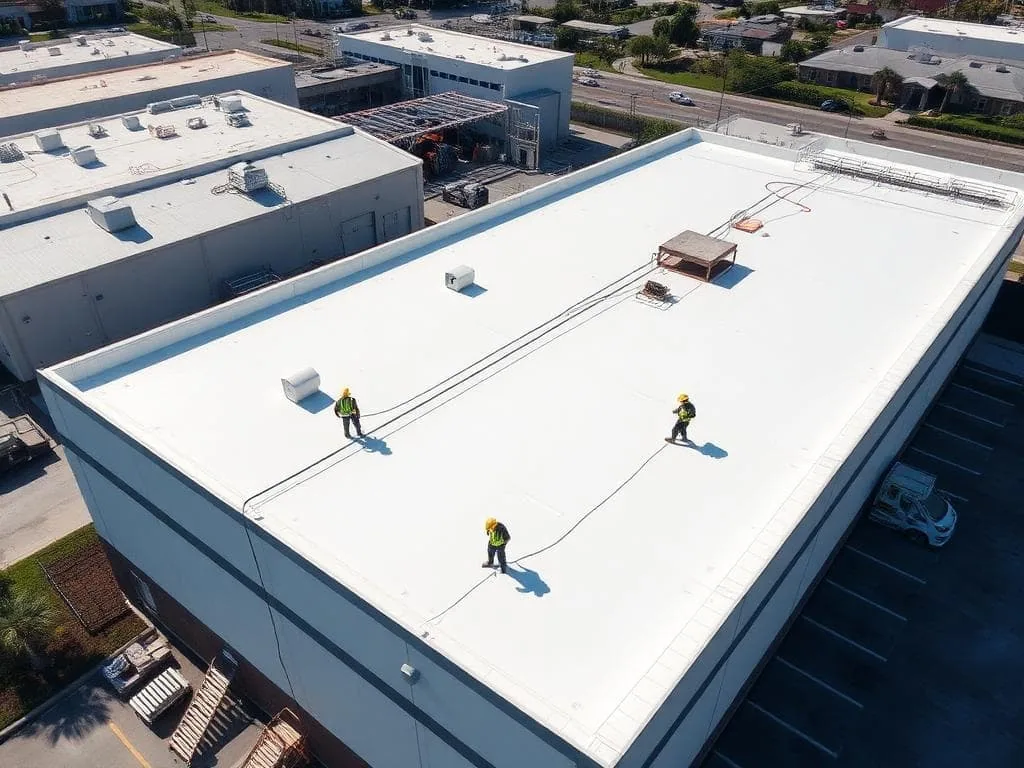
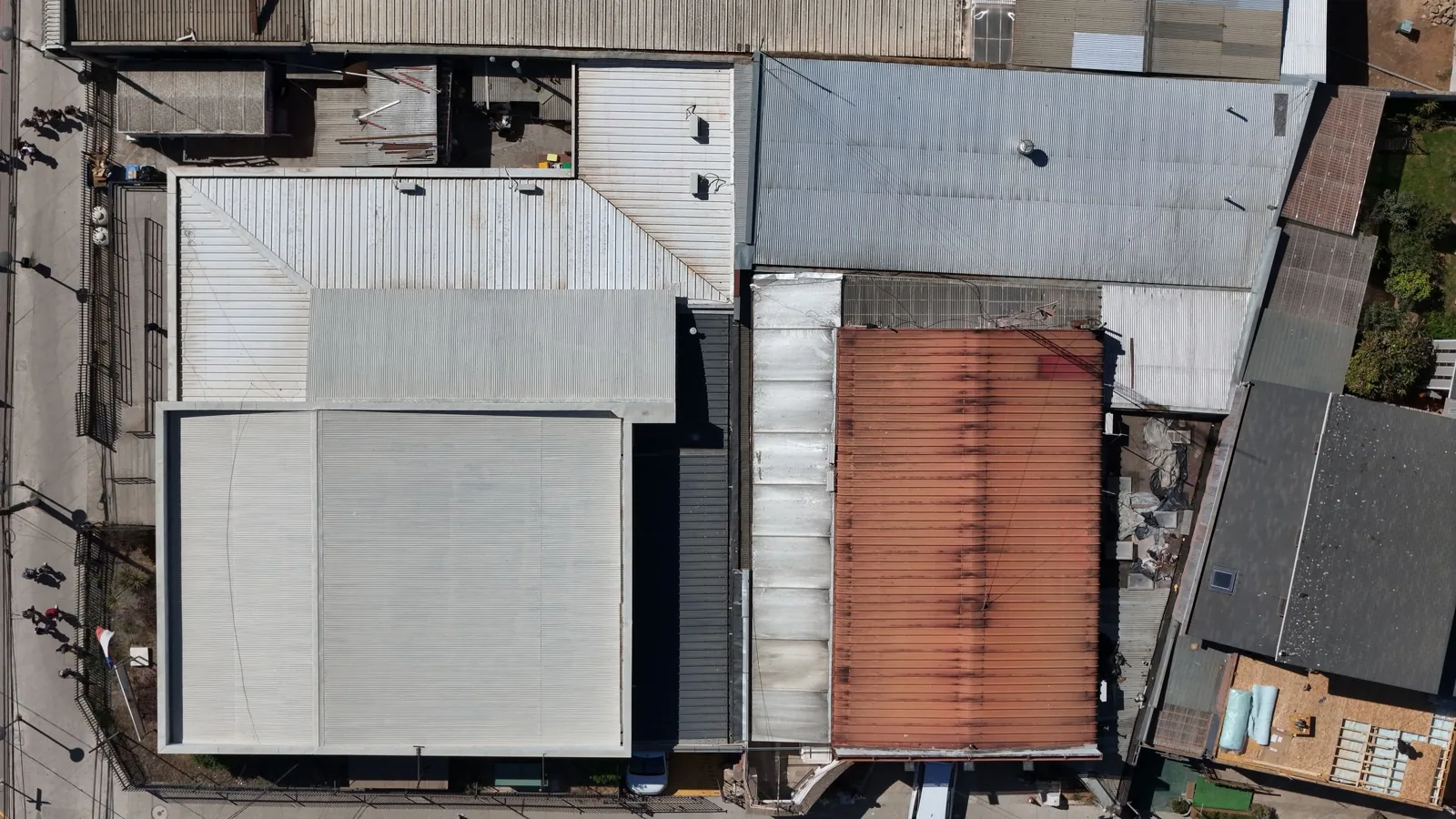
Aircraft hangar roof repair in Berkeley, CA: edge metal, wet insulation and perimeter flashing fixed with aircraft below kept protected and on schedule.
Property Types We Roof | Berkeley, CA
Hangar roofs tend to fail at the edges first. A long, low-slope roof with a big span catches wind along the perimeter, and over time the edge metal loosens, the membrane behind it pulls back, and the wood nailer that holds everything down starts to rot. On a hangar near Berkeley, CA, that kind of leak rarely drips right at the wall. Water runs along the deck and shows up over a parked aircraft or a parts bench thirty feet in, which is the worst possible place for it.
When we get the call, we start on the roof at the edge closest to the leak. We pull a section of loose metal, check whether the nailer is still solid enough to take new fasteners, and look at the neighboring seams and drains for a second source. If it is raining or the roof is open, we can install temporary protection the same day, including nights and weekends. Your operations team decides how aircraft get moved or covered; we tell you exactly where and when we will be working overhead. Any electrical or mechanical issues we find go to the right trade.
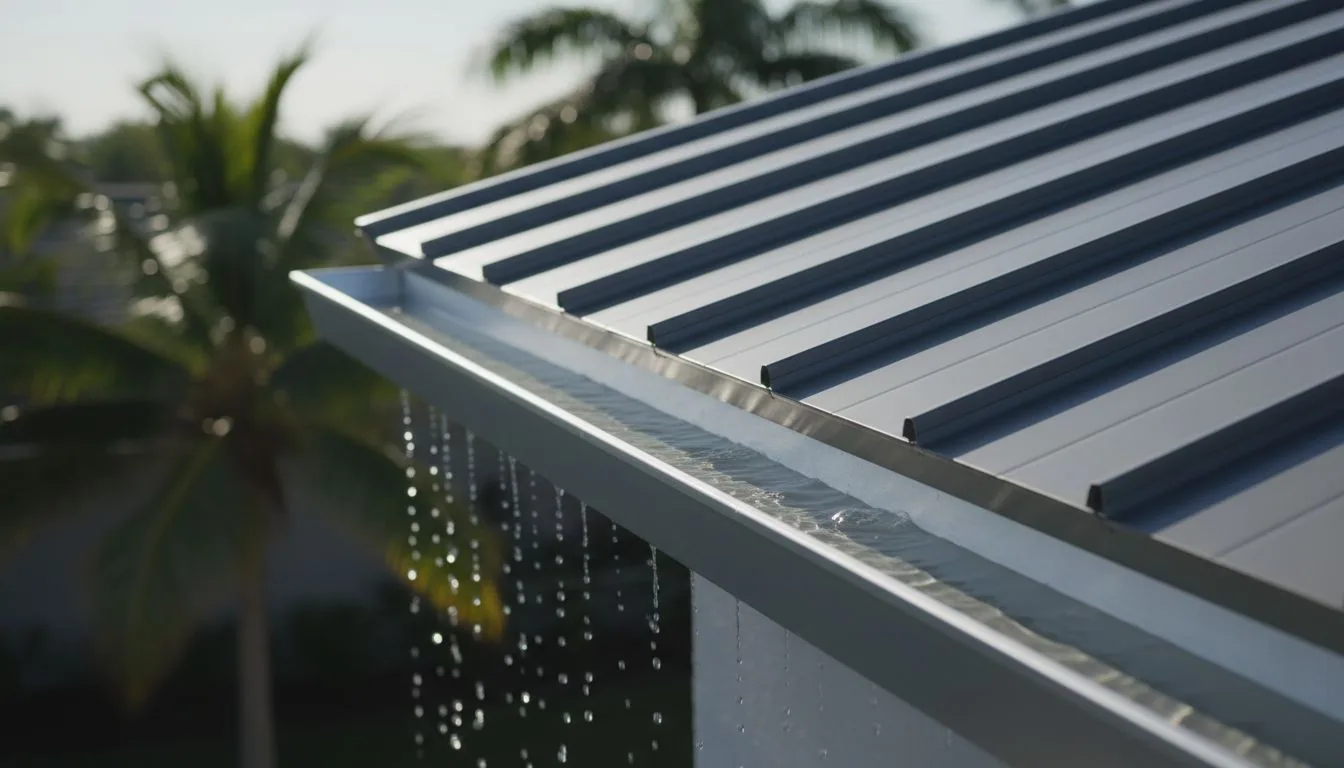
Edge metal can look fine from the ground and still be holding onto nothing. Once the nailer behind it is soft, new screws will not hold, and resealing the old metal just buys a few months. Our edge metal and coping repair work starts by opening a short section to see the wood and the membrane termination. If the nailer is sound, we can often reuse it. If it is rotted, it gets replaced before any new metal goes on, and the estimate shows that line item separately so you can see why the price is what it is.
Wet insulation is the other thing that hides behind a hangar edge. Water that gets in at the perimeter can soak several feet inward while the membrane on top still looks normal. An infrared moisture survey shows where the wet areas likely are, and we confirm the edges of them with a few small core cuts, which we patch the same day. That tells us whether the fix stays at the perimeter or whether a larger area of insulation has to come out. You get a marked-up roof plan, not a guess.
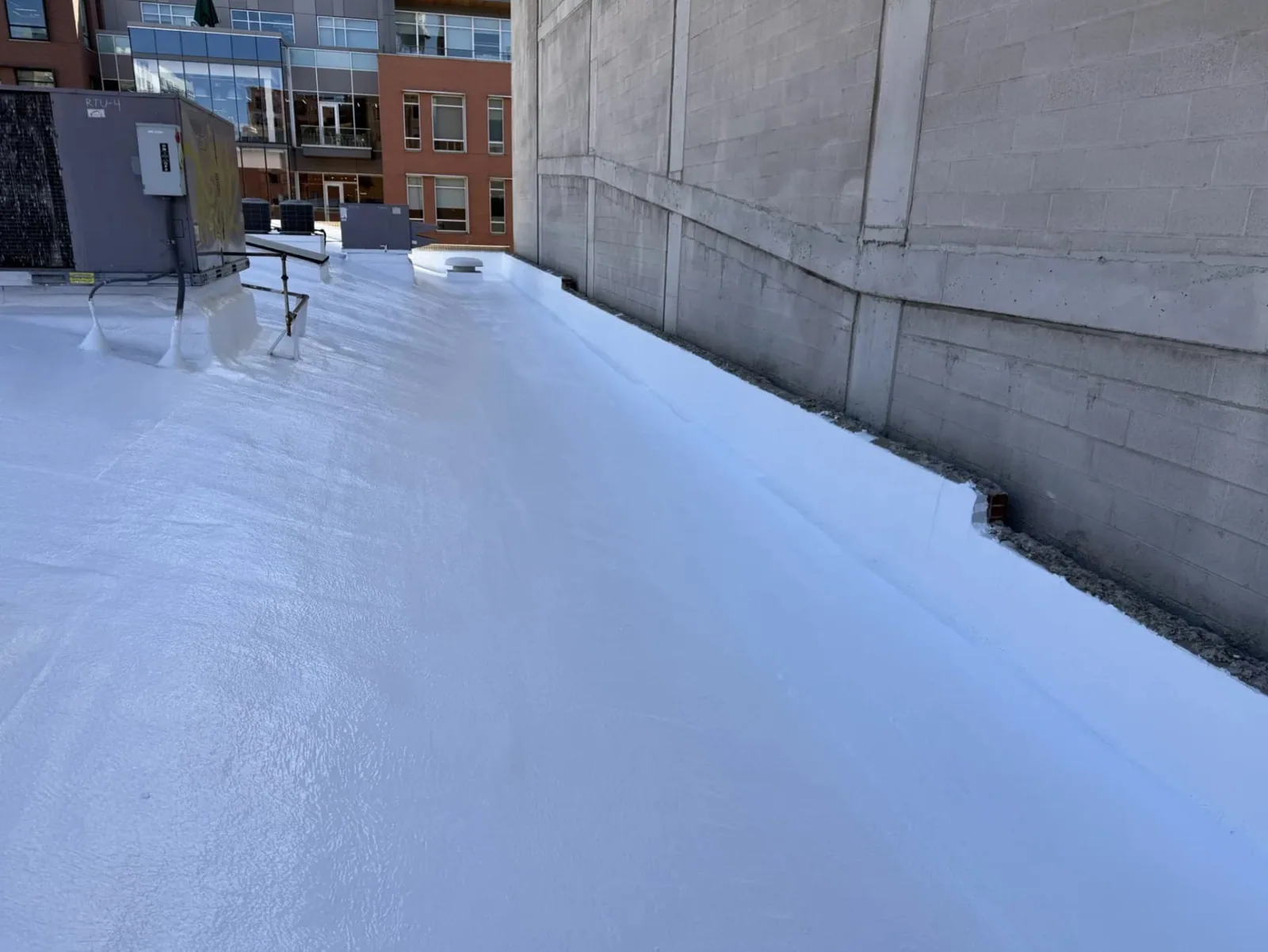
Sometimes most of the hangar roof is still in decent shape and only the perimeter has failed. In that case a roof recover over the dry field areas can make sense, but only if the edges are rebuilt properly first. A new membrane laid over a rotten nailer will fail at the same spot. Before we propose a recover, we check that the deck and structure can carry the added weight, that wet insulation has been removed, and that expansion joints get a proper flexible detail instead of being bridged over.
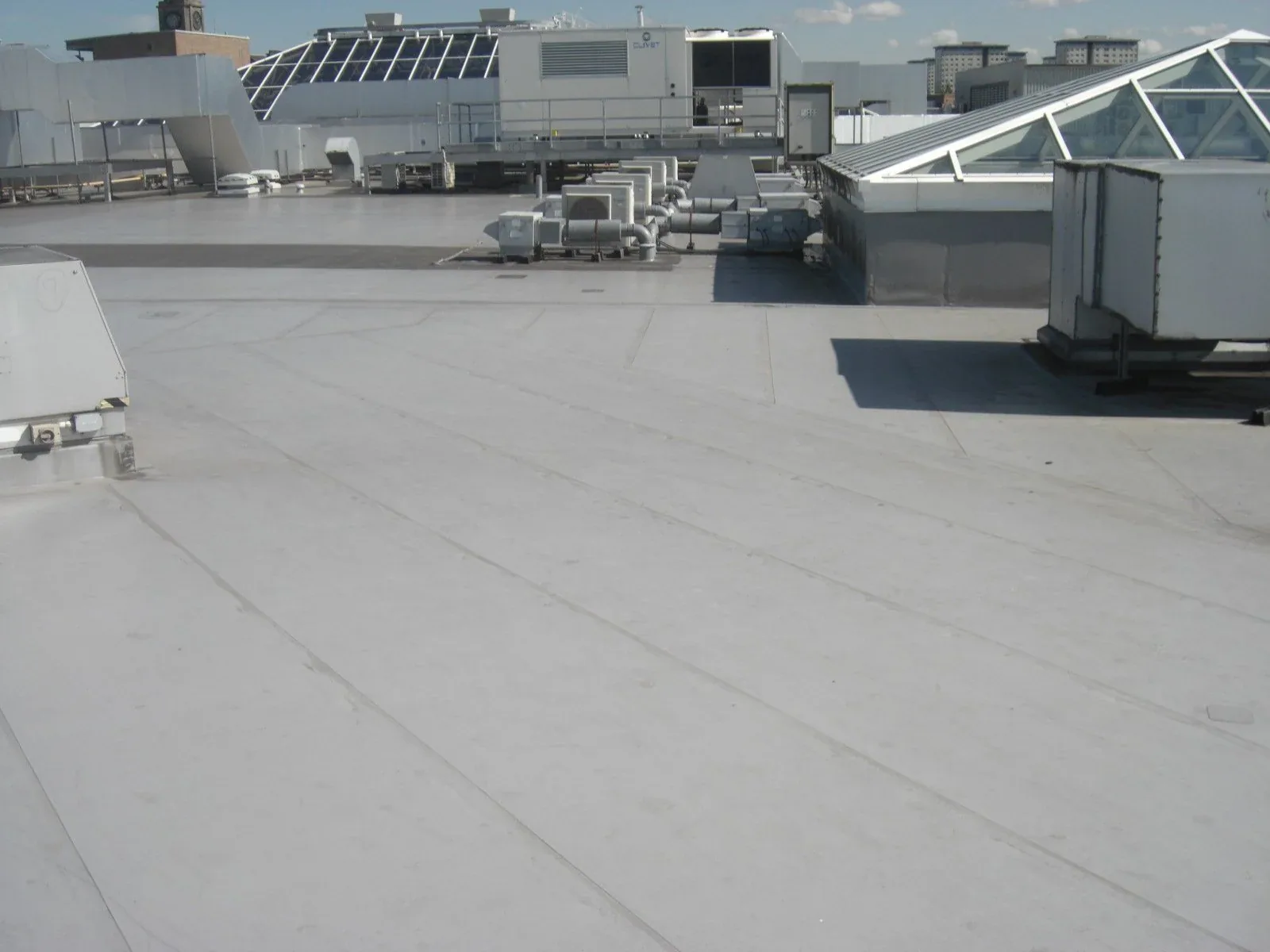
The repair method depends on what is already on the roof. A PVC or TPO membrane gets heat-welded flashing that matches the existing sheet. Modified bitumen and built-up roofs get compatible torch-down or cold-applied details. Metal hangar roofs need seams and fasteners handled to allow for expansion. We confirm the material on site before picking a method. If a drain, gutter or rooftop unit sits near the failed edge, we deal with it now, because once new metal and membrane are installed, getting back under them costs more.
Tearing off any section of a hangar roof puts debris, dust and the occasional dropped tool over whatever is parked below. Our occupied building reroofing approach maps the work area on a floor plan and shows your team which bays sit under each day's opening. Your aviation staff decide which aircraft move, which get covered, and when; we plan crane lifts, material staging and debris chutes around those decisions. If another trade has to relocate a light fixture or a sprinkler line first, that goes on the schedule before we open the roof.
If we find more damage once the roof is open, the work area can grow into a bay that was supposed to stay clear. When that happens, we stop, mark the new boundary, and talk it through with your operations lead before we cut further. Temporary dry-in is installed at the end of every shift so nothing is left open overnight. The daily report tells you what was finished, what is temporary, and what still has to happen before the permanent roof is closed over that section.
Concord Jet Center in Concord rents corporate hangar and office space, and it is a good example of the mixed hangar-and-office buildings that serve East Bay aviation. Each of those buildings has its own roof age, membrane type and edge details, so every hangar we work on gets its own inspection. For owners closer to home, we schedule roof inspections in West Berkeley and the surrounding industrial areas based on where the leaks are showing up inside and what drawings you have for the roof edge.
Aviation buildings around Berkeley and Oakland sit close to the bay, where wind off the water and long dry spells followed by heavy winter rain are hard on perimeter details. Before we visit, it helps to know where aircraft are normally parked, where the leaks appear, and who on your side controls hangar access. We walk the full edge, photograph every soft spot and loose section, and write up a repair plan for that specific building. We do not price your hangar off a similar one down the road.
Hangars share some problems with warehouses, but the stakes below the roof are different. In a warehouse roof project, we work around racking and stored goods; in a hangar, it is aircraft that are expensive to move and easy to damage. At the end of the job you get photos of the rebuilt edge, the new nailer, the flashing details and the boundary of any insulation we replaced. Anything temporary is clearly labeled, and any structural, wall or interior issue we spotted is listed with the trade that should look at it.
Many hangars also house shop space with compressors, paint booths or exhaust fans on the roof, much like a manufacturing plant roof. Those curbs and penetrations need to be coordinated with whoever services the equipment. The closeout package marks each rooftop unit, drain and repaired edge on a roof plan. If a leak shows up next season, your maintenance team can compare it against that plan and tell quickly whether it is near the new work or somewhere else entirely.
Send us where the leaks show up inside and any drawings of the roof edge. We will walk the hangar perimeter, photograph what we find and give you a clear repair plan.
Request a Roof Assessment