Local weather advisory
The National Weather Service has issued a coastal flood advisory covering Berkeley. Heavy rain and drainage loading can expose roof leaks, blocked drains, and ponding water. This is a weather exposure advisory; it does not establish damage to a specific roof.
Do not access a roof during hazardous weather. Protect people first, avoid water near electrical equipment, and request roofing help when conditions permit.
National Weather Service · Updated Oct 28, 2026, 7:20 AM UTC
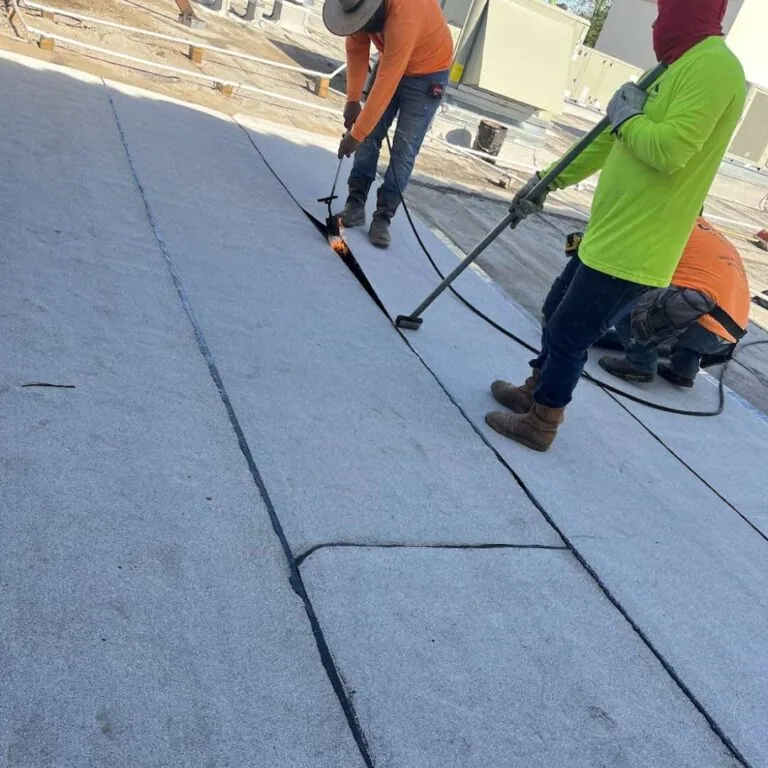
Commercial roofing in North Oakland and Temescal: split expansion joints and roof-to-roof transitions repaired with flexible details that let the building move.
Service Areas | Berkeley, CA
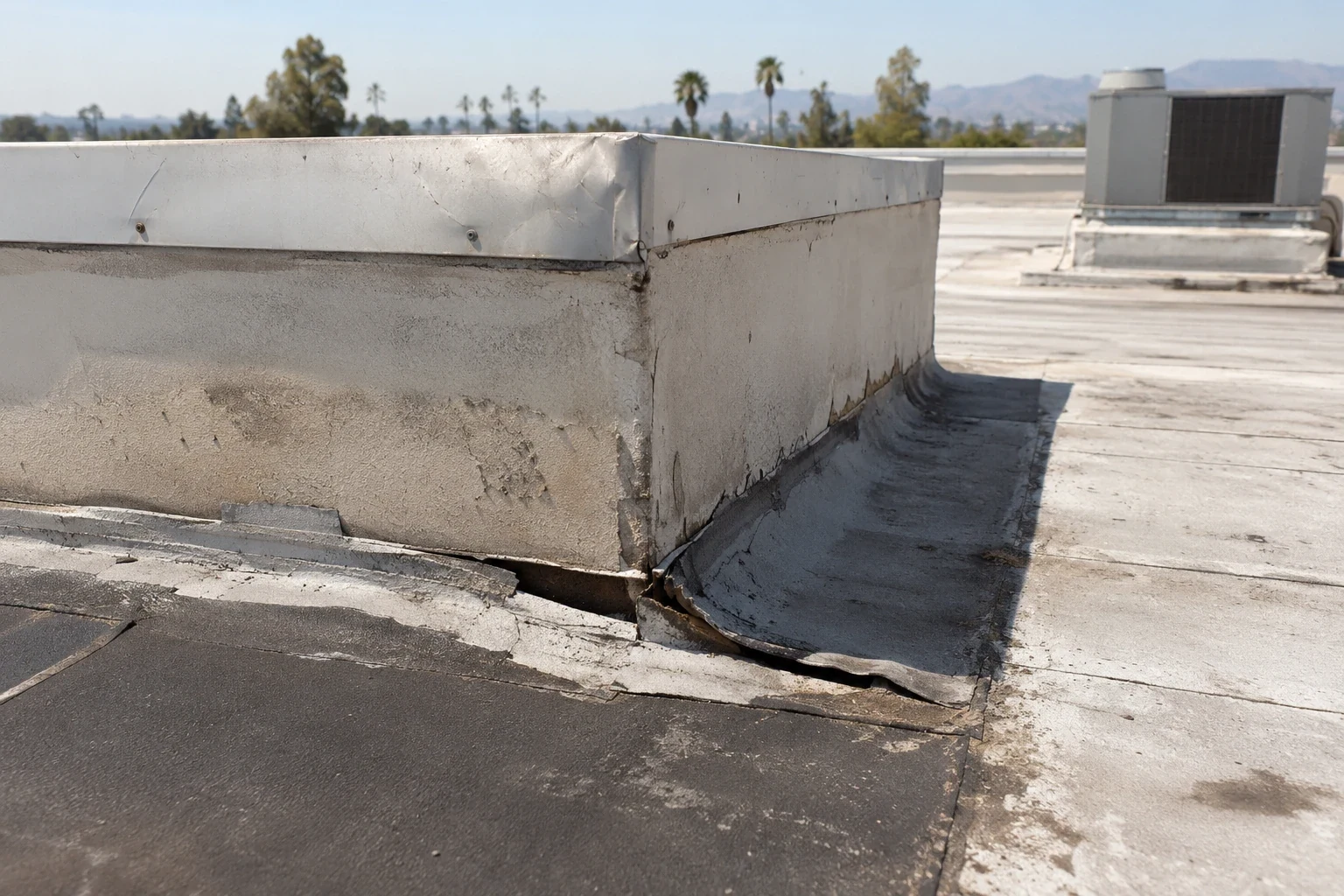
Where two sections of a commercial building meet, the roof often has an expansion joint or a transition between different roof heights. Those spots move as the building heats, cools and settles. When the cover splits, the usual quick fix is a stiff patch across the gap, and it tears again as soon as the building moves. We repair commercial roofs in North Oakland and Temescal from our base in Berkeley, CA, and we figure out how that joint was meant to work before choosing a repair.
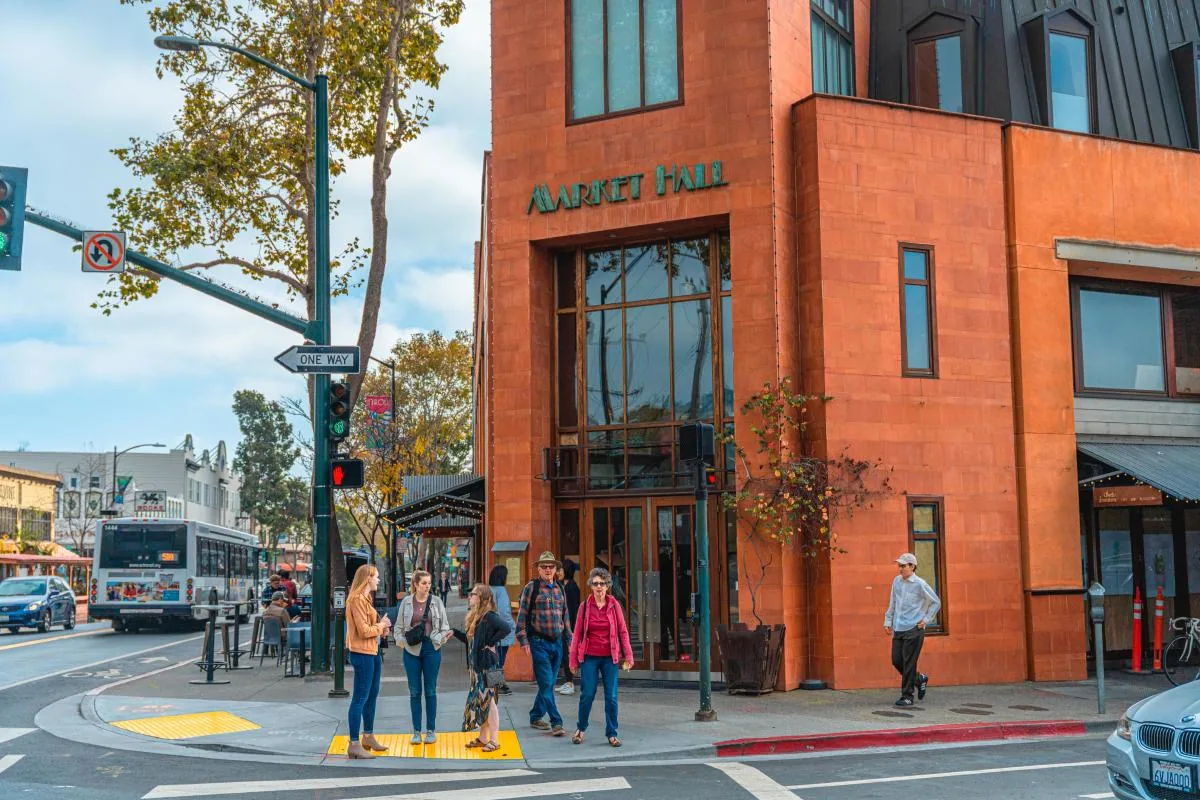
Older commercial blocks along Telegraph Avenue, near the Temescal library branch, often have additions built at different times, so these joints are common. The split you can see may be a simple roof-to-roof seam, or it may be part of a true building expansion joint. We find out which before removing anything. Our flashing failure repair work is based on the actual detail on your building. A straight line on the roof can hide a more complicated connection underneath.
A split cover can obscure the original purpose of the connection. We inspect the adjoining roof planes and accessible joint construction. Building records may help establish how the separate portions were intended to meet. The correct repair must preserve necessary movement where the assembly requires it. Tying the sides rigidly together can strain another component. We explain that distinction before defining a new waterproofing detail.
An upper cover, flexible connection and end termination can fail differently. We examine each accessible part rather than treating the visible tear alone. Our inspection of roof joints and connections records those findings with location photographs. A sound central joint can still leak through an unfinished end. The wall connection may require related correction where it meets the roof. We identify any design or specialist evaluation needed for an uncertain assembly. The owner can then approve a detail suited to the actual connection.
Wrinkles beside the joint may show strain in the surrounding sheet. They can also reflect poor attachment or displaced underlying layers. We check the membrane and what is under it on both sides. A new connection needs sound material where it joins the roof. Weak backing or damp insulation can enlarge the necessary removal. An approved opening can help establish that condition before permanent work begins.
Our roof insulation and cover board repairs replace wet or crushed material near the joint and leave dry insulation in place. The new joint has to sit on solid material without trapping anything wet underneath. If the roof is higher on one side than the other, that changes how the joint is flashed, and water still has to drain away from it toward a drain. The estimate covers the joint and the roof on both sides. A neat new strip down the middle can leave the real problems untouched.
A movement detail needs adequate flexibility within its intended assembly. Its shape and attachment differ from an ordinary flat sheet patch. We identify the applicable system before choosing replacement components. The detail must also fit the adjoining membrane materials and wall terminations. A preparation trial can assess whether the existing membrane will still bond. Its result may require extending removal to a sounder area.
Where modified bitumen roofing is confirmed beside the joint, repair methods follow that assembly. A different adjoining membrane may require another compatible transition. We coordinate those materials within the proposed detail rather than mixing treatments casually. Each end needs a reliable connection to the neighboring waterproofing. The owner receives the reason for the selected method in writing. That makes a local joint correction easier to compare with broader roof replacement. The recommendation follows connection condition and the sound remaining roof.
A joint repair can sit above spaces with different occupied uses. We identify both sides of the connection during the site walk. The manager confirms which rooms need protection or a changed work period. A daily opening should match the closure that can be completed. Material staging and debris movement also need a safe route. We agree on those limits before committing to the repair date.
A building on Telegraph Avenue gets its own entrance and lift plan. If you also have roofs in Rockridge or West Oakland, we can schedule inspections together. Our reroofing over occupied buildings work plans protection for each building separately, and each building has a named contact who can approve extra work if we find hidden damage.
A completed transition needs images showing its center and both ends. We photograph the adjoining roof surfaces and wall connections as well. The record identifies the movement detail chosen for the repaired assembly. It also states which damaged backing or insulation was removed. Later inspection can then compare the entire connection with its completed condition. A close-up of the center would miss changes at its terminations.
Our reports of roof findings and completed corrections separate repaired portions from unresolved adjoining concerns. A stable joint can stay within the regular inspection route. Renewed strain or a displaced end requires closer examination. The manager can identify that change without treating every roof mark as a failure. Another worn connection receives its own condition finding and recommendation. That lets the owner prioritize the next repair using actual observations.
If the joint opens up to show damaged wood or deck, we photograph it, show the manager which side of the building it is on, and get approval before expanding the repair. If it looks structural, we recommend an engineer review it before we cover it back up. We keep each day’s opening small enough to seal before we leave.
Temescal’s commercial strip along Telegraph is mostly storefronts and small businesses, so sidewalk access and business hours matter. We place ladders or lifts to keep the sidewalk clear and agree on work hours with the tenant below. Oakland has its share of earthquake and fire history, but we base roof decisions on what we see on your roof: actual movement, heat damage or worn membrane. Every seam or flashing repair is marked on the roof plan, and we tell the manager what nearby areas we checked and what was outside the job.
Let us check the split joint and the roof on both sides of it. You get plain photos showing the joint, what is underneath, and a repair that will hold.
Request a Roof Assessment